





 CC-BY 4.0
1. Introduction
Putting man in its proper place as just another animal, ideas about the evolution of species have long reflected an anthropocentric view. Based on the history of multicellular organisms, any species of interest kept a scale matching that of man. Yet the cell, almost always visible only through a microscope, is the atom of life. If evolution by natural selection was universal, it was necessary to consider whether the processes proposed to explain the fate of macroscopic organisms remained valid for microbes, which are normally unicellular and very small. This was all the more important because, even at a time when the existence and nature of genes were not yet understood, the accepted rules for explaining evolution soon added a component other than size: the sexual distinction between individuals. However, it was not obvious that this distinction, which was quite clear in microbes such as yeast, was also valid for bacteria. Very early on, one of the implicit questions postulating the existence of a sexual cycle in bacteria had triggered the study of this important process (Sherman and Wing, 1937), but it was only in parallel with the discovery of the role of DNA as a vector of heredity that the mechanisms governing it were understood (Tatum and Lederberg, 1947). Furthermore, singularised by their pleomorphism, microbes have phenotypes that vary considerably depending on how they are cultured. Until the details of heredity were understood, this gave rise to many unfounded speculations. Early microbiologists thus believed that the heredity of microbes obeyed different laws than those of plants and animals (Rodet, 1894; Enderlein, 1925; Hadley, 1927). To go further, it was first necessary to choose model organisms that would allow for the construction of conclusive experiments and explore the evolution of their descendants.
2. Early observations of adaptive mutations in bacteria
As early as 1859, to explain why broths and other infusions were quickly invaded by microbes, Louis Pasteur demonstrated that this process required the prior presence of living organisms. Life does not arise spontaneously. His famous opponent Félix Pouchet, a proponent of the traditional animistic view, vigorously challenged him, claiming to have found evidence contrary to Pasteur’s. A fierce battle ensued. What was Pouchet’s “evidence”? Pasteur used heated yeast extract as sterilised broth, while Pouchet showed that he recovered microorganisms after boiling containers containing water in which hay had been infused (Roll-Hansen, 1979). We now know that herbaceous plants are the natural environment in which the “hay bacteria” characterised in 1872 by Ferdinand Cohn and now known as Bacillus subtilis multiply. These bacteria form spores that are highly resistant to heat (Nicholson et al., 2002), which explains the observations made by Pouchet, who had poorly sterilised his culture medium. One of the models chosen by Jacques Monod to study bacterial physiology, this organism is nowadays once again being used to analyse the mechanisms of their evolution (Zeigler and Nicholson, 2017). However, it is another bacterium, also used by Monod in his thesis, the coliform bacterium originally named Bacterium coli commune, which has since become the best-understood living organism (Méric et al., 2016). Discovered in 1885 in the colons of infants and renamed Escherichia coli in honour of its discoverer, German paediatrician Theodor Escherich, it has served as a model for studying the mechanisms of bacterial evolution since its earliest day. Unfortunately, this work has been largely forgotten. Indeed—and this amnesia is exaggerated because what is known to the general public must be easily accessible on the web and is therefore often very recent—, many crucial experiments that were discussed even before the discovery of molecular mechanisms of heredity are overlooked. Rediscovering them, illuminated by our current knowledge, brings to light old controversies that reveal unexpected evolutionary behaviours, the explanation of which opens up new perspectives on the mechanisms of species evolution.
Isolated from a case of enteritis by Max Neisser in 1906, a strain of B. coli commune thus became the subject of heated debate on evolution. Neisser had selected it after observing a curious phenomenon: unlike the reference strain that ferments lactose, this strain did not. However, when the bacteria were left at 37 °C for 72 to 96 h on Petri dishes containing lactose and a colourless indicator that turns red in the acidic environment created by fermentation, red daughter colonies appeared on the surface of “white” parent colonies that did not ferment it. These microbes had therefore acquired this ability after being exposed to the sugar, and did so in a stable and apparently irreversible manner. This led Neisser to name it B. coli mutabile to emphasise its instability. In the original article describing the strain, Neisser suggests, without discussing the cause, that the variation observed in B. coli mutabile results from a mutation in the sense understood by De Vries in plants in the early 1900s (Neisser, 1906). Unifying what was understood about heredity, this seemed to reveal a case of heredity of an acquired trait, an observation that was anathema to proponents of a narrow interpretation of Darwin and Wallace’s theories. This may explain the long silence that obscured these observations.
Neisser had suggested to his student Rudolf Massini that he made this the subject of his thesis. Massini showed in great detail, starting with individual bacteria that he allowed to multiply on plates, how, when cultured on a solid medium containing a specific dye, they first form white colonies. After several days, “papillae” appear on these colonies and turn red. Subcultures made from these papillae on media containing lactose never produce white offspring on the same sugar, even after prolonged subculturing on lactose-free media (Massini, 1907). We reproduce here an excerpt of the original text of Massini’s observations because they are identical to our later description using a bacterial model with known genetic and molecular characteristics, which could not have been the case at the time (Box 1).
Box 1. Papillae fermenting lactose maintain this ability over generations.
Die zweite Eigenart unseres Bakteriums besteht darin dafs, nicht alle Keime zu gleichmäfsigen Kolonien auswachsen sondern, dafs unter bestimmten Bedingungen einzelne Keime variieren und ihre neu erhaltene Eigentümlichkeit sofort konstant weiter vererben. Wird das Koli auf Endoplatten weiter gezüchtet, so dafs der neue Satz immer von einer isolierten Kolonie des vorhergehenden Satzes ausgeht, so sieht man nach einigen Umzüchtungen neben den weifsen Kolonien rote auftreten) Diese letzteren sind nach 16 Stunden nicht von den früher beschriebenen farblosen Kolonien zu unterscheiden nach 18–20 Stunden aber erhalten sie einen roten Nabel und nach 36–48 Stunden sind sie ganz rot und zeigen den für das Bacterium coli commune typischen metallischen grünen Fuchsinglanz. Am 2 und 3 Tage sind sie durchschnittlich gröfser als die weifsen Kolonien, bleiben aber in den nächstfolgenden Tagen an Gröfse hinter den letzteren bedeutend zurück. Die roten Kolonien erhalten nie Knötchen wie ich sie im ersten Teil der Arbeit als, für die weifsen Kolonien charakteristisch beschrieben habe Wird nun von einer roten Kolonie wieder abgeimpft und ein neuer Endosatz ausgestrichen, so entstehen nur rote Kolonien keine einzige weifse und auch bei weiterer Verimpfung bleiben alle folgenden Generationen rein rot es gelingt nie mehr auf Endo eine weifse Kolonie zu erhalten. (ibid.)
The second peculiarity of our bacterium is that not all germs grow into uniform colonies, but that under certain conditions individual germs vary and immediately pass on their newly acquired peculiarity constantly. If the coli is further cultivated on Endo plates, the new set always originates from an isolated colony from the previous set, after a few re-cultivations, red colonies appear alongside the white ones. After 16 h, the latter are indistinguishable from the colourless colonies described earlier, but after 18–20 h, they develop a red navel, and after 36–48 h they are completely red and show the metallic green fuchsine luster typical of the Bacterium coli commune. On days 2 and 3, they are on average larger than the white colonies, but in the following days they remain significantly smaller than the latter. The red colonies never develop nodules as I described in the first part of this paper as characteristic of the white colonies. If a red colony is now inoculated again and a new Endo plate is spread, only red colonies develop, not a single white one, and even with further inoculation, all subsequent generations remain purely red; it is never possible to obtain a white colony on Endo.
How should we interpret these observations—along with many others, such as the heritable adaptive emergence of a “capsule” in pathogenic bacteria (F. H. Stewart, 1926)—, at a time when the physical nature of genes remained a mystery? Few questions have sparked as much debate—often heated—as that of the origins of these mutations (see, for example, the discussions sparked by the generation of adaptive mutations in E. coli in 1988 (Cairns et al., 1988)). Similarly, few questions have brought to light as many prejudices rooted in ignorance of the fundamental biological mechanisms underlying the variability of bacterial phenotypes, whatever its origins and extent. Are they adaptive mutations or temporary adaptation to the environment?
This question, which Monod addressed in his study of bacterial adaptation to growth on various carbon sources (Monod, 1949), enabled him to understand enzymatic adaptation through gene expression. In his study, it takes only a few hours for lactose-fermenting E. coli to appear, and this adaptation is reversible. This implies a mechanism that does not alter the nature of the genes in the cells involved. In contrast, in the experiments by Neisser and Massini, it takes several days, and this adaptation is irreversible. The extensive literature on this subject consists almost entirely of observations lacking a common guiding principle, other than revisiting the question of the inheritance of acquired characteristics. The puzzle still presented itself in this way in 1938:
In the case of the citrate “mutant”, a smear on citrated agar usually shows no sign of a colony for at least three days and frequently this time interval may be four, five, or six days. Why the delay? Secondary colonies of Bacterium coli-mutabile appear on lactose indicator agar only after a lapse of days. Typical cultures of this organism sown in lactose broth may show no visible acidity for more than a week. We felt that we shall never have the exact answers to what actually does go on in strains like these until methods better than those now in use have been developed [emphasis added] (Parr, 1938).
These observations have long been cited and discussed, particularly in relation to the possible existence of sexual reproduction and the general mechanisms of heredity in bacteria (Luria, 1946), but after the discovery of DNA’s role in heredity, they were quickly forgotten. Every genetic mutation must have a physical basis, observable in DNA, but it was only very recently that it became possible to identify them. To go further, it was indeed necessary not only to start with a very well-known genetic model—which became easy once genomic sequencing experiments became commonplace—but also to consider what types of experiments to pursue, considering the life cycle of organisms. We explore first this point, rarely emphasized.
3. The ages of life: which phase of the life cycle should be chosen to study evolution?
When considering evolution, we often overlook the fact that the course of life is not uniform. The existence of individuals or species, from birth to death, unfolds in several phases (Figure 1). We tend to focus on the periods when the organism is young, since evolution involves the generation of progeny. Yet cells—whether isolated or forming a multicellular organism—go through a progression in which this phase represents only a part, often a brief one, of their entire lifespan. However, the nature and fate of the ages of life certainly play a key role in how they will affect the evolution of the entity of interest. This is because the selective processes involved in this evolution cannot be the same if the entity is at the beginning of its life cycle, if it is growing, in a stationary state, ageing, or near death. Only the final phase is unlikely to have a significant influence on the production of its progeny, and even then, it may affect the survival of those already born (Travers et al., 2021).
The ages of life. For convenience, most experiments on evolution in the laboratory tend to avoid what happens in the long run. In chemostats, cells grow for a long time, but in a stable environment. Here we show that during the stationary phase—when the maturation of certain compounds transitions into ageing—coordinated mutations begin to appear. At the end of this period, populations age and cells die one after another, initially following Gompertz’s law (Kirkwood, 2015), and then with a probability that tends to be constant (Steiner, 2021). In the case of single-celled organisms that divide by binary fission, death only occurs after a number of generations—usually unknown—which means that, in their case, the universality of this concept remains, for the time being, a conjecture. In the stationary phase, when there is no growth, death may only occur after a very long time (Pechter et al., 2017). The term “senescence” is used here in Steiner’s sense. The blue arrow represents the conjecture presented in this historical review, which explores the idea of an adaptive reset triggered by the renewal of proteins that have become altered over time.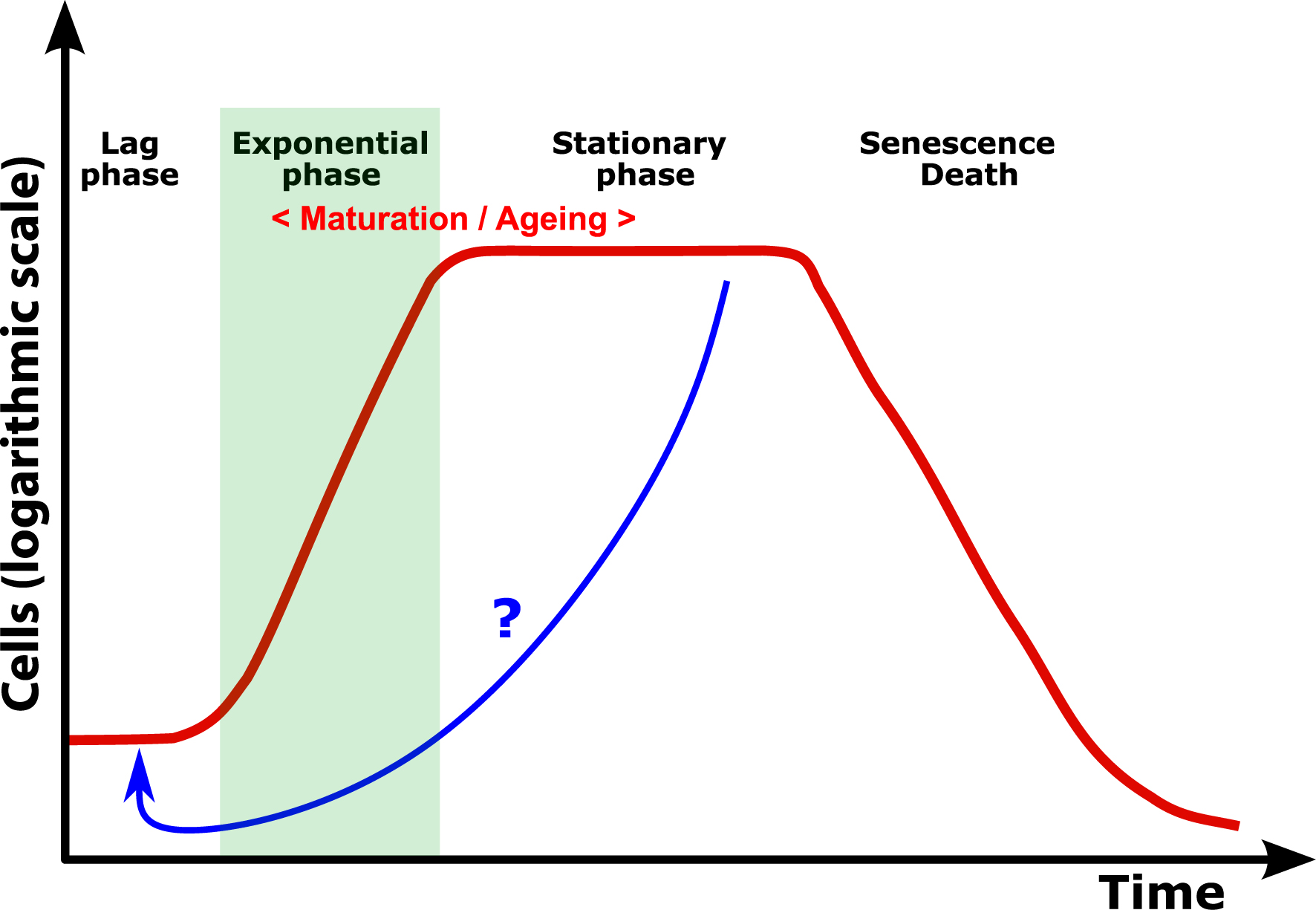
Microbial models of evolution have primarily focused on growth in liquid culture, which is easy to set up. This is also when the number of descendants is highest, making it suitable for robust statistical analyses (Dworkin and Harwood, 2022). In this context, long-term evolutionary experiments use either growth in a chemostat (Marlière et al., 2011), or the daily dilution of cells into fresh medium, allowing them to grow again (Papadopoulos et al., 1999). These approaches are typically anthropocentric, as they are designed to facilitate work in the laboratory. While they do not allow for a realistic exploration of the phenomenon of bacterial evolution, they have nevertheless brought to light the important role of an often-neglected parameter: ageing. It should be noted here that, just as with the term “senescence”, this is a “prospective” concept, in John Myhill’s sense, inevitably sparking much debate (Myhill, 1952). We therefore use these terms while retaining the imprecision of their commonsense meanings. In liquid culture, the bacterial population creates a competitive situation among individuals that allows for the rapid emergence of mutants capable of gaining a growth advantage over other members of the population when it enters the stationary phase, the predominant phase of its life cycle. This phenomenon of “growth advantage in the stationary phase” (GASP) has, for example, highlighted the key role of an RNA polymerase subunit, RpoS, whose involvement we discuss later (Zinser and Kolter, 1999; Abram et al., 2021).
Other studies, designed to explain the observations made by Cairns and his colleagues using Petri dishes, have sought to understand the mutations that arise during the stationary phase on solid media. These experiments are based on the premise that ageing, rather than being recognised as a necessary component of life with its own distinct characteristics, is merely one of the many “stresses” that the cell must contend with, thereby acting as a stimulator of the background level of mutagenesis (Lansch-Justen et al., 2024). As was very common at the time, the observed mutations were therefore interpreted as the result of a partial loss of activity in the DNA mismatch repair system and/or the DNA recombination process (Taddei et al., 1997; Bjedov et al., 2003).
4. An “intelligent” E. coli to explore the origin of adaptive mutations
During the stationary phase, the organism ages while restoring, to the best of its ability, what is no longer functional in order to survive. The consequences of the mutations that occur at that time become apparent during evolution as soon as the organism finds a way to generate progeny. This is not merely a theoretical view: preserving dormant bacteria on solid media or in “deep agar” often reveals, when used to restart a new culture, unexpected variants carrying mutations (Faure et al., 2004; Nahku et al., 2011). This fact is, unfortunately, little known despite the many difficulties that arise when comparing the work of laboratories that claim to use the same strain (Soupene et al., 2003). Highlighting the importance of understanding what happens during survival, this is another significant—yet neglected—reason that casts doubt on the reproducibility of many biological experiments (Cobey et al., 2024).
In the mid-1980s, our laboratory launched an investigation designed to test these observations experimentally. To this aim, we used a strain of E. coli with impaired catabolic repression, a research topic familiar to Jacques Monod’s laboratory and to Agnès Ullmann, with whom we were collaborating. These bacteria carried a mutation that eliminated the cya gene encoding adenylate cyclase, rendering them incapable of utilising a wide range of carbon sources. We then let a few hundred individual bacteria grow on Petri dishes. These plates contained a rich medium that allowed them to grow as small colonies until they had used up all the carbon sources they could find. When the medium was supplemented with maltose, could these bacteria generate progeny? The prevailing wisdom holds that only pre-existing mutations would allow new functions to emerge. This should, therefore, not be possible, but the experiment was worth trying. The medium, designed to be selective for enterobacteria, also contained a dye meant to indicate acid production (MacConkey medium (MacConkey, 1905)) and was supplemented with maltose. These plates, incubated at 37 °C for 24 h, were then left for several days at laboratory temperature (18–22 °C). As expected, small white colonies were initially observed, which eventually stopped growing.
We could have considered the matter closed and discarded the plates. However, waiting a little while was not difficult, and our patience was rewarded: a few days later, red papillae appeared on their surface, the exact counterpart to what Neisser and Massini had described (Figure 2). Since this experiment was highly reproducible and could be completed in less than a month, it served as the basis for one of the General Microbiology teaching courses organised by Agnès Ullmann at the Pasteur Institute (Ullmann et al., 1986). Only one genetic conclusion could be drawn from these early experiments: contrary to the widespread hypothesis that recombination was involved in explaining the phenomenon of adaptive mutations, we showed that inactivation of the recA gene merely slowed growth, without preventing the appearance of the papillae (Danchin, 2007). However, since, at the time, we were unable to determine whether the papillae carried meaningful mutations, this work was not further developed.
Growing papillae on MacConkey agar plates in the presence of maltose. The small colonies of the strain unable to produce cAMP are occasionally invaded by adaptive mutants that can utilise this sugar.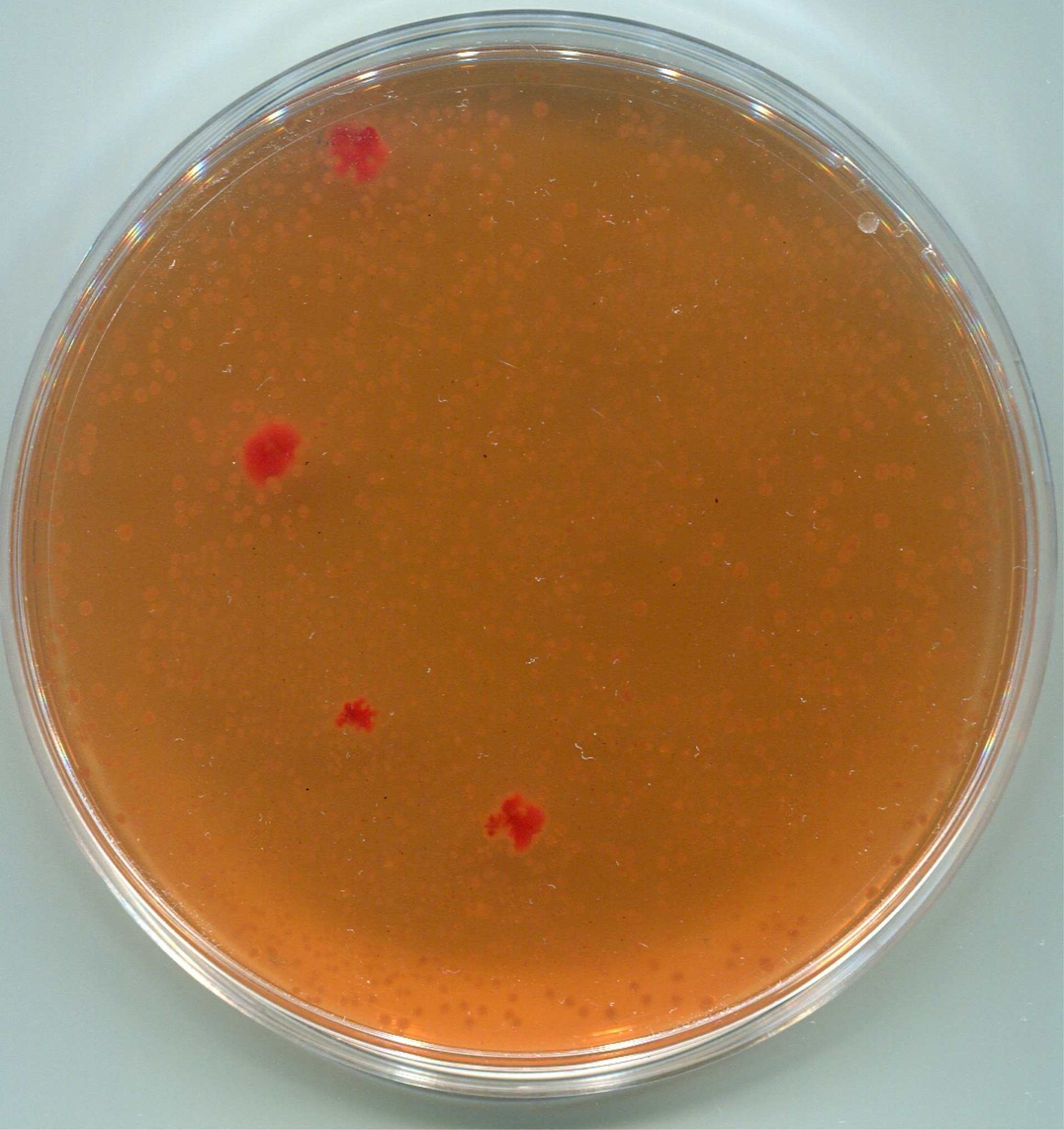
More than twenty-five years after these initial experiments, we developped a model based on the archetypal E. coli K12 strain (strain MG1655), whose genome was first sequenced, in order to identify the mechanisms that shape evolution when progeny generation occurs during the survival phase (Blattner et al., 1997). To serve as a reference, the genome sequence of the cya mutant, AMB1655, was determined. We also established that this strain does not produce more rifampicin-resistant mutants (an antibiotic that inhibits transcription) than its parent strain MG1655 (Sekowska et al., 2016). Its distinctive feature is that it cannot grow on many sugars because the transcription of the genes involved in their catabolism requires the presence of cyclic AMP (cAMP), a mediator of gene expression for several hundred genes in E. coli (Kolb et al., 1993), whereas the cya gene encoding adenylate cyclase had been deleted in the strain. This allowed us to explore what happens when cells are left to survive in a rich medium, where they initially find enough to produce small colonies but stop growing once they have used up the carbon sources available to them. We then fed them with one or another of these sources known to be unusable in the absence of cAMP.
Allowing these bacteria to grow and enter the stationary phase, we aimed at sequencing the genomes of the expected mutants. The colonies formed after 24 h remained unchanged, but after three to five days, red papillae began to appear on the surface of some of them—at a rate of about one papilla per hundred white colonies. These papillae kept growing until they covered the entire plate. In an atmosphere where humidity and temperature are kept constant, this pattern repeats itself, and new papillae appear for at least two months (Sekowska et al., 2016). Purified by successive passage and isolation of red colonies on plates containing the same medium, these papillae exhibit the characteristic properties of the mutations observed in the Neisser and Massini experiment. Physiological analysis of mutants derived from independent colonies that emerged throughout the experiment allowed for the description of the kinetics of their emergence, their behaviour in response to different carbon sources, and their phenotype on various indicator media. When spread on a medium with a different colour from that of the MacConkey medium (typically EMB rich medium, containing eosin and methylene blue (Leininger et al., 2001)) or on media containing carbon sources other than maltose, it was observed that their phenotypes were very diverse, suggesting that their mutations were far from all identical.
5. The contribution of genomics: adaptive mutations are not randomly distributed across the chromosome
The genomic revolution has transformed our understanding by enabling us to compare individuals within a population through the base-by-base identification of their genome sequences. In collaboration with Morten Nørholm’s laboratory in Copenhagen, we extracted and sequenced DNA from the genomes of 96 papillae retained for their distinct phenotypes. The differences between their genome sequences and that of the parental strain were characterised (Sekowska et al., 2016). Almost all mutants carry one or more mutations in the crp gene, which encodes the cyclic AMP receptor, CRP, and these mutations tend to accumulate over time, revealing an adaptive process discussed further below (Frendorf et al., 2019; Lauritsen et al., 2021). To broaden the evolutionary landscape of this protein, we also sequenced the crp gene separately from 594 independent papillae (Frendorf et al., 2019). When the mutants emerge at the beginning of the experiment, there is generally only a single mutation in the gene. Over time, other mutations also arise in the same gene. However, since we lacked the resources to analyse in detail the specific effects of each of these mutations, we can assume that a number of them are neutral (ibid.).
In addition to these mutations, we identified 145 mutations and 15 deletions or insertions of mobile sequences in regions known to be unstable (ychE, icd, intR in the Rac prophage region (Foster et al., 2015; Ramisetty and Sudhakari, 2019; Wons et al., 2025)). These mutations form a series of hot spots, while the bulk of the genome remains unaffected. Isolated from independent papillae, they often affect the same gene at different positions, highlighting the functional link between the gene and the mutant’s ability to grow. Moreover, these mutations are almost all located within the coding sequence of the genes, much more frequently than one might have expected given the significant proportion of non-coding regions in the genome. All of this demonstrates that the observed phenomenon is specific to certain genes and does not increase overall mutagenicity.
6. Mutations in the stationary phase form coherent metabolic classes
Analysis of these mutations shows that the affected functional classes allow the mutants to be pre-adapted to resume growth in the environment they face, revealing concerted metabolic activities (Table 1).
Mutated genes with known functions
| Process | Role | Genes |
|---|---|---|
| Carbon metabolism | Maltose regulon | malT malP malG |
| Arabinose regulon | araC setD(ydeA) | |
| Lactose operon | lacI lacZ lacP | |
| Catabolite repression | mlc(dgsA) | |
| Growth homeostasis | CTP synthesis | pyrG cmk udk |
| Degradosome | pnpA rhlE | |
| Methylglyoxal homeostasis | Methylglyoxal synthesis | mgsA |
| Potassium homeostasis | khtL(ybaL) kdpAB kefA(mscK) proP | |
| Translation | Modulation of translation | rsmG proQ |
| Transcription | Start and elongation | rpoC rpoD rpoS |
| Regulation of transcription start | crl rseB | |
| Replication | DNA repair | xseA |
The genes identified in the experiment are grouped into well-defined processes. Their functions show that the mutations are systematically linked to a role in the cell that enables it to adapt upon exiting the stationary phase, particularly through the ability these mutations confer to grow on carbon sources that are unusable by the parental strain. Details of the processes of interest is presented in Figures 3 and 4.
De novo synthesis of CTP does not involve CDP, even though CDP is necessary for DNA synthesis.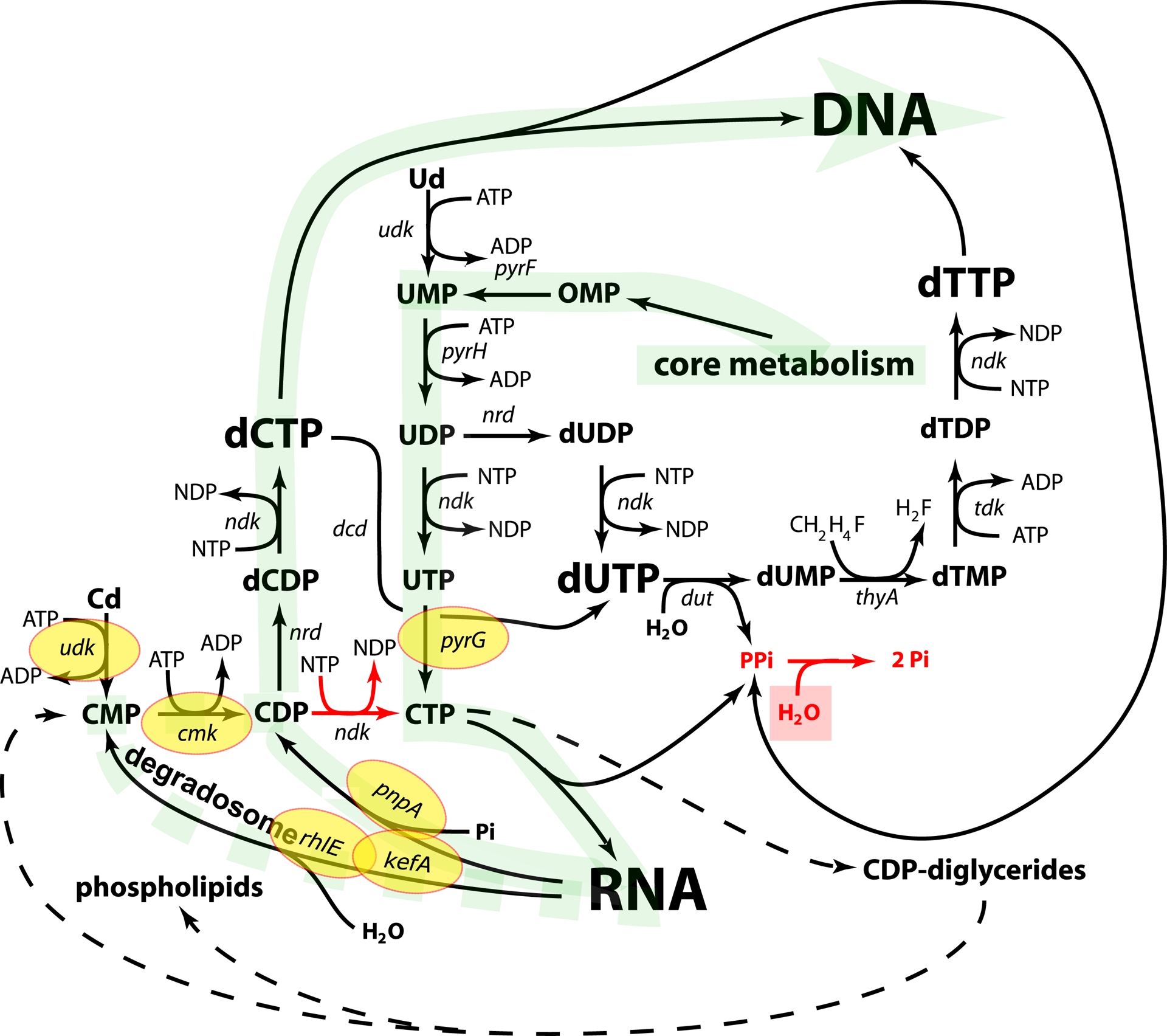
Glycolysis bypass during the stationary phase. The glycolysis by-pass involving MGO is highlighted by a green band. We observe the two key steps of this pathway among our mutations (light orange ovals), starting with methylglyoxal synthase and ending with the D-lactate precursor, which stimulates cytoplasmic acidification by modulating potassium transport. The step immediately downstream of MGO is likely spontaneous and does not require a specific enzyme (thus ruling out the emergence of mutations).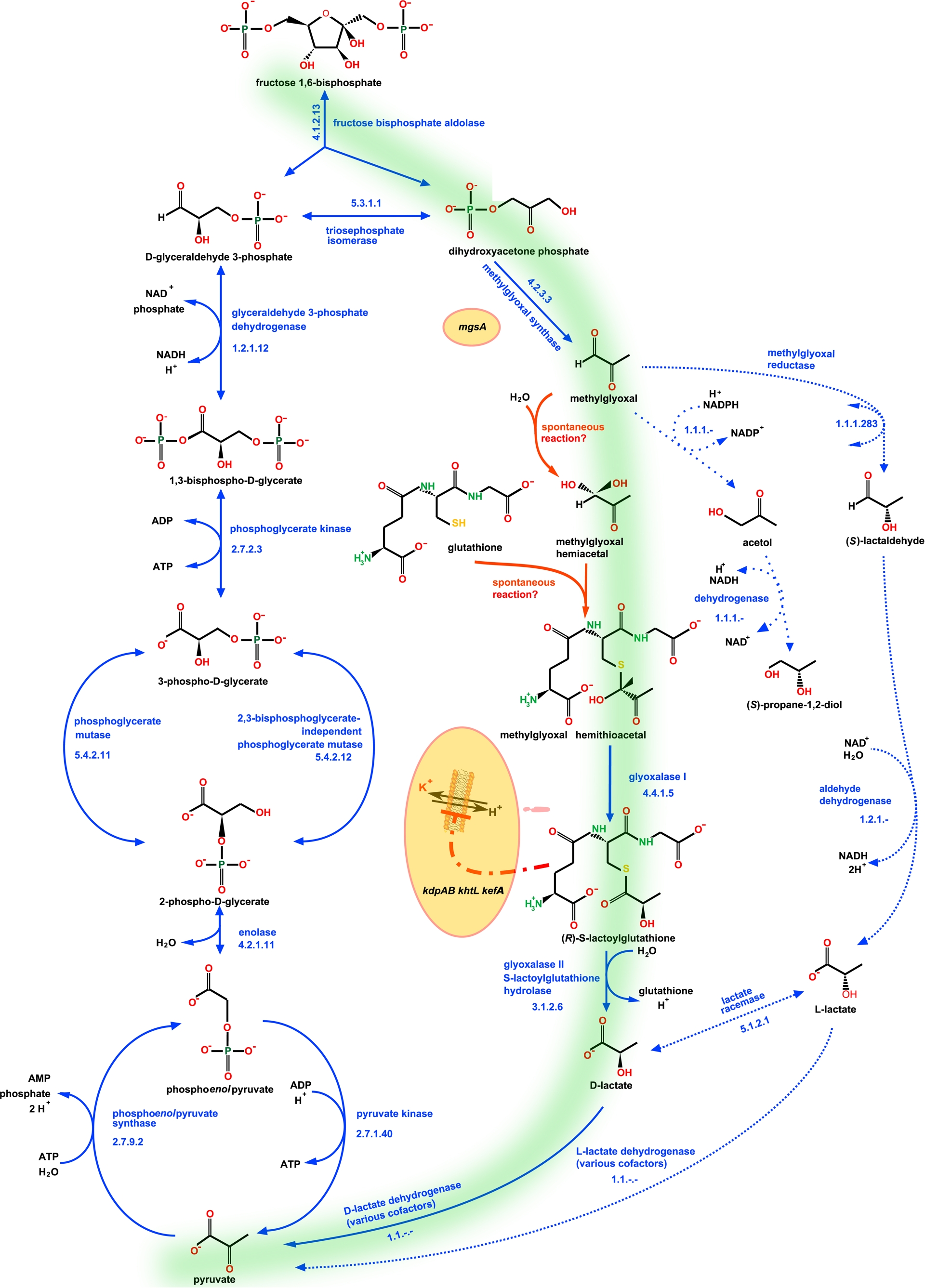
Identifying the cause of this coordination is essential for understanding the origin of these mutations and why they possess their adaptive character. To establish the extent of this coherence, we first analysed their functions.
6.1. Cyclic AMP-sensitive catabolism of carbon sources
The dominant function of the mutants is a direct consequence of the genetic make-up of the AMB1655 strain, which involves catabolic repression. This can be explained as follows: in a strain deficient in adenylate cyclase, some changes in the cyclic AMP receptor can restore growth. This is because it behaves as an allosteric regulator, switching between an inactive form and an active form stabilised by cAMP (Harman, 2001). Insensitive to cAMP, certain mutants, known as CRP*, lock it into a permanent activator of the expression of catabolic operons (Garges and Adhya, 1985). These mutated receptors are generally able to activate simultaneously several operons (Youn and Carranza, 2023). What about other mutations in the catabolism of sugars that cannot be utilised by the parental strain? Several sugars are included in our list, in particular lactose (mutations in the repressor and promoter of the lactose operon, or in beta-galactosidase) and arabinose (regulation of transcription or transport of this sugar). These mutations are unexpected in that these sugars were not used in the experimental setup in which the papillae appeared. Perhaps more easily accounted for (since this sugar is present in the selective medium), a greater number of mutations involving maltose are observed. Some are found in the MalT regulator, which activates the transcription of several operons in the maltose regulon. Here again, a mutation appears in a promoter region—controlled by MalT—that of the malPQ operon, which enables the breakdown of maltodextrins. Finally, a mutation in a gene encoding a subunit of a maltose transporter allows this sugar to enter the cell. Linking these mutations to the crp* mutations, the location of the CRP activator binding site in the promoter region of these genes is important for the recognition of transcription initiation factors (sigma factors), whose role we discuss below. Finally, a mutation is observed in the repressor of the MalT activator DgsA, which also controls the expression and activity of glucose transport—whose metabolism is insensitive to CRP—and its amino acid derivatives (and consequently interferes with the glucose-associated effects of catabolic repression (Lengeler, 2015)). In conjunction with the functional class described in the following paragraph, it should also be noted that this regulator is involved in growth control—hence its alternate name, Mlc, for “Make Large Cells”—through a trade-off between glucose transport and cAMP-modulated catabolic repression (Plumbridge, 1998).
6.2. Synthesis of CTP, a metabolic integrator of cell growth
During the stationary phase, a portion of the population dies through a process resembling apoptosis (Jung et al., 2015). Allowing bacteria to have progeny requires that this process be regulated in a way that promotes the resumption of growth. A subunit of exonuclease VII, XseA, which is important for the correction of DNA mismatches, controls cell death. Its expression is repressed by the CRP-cAMP complex, which simultaneously activates the guaBA operon transcribed in the opposite direction and responsible for the synthesis of guanine monophosphate, an essential precursor for de novo nucleic acid synthesis (Hutchings and Drabble, 2000). In a mutant expressing CRP*, it is therefore conceivable that the role of XseA must be regulated to facilitate a return to growth. This could explain the presence of an xseA gene mutant in our collection.
The coordination of metabolism that enables cells to grow is illustrated by the discovery of a metabolic control mechanism recently proposed to explain the non-homothetic nature of the growth of cellular compartments (Danchin, 2021). Discovered in the course of the analysis of the evolution of the SARS-CoV-2 virus, this novel control mechanism identified the nucleotide cytidine triphosphate (CTP) as the pivotal metabolite required to coordinate the synthesis of critical metabolites in the cytoplasm (a three-dimensional space), in membranes (two-dimensional), and in genomic DNA (linear). This role results from the fact that the precursors for DNA synthesis are not nucleoside triphosphates, but diphosphates. This places cytosine metabolites at a decisive point in metabolism because the de novo synthesis of CTP by the PyrG synthetase does not use CDP—it uses UTP and glutamine—precluding straightforward synthesis of the deoxyribonucleotide dCDP. This would necessitate the concerted action of catabolic genes to produce the required CDP (Ou et al., 2020). Here, the mandatory use of this diphosphate is strikingly reflected by the presence of mutations affecting not only the anabolic pathway (the pyrG gene), but all pathways for the salvage of cytosine derivatives leading to the bottleneck represented by CDP generation. Highlighting the importance of this pathway, we isolated several mutants of the cmk gene, which encodes cytidylate kinase CMK (Figure 3).
De novo synthesis of nucleoside triphosphates requires that diphosphate precursors are phosphorylated. Ribonucleoside diphosphates are necessary intermediates for the formation of deoxyribonucleosides for DNA synthesis. However, de novo synthesis of CTP does not produce CDP, the corresponding ribonucleoside diphosphate. Since nucleoside triphosphates are in large excess relative to their diphosphate counterparts, the metabolic origin of CDP requires the recycling of cytosine derivatives, particularly via RNA degradation, either by phosphorolysis (pnpA) or by hydrolysis (ribonucleases). Interpreting these mutations (in a yellow oval) as concerted is reflected by the grouping of the relevant enzymatic reactions, even though their genes are not clustered on the chromosome.
6.3. A paradoxical glycolysis bypass
When they are not multiplying, bacteria repair their aged essential compounds or break them down and then re-synthesise them. To produce energy and ensure general maintenance in the presence of molecular oxygen, they respire instead of building biomass. Glycolysis then adapts to enable ATP synthesis through respiration by maintaining a sufficient proton gradient across the cell membrane, while preventing the accumulation of toxic phosphorylated derivatives that result from its slowing down. This is made possible by the glycolysis bypass that produces methylglyoxal (MGO) from dihydroxyacetone phosphate (DHAP) (Dickmanns et al., 2018). In the stationary phase, inorganic phosphate becomes a limiting factor. When its concentration is low, glyceraldehyde-3-phosphate dehydrogenase slows down, causing an accumulation of DHAP, which interrupts glycolysis and thus the production of pyruvate, essential for energy generation through respiration. DHAP and phosphorylated MGO hydrolyse spontaneously, but too slowly to prevent the negative effects of DHAP accumulation. In many organisms (such as E. coli, B. subtilis, or man), this has led to the emergence and stabilisation of the synthesis of a specific enzyme, methylglyoxal synthase (MgsA), which produces MGO and phosphate. The activity of this enzyme is allosterically regulated by phosphate, maintaining its intracellular concentration at an optimal level (Saadat and Harrison, 1999).
MGO is a toxic metabolite: it is a highly reactive dicarbonyl that damages proteins, nucleic acids, and numerous metabolites. The cell must therefore find a way to counteract its toxicity. This is all the more necessary in the case of our experiments, since crp* mutations have long been known to overproduce this metabolite (Botsford, 1981; Melton et al., 1981). As shown in Figure 4, several processes address this issue: (1) the use of oxidoreductases that convert MGO into (S)-lactaldehyde; (2) degradation; and finally, (3) a change in the reactivity of this electrophile, which loses its reactivity in an acidic environment. Pathway 1 exists but merely shifts the problem due to the intrinsic reactivity of aldehydes, which is not very different from that of MGO. The pathway must therefore be supplemented by an aldehyde dehydrogenase. Pathway 2 is widespread in aerobic organisms. It exploits MGO’s affinity for nucleophiles—in this case, sulfhydryl groups—to make it react with glutathione (or its analogs, such as bacillithiol in Bacillaceae or mycothiol in Mycobacteria). The thiol group of these metabolites protects the cell against many toxic compounds, particularly reactive oxygen species. With MGO, glutathione forms a hemithioacetal converted by a glyoxalase into (S)-lactoylglutathione, which is then hydrolysed into D-lactate (Iacometti et al., 2022). Finally, pathway 3 mobilises proton transport into the cell. Many transport systems import protons, but a preferred pathway for MGO detoxification uses the inverse transport of potassium and protons as a means. This is illustrated, for example, in Yersinia enterocolitica, where the relatively acidic intracellular environment mitigates the toxicity of MGO (Bengoechea and Skurnik, 2000).
In our experiments, the latter pathways manifest as a set of mutations forming a coherent functional unit, starting with the mgsA gene mutation. Cytoplasmic acidification involves the potassium ion (K+), which must be imported. To this end, KdpFABC, a control valve composed of four subunits, uses ATP in a gating mechanism to maintain a high intracellular potassium concentration, whereas it is generally low outside the cell. By associating, KdpA and KdpB form a tunnel through which several water molecules and a K+ ion move together into the cell when its intracellular concentration falls below a threshold, triggering ATP hydrolysis (Greie, 2011; Boel et al., 2019; Valia Madapally et al., 2026). Substantiating this function, we observed mutations in the kdpA and kdpB genes. The coupling between potassium export and proton import, meanwhile, is implicated through a mutation in the khtL (ybaL) gene, which encodes a cation/proton antiporter. This ion exchanger links pathways 2 and 3, as its homolog in B. subtilis, khtU, encodes a transporter that exports K+ in response to activation by (S)-D-lactoyl-bacillithiol, leading to cytoplasmic acidification that is both necessary and sufficient for maximum protection against MGO (Chandrangsu et al., 2014). Finally, a gene identified in our study, kefA (mcsK), directs the synthesis of a diaphragm that opens when osmotic pressure increases, but only in the presence of potassium in the cell’s periplasm (Y. Li et al., 2002). Its expression is normally repressed during the stationary phase. Furthermore, the KefA protein associates with the degradosome, which organises RNA degradation through both hydrolysis and phosphorolysis (Regonesi et al., 2006). This function is necessary for the CTP metabolism described above, which substantiates our interpretations.
The logic behind this set of functions is further established when we consider the proP mutation in the promoter of the ProP transporter gene, which maintains intracellular osmolarity through the simultaneous import of protons along with proline or glycine betaine (Ozturk et al., 2023). This coherence is supported by another mutation affecting the ProQ molecular chaperone, which stabilises the ProP messenger RNA, as well as the messenger RNA for the periplasmic protein MalM of the maltose regulon, whose function remains unknown to date (Stein et al., 2020). It is merely known that the efficiency of malM gene translation is highly sensitive to the presence of protons (Schumacher et al., 2023). This thus links the maltose regulon to the role of protons in MGO resistance. Finally, it is worth noting that the transcription of the previously mentioned khtL (ybaL) gene depends on DNA supercoiling, which is highly sensitive to the osmotic stress response. It is further controlled by sigma factor 38 (RpoS), linking this entire complex to the transcription function we must now consider, since here too, numerous mutations in the corresponding machinery have been isolated in our experiment.
6.4. Transcription machinery
Mutating the transcription mechanism is the most direct way for a cell to optimise its metabolism in response to environmental changes. A general involvement of this process is obvious, considering the mutations in RNA polymerase and factors that control the initiation of its activity (Cohen and Hershberg, 2022). Escherichia coli RNA polymerase consists of several subunits: two α subunits (RpoA), one β subunit (RpoB), and one β′ subunit (RpoC). Mutants of these subunits were present in our experiments. To enable it to recognise a promoter and initiate transcription, RNA polymerase uses an additional subunit, a sigma factor of which there are several types. The most important of these, sigma 70 (RpoD), is the factor that directs the enzyme towards the transcription of housekeeping genes. Mutants of this proteins are also found among our mutants. However, the RpoS factor (sigma 38), which is specific to the stationary phase (K. Schwartz et al., 2025), best characterises our mutations associated with the transcription process.
RpoS regulates the transcription of most genes involved in the cell’s management of physiological or metabolic transitions, as well as its entry into the stationary phase (Hengge, 2011). The mutations observed in our study often lead to its inactivation, but not always. This may be related to the fact that its expression is repressed by CRP in the presence of cAMP during growth phase transitions (Guo et al., 2015). Furthermore, the corresponding gene, rpoS, is known for its instability, as it is inactive or has been lost in many laboratory strains (Spira et al., 2011). Finally, the inactivation of RpoS in ageing colonies confers a selective advantage for survival by allowing the accumulation of acetate during the stationary phase (Bergman et al., 2014). These features are reflected here by the increase over time in the number of mutations within the rpoS gene, appearing more frequently in late papillae (Sekowska et al., 2016). Responding to many types of transitions, RpoS is a fragile protein that is easily degraded by proteolysis. An adaptor, RssB, transports it to the discriminating protease ClpXP. In stressful conditions, the degradation of RpoS is suspended due to the sequestration of RssB by anti-adaptors, each of which is induced in response to a specific stress (Brugger et al., 2023). Apart from RpoS itself, we have not identified any mutants of these factors, but it goes without saying that, despite the scope of the experiment, we have explored only a fraction of the evolutionary landscape. As a case in point, we identified a mutant of the Crl factor, which specifically binds to the complex between RNA polymerase and RpoS and stabilises it, thereby playing an essential role in restoring the RpoS basal level (Bougdour et al., 2004).
Sigma E (RpoE), a factor specific to the expression of genes involved in cell envelope metabolism, undergoes a fate similar to that of RpoS. In this case, the anti-sigma factor RseA is sequentially cleaved by the proteases DegS, RseP, and cytoplasmic proteases to release sigma E in response to a dysfunction in outer membrane biogenesis (Konovalova et al., 2018). This proteolysis is regulated because the direct interaction between RseA and another factor, RseB, inhibits the cleavage of RseA by DegS (Chaba et al., 2011). The proteolytic activation of DegS and the disruption of the binding of RseB—a factor for which we have isolated a mutation—are therefore both necessary to trigger the extracellular stress response via sigma E. At this current qualitative and descriptive stage, we can observe that it is genes preferentially expressed in the stationary phase that are the target of specific mutations.
7. Transcription is locally mutagenic
The explanations proposed for the adaptive mutagenesis of beta-galactosidase reported by Cairns and colleagues have sparked a long-standing controversy (Cairns et al., 1988; Brisson, 2003). Apart from fanciful interpretations or those invoking the mundane and purely phenomenological role of mechanisms associated with DNA replication, several studies have proposed that they originate from the transcription process via a mechanism known as “retromutagenesis”, the molecular explanation of which has evolved over time (Holmquist, 2002; Callegari, 2016). Initially, the proposed hypothesis remained dependent on the traditional direct involvement of DNA, assuming that, during the transcription of DNA regions altered by physico-chemical agents, the messenger could bypass the lesions while triggering local replication, preventing repair and thereby fixing local alterations in the genome. Since this would correspond to regions transcribed in response to environmental changes, the result would be adaptive (Doetsch et al., 1999). Later, at the very time we were reporting on what we are discussing here, the authors of this hypothesis used the directed reversion of a lacZ gene mutation as a model and modified the explanation by proposing a new concept in which the molecular process of transcription played a central role. The DNA double helix covered by messenger RNA forms a “bubble” where single-stranded polynucleotides become accessible to reactive agents, thereby significantly increasing the probability of local mutagenesis (Morreall et al., 2015). Can these very limited studies be extended to cover the entire genome? Our experiments demonstrate that the targeted process of retromutagenesis can be applied to a population, where it often results in the simultaneous presence of multiple mutations in the genome or even within the same gene, always in the same strand.
This can be identified because knowing the gene sequence gives us a handle to reveal not only the exact nature of the mutation, but also—given the direction of gene transcription—which DNA strand has been mutated. The vast majority of our mutations result from two types of events: either transversions, which change G•C pairs to T•A, or transitions, in which cytosine is replaced by thymine. In the first case, they result from the oxidation of guanine to 8-oxoguanine in the presence of reactive oxygen species. In the second case, they result from the deamination of cytosines. The mutated base is primarily present in the transcribed strand within the gene’s coding sequences (84% for G transpositions and 93% for C deaminations), which establishes the role of transcription in the process. The frequency is even higher in the crp gene, since in this gene isolated from 594 independent papillae, 99% of G transpositions and C deaminations occurred in the transcribed strand (Sekowska et al., 2016; Frendorf et al., 2019; Lauritsen et al., 2021).
In our experiments, a papilla appears in a colony containing approximately one million bacteria. This represents an enriched local bias as compared to that observed in the parental strain AMB1655, which exhibits a normal spontaneous mutation rate of less than two mutations per billion bacteria (Wu and Hilliker, 2017). Given that these mutations make hot spots and are restricted to two types, they can only be the result of some well-defined molecular processes, such as the transcription of a gene into messenger RNA. By opening the DNA double helix, transcription exposes the bases protected within the helix to chemical damage. In the presence of molecular oxygen, guanine is known to be easily oxidised into a series of derivatives, such as 8-oxoguanine (Hori et al., 2011). The unwinding of DNA also exposes cytosine to an intrinsic chemical alteration: in equilibrium between several tautomeric forms, its exposure to the reactivity of water promotes its deamination to uracil (Bhagwat et al., 2016). It should be emphasised that this latter cause of mutations is independent of the presence of molecular oxygen.
Viewed in this way, transcription is inherently mutagenic, and the simultaneous presence of mutations in multiple genes implies that they are transcribed in concert. This phenomenon upends the evolutionary landscape of the species. It exposes the process of gene expression itself to an inevitable selection pressure that is quite different from that generally proposed to explain how species evolve. Evolution is supposed to result from pre-existing mutations involving directly one or more of the organism’s phenotypic traits. If the transcription-related mechanism we uncovered is general, it remains to be explained why the mutations we observe form clusters that alter functions grouped into metabolic pathways corresponding to coherent functional units.
8. Concerted, adaptive mutagenesis results from the concurrent transcription of genes involved in survival and growth
How can we explain this functional coordination? We must first assume that the genes expressed during this age when the cell just survives serve to keep the cell alive. Only a small fraction of the functions encoded by the genome are involved. Survival requires a basal metabolism in which the cell recycles everything it can. This activity is illustrated here by mutations in the MGO-dependent glycolysis bypass. If the genes of this pathway appear in our study, it is because they are transcribed. The most plausible explanation is therefore that the proteins involved, having aged, aggregate or are degraded, losing their function, which requires them to be synthesised anew. The consistency of the whole is evident in the fact that the pathway using MGO is strictly subordinate to the pathway that uses glutathione to produce D-lactate, then pyruvate (Iacometti et al., 2022). These functions are all part of the set of mutations obtained. The associated proteins must therefore change at a comparable rate, adapting their ageing process to their role in metabolic surveillance, which enables survival.
A second constraint also follows: the cells must be ready to resume growth without being subjected to the unbearable mechanical forces resulting from the differential growth of their components. Poor tuning would lead to their lysis. This requires the maintenance of the cell’s spatial homoeostasis to be anticipated when it begins to grow again. In a completely different context, we have demonstrated that the cell utilises the nucleotide CTP for this purpose, through both its de novo synthesis and the recycling of all compounds containing cytosine derivatives, particularly RNAs. Once again, we must assume that the proteins decay at a similar rate so that they can be re-synthesised in a coordinated manner, enabling cells with the relevant mutations to grow. Unfortunately, there are few studies that explicitly identify the degradation of the enzymes involved in the biosynthesis of nucleotides in this family, aside from work showing, in vitro, that they are susceptible to proteolysis (e.g. (Simard et al., 2003) for PyrG and (Ofiteru et al., 2007) for Cmk).
Does this also apply to the metabolism of carbohydrates regulated by cAMP? The ultimate reason for their use seems here quite straightforward: the very fact that the cell contains a constitutively active activator, CRP*, means that most, if not all, the operons positively regulated by CRP are activated. We must, however, explain why the crp gene is transcribed during survival. This amounts to determining whether CRP decays in a time-dependent manner or, at the very least, is an unstable protein. Most studies of this receptor concern not the protein’s lifespan, but that of its messenger RNA. An earlier study, however, shows that CRP is naturally degraded, likely quite rapidly, and that this depends on its interaction with the machinery that controls its folding, assisted by the molecular chaperone DnaKJ (Ohki et al., 1992).
There are few studies exploring the lifespan of proteins in E. coli. The most detailed study analysed the lifespan of 3200 of these proteins when the bacteria are subjected to various types of starvation. However, the experiment was conducted in a chemostat. It is therefore limited to reporting what occurs during growth in liquid medium, far removed from the conditions of survival on solid substrates (Gupta et al., 2024). A notable finding of this study was, however, that none of the proteolytic mechanisms identified to date appear to be involved in the degradation of these proteins. This shows that our knowledge of intracellular proteolysis is lacking essential elements. It is, of course, a very important experiment, which can be used to understand the selective mechanisms that have linked the function of these proteins to their more or less rapid turnover during growth. A second observation from this study is that, frequently, regulators of gene expression have a short lifespan, well suited to their regulatory function. This could also apply to the regulators identified in our own study. This work, however, does not account for the ages of life other than the growth phase, emphasising the lack of attention paid to the universal yet poorly understood mechanism of protein ageing that we are now describing.
9. Is programmed protein ageing the source of adaptive mutations?
The mutation outcome of our experiments naturally leads to the hypothesis that a cell in survival mode remains on standby, ready to resume division as soon as conditions become favourable—even though the cells are deteriorating in a time-dependent manner. What mechanism did evolution adopt to make the most of this standby period, and what are its consequences? As always, the core mechanism underlying natural selection is to make use of whatever is available and to recruit what is already present as an agent of some stabilising function (Schmalhausen, 1949), even if this necessitates refining this initially awkward capability over generations. As time goes by, the proteins that maintain the cell’s functions inevitably deteriorate. Their effectiveness gradually declines. Cells must, therefore, replace those that no longer function and synthesise them anew. This requires the expression of their genes, beginning with their transcription. If the very process of ageing can be subject to natural selection, we will have identified the primary cause triggering the general process that leads to adaptive mutagenesis.
If programmed, protein ageing could serve as a biological clock, linking survival-essential functions of a subset of key proteins—which may differ in different organisms—to the exploration of new behaviours better adapted to the environment thanks to the mutagenesis induced by their re-synthesis. What do we know about the fundamental mechanisms of protein ageing? Due to passing fads and the irrepressible quest for youth, simplistic ideas with lucrative implications dominate the scene, far removed from scientific rationality that tells us that the human life span is considerably constrained by our genome (Shenhar et al., 2026). As illustrated by the plethora of advertisements for fanciful remedies, one cause of cellular alterations results from chemical reactions due to short-lived reactive compounds (for example, the famous “reactive oxygen species”, consequences of oxidative stress) or from metabolic or even physical accidents, because matter is subjected to various types of radiation. However, while these alterations are ubiquitous, their sites of action and intensity vary considerably. Since they arise from accidents—by definition random—it is challenging to incorporate them into a universal law of evolution. For this reason, they mask an underlying intrinsic phenomenon that, in turn, marks the passage of time, but now in a constant and inevitable manner. Proteins are particularly affected, but their individual lifespan remains difficult to predict, if only because they rarely exist in isolation, as they play a major role in multi-protein complexes, which often also include nucleic acids (McShane et al., 2016; Sagawa et al., 2024).
In fact, one cause—long recognised but largely ignored—must be the primary factor: in water, all proteins change spontaneously, each with its own intrinsic decay time (half-life), acting as genuine biological clocks (N. E. Robinson and A. B. Robinson, 2004). This constraint comes into play as early as the translation step, even before the protein can interact with other cellular components. This is because the polypeptide chain is naturally unstable due to the presence of mainly two amino acids, asparagine and aspartate (though not exclusively these). Depending on the structural context (sequence and spatial structure), L-aspartate- and especially L-asparagine-containing motifs form an L-succinimide intermediate through dehydration (or deamidation in the case of asparagine). This intermediate rehydrates and tends to isomerise into L-isoaspartate. The chronological evolution of the polypeptide thus modified can even subsequently lead to a change in chirality, with L-aspartate becoming D-aspartate (Figure 5). All of this distorts the backbone of the protein’s peptide bonds, altering or destroying its function (A. B. Robinson et al., 1970; Aswad et al., 2000). This process, depending on physico-chemical conditions (temperature and water activity in particular), has a characteristic lifetime for each protein, ranging from a few minutes to several decades or even centuries (McKerrow, 1979). If this process is subject to natural selection, it could then serve all sorts of functions that have so far gone completely unnoticed.
Spontaneous cyclisation and fate of aspartate and asparagine residues in polypeptides. Isoaspartate residues can be methylated, and the methyl group is then hydrolysed, which can result in the formation of an aspartate residue, but only at a low rate.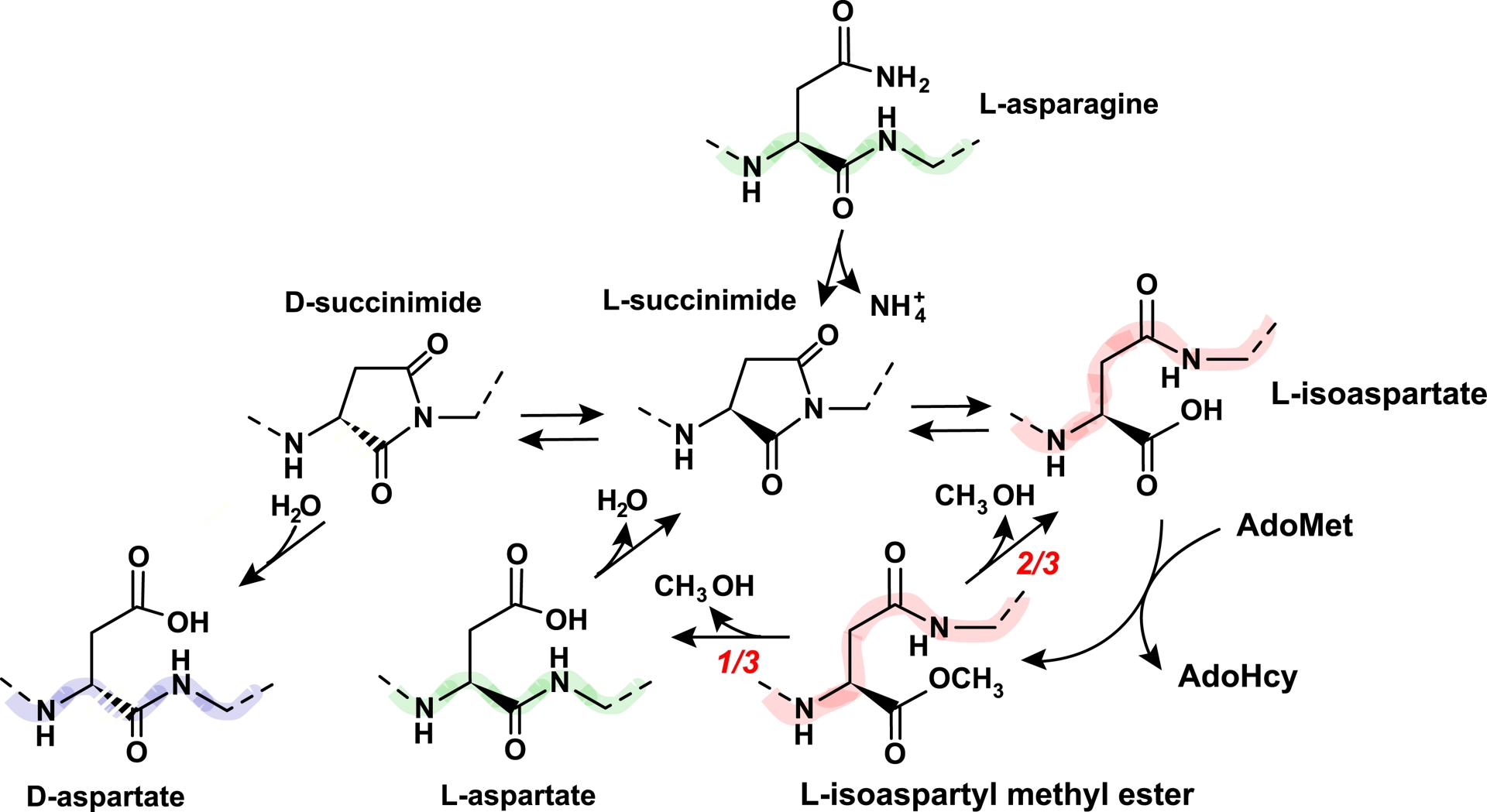
Very often, but not always, this isomerisation is followed by the repair of L-isoaspartate residues, catalysed by a methyltransferase that uses S-adenosylmethionine (AdoMet) and restores an L-aspartate residue. If the starting point is an L-aspartate residue in the native chain, the polypeptide returns to its initial state. However, the repair process replaces L-asparagine residues with L-aspartate residues, which alters many of the protein’s properties, particularly its electrical charge. Furthermore, this process is imperfect and metabolically very costly, as it requires three ATP molecules to produce one AdoMet, and only a fraction of the methylated L-isoaspartate yields L-aspartate, while the rest returns to the incorrect motif the rest of the time ((Lowenson and Clarke, 1991; Danchin et al., 2011) and Figure 5). In E. coli, this remediation is carried out by the L-isoaspartate(D-aspartate)-O-methyltransferase Pcm protein, known for its role in the survival of ageing bacteria (Visick et al., 1998). It goes without saying, however, that most aged proteins will not be repaired but degraded. If they are important for survival, they will then be replaced by “young” proteins through the expression of the corresponding genes, which involves a transcription step—a source of adaptive mutations.
To take this a step further and set up an initial experiment to determine the role of this repair mechanism, we needed to establish whether the proteins we had identified as mutation targets were susceptible to ageing. This was all the more important given that, in E. coli, at least two proteins evolve into a sequence containing an isoaspartate motif while remaining functional. These are the ribosomal S11 protein and the MurA protein, which is key to bacterial cell wall synthesis. The modification of the S11 protein occurs so rapidly (in the order of a few minutes) that we must assume it is a functional modification (David et al., 1999). This is also the case for UDP-N-acetylglucosamine 1-carboxyvinyltransferase MurA, which supports the first step in bacterial cell wall synthesis and for which the presence of a functional isoaspartate residue has been established (T. Zhang et al., 2020). This is therefore not a matter of ageing but of true post-translational maturation. Furthermore, it is reasonable to consider that some of these isomerisations lead to functional deamidations, particularly to adapt certain proteins for survival by modifying some of their physico-chemical properties. This could specifically affect the resilience of the transcription machinery, which must remain functional over the long term (Danchin et al., 2011).
Unfortunately, as we have seen, the details of spontaneous protein ageing have been little studied. We do know, however, that the expression of the crp gene results in a finely tuned content of the protein CRP in the cell. Its transcription is negatively regulated by the CRP-cAMP complex, which binds immediately downstream of the transcription start site, preventing the formation of the corresponding mRNA (Hanamura and Aiba, 1991). Furthermore, this transcription itself is positively regulated by this complex (Hanamura and Aiba, 1992). This results in maintaining the receptor concentration at an optimal level for the cell. Thus, if we find a way to trigger the degradation of CRP, its transcription will be immediately activated, carrying over all the consequences of adaptive mutagenesis that we have identified. With some luck, if CRP ages due to the isomerisation of certain aspartate or asparagine residues and if this ageing is subject to repair, inactivating the pcm gene in our model could therefore teach us a little more about the role of cellular ageing by accelerating the degradation and re-synthesis of CRP.
We therefore replaced the pcm gene in strain AMB1655 with its inactive counterpart from the reference collection of all inactivated E. coli genes (Keio collection (T. Baba et al., 2006)) and verified that the resulting strain does not have a mutator phenotype. In the set-up used to monitor the generation of adaptive mutations, the result of this construct is spectacular, as shown in Figure 6. After 48 h, almost all the white colonies had produced a red papilla, which corresponds to a presumably local mutation rate at least two hundred times higher than that observed with the parental strain. It also becomes very difficult to maintain the basic construct, which must be systematically re-isolated from a white colony.
Papillae observed on colonies of strain AMB1655 carrying a mutation that inactivates the pcm gene. The figure displays the outcome of two independent experiments, two days after spreading a few hundred bacteria onto MacConkey’s maltose medium. Almost all the colonies developed a red papilla.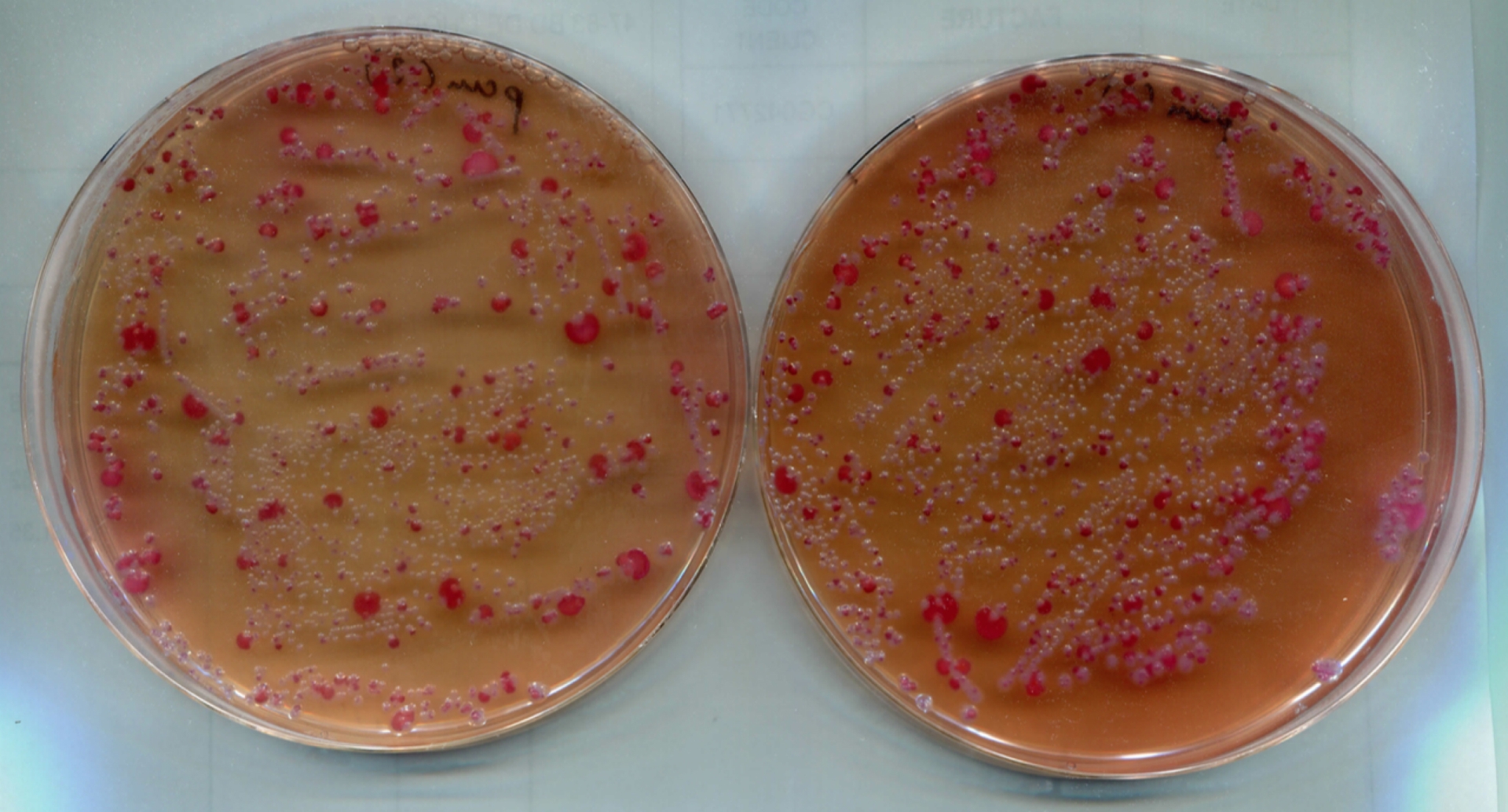
The demonstration of the role of spontaneous chemical evolution of proteins in the origin of the adaptive mutations reported has remained at a very preliminary stage so far, due to a lack of financial support. However, as this article aims to show, this work opens up a new avenue for understanding what occurs during survival, particularly with regard to its contribution to species evolution. We hope this will stimulate further research.
10. Perspectives: how evolution anticipates future events
The evolution of a population towards differentiation into several species is based on the functional triad: variation, selection, and amplification. The most widely accepted premise underpinning the theory of evolution by natural selection is that variation, which is in practice random, cannot favour any particular future direction for evolution. It is assumed to affect the genomes of the individuals making up the population at random, notwithstanding the internal constraints linked to the biochemical nature of the DNA that constitutes them. The population, facing an uncertain environment, will retain—select—a certain number of descendants who will multiply and, over time, produce a divergent tree of successive descendants whose adaptation to the environment will be the result of happy accidents. There is a discordant but ideal scenario that is rarely considered because it is easily misappropriated to justify eugenic approaches (Weindling, 2012). If the mechanisms of evolution allowed individuals to anticipate certain characteristics of the environment their progeny will face, this would go a long way towards ensuring the long-term survival of new species. But chance is blind. Taking this feature of evolution into account is, therefore, generally not considered acceptable.
We know, however, that at least one mechanism of anticipation already exists. While ubiquitous, its role remains vastly underestimated and obscured in most phylogenetic trees—largely due to the reservations just mentioned, as well as the “adamist” bias that insists on a single origin for any entity evolving by descent. This process is the acquisition of genes present in the environment through horizontal gene transfer, a major pathway of genomic innovation (Soucy et al., 2015). This is because sampling these genes—which reflect the many adaptive strategies employed by the communities present—and incorporating them into its genome enables an individual to respond effectively to conditions which, for its parents, were unattainable novelties. This certainly plays a crucial role in speciation (Médigue et al., 1991; Thomas et al., 2017; Munshi et al., 2025). Furthermore, given that the action of chance can differ according to the age of life, the emergence of adaptive mutations could provide a rational basis for a new type of anticipation.
The majority of evolutionary models limit evolution to the transmission of genetic inheritance within a population of young individuals. It is thought to result from a ratchet mechanism affecting the genome following chemical or physical damage to DNA (which is a fragile string), whether in its inactive form, during replication, or as a result of various forms of recombination. However, such damage, occurring before and during replication, is highly varied. In fact, research has long led to the understanding that, although random, the basal rate of DNA mutagenesis cannot be uniform, as it depends on the DNA sequence and its local conformation (Maki, 2002). It also depends on the biochemical processes involved. For example, replication in bacteria is semi-conservative. This creates a fundamental asymmetry between the two strands of the double helix and subjects each to a different mutagenesis mechanism (Snedeker et al., 2017). The mutation rate in a cell, of course, is also the result of the numerous processes that ensure the maintenance of the genome during replication, immediately afterwards, and long afterwards. Moreover, DNA is not an inert memory; it is transcribed far more often than it is replicated. Transcribing a gene in the same direction as replication does not have the same effect as doing so in the opposite direction. Potential conflicts between the orientations of the two processes mean that the distribution of genes within the chromosome depends on their orientation relative to the direction of replication (Gao et al., 2017). More specifically, given that the transcription of each gene has a start and an end, it is observed that the 5′ end of genes has an abnormally low mutation rate (Radrizzani et al., 2025).
Beyond this common way of viewing transcription’s contribution to evolution, the generally ignored hypothesis of retromutagenesis suggests that transcription is, by its very nature, mutagenic because the double helix unwinds to serve as a template in this initial stage of gene expression. Mutagenesis itself remains locally random (subject to constraints imposed by the physico-chemical mechanisms involved), but gene transcription is not. Only a portion of the genome is transcribed, and transcription depends on the environment and phases of growth. One might therefore expect that the most highly transcribed genes, especially those involved in the housekeeping machinery during growth, would be affected first, leading to a prevalence of mutations in the regions where they are located. However, the question of whether this transcription, which is often high, leads to an elevated mutation rate or vice versa, remains partly open. A key reason for this uncertainty is that selection pressure on highly expressed housekeeping genes could have led to restricting their sensitivity to being transcribed because of the risk of the “error catastrophe” mutagenesis (Orgel, 1963; Orgel, 1970), leaving only those genes that are less sensitive to transcription-induced mutagenesis to persist. In fact, precisely because this is an essential mechanism, we would expect there to be mechanisms that counteract the expected mutagenesis, and that these have been retained over time. These mechanisms could combine, for example, greater stability of proteins once translated (which reduces the need for transcription, since they do not have to be re-synthesised) with optimisation of the corresponding gene sequence to make it more resistant to the causes of mutations (Oman et al., 2022). The debate remains open, with experiments continuing to be interpreted as pointing in one direction or the other (Sniegowski et al., 2000; X. Chen and J. Zhang, 2013). This contradiction between families of selective pressures undoubtedly explains the many questions surrounding the role of transcription in mutagenesis. Furthermore, what has been established regarding the existence and nature of mutations in genes encoding proteins essential for cell division reflects a popular view in which ageing is perceived as the result of the accumulation of errors at all levels: replication, transcription and translation (Diggs, 2008), and not as an important or even beneficial factor in evolution. We shall not go into further detail here, though we wish to emphasise that what is new in our line of thinking is the involvement of a universal yet unexpected mechanism of variation: the intrinsic spontaneous chemical modification of proteins, the effect of which, to our knowledge, has not yet been explicitly taken into account in evolutionary models.
Rather than focusing on growing cells, we have studied what happens during the long duration of the final age of active life, when the cell is merely surviving. This means taking seriously the consequences of ageing for evolution. The role of the different ages of life is by no means insignificant, if only because metabolism and the associated processes are not the same at the start of growth, during its development, and once it has stopped. The ageing of all cellular components is inevitable, and this has significant consequences for the mechanisms of mutagenesis. As we mentioned at the beginning of this article, it took some time for it to be accepted that bacteria age and die. Whilst this was relatively easy to understand for microbes that reproduce by budding, as the number of buds is limited (Henderson and Gottschling, 2008), it was more difficult when cells divide symmetrically. The idea that bacterial division distributes ageing entities randomly was proposed to illustrate the concept of antifragility conceived by Nassim Taleb (Danchin et al., 2011) and revisited ten years later to account for the difficulties encountered in accepting that bacteria age and die. In this context, the role of proteins is central, and when cells divide, it is the fact that aged proteins concentrate at the cell poles that creates the critical asymmetry leading to cell death (Lapińska et al., 2019; Steiner, 2021). However, what is being investigated here is not ageing during growth, but—excluding spore formation—the duration of survival without multiplication (Pechter et al., 2017). Whilst proteins are indeed at the heart of the debate, could the limited lifespan of some of them be the cause of adaptive mutations? Several deeply ingrained preconceptions reflect the conceptual difficulties encountered during the many discussions on this subject.
As we have seen, two families of conditions that alter proteins, which are essential agents of growth, have dominated causal explanations for the limits on lifespan. On the one hand, gene expression, whether through replication, transcription or translation, is prone to systematic errors that result in altered protein forms. On the other hand, proteins are subject to inevitable chemical accidents. However, a specific cause linked to their polypeptide nature has been overlooked. Indeed, the idea that an intrinsic and inevitable chronological ageing of proteins contributes significantly to longevity and the generation of offspring has not been seriously considered. To date, this contribution has been explored only marginally, apart through the experiments reported here, which are, of course, very preliminary. We wished to highlight that this inevitable alteration of proteins is associated with a process rarely invoked: mutagenesis due to the physical implementation of transcription, triggered by the need to resynthesise the defective proteins. However, by its very nature, this phenomenon has a significant anticipatory component, whose contribution to the evolution of species is not implausible.
Indeed, the consequences of this inevitable time-dependent change give the transcription of the entities of interest a recursive, and therefore innovative, character (Hofstadter, 1979), inevitably linking it to their adaptation. The fact that proteins have an intrinsic lifespan directly linked to their polypeptide sequence is a remarkable property, since this half-life is certainly adjustable following mutations and is therefore a likely but unexpected target of natural selection. While this paper presents merely a conjecture based on a set of consistent observations, it would be interesting to construct an abstract model to test the plausibility of the adjustment, through natural selection, of the half-life of crucial proteins to the reproductive lifespan of a model species. For example, we should examine whether (and how) agents that collaborate to perform the same function tend to have similar lifespans and be re-synthesised at the same rate, even though they were initially subjected to purely random evolution. This could precede or occur in parallel with the emergence of mechanisms to regulate their co-expression (this is one of the roles of operon regulation, for example). This type of evolution is illustrated in our study by the presence of mutants revealing the concerted evolution of several crucial metabolic functions. And, as proteins can evolve by adapting their lifespan to a specific function, this could allow natural selection to gradually adjust it to suit the different ages of life. Living a long life has selective significance only if it goes hand in hand with the possibility that ageing individuals are able to produce, or at least help to produce, viable offspring, and this explains the metabolic pathways identified in our experiment.
Here, the march towards death is not merely an inevitable fate for individuals. In certain contexts, it is also the means by which numerous variants are produced, limited to specific pathways that allow them to anticipate the emergence of unpredictable environmental traits. This underestimated, or even ignored, aspect of the temporal information carried by proteins should be at the centre of a new interpretation of the theory of natural selection. An important consequence of this approach is that, although it recognises, in principle, the positive role of ageing, this does not mean that the proteins involved in this process must necessarily perform identical metabolic functions in different organisms. The only thing that matters is that a family of important proteins contributes to evolution through their lifespan. If our conjecture is correct, this would explain why the precise mechanisms of aging vary from one organism to another, which makes the study of this process particularly difficult, yet fascinating.
Finally, those exploring the applications of synthetic biology will have noted that variations in our proposed experimental model could be employed to reveal unknown metabolic pathways. By using synthetic constructs, these pathways could be directed towards new functions. For example, artificial compounds could be added to the growth medium. Furthermore, the deliberate and selective modification of the lifespan of a carefully chosen protein could facilitate the identification of new families of adaptive mutations, providing insights into the functional cycles present within cells in both natural and synthetic organisms.
Acknowledgments
We dedicate this work to the memory of Agnès Ullmann, whose scientific contributions to the early stages of molecular biology are often underestimated, for her unwavering support of new ideas and the associated experiments. AD designed the experimental protocol presented here and conducted the experiment that served as the basis for the general microbiology course at the Pasteur Institute led by Agnès Ullmann, as mentioned in the text. He drafted the first version of the manuscript. AS, while serving as director of the laboratory at Stellate Therapeutics (aka AMAbiotics SAS), now defunct, constructed strain AMB1655 and its derivatives, and then designed the experimental conditions necessary to carry out, over time, the experiments for the isolation and characterisation of adaptive mutants, which were subsequently developed in collaboration with Morten Nørholm and his colleagues in Copenhagen. Experiments demonstrating an unexpected effect of isoaspartate residue repair on the generation of adaptive mutations were developed from 2011 to 2018 and presented and discussed at several conferences held at the University of Hong Kong and BGI in Shenzhen. AD and AS approved the final version of the manuscript. No funding was received for the production of this review article.
Declaration of interests
The authors do not work for, advise, own shares in, or receive funds from any organization that could benefit from this article, and have declared no affiliations other than their research organization.