





 CC-BY 4.0
1. Introduction
Dendrimers represent a unique class of synthetic polymers with precisely defined structures, characterized by high branching, monodispersity, and well-controlled surface functionalization. Owing to these structural features, dendrimers occupy an important position among modern functional polymers and find applications across a wide range of contemporary, highly relevant scientific fields [1, 2, 3, 4, 5].
An important characteristic of dendrimers is the ability to modify their periphery, allowing the introduction of various functional groups without compromising the integrity of the dendrimer structure. This approach is particularly advantageous for the development of fluorescent dendrimers, where the peripheral attachment of photoactive chromophores combines the benefits of the dendrimer matrix with the optical properties of low-molecular-weight fluorophores, with applications in sensing, catalysis, optics, and materials science [6, 7, 8, 9, 10]. Fluorescent dendrimers are of interest both from a fundamental perspective, for investigating structure–property relationships, and for their potential to develop new functional materials. Compared to low-molecular-weight fluorophores, dendrimer-based systems often exhibit enhanced stability, multivalency, and improved control over the spatial distribution of photoactive centers. These features make them promising platforms for the rational design of photoactive macromolecular systems [11, 12, 13]. In addition, fluorescent dendrimers are employed as contrast agents in fluorescence microscopy and other bioimaging techniques, facilitating the diagnosis of various diseases [14, 15].
Fluorescent dendrimers can be designed to act as carriers of therapeutic agents while enabling monitoring of their distribution [16, 17, 18, 19]. Furthermore, by conjugating specific fluorophores and recognition units to dendrimers, fluorescent sensors can be designed to monitor changes in environmental and biological systems, including pH, ionic strength, temperature, the presence of metal ions, biomolecules, or toxins. In these cases, the role of dendrimers is to provide a stable platform and a unique microenvironment that enhances sensor performance [20, 21, 22, 23, 24, 25].
Fluorophores can be incorporated into dendrimer structures through covalent attachment to peripheral functional groups or by encapsulation, where the fluorophores are located within internal cavities or the dendrimer core. Alternatively, fluorophores may be integrated as structural elements within the dendrimer core or branching units [26, 27]. Peripheral covalent attachment ensures high stability of the resulting systems and prevents undesired aggregation or migration of the fluorophores. In such systems, dendrimers contain a large number of closely spaced chromophores that may act independently or interact with each other. This phenomenon is commonly referred to as the “dendrimer effect”, which has been extensively discussed in the literature [28, 29].
Among the wide variety of organic fluorophores, 1,8-naphthalimides (NI) have emerged as a particularly useful class of fluorophores, owing to their high fluorescence quantum yields, excellent photostability, and the possibility for facile functionalization at the C-4 position and the imide nitrogen atom, which facilitates their covalent attachment to dendrimers [30, 31]. The polarization of the 1,8-naphthalimide molecule arises from donor–acceptor interactions between the electron-accepting carbonyl groups of the imide moiety and substituents at the C-4 position of the naphthalene ring [32]. Amino substituents (–NH2, –NHR, –NR2) and alkoxy substituents (–OR) act as effective electron donors, giving rise to internal charge transfer (ICT) processes. Because nitrogen is less electronegative than oxygen, its lone electron pair is more efficiently delocalized toward the 1,8-naphthalimide acceptor compared to alkoxy substituents. In solution, 4-alkoxy-substituted 1,8-naphthalimides typically absorb in the ultraviolet spectral region and emit violet–blue fluorescence, whereas amino-substituted 1,8-naphthalimides absorb in the visible region and emit yellow–green fluorescence. Thus, by varying the electron-donating ability of substituents at the C-4 position, the synthesis of 1,8-naphthalimide derivatives with predefined and tunable emission colors and fluorescence intensities can be rationally designed [32].
In recent years, the biological activity of 1,8-naphthalimide derivatives has been intensively investigated for applications in biomedicine and biology [33, 34, 35, 36, 37]. The planar core of the 1,8-naphthalimide molecule enables intercalation between DNA base pairs, disrupting the normal double-helical structure. This process inhibits DNA replication and transcription during cancer cell proliferation, ultimately inducing cell death, including through autophagy. In addition, 1,8-naphthalimides and their metal complexes exhibit significant potential as antibacterial and antifungal agents [38, 39, 40]. Certain 1,8-naphthalimide derivatives have also been employed as photosensitizers in antibacterial photodynamic therapy [41, 42, 43]. Upon light irradiation, they generate reactive oxygen species (ROS), which are highly cytotoxic toward both Gram-positive and Gram-negative bacteria.
Owing to their favorable photophysical and biological properties, 1,8-naphthalimides represent a highly attractive chromophoric system for the modification of dendrimers bearing peripheral primary amino groups. Their synthesis is based on covalent attachment via condensation of 1,8-naphthalimide anhydrides with primary amines, which constitutes a typical example of “peripheral modification”. This approach provides a high degree of control over the number and nature of the functional groups introduced, forming the basis for the multifunctionality of the resulting dendrimers [44, 45, 46].
Studies on fluorescent dendrimer systems modified with 1,8-naphthalimide fluorophores have focused on biomedical applications, cell and tissue imaging [47], detection of metal ions and protons [24], and investigation of dendrimer interactions with bacterial cell membranes [48, 49], among others. By enabling control over the number and spatial distribution of fluorophores within the dendrimer structure, these hybrid nanomaterials allow fine tuning of optical properties and selectivity toward specific molecules or environmental conditions.
This review presents a comprehensive overview of our investigations into the synthesis of fluorescent dendrimers with different architectures and peripheral modifications. Particular emphasis is placed on the synthetic strategies and methodologies employed for the modification of poly(amidoamine) and poly(propylene imine) dendrimers with various organic fluorophores, as well as on the first syntheses of hyperbranched polymers with related photoactive functionalities. Biological and sensing applications are addressed only briefly to emphasize their direct relationship with the synthetic design of the dendrimer systems presented.
2. Design principles of fluorescent PAMAM and PPI dendrimers
The design of fluorescent dendrimers is based on combining a well-defined dendrimer architecture with deliberately introduced photoactive groups. A major advantage of dendrimer systems is the possibility of controlling the number, distribution, and chemical nature of functional groups at the macromolecular periphery, particularly in systems with a high or complete degree of functionalization. This enables systematic investigation of structure–photophysical property relationships and opens pathways toward the development of fluorescent materials with predefined characteristics.
In the development of fluorescent dendrimers, the choice of dendrimer matrix is crucial. Poly(amidoamine) (PAMAM) and poly(propylene imine) (PPI) dendrimers are distinguished by their well-defined structures, reactive terminal amino groups, and high synthetic reproducibility. These features make them suitable platforms for peripheral functionalization with organic fluorophores without significantly perturbing the dendrimer core structure.
2.1. Synthesis of PAMAM dendrimers modified with 1,8-naphthalimides
For the first time, PAMAM dendrimers of zero [44] and second [45] generations, peripherally modified with 1,8-naphthalimide chromophores, were synthesized, enabling precise control over the degree of functionalization and the distribution of fluorophores on the macromolecular surface. The objective of this modification was to investigate their ability to detect metal ions and protons via a photoinduced electron transfer (PET) mechanism [50]. These initial studies demonstrated the potential of dendrimers as highly sensitive optical fluorescent sensors for the detection of metal ions and protons, using dendrimer-bound 1,8-naphthalimide units as signal transducers.
Subsequent investigations further developed this concept by synthesizing a series of new PAMAM and PPI dendrimers functionalized with 1,8-naphthalimide units, which exhibit sensing properties [24]. The selection of 1,8-naphthalimides as fluorophores for dendrimer modification was based on extensive prior experience with monomeric low-molecular-weight fluorophores and their covalent attachment to linear polymers [51, 52, 53, 54, 55, 56]. In contrast, these fluorophores had not been previously used to modify dendrimers. Owing to the dendrimer effect, peripheral 1,8-naphthalimide units can induce signal amplification, as the overall fluorescence response represents a cumulative contribution of multiple chromophoric units. In several dendrimer systems, it has been demonstrated that the individual photophysical properties of the chromophores are largely preserved, without significant fluorescence self-quenching. This behavior is attributed to the spatial separation of the chromophoric units within the dendritic framework, which limits π–π stacking interactions [24, 44, 45, 57].
To investigate structure–function relationships, substituents of different electronic nature were introduced at the C-4 position of the 1,8-naphthalimide units in low-generation dendrimers. Nitro groups and bromine atoms exhibit pronounced electron-accepting properties, which prevent effective polarization of the chromophoric system and fluorescence emission. Consequently, these substituents have to be replaced by electron-donating amino or alkoxy groups possessing a mesomeric (+M) effect. Nitro- and halogen-substituted 1,8-naphthalimides are classical activated systems for nucleophilic aromatic substitution, allowing efficient introduction of amino and alkoxy groups at the C-4 position, and are widely employed in the synthesis of functional fluorescent derivatives [58, 59].
Scheme 1 illustrates the condensation reaction between 4-nitro-1,8-naphthalic anhydride and the terminal amino groups of a first-generation PAMAM dendrimer, followed by nucleophilic substitution of the nitro group by amino substituents of different nature. In this manner, various 4-amino-substituted 1,8-naphthalimide derivatives were obtained, covalently attached to the dendrimer periphery (Scheme 2).
Modification of first-generation PAMAM dendrimer with 1,8-naphthalimides.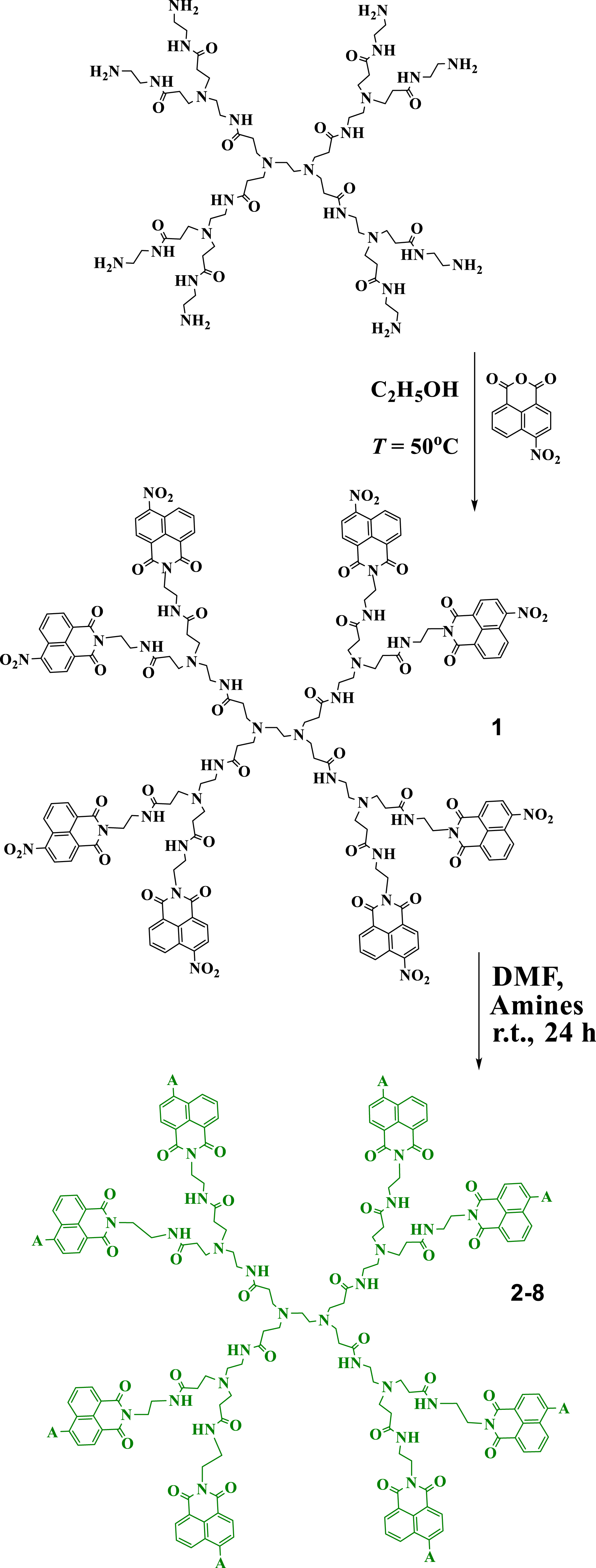
Peripherally modified first-generation PAMAM dendrimers bearing 1,8-naphthalimide units.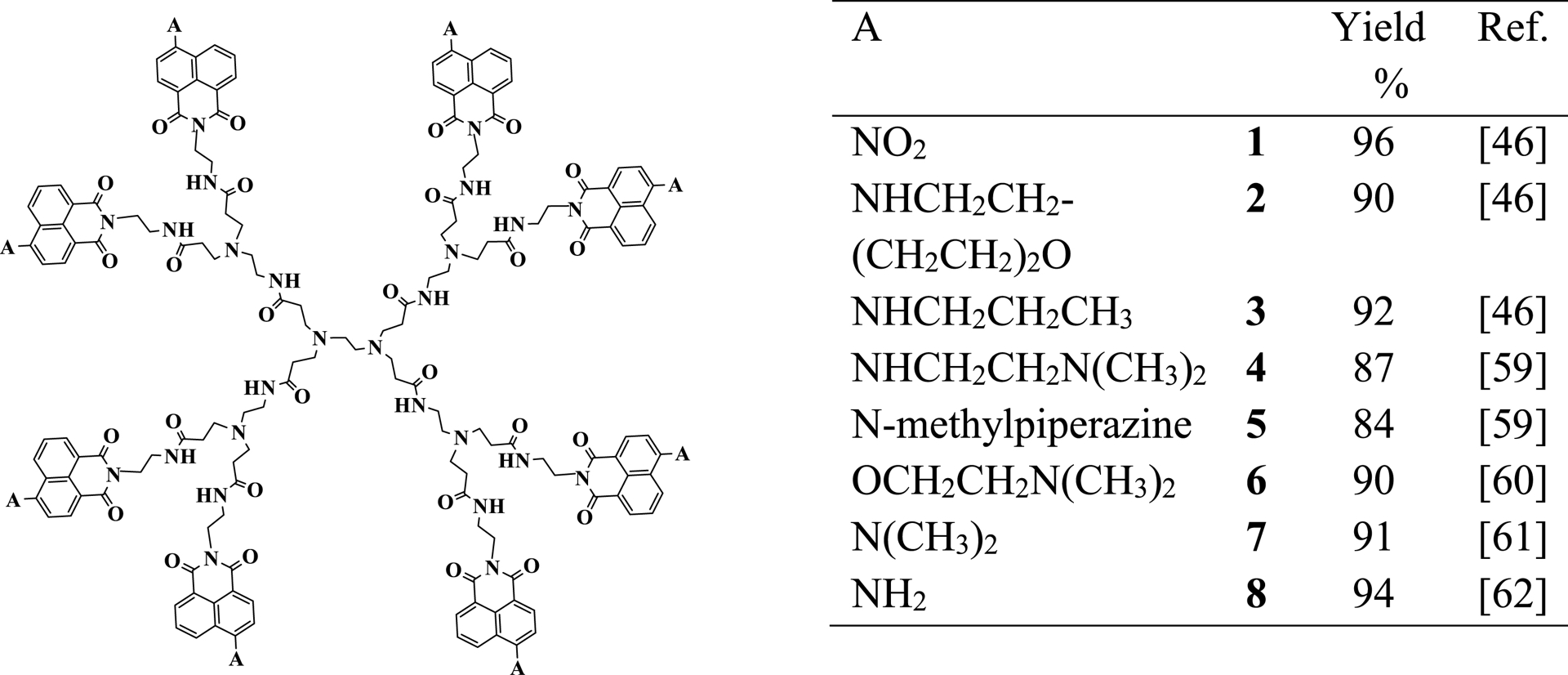
The first-generation PAMAM dendrimer modified with eight 4-nitro-1,8-naphthalimide units 1 was further used as a starting material for the synthesis of 6 a blue-emitting fluorescent dendrimer bearing an N,N-dimethylaminoethoxy substituent (–OCH2CH2N(CH3)2) at the C-4 position of the 1,8-naphthalimide core. Its design follows the fluorophore–spacer–receptor concept, in which the N,N-dimethylamino group (–N(CH3)2), containing a tertiary nitrogen atom with a nonbonding electron pair, acts as the receptor moiety for metal ions and protons and is linked to the 1,8-naphthalimide signaling unit via an ethylene spacer (–CH2CH2–) [60].
The nucleophilic substitution of the nitro group by the N,N-dimethylaminoethoxy substituent was carried out in DMF in the presence of alkaline agents. In addition, a dendrimer bearing a primary amino group as a substituent at the C-4 position of the 1,8-naphthalimide structure was obtained in a single-step synthesis via the reaction of 4-amino-1,8-naphthalic anhydride with the PAMAM dendrimer [62].
Using the same synthetic strategy, PAMAM dendrimers of zero and second generation were analogously prepared, peripherally modified with four and sixteen 1,8-naphthalimide units, respectively, bearing different substituents at the C-4 position of the naphthalene core (Scheme 3).
PAMAM dendrimers modified with 1,8-naphthalimides from zero and second generations.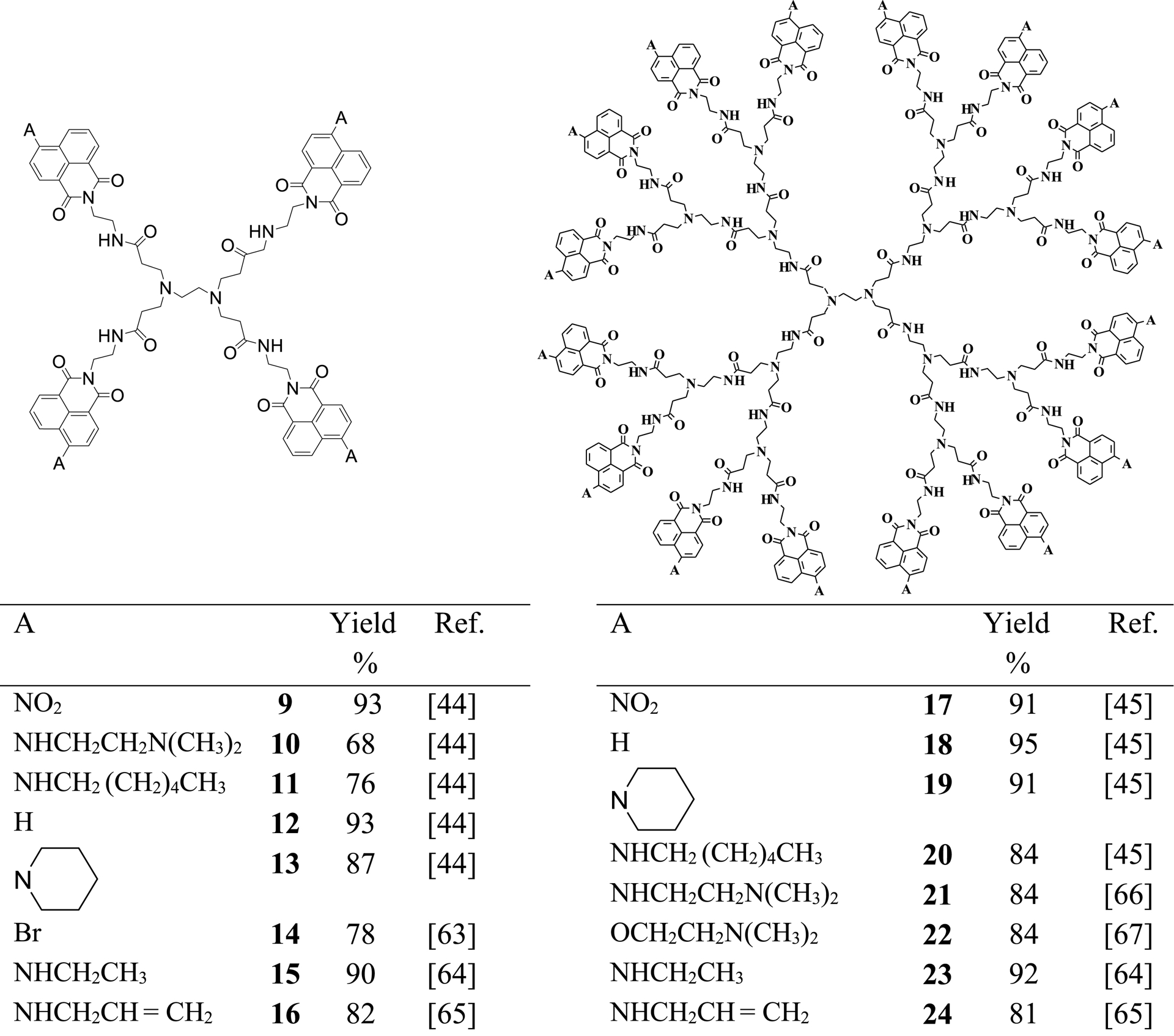
2.2. Peripheral modification of PPI dendrimers of different generations with 1,8-naphthalimide derivatives
Poly(propylene imine) dendrimers are an alternative dendrimer architecture, characterized by a more hydrophobic internal structure compared to PAMAM dendrimers. As with PAMAM systems, terminal primary amino groups are used for peripheral modification with fluorophores. Within our studies, fluorescent PPI dendrimers peripherally modified with organic fluorophores were synthesized for the first time, using synthetic methodologies analogous to those applied for PAMAM dendrimers but adapted to the specific chemistry of the PPI matrix. This approach enables a direct comparison between the two dendrimer types and allows assessment of the influence of dendrimer architecture on the photophysical properties of the resulting macromolecules.
Peripheral modification of PPI dendrimers was achieved through covalent attachment of fluorophoric units to the terminal amino groups. Various fluorophores were employed, including derivatives of 1,8-naphthalimide, benzanthrone, acridine, and nitrobenzofurazan, thereby extending the spectral range and enabling systematic investigation of the influence of chemical structure on photophysical characteristics.
2.2.1. Synthesis of first-generation PPI dendrimers bearing 4-amino-substituted 1,8-naphthalimide units
In the design of fluorescent PPI dendrimers, synthetic schemes and substituents at the C-4 position analogous to those used for PAMAM dendrimers were employed (Scheme 4).
First-generation PPI dendrimers peripherally modified with 1,8-naphthalimide derivatives.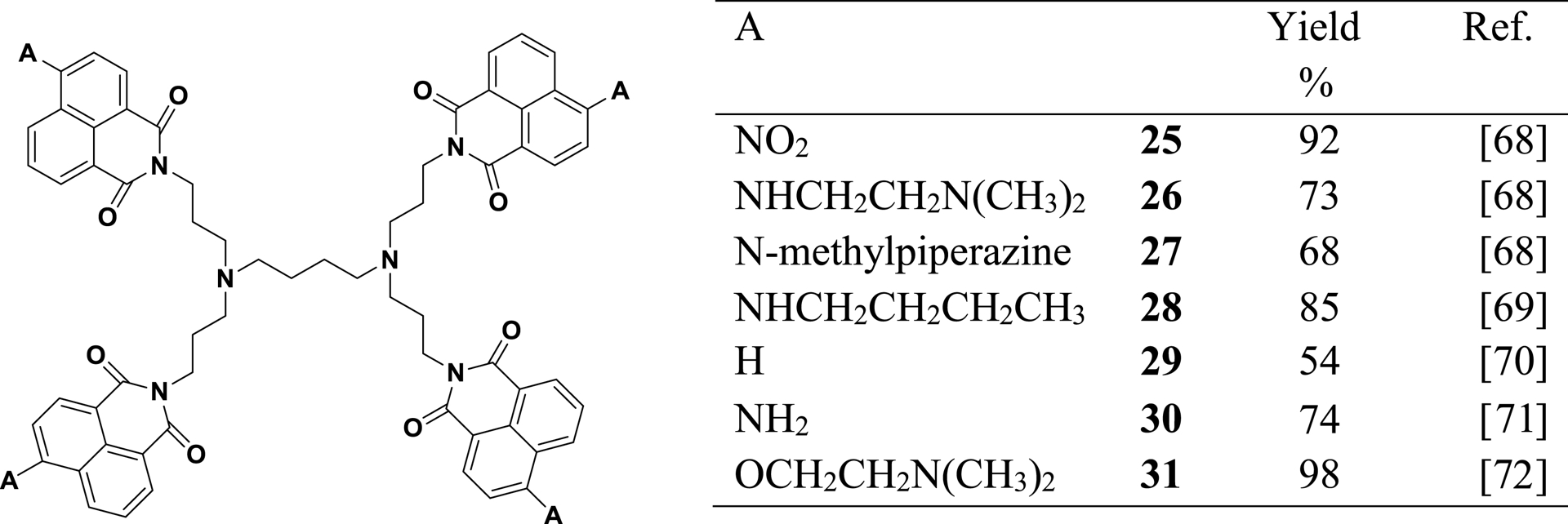
2.2.2. Synthesis of PPI dendrimer 31 bearing 4-alkoxy-1,8-naphthalimide units
Ultrasonic irradiation is a well-established sonochemical method for synthesis, enabling reduced reaction time and increased yields in nucleophilic substitution reactions of the nitro group in 4-nitro-1,8-naphthalimides with alkoxy substituents (alcoholate anions, –OR) [73, 74]. The reaction proceeds via a nucleophilic aromatic substitution (SNAr) mechanism, while ultrasonic irradiation provides the energy and mechanical effects that accelerate both the generation of reactive species and the substitution.
In contrast to conventional thermal heating, where the entire reaction volume is maintained at elevated temperature, sonochemical conditions allow the bulk solution to remain close to room temperature [73]. This significantly reduces or eliminates side reactions and product degradation that may occur during prolonged high-temperature heating, thereby increasing the purity and yields of 4-alkoxy-1,8-naphthalimide derivatives. A blue-emitting fluorescent PPI dendrimer was obtained through nucleophilic substitution of the nitro group by an –OCH2CH2N(CH3)2 residue using ultrasonic synthesis. The reaction was carried out in N,N-dimethylaminoethanol, which served simultaneously as both reagent and reaction medium. Under these conditions, a blue-fluorescent PPI dendrimer 31 was obtained in nearly quantitative yield and high purity, as shown in Scheme 5 [72].
Ultrasonic synthesis of a first-generation PPI dendrimer bearing 4-N,N-dimethylaminoethoxy-1,8-naphthalimide units at the periphery.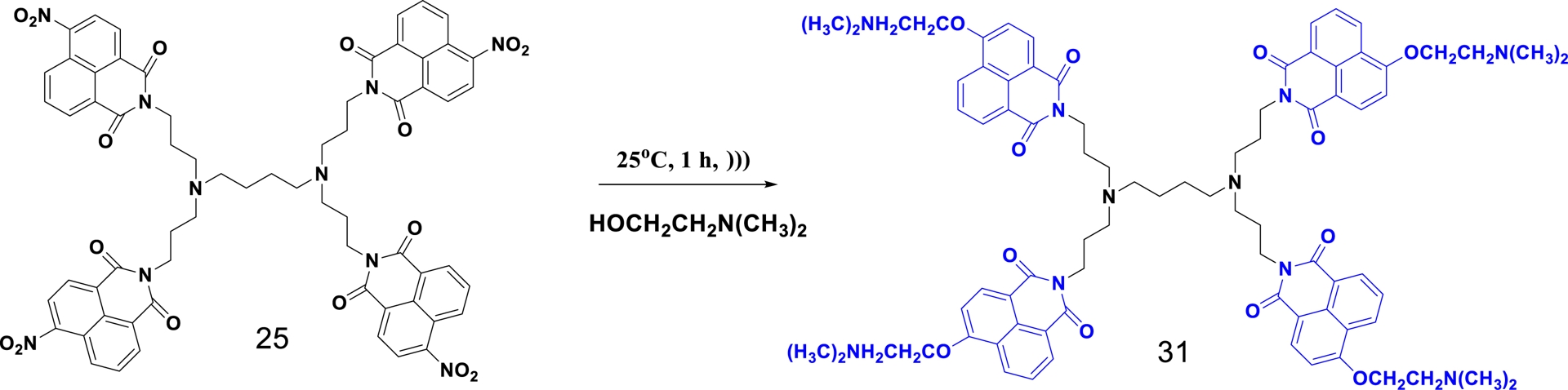
2.2.3. Synthesis of second- and third-generation PPI dendrimers bearing 4-amino-substituted 1,8-naphthalimide units
Fluorescent PPI dendrimers bearing eight 4-amino-substituted 1,8-naphthalimide units were obtained via condensation of a second-generation PPI dendrimer with 4-nitro-1,8-naphthalic anhydride, followed by nucleophilic substitution of the nitro group by various amines in DMF. In addition, 4-bromo-1,8-naphthalic anhydride and 1,8-naphthalic anhydride were also employed as starting materials (Scheme 6).
Second-generation PPI dendrimers peripherally modified with 1,8-naphthalimide derivatives.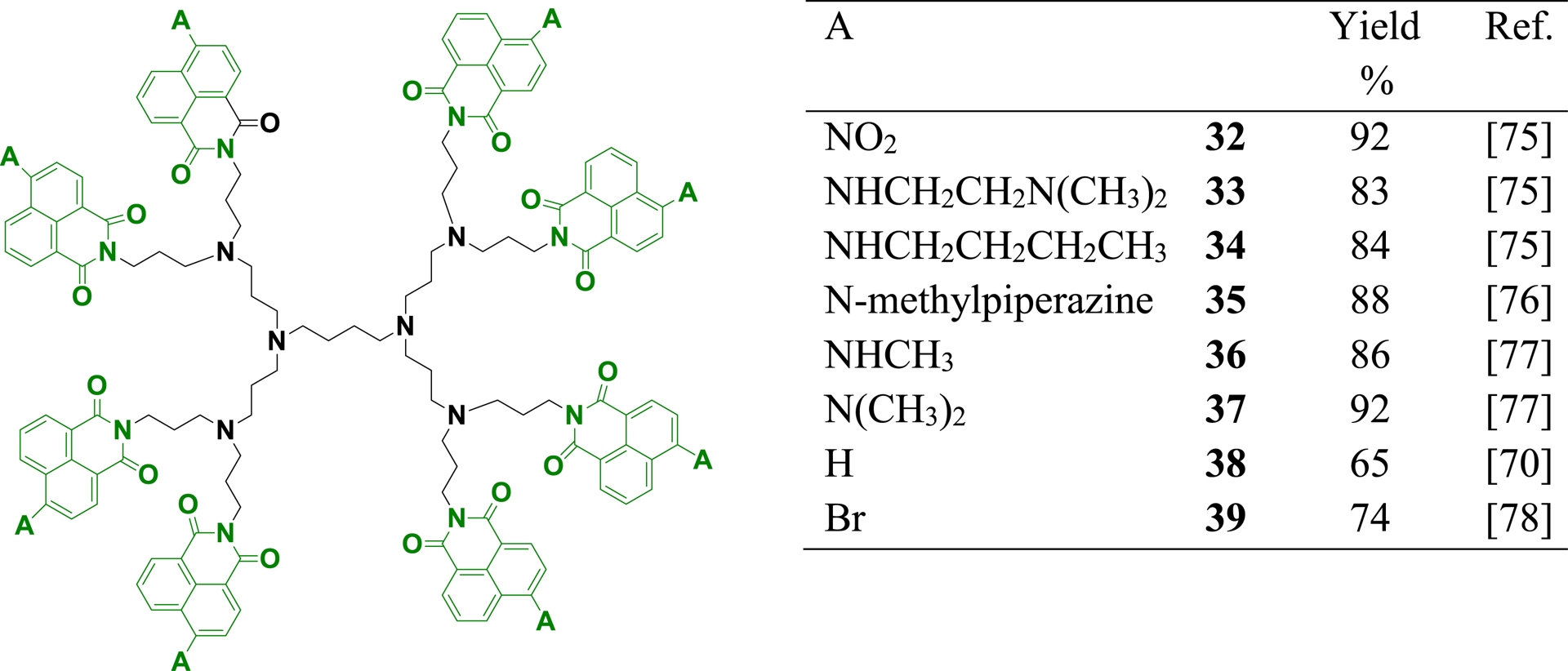
A PPI dendrimer bearing sixteen terminal primary amino groups was reacted with 4-amino-1,8-naphthalic anhydride, yielding dendrimer 40 with the structure shown in Scheme 7 (yield 82%) [71]. In contrast, peripheral modification of the same dendrimer with 4-nitro-1,8-naphthalimide was complicated by the poor solubility of the reaction system and the reduced reactivity associated with this nitro-substituted precursor, leading to incomplete functionalization and products with different degrees of substitution. Because of the limited synthetic control achieved, this approach was not further pursued.
Third-generation PPI dendrimer 40 peripherally modified with 4-amino-1,8-naphthalimide units.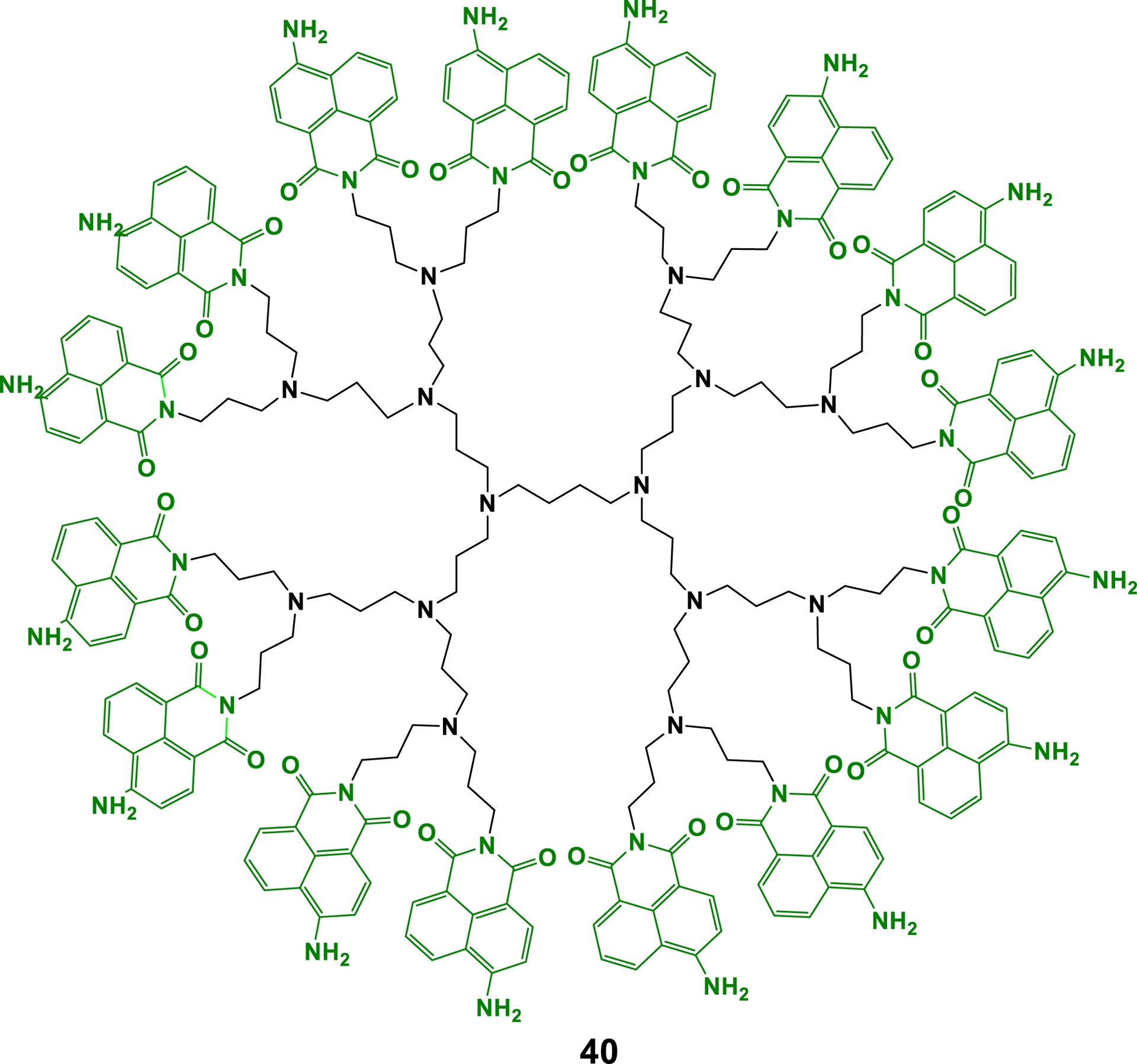
The dendrimers described were isolated in the solid state and exhibit good stability upon prolonged storage under ambient conditions. They are readily soluble in common organic solvents but are insoluble in water.
2.3. PPI dendrimers modified with other fluorophores
In addition to 1,8-naphthalimides, fluorescent PPI dendrimers modified with other classes of organic fluorophores—namely benzanthrone, acridine, and nitrobenzofurazan—were developed within our studies. The aim of this approach was to extend the spectral range of fluorescent dendrimer systems and to demonstrate the versatility of the synthetic methodologies applied across different chromophoric structures.
2.3.1. Synthesis of a second-generation PPI dendrimer modified with benzanthrone (41)
Benzanthrone is a polycyclic aromatic ketone with an extended π-conjugated system, which accounts for its strong absorption and intense fluorescence in the long-wavelength region of the visible spectrum. A characteristic feature of benzanthrone derivatives is their high photostability and relatively large Stokes shift, making them suitable for applications requiring stable fluorescence signals with minimal self-absorption. Interest in benzanthrone-based fluorophores also arises from pronounced intramolecular charge-transfer character, which renders their fluorescence sensitive to medium polarity and structural modifications [79, 80, 81].
A fluorescent dendrimer modified with benzanthrone chromophores was obtained via peripheral functionalization of a second-generation PPI dendrimer using a benzanthrone derivative bearing a reactive chloromethyl group (2-chloro-N-(7-oxo-7H-benzo[de]anthracen-3-yl)acetamide) with a yield of 82%. The benzanthrone precursor had been previously reported and characterized [80].
The modification proceeds through nucleophilic substitution of the chlorine atom in the chloroacetamide fragment by the primary amino groups of the dendrimer, resulting in the formation of stable amide bonds and covalent attachment of benzanthrone units to the dendrimer periphery (Scheme 8) [82]. The structure of the dendrimer obtained, bearing eight benzanthrone units, is supported by MALDI-TOF mass spectrometry, elemental analysis, and NMR spectroscopy. In particular, the 1H NMR spectrum exhibits characteristic NHCO signals in the region 10.92–10.56 ppm corresponding to eight amide protons, confirming the formation of amide linkages and excluding the formation of tertiary amine structures. The absence of polysubstitution on a single nitrogen atom is attributed to steric hindrance within the dendritic structure, which limits further substitution. According to the data reported in ref. [82], the incorporation of benzanthrone units into the dendrimer structure results in fluorescent macromolecular systems in which the photophysical properties of the chromophores are largely preserved, without significant fluorescence quenching. These results demonstrate the feasibility of introducing bulky fluorophores into dendrimer architectures via peripheral modification.
Chemical structure of a second-generation PPI dendrimer modified with benzanthrone units.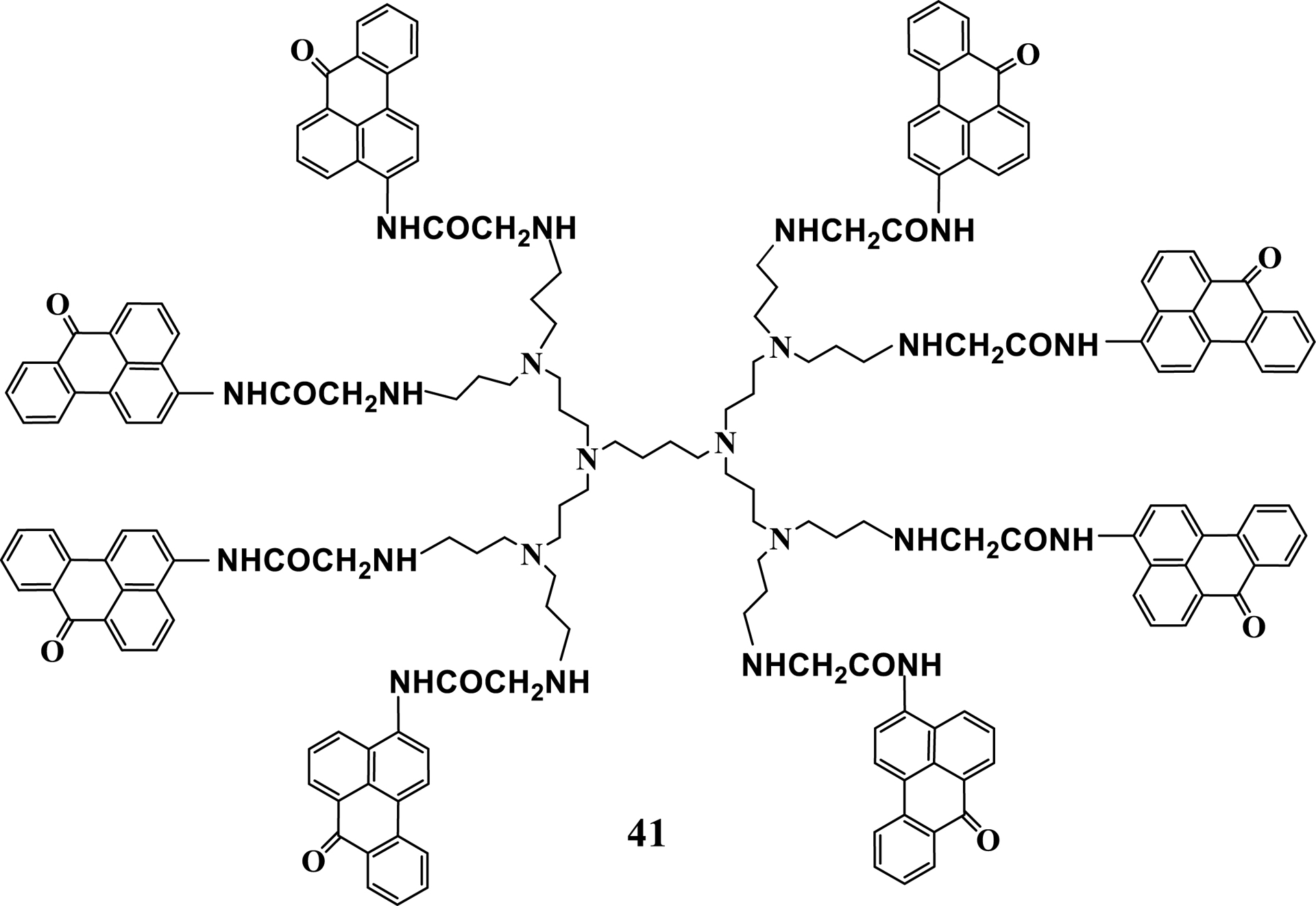
2.3.2. Synthesis of a second-generation PPI dendrimer modified with acridine (42)
Acridine and its derivatives represent a class of heteroaromatic compounds with well-defined fluorescent properties arising from their planar π-conjugated structure. They are characterized by relatively high fluorescence quantum yields and good photostability, which makes them suitable for a variety of photonic and sensing applications. Of particular interest is the ability of acridine fluorophores to participate in proton-dependent and electron-transfer processes [83, 84]. Protonation of the nitrogen atom in the acridine scaffold leads to significant changes in absorption and emission properties, rendering these compounds sensitive to pH variations and attractive for sensing applications.
In our studies, peripheral modification of a PPI dendrimer via covalent attachment of acridine fragments has been reported [85]. Acridine fluorophores are of interest due to their favorable photophysical characteristics and biological activity. The synthesis was carried out by reacting 9-chloroacridine with a PPI dendrimer in a phenolic medium at elevated temperature under an inert atmosphere. Due to the formation of a protonated dendrimer species in the reaction medium, the isolated solid product was converted to its neutral form by dissolution in a water/ammonia solution (approximately pH 8) [85].
This acridine-modified dendrimer complements the previously developed naphthalimide- and benzanthrone-based dendrimers and further expands the possibilities for the rational design of fluorescent materials with diverse spectral properties.
2.3.3. Synthesis of a second-generation PPI dendrimer modified with 4-nitrobenzofurazan (43)
4-Nitrobenzofurazan is a strongly electron-deficient heteroaromatic fluorophore distinguished by pronounced donor–acceptor characteristics. The presence of a nitro group combined with the benzofurazan ring leads to intense charge-transfer transitions, resulting in high sensitivity of spectral properties to the surrounding environment and chemical interactions. As a fluorophore, 4-nitrobenzofurazan is particularly attractive due to its ability to respond to nucleophilic attack and changes in electron density, which makes it suitable for sensing applications. Despite their lower fluorescence intensity compared to other fluorophores, benzofurazan derivatives are valuable for their high sensitivity and the possibility of fine-tuning their properties through molecular design [86, 87].
A new fluorescent dendrimer with a high yield of 97% was obtained by peripheral modification of a second-generation PPI dendrimer with 4-nitrobenzofurazan fragments [88]. The synthesis is based on direct nucleophilic aromatic substitution, in which the primary amino groups of the PPI dendrimer react with 4-chloro-7-nitrobenzofurazan, employed as a highly electrophilic chromophoric precursor (Scheme 9). Bonding of 4-nitrobenzofurazan units into the dendrimer structure imparts new photochemical properties, as the chromophore becomes fluorescent upon substitution of the chlorine atom by the electron-donating alkylamino groups of the dendrimer.
Chemical structure of a second-generation PPI dendrimer modified with acridine (42) and 4-nitrobenzofurazan (43).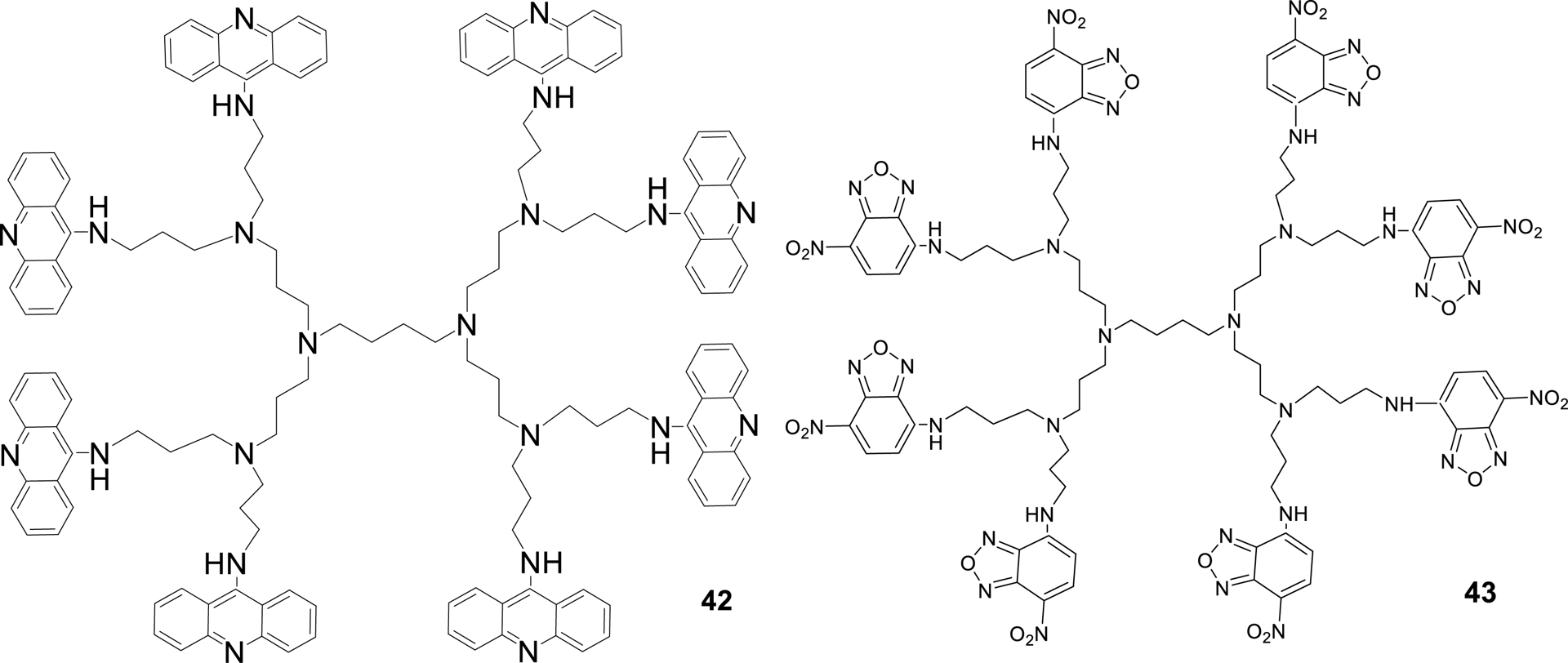
These syntheses represent the first examples of peripheral modification of PPI dendrimers with benzanthrone, acridine, and 4-nitrobenzofurazan chromophores, achieved by applying established synthetic methodologies for peripheral functionalization. This approach enables the transfer of synthetic strategies from one class of fluorophores to another, thereby expanding the possibilities for developing fluorescent dendrimers with tunable spectral characteristics.
3. Water-soluble and charged fluorescent dendrimers
Water-soluble fluorescent dendrimers represent a logical extension of studies on hydrophobic systems and demonstrate the adaptability of dendrimer architectures to specific environmental conditions. Their development constitutes an important step toward expanding the application potential of fluorescent dendrimers in biomedicine and sensing, while simultaneously imposing specific demands on synthetic design. Although biological and sensing applications are addressed only briefly in the present review, the synthetic approaches and architectural solutions described in this section provide a foundation for the further development of functional fluorescent dendrimer materials.
In contrast to hydrophobic fluorescent dendrimers, water-soluble dendrimers require careful selection of both the dendrimer matrix and the fluorophoric units, as well as the mode of their attachment to the dendrimer. Water solubility can be achieved by introducing negatively charged anionic groups, such as carboxyl (–COOH) or sulfonic (–SO3H) groups, into the 1,8-naphthalimide structure, by quaternization of amino groups, or by incorporating substituents containing polar functionalities, such as hydroxyl groups in N-glucosamine derivatives. In this manner, the charge of the dendrimers can be controlled by selecting appropriate functional groups. This strategy allows fine-tuning of macromolecular properties and provides a means of regulating interactions between dendrimers and their surrounding environment. At the same time, retention of fluorophores at the dendrimer periphery ensures good accessibility and minimizes undesirable intramolecular interactions that could lead to fluorescence quenching.
The synthesis of 4-sulfo-1,8-naphthalimide-modified first-generation PPI (G1) and zero-generation PAMAM (G0) dendrimers was designed to enhance the hydrophilicity of the resulting macromolecules and was carried out in a one-step reaction of the potassium salt of 4-sulfo-1,8-naphthalic anhydride with the corresponding dendrimers (Scheme 10). The resulting dendrimers absorb in the ultraviolet region and emit blue fluorescence [89, 90].
Chemical structures of dendrimers 44 and 45 peripherally modified with four 4-sulfo-1,8-naphthalimide units.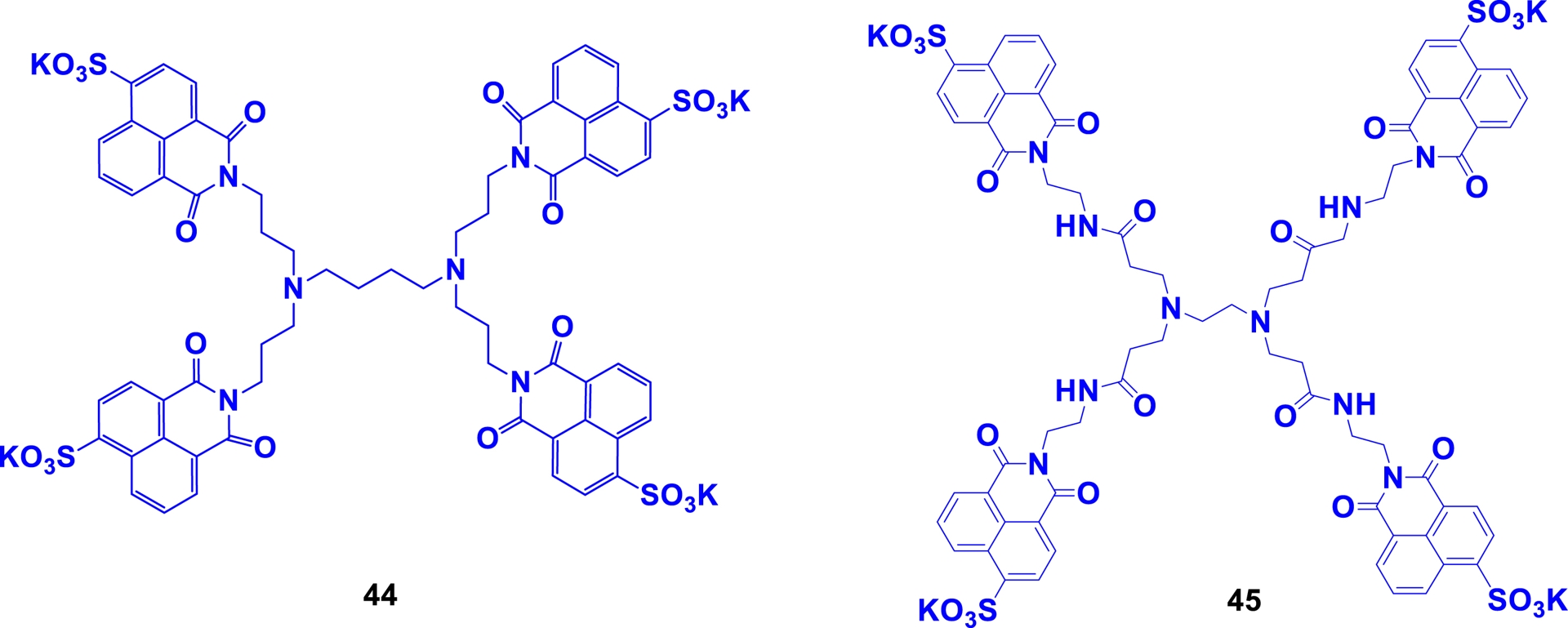
The presence of carboxyl groups (–COOH) on a PAMAM dendrimer was achieved via a one-step synthesis by reacting 3-(6-nitro-1,3-dioxo-1H-benzo[de]isoquinolin-2(3H)-yl)propanoic acid with the terminal amino groups of the dendrimer in DMF at 25 °C. The structure of dendrimer 46 is presented in Scheme 11; it exhibits yellow–green fluorescence, as reported in Ref. [91].
Chemical structures of a PAMAM dendrimers bearing carboxyl groups (46) and PPI dendrimers containing N-glucosamine units (47).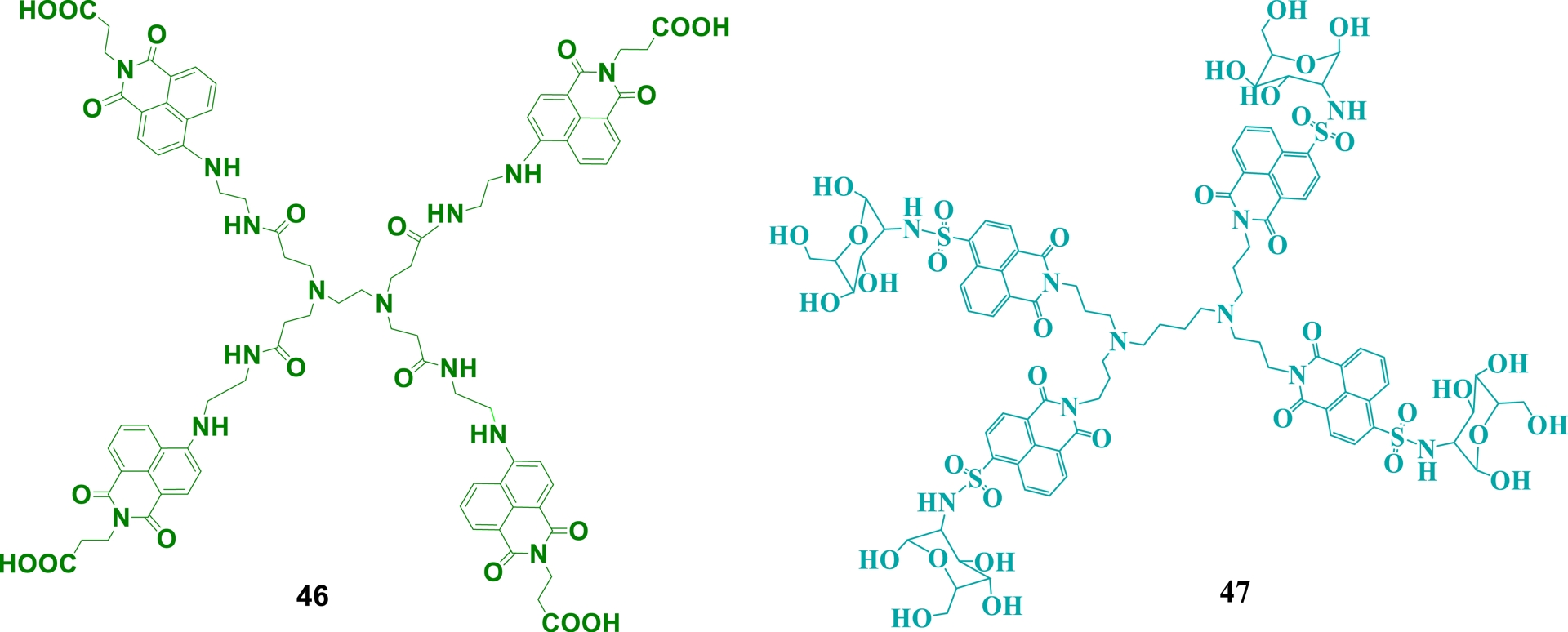
Dendrimers modified with N-glucosamine have attracted considerable interest in nanomedicine due to their unique multivalent architecture and ability to neutralize the high positive charge of parent dendrimers, such as PPI and PAMAM. This charge compensation leads to improved biocompatibility and reduced cellular toxicity. Such dendrimers can act as “smart” carriers, capable of simultaneously transporting drug molecules while also exhibiting intrinsic biological activity [92, 93, 94].
In our studies, N-glucosamine was combined with 1,8-naphthalimide to modify a first-generation poly(propylene imine) (PPI) dendrimer 47 (Scheme 11), resulting in significantly improved water solubility of the PPI dendrimer [95].
To introduce a quaternary ammonium group into the structure of a PPI dendrimer, the primary amino group of dendrimer 29 was first acylated with chloroacetyl chloride to afford dendrimer 48. Subsequently, the chlorine atom was substituted by reaction with pyridine, yielding dendrimer 49 with a quaternary ammonium group. As a consequence of introducing the electron-accepting acylated amino group, the fluorescence emission shifted from yellow–green (dendrimer 29) to blue, while the quaternary ammonium group imparted excellent water solubility to the resulting dendrimer (Scheme 12) [96].
Synthesis of a water-soluble PPI dendrimer 49 modified with a quaternized 4-amino-1,8-naphthalimide.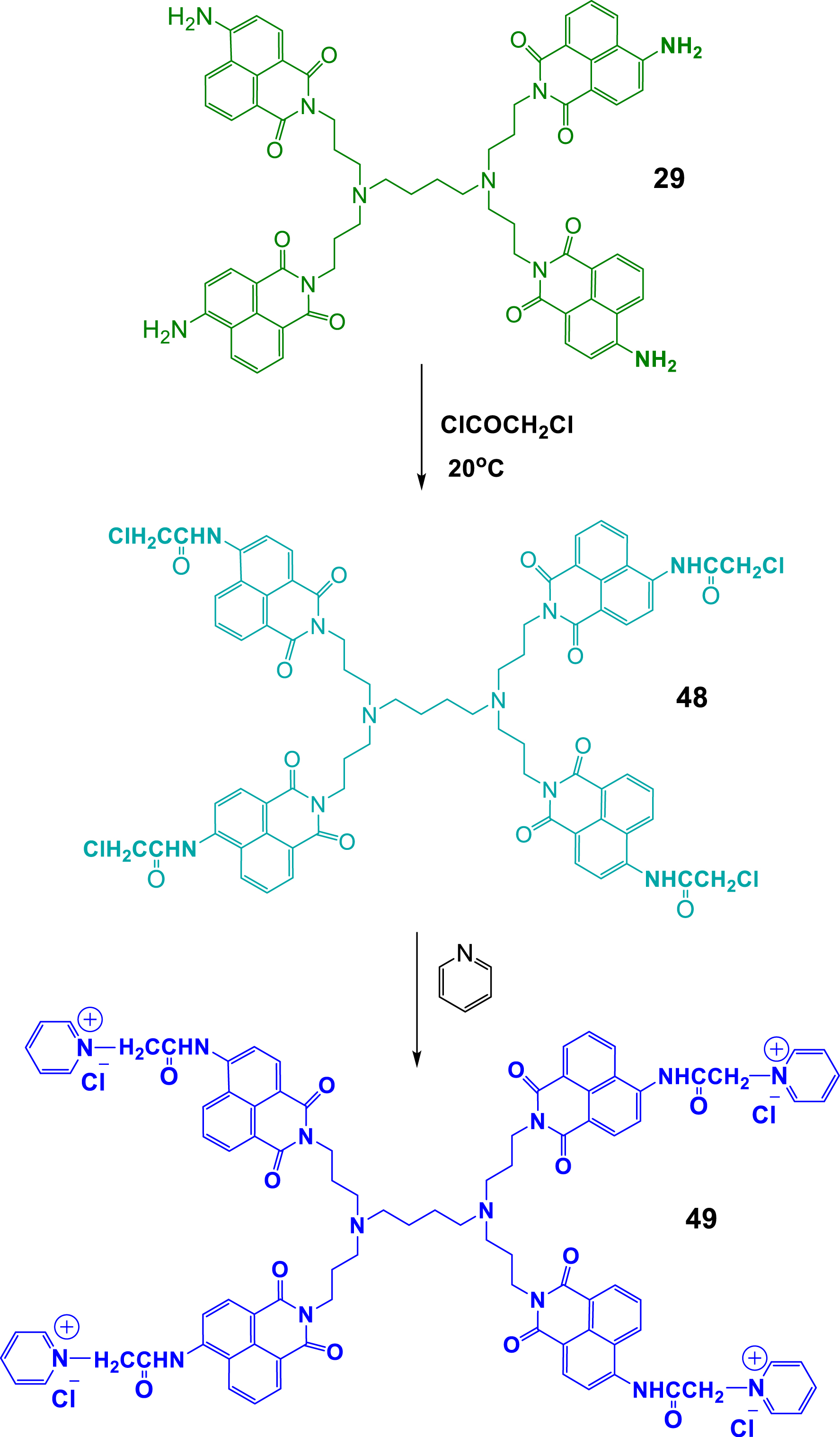
4. Photoactive dendrimers for application in antibacterial photodynamic therapy (aPDT)
Specialized photoactive dendrimers represent a logical extension of the concept of fluorescent dendrimers, in which macromolecular design is directed not only toward fluorescence emission but also toward the control of photoinduced processes. In such systems, the dendrimer architecture serves as a platform for spatially organizing photoactive centers, enabling purposeful modulation of their properties through chemical modification.
In our studies, particular attention has been devoted to introducing heavy atoms into the fluorophore structure as an effective tool for tuning the photophysical characteristics of dendrimer systems. For the first time, dendrimers peripherally modified with brominated 4-amino-1,8-naphthalimide units were synthesized, in which the heavy atom was introduced directly into the chromophoric system at the C-3 position. The presence of a bromine atom in the fluorophore structure exerts a pronounced influence on the photoactivity of the dendrimer.
Bromine can enhance spin–orbit coupling within fluorophore molecules, thereby increasing the rate of intersystem crossing (ISC) from the singlet excited state (S1) to the triplet state (T1). This phenomenon is known as the heavy atom effect [97]. The enhancement of ISC is directly related to the efficiency of singlet oxygen (1O2) generation [98, 99, 100]. In this context, the introduction of a bromine atom constitutes a key innovation and is essential for achieving antimicrobial photodynamic activity in 1,8-naphthalimide-based systems.
To obtain dendrimers modified with 1,8-naphthalimide units bearing both a bromine atom and an amino substituent, a first-generation PPI dendrimer peripherally modified with 4-nitro-1,8-naphthalimide units (25) was employed as a precursor. The nitro group was replaced by an N,N-dimethylamino group via electrophilic substitution to yield dendrimer 50, followed by bromination with molecular bromine to introduce the bromine atom, affording dendrimer 51 (Scheme 13) [101]. Compared to the non-brominated fluorescent dendrimer 50, dendrimer 51 exhibits altered photophysical behavior, which is attributed to enhanced ISC and modified deactivation pathways of the excited state. These results demonstrate the potential of dendrimers for the rational design of systems with controlled photoactivity.
Synthesis of PPI dendrimers 50 and 51.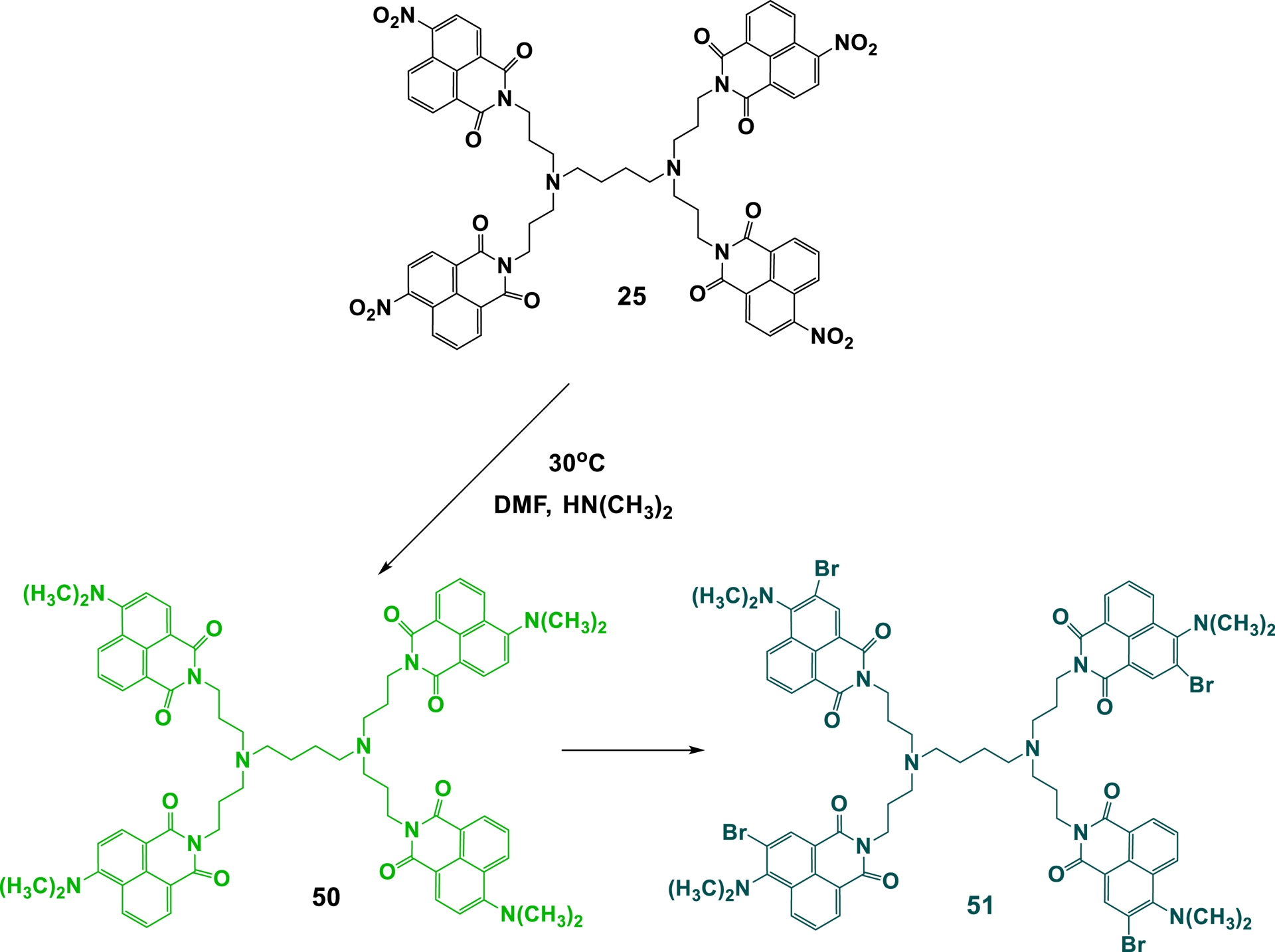
5. Synthesis of fluorescent hyperbranched polymers modified with fluorophores
Hyperbranched polymers (HBPs) constitute a distinct class of branched macromolecules characterized by a high degree of branching and a large number of terminal functional groups. In contrast to dendrimers, HBPs are obtained through statistical polymerization processes and therefore do not possess strictly defined, monodisperse structures. Nevertheless, they combine several key advantages of dendrimers such as their three-dimensional architecture and multivalency with a simpler, more cost-effective synthetic approach [102, 103, 104].
In this review, HBPs are considered an alternative platform for the development of fluorescent branched systems closely related to dendrimer design. Within our studies, fluorescent HBPs modified with organic fluorophores were synthesized employing synthetic strategies analogous to those applied for dendrimers. Their preparation involves the chemical modification of a commercially available hyperbranched polyesteramide (Hybrane® P 1000, HBP–OH), containing multiple hydroxyl groups, followed by the introduction of azide functionalities suitable for subsequent covalent attachment of fluorophores via click chemistry. This modification does not alter the hyperbranched architecture of the polymer but generates an azide-functionalized HBP that can serve as a versatile platform for the incorporation of photoactive units of different chemical nature (Scheme 14).
Schematic representation of the synthesis of fluorescent hyperbranched polymers based on Hybrane® P 1000 via azide functionalization and subsequent Cu(I)-catalyzed click attachment of fluorophores.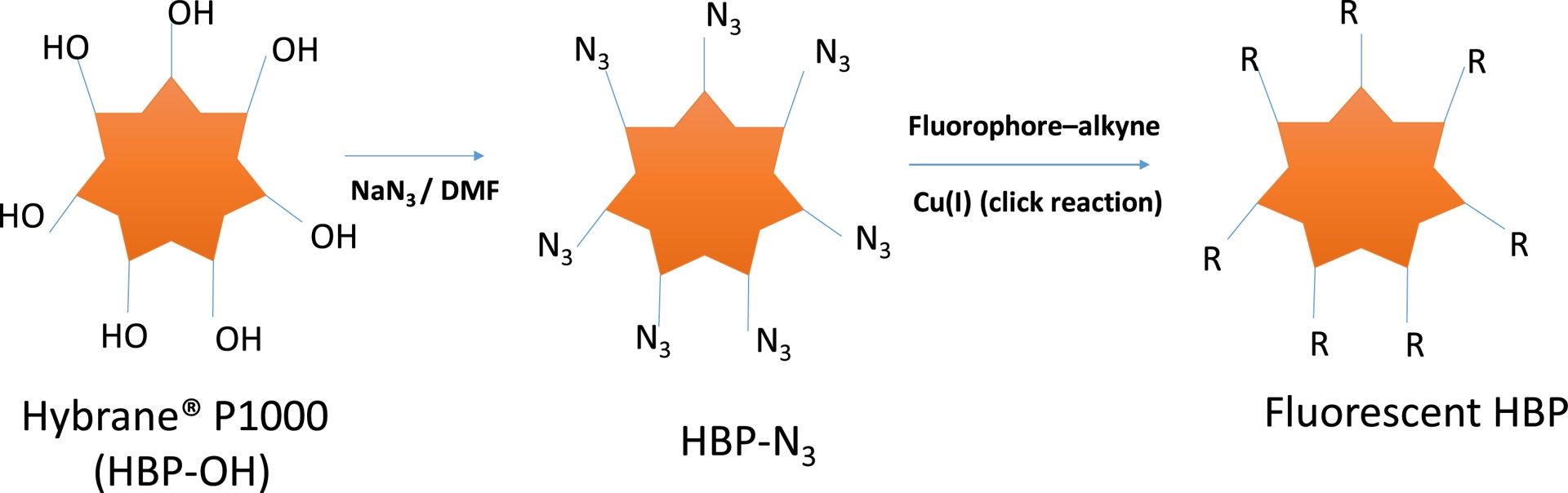
Fluorophores such as 1,8-naphthalimides [105], dansyl derivatives [106], and acridines [107] were employed, each modified to contain a terminal alkyne group. This structural modification renders the fluorophore molecules “click-active” components, capable of selectively reacting with the azide groups of the polymer to form stable 1,2,3-triazole rings that serve as covalent linkages between the fluorophores and the polymer backbone. The number of incorporated fluorophore units is controlled by the predefined number of azide groups present on the polymer platform. In the investigated systems, this strategy resulted in polymers bearing six covalently attached fluorophores per macromolecule (Scheme 15).
Chemical structures of the modified photoactive HBPs 52–54.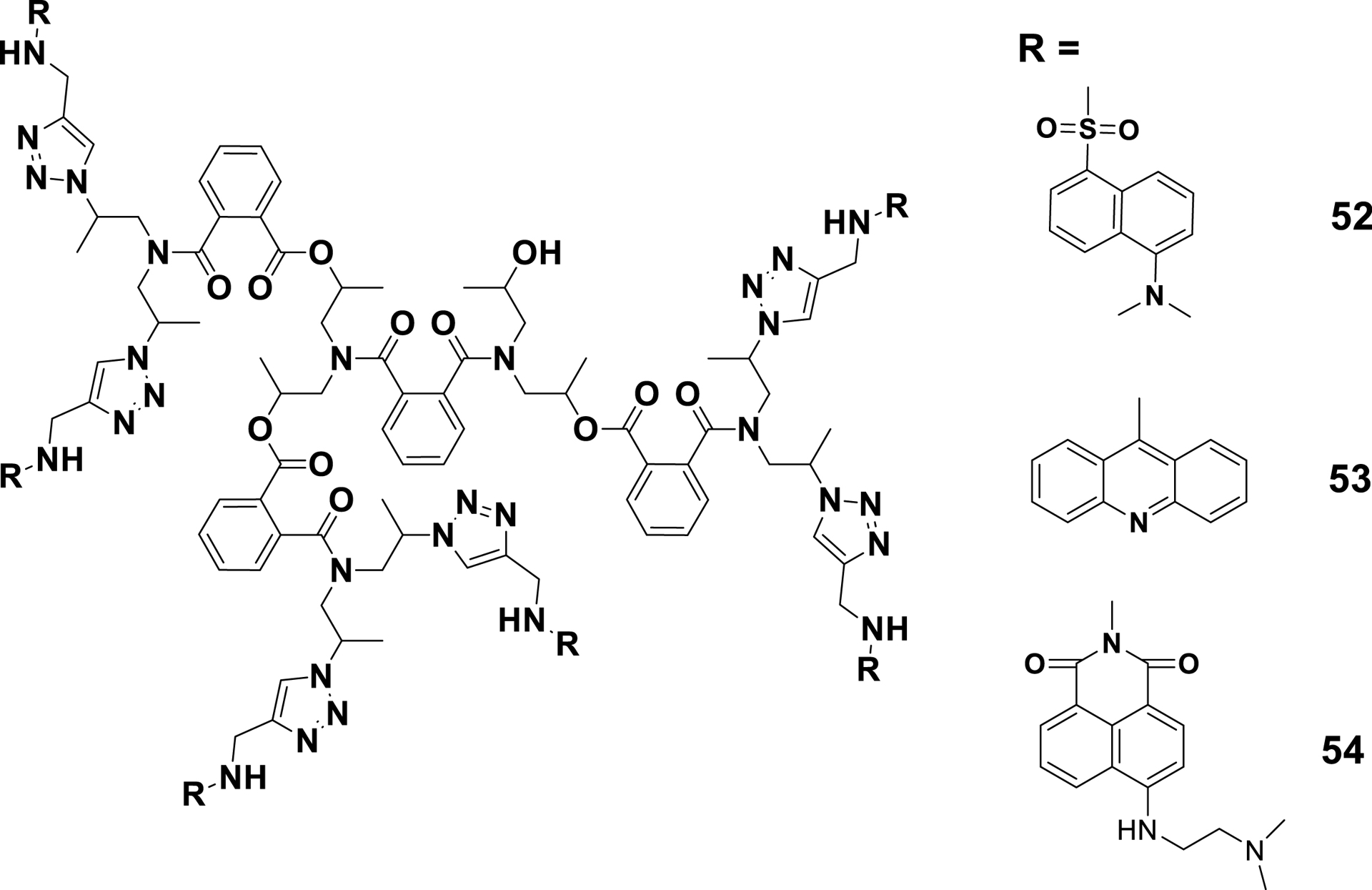
Comparison between fluorescent dendrimers and hyperbranched polymers highlights both similarities and fundamental differences between these two types of branched systems. While dendrimers offer precise control over architecture and fluorophore distribution, hyperbranched polymers provide enhanced synthetic accessibility and scalability. In both cases, peripheral fluorophore modification yields photoactive macromolecules, in which the branched structure plays a crucial role in determining their photophysical properties.
The first syntheses presented of fluorescent HBPs demonstrate that these systems can successfully complement dendrimer-based architectures in the development of new fluorescent materials. The relationship between dendrimers and hyperbranched polymers underscores the universality of the applied synthetic approaches and expands the possibilities for designing branched photoactive macromolecules with diverse structural characteristics.
The differences between the three fluorescent hyperbranched polymers arise from the chemical nature of the incorporated fluorophores rather than from the mode of their attachment to the polymer backbone. This confirms the universality of the applied synthetic approach and enables direct comparison of the functional properties of the resulting polymeric systems.
6. Influence of substituents and dendrimer generation on the photophysical properties
The photophysical properties of dendrimers modified with 1,8-naphthalimide chromophores depend both on the nature of the substituents at the C-4 position of the naphthalimide core and on the dendrimer architecture. It has been found that the spectral characteristics of these systems depend mainly on the electron-donating ability of the substituents at the C-4 position, whereas substituents attached to the imide nitrogen have only a negligible effect.
Primary and secondary amino substituents at the C-4 position form effective donor–acceptor interactions, resulting in strong fluorescence emission, usually in the yellow–green region [44, 61, 62, 64, 66, 69]. In contrast, cyclic or acyclic tertiary amino groups often lead to reduced fluorescence intensity due to conformational effects that disrupt the planarity of the chromophore and promote non-radiative deactivation pathways [45, 77]. Alkoxy-substituted 1,8-naphthalimides represent another important class of fluorophores. Their weaker electron-donating character, compared to amino substituents, induces hypsochromically shifted spectra and blue fluorescence emission [60, 67, 72].
Of particular interest are systems containing remote tertiary amino groups linked to the chromophore via ethylamino or ethoxy spacers [44, 60, 66, 67, 68, 72, 76]. In these systems, fluorescence intensity shows a pronounced dependence on solvent polarity due to photoinduced electron transfer (PET). In polar media, PET processes favor fluorescence quenching, whereas in less polar solvents the emission is enhanced.
Brominated 1,8-naphthalimide derivatives represent an additional structural motif influencing photophysical behavior. The introduction of a bromine atom at the C-3 position induces a hypsochromic shift of both the absorption and fluorescence maxima and generally reduces fluorescence quantum yields, reflecting the heavy-atom effect and altered chromophore polarization. At the same time, bromination facilitates ISC and population of triplet states, features particularly important for photodynamic applications [101].
In addition to substituent effects, dendrimer architecture introduces an additional level of control over photophysical behavior. The modified dendrimers contain different numbers of fluorophores, which in most cases retain the photophysical properties of the corresponding monomers without significant self-quenching. As a manifestation of the dendrimer effect, increased molar absorptivity was observed for all synthesized dendrimers, proportional to the number of peripherally attached chromophores.
This indicates that the dendrimer structure can provide sufficient spatial separation between chromophore units while minimizing aggregation, although at higher generations or in systems bearing bulky substituents, partial interchromophoric interactions may occur. Both dendrimer backbone structure and solvent polarity influence the photophysical properties of the modified dendrimers. Structural differences between PAMAM and PPI dendrimers affect the local microenvironment of the chromophores, including polarity, conformational flexibility, and possible intramolecular interactions, which can alter emission intensity and spectral position.
Overall, the photophysical properties of 1,8-naphthalimide-modified dendrimers result from the combined influence of substituent effects and dendrimer architecture. The interplay of these factors provides a basis for the rational design of fluorescent macromolecular systems with tailored optical characteristics.
7. Brief overview of biological and sensing properties of fluorescent dendrimers
7.1. Sensor activity of dendrimers modified with 1,8-naphthalimides
These structure–photophysical relationships are directly reflected in the sensing behavior of the systems, as discussed in the following section. The fluorescent dendrimers developed within the scope of the studies presented demonstrate significant potential for applications in sensing systems, with these properties being directly related to the synthetic design and architectural features of the macromolecules. The branched structure, multivalent periphery, and controlled fluorophore functionalization create favorable conditions for effective interactions with analytes, including metal ions, protons, and biological targets [24]. The sensing properties of fluorescent dendrimers originate from the ability to modulate the photophysical characteristics of the fluorophores in response to changes in the surrounding environment or the presence of specific analytes. Peripheral localization of the photoactive units facilitates direct access of the analytes to the fluorophore centers and allows measurable variations in the fluorescence signal. In this context, the dendrimer architecture does not merely serve as a carrier but actively contributes to the amplification and stabilization of the sensing response. A commonly employed strategy for constructing fluorescent dendrimer-based sensors involves modifying PPI or PAMAM dendrimers with fluorophores containing donor–acceptor systems, such as 1,8-naphthalimide derivatives bearing receptor fragments. In these systems, the fluorophore serves as the signaling unit, while peripheral or internal functional groups act as receptor sites for metal cations or protons [24]. The sensing mechanism is most frequently based on PET which leads to fluorescence quenching or enhancement depending on the presence of the analyte [50]. Coordination of a metal ion or protonation of donor atoms reduces their electron-donating ability and suppresses PET, thereby restoring or enhancing the fluorescence signal. For example, dendrimers containing tertiary amine receptor groups exhibit fluorescence enhancement upon coordination with Pb2+ ions, while Cu2+ ions can induce efficient quenching due to complex formation within the dendrimer structure [24, 59, 72, 75]. Similar behavior has been observed in a number of systems based on 1,8-naphthalimide-modified dendrimers, where fluorescence modulation upon interaction with metal ions such as Zn2+, Fe3+, and Li+ has been reported [63, 65, 69, 108]. More recent studies on water-soluble systems demonstrate pronounced selectivity toward Cu2+ ions in aqueous media, even in the presence of competing ions, confirming their applicability as selective fluorescent sensors [90]. The dendrimer architecture enables the simultaneous participation of multiple receptor sites and fluorophore units, leading to high sensitivity and, in some cases, pronounced selectivity toward specific metal ions. It has been shown that coordination of even a single metal ion within the dendrimer matrix can induce a significant change in the fluorescence response, highlighting the advantages of the multivalent dendrimer effect [69, 109]. In addition to metal ion detection, fluorescent dendrimers have also been employed as proton sensors, in which changes in the medium’s acidity result in distinct spectral and colorimetric variations. For instance, protonation of internal amino groups suppresses PET processes and leads to enhanced fluorescence emission, whereas deprotonation restores PET and results in fluorescence quenching [90]. This enables their use as fluorimetric and colorimetric pH sensors in organic solvents and heterogeneous systems. Compared to their low-molecular-weight analogs, dendrimer-based sensors exhibit enhanced sensitivity, tunable selectivity achieved through molecular design, and the potential for integration into heterogeneous materials and composite systems. These features establish fluorescent dendrimers as promising platforms for the development of sensing materials for metal ions and protons [24].
7.2. Antibacterial and photodynamic activity of dendrimers modified with 1,8-naphthalimides
Fluorescent dendrimers represent a promising class of antimicrobial agents in which biological activity arises from the combined effect of the dendrimer architecture and the incorporated photoactive fluorophores. The multivalent nature of dendrimers enables efficient interactions with microbial cell membranes, particularly in systems possessing cationic or amphiphilic surfaces, leading to membrane destabilization and cellular dysfunction, as widely described for antimicrobial dendrimers [110].
The antibacterial activity of dendrimers modified with 1,8-naphthalimide derivatives is governed by a complex interplay between the dendrimer architecture, the nature of the substituents at the C-4 position of the chromophore, and the presence of metal ions or light activation [78, 101, 111, 112, 113]. In these systems, the dendrimer acts not only as a carrier but also as an active structural element that enhances the local concentration of photoactive units and promotes interactions with microbial targets. From a structure–activity relationship perspective, the nature of the C-4 substituent plays a decisive role by modulating the electron-donating ability, fluorescence efficiency, and capacity for photoinduced electron transfer, which in turn directly influences both sensing and antimicrobial performance.
The basic antimicrobial mechanism involves interactions with the bacterial membrane, followed by disruption of its integrity and increased permeability. This effect is more pronounced for Gram-positive bacteria, while Gram-negative strains exhibit higher resistance due to the presence of an outer membrane [48, 49]. In addition, experimental studies show that modified dendrimers can bind to and penetrate bacterial membranes, facilitating subsequent photodynamic action.
Complexation with metal ions, particularly Cu(II), significantly enhances antimicrobial efficiency. For example, a PAMAM dendrimer modified with 1,8-naphthalimide units and its copper complex exhibit stronger antibacterial activity than the corresponding ligand, with minimum inhibitory concentrations (MIC) as low as 6.96 μM against Bacillus cereus under light irradiation [61]. The increased activity of the metallodendrimer is attributed to both improved membrane interactions and enhanced generation of reactive oxygen species (ROS) [61].
Photoactive dendrimers show a pronounced increase in antimicrobial activity upon light irradiation. Under illumination, these systems generate ROS, predominantly singlet oxygen (1O2), which induces oxidative damage to bacterial membranes and intracellular components. Quantitative experiments demonstrate that bacterial growth inhibition can increase from approximately 50% in the dark to over 80% under light irradiation for metallodendrimer systems. This synergistic effect between intrinsic antimicrobial properties and photodynamic activity makes these systems highly effective for antimicrobial photodynamic therapy (aPDT) [101, 113].
Furthermore, the ability of these dendrimers to generate singlet oxygen is preserved after immobilization onto solid substrates. Dendrimers deposited onto cotton fabrics retain their photodynamic activity and exhibit strong antibacterial effects under irradiation, leading to nearly complete inhibition of bacterial growth in some cases. This enables the development of functional self-disinfecting materials and textile-based antimicrobial systems [114, 115].
In addition to dendrimers, structurally related hyperbranched polymers exhibit similar behavior, combining multivalency and photodynamic activity, which further broadens the range of applications of such systems [62]. Overall, dendritic and hyperbranched architectures functionalized with 1,8-naphthalimide units provide an effective platform for the design of multifunctional antimicrobial systems, in which membrane interactions, metal ion effects, and photodynamic mechanisms act synergistically to enhance biological performance.
8. Conclusions and outlook
This review summarizes our systematic research on the synthesis of fluorescent dendrimers and other branched polymers based on peripheral modification with organic fluorophores. The main emphasis is on applying universal synthetic approaches to prepare well-defined branched macromolecules with tunable photophysical properties. In our work, a series of fluorescent poly(amidoamine) and poly(propylene imine) dendrimers modified with different classes of fluorophores, including 1,8-naphthalimides, brominated naphthalimides, benzanthrone, acridine, and 4-nitrobenzofurazan, has been reported. It has been shown that dendrimer architecture, together with the nature of the fluorophore substituents, plays a key role in controlling the spatial distribution of photoactive groups and their photophysical behavior, enabling targeted study of structure–property relationships. The first examples of fluorescent hyperbranched polymers obtained via synthetic strategies inspired by dendrimer design are also presented. The comparison between strictly defined dendrimers and statistically branched polymers highlights both the advantages of dendrimer architecture for structural control and the practical advantages of hyperbranched systems for synthetic accessibility and efficiency. Water-soluble fluorescent dendrimers showed potential in adapting to specific environmental conditions without compromising structural integrity. In addition to their sensing potential, the fluorescent dendrimers presented exhibit antimicrobial photodynamic activity directly related to molecular design, peripheral functionalization, and the photoactivity of the incorporated fluorophores. The combined influence of substituent effects, dendrimer generation, and multivalent architecture provides versatile opportunities for tuning photophysical properties and functional performance.
Future perspectives include expanding the diversity of fluorophore systems, achieving finer control over dendrimer architecture and photophysical behavior, and integrating photoactivity with additional functional properties, particularly sensing and antimicrobial photodynamic activity.
In conclusion, peripheral modification of dendrimers and hyperbranched polymers with organic fluorophores represents a versatile strategy for designing photoactive macromolecules with tunable optical properties and promising applications in sensing, biomedicine, and functional materials.
Funding
This study is financed by the European Union Next Generation EU, through the National Recovery and Resilience Plan of the Republic of Bulgaria, project No BG-RRP-2.004-0008 and European Union Next Generation EU, through the National Recovery and Resilience Plan of the Republic of Bulgaria, project No BG-RRP-2.004-0002, “BiOrgaMCT”, European Union (Nextgeneration EU), through CSIC Interdisciplinary Thematic Platform Salud Global+ (PTI-SALUDGLOBAL+).
Declaration of interests
The authors do not work for, advise, own shares in, or receive funds from any organization that could benefit from this article, and have declared no affiliations other than their research organizations.