

Sommaire

[in progress] Dendrimers: An Update on their Properties
[[en cours] Dendrimères : un point sur leurs propriétés]

[traduit de l'anglais]
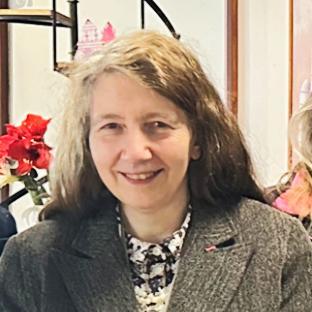 Anne-Marie Caminade a étudié à l'université Paul Sabatier de Toulouse, où elle a rédigé une première thèse sur les réactions d'ozonation des liaisons insaturées en chimie du phosphore, sous la direction de Max Koenig. Après un premier post-doctorat à l'Institut français du pétrole (IFP) de Rueil-Malmaison, sous la direction d'Hubert Mimoun, elle a rejoint le CNRS en 1985 en tant que chercheuse à l'université de Toulouse. Elle a ensuite rédigé une deuxième thèse sur les complexes de composés phosphorés à faible coordination, sous la direction de Jean-Pierre Majoral, puis effectué un deuxième post-doc, grâce à une bourse Alexander von Humboldt, pour travailler sur les composés de l'antimoine et du bismuth dans le laboratoire du professeur Michael Veith à l'université de Sarrebruck (Allemagne). De retour à Toulouse, non pas à l’université mais au Laboratoire de chimie de coordination (LCC) du CNRS, elle a travaillé sur les complexes phosphore-zirconium, puis sur les macrocycles phosphorés. Elle a ensuite créé le thème « dendrimères phosphorés », ce qui lui a permis de devenir directrice de recherche au CNRS en 1997, puis directrice de recherche de classe exceptionnelle en 2014, et enfin directrice adjointe du LCC (DUA, 2021-2024). Elle continue de développer le thème des dendrimères phosphorés dans de nombreux domaines, allant de la catalyse homogène aux nanomatériaux, en passant par les capteurs et surtout la nanomédecine, avec notamment des activités dans les domaines du cancer, de l’inflammation et des infections.
Ses travaux de recherche ont donné lieu à plus de 570 publications et 18 brevets, et sont à l'origine de la création de deux start-ups, Dendris et IMD-Pharma. Elle a été élue membre de l'Académie européenne des sciences (EurASc) et de l'Academia europaea en 2022. Elle a reçu des distinctions décernées par les quatre plus grandes sociétés chimiques de l'Union européenne (France 2021, Allemagne 2022, Espagne et Italie 2024) ainsi que par la Fédération Gay-Lussac – Académie des sciences de France (2024). Elle est rédactrice consultative de la revue Chemical Society Reviews et rédactrice invitée de nombreux numéros spéciaux (Chem. Soc. Rev., Coord. Chem. Rev., Molecules, Pharmaceutics, J. Pers. Med., Cancers, etc.) ainsi que de ce numéro thématique des Comptes-Rendus Chimie.
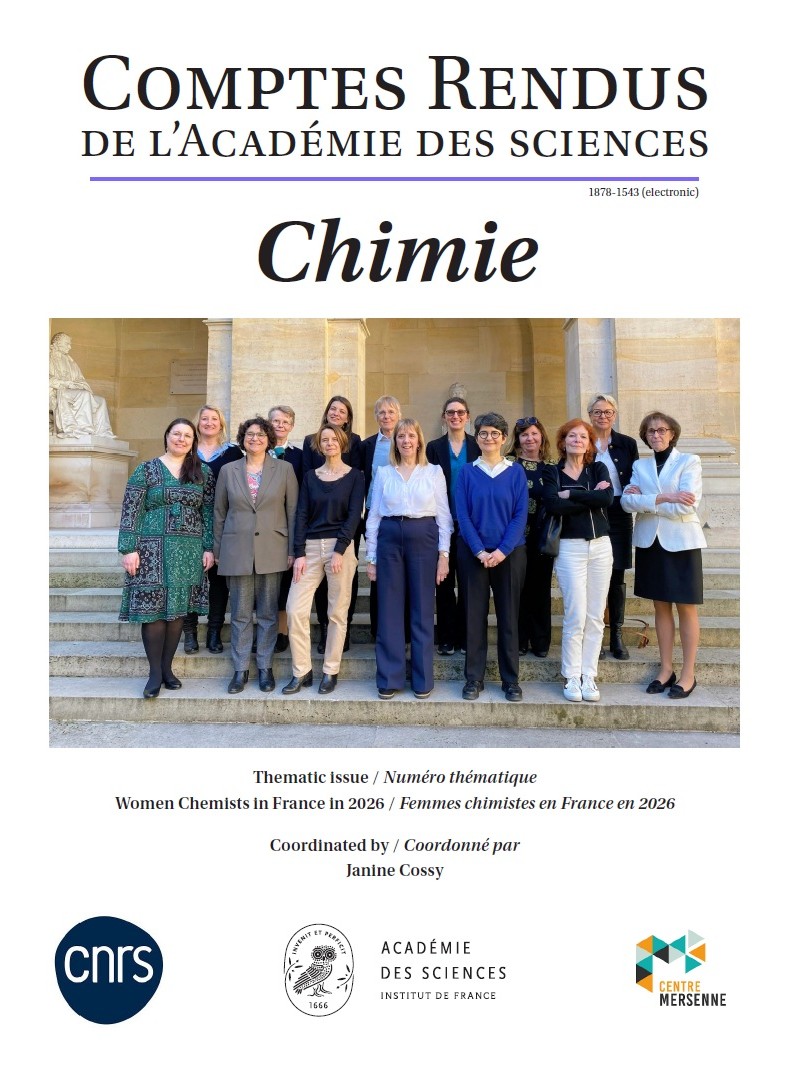
Women Chemists in France in 2026
[Femmes chimistes en France en 2026]
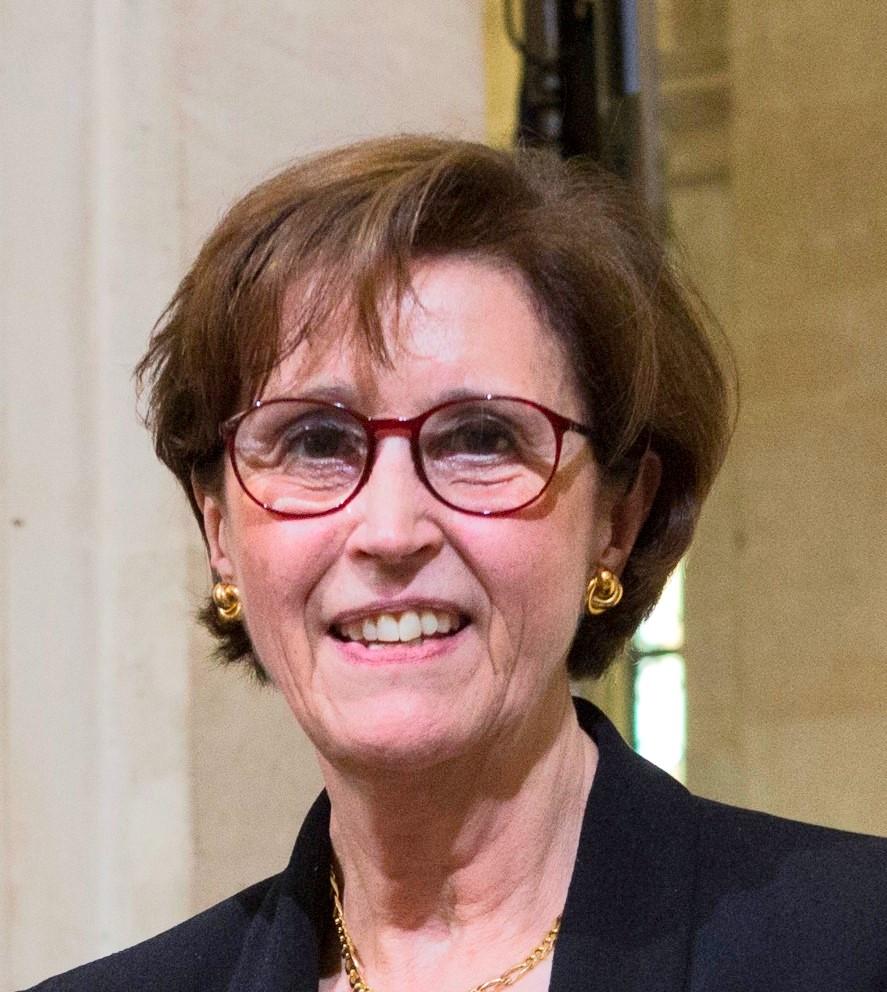 Janine Cossy a fait ses études à l'Université Champagne-Ardenne à Reims, et elle y a effectué une thèse en photochimie sous la direction du Prof. Jean-Pierre Pète. Après un séjour postdoctoral de deux ans chez le Prof. Barry M. Trost, à l'Université du Wisconsin (États-Unis), elle revient à Reims où elle devient, en 1990, directrice de recherche au CNRS. La même année, elle est nommée professeur de chimie organique à l'ESPCI Paris. Les recherches de Janine Cossy portent sur la synthèse de produits naturels et de molécules biologiquement actives (principalement avec des propriétés antitumorales et anti-inflammatoires) et sur le développement de méthodes de synthèse sélectives dans des domaines variés (photochimie, chimie radicalaire, réarrangements, couplages organométalliques, réactions enzymatiques, etc.). À l’heure actuelle, ses travaux s’incrivent dans le cadre de la chimie verte où elle met au point des méthodes de synthèse catalytiques utilisant des enzymes et des réactifs peu polluants.
Ses travaux de recherche ont donné lieu à plus de 570 publications et 18 brevets. Elle a été élue à l'Académie des sciences en 2017 et à l'Académie nationale de pharmacie en 2022. Signalons qu’elle a été présidente de la Division de Chimie Organique de la SFC (à l’heure actuelle SCF), membre de la Division «Organic and Biomolecular Chemistry» à l’IUPAC. Elle a été éditrice adjointe d’Organic Letters (ACS) et, à l’heure actuelle, elles est éditrice associée de Tetrahedron et des Comptes-Rendus Chimie de l’Académie des sciences. Elle est la cofondatrice de deux entreprises, CDP-Innovation et Acanthe Biotech.
Polyolefins: Chemistry and Polymerization Processes
[Polyoléfines : Chimie et procédés de polymérisation]
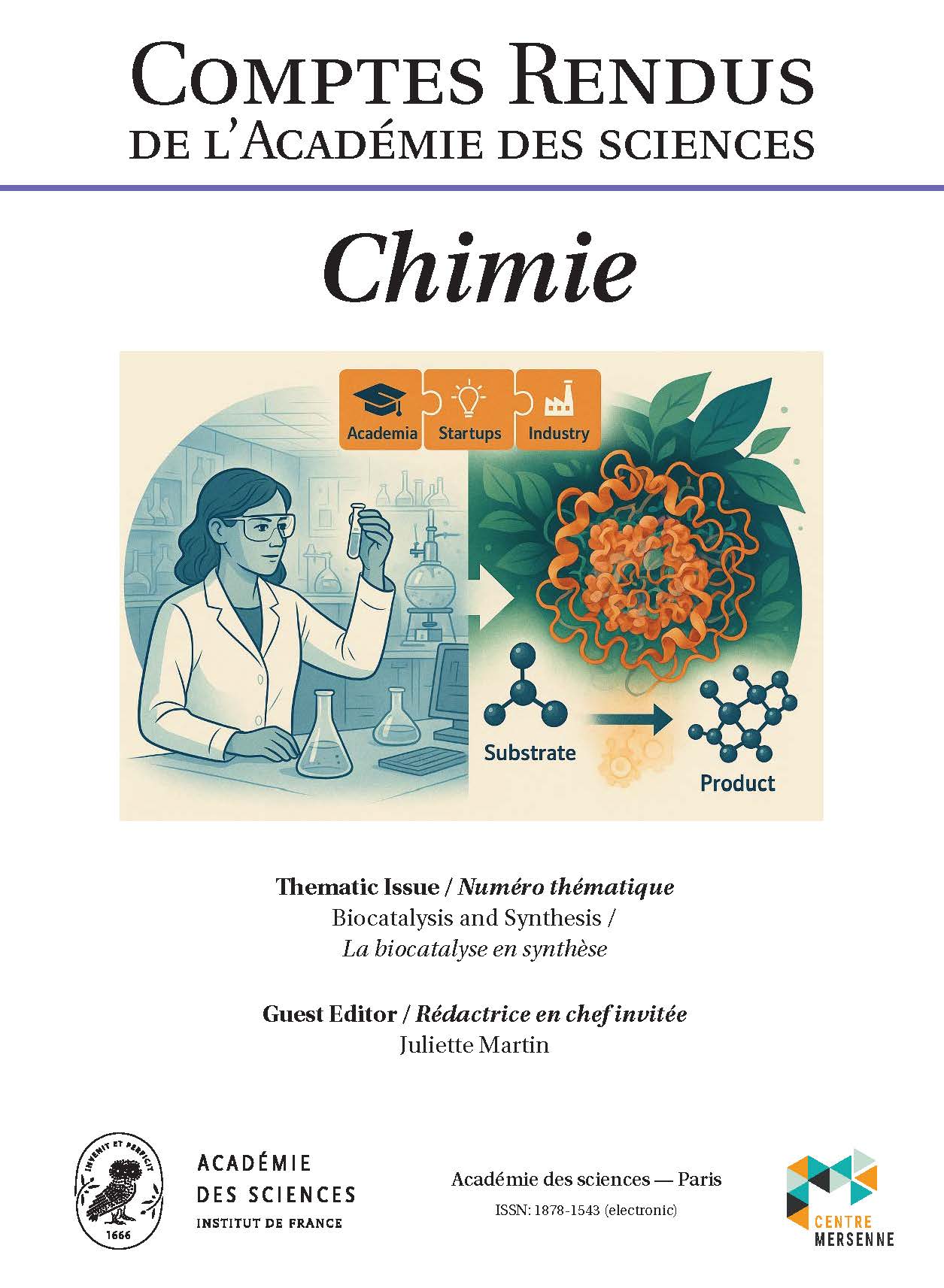
Biocatalysis and Synthesis
[La biocatalyse en synthèse]
 Juliette a obtenu son doctorat en chimie organique à l'Université de Caen (France), dans le domaine de l'organocatalyse et de la synthèse asymétrique sous la direction du Pr. Marie-Claire Lasne. Elle a ensuite effectué un postdoctorat industriel à Zeneca Life Science Molecules au Royaume-Uni dans le domaine de la catalyse homogène et hétérogène. Intégrée au département R&D, elle s'est concentrée sur le développement de nouvelles plateformes technologiques en chimiocatalyse et biocatalyse chez Avecia - CDMO (Contract Development Manufacturing Organization) à Huddersfield (UK). En outre, elle a coécrit un chapitre de dans « Asymmetric Catalysis on Industrial Scale » (Catalyse asymétrique à l'échelle industrielle), Wiley-VCH. Elle a également participé à l'organisation nationale britannique « Innovative Manufacture Initiative » pour étudier de nouveaux outils techniques afin d'accélérer l'efficacité par le biais de projets de recherche et développement.
De retour en France, elle a occupé plusieurs positions dans le développement de procédé en R&D au sein de PPG-Sipsy (aujourd'hui Zach System) et de PCAS (aujourd'hui SEQENS). Elle a occupé le poste de responsable R&D sur l'un des sites industriels de PCAS (aujourd'hui SEQENS), en se concentrant sur le développement de certaines technologies clés, incluant la synthèse des polymères pour la libération contrôlée de médicaments, et a été responsable de la biocatalyse pour la synthèse pharmaceutique. Elle a ensuite été nommée Directrice Générale de Protéus (une société spécialisée dans la science des protéines intégrée depuis 2017 à SEQENS).
Aujourd'hui, elle met à profit ses 25 ans d'expérience dans le domaine de la chimie de synthèse et de la biocatalyse industrielle pour développer le réseau en R&D et promouvoir la communication scientifique entre les différents domaines de la chimie et des activités économioques. Juliette est autrice et co-autrice de plus de 20 articles scientifiques. Elle occupe actuellement le poste de responsable de la communication scientifique chez SEQENS - un leader mondial intégré des solutions pharmaceutiques et ingrédients de spécialité, 16 sites de production, 9 pays, 9 centres de R&D, +300 chercheurs et experts.
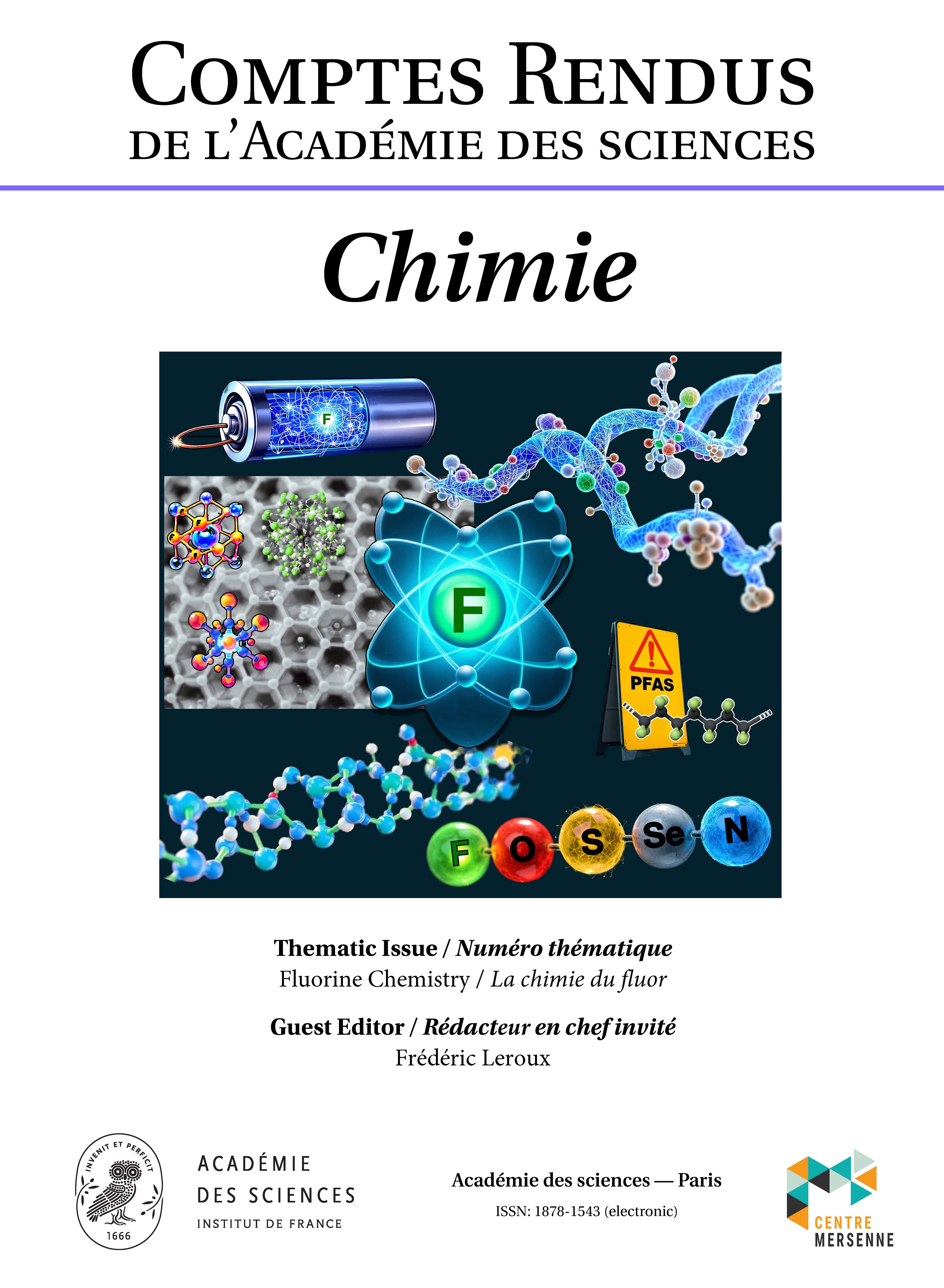
Fluorine Chemistry
[La chimie du fluor]
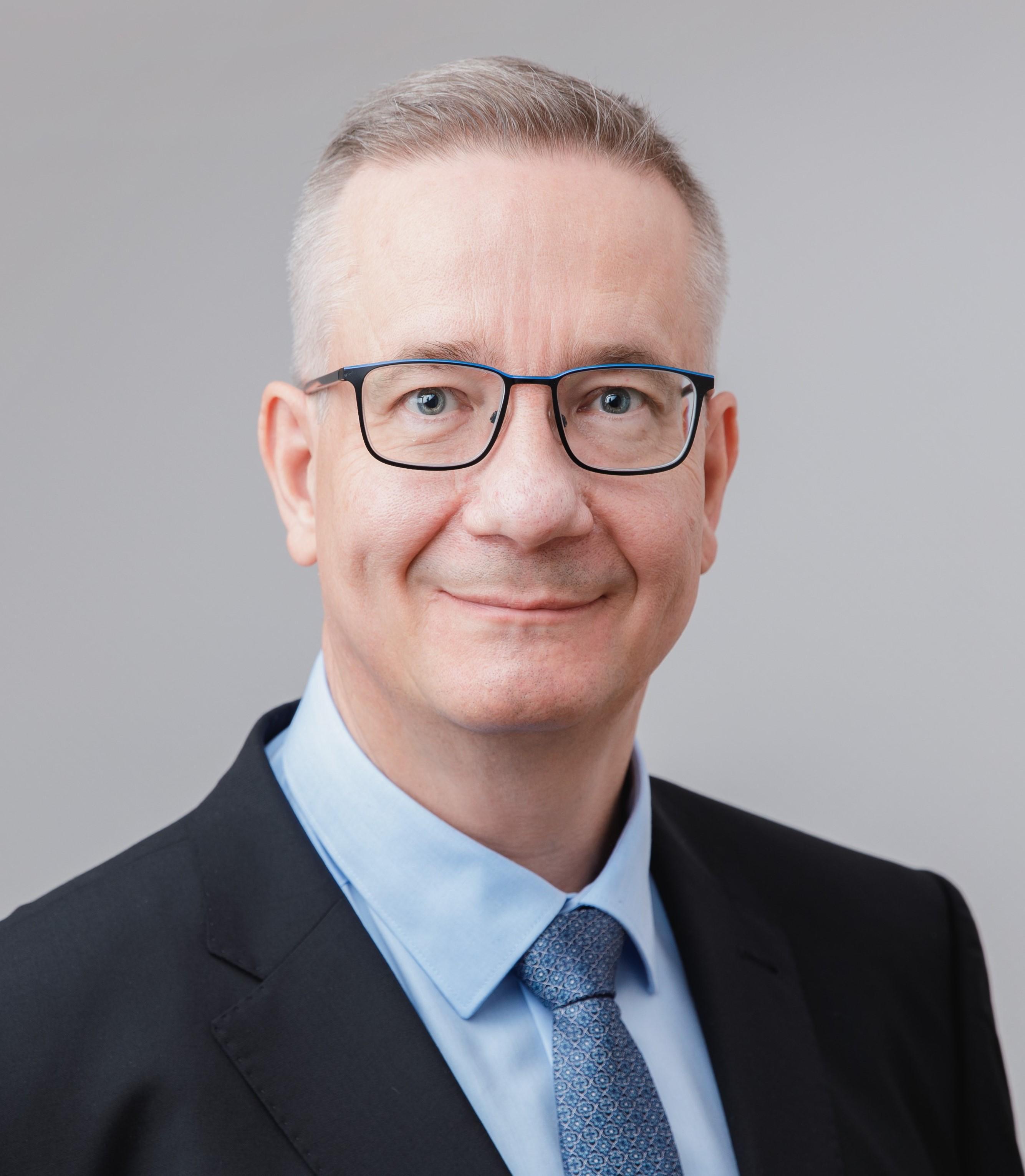 Frédéric Leroux est directeur de recherche CNRS à l'Université de Strasbourg. Il est actuellement directeur du département de chimie moléculaire "Laboratoire d'Innovation Moléculaire et Applications" (UMR7042-LIMA CNRS-Université de Strasbourg-Université de Haute-Alsace). De 2014 à 2024, il a été directeur du LabCom CNRS avec la société Bayer.
Ses recherches portent sur la chimie des composés organofluorés, et en particulier sur l'exploration de méthodologies innovantes et douces pour incorporer des atomes de fluor ou des groupes fluorés émergents (OCF3, OCHF2, CHF2, ...) dans des molécules d'intérêt pour les Sciences de la Vie. Ses recherches sont menées en étroite collaboration avec des partenaires industriels.
Il a publié plus de 150 articles, 22 brevets, 14 livres et chapitres de livres, et a présenté ses travaux lors de plus de 125 conférences. Il est Fellow de la Royal Society of Chemistry et Membre distingué de la Société chimique de France. Depuis 2016, il dirige le GIS CNRS Réseau français du fluor et est président de l'Association franco-japonaise de chimie fine et thérapeutique. Depuis 2023, il est Délégué scientifique à la Direction des relations avec les entreprises du CNRS.
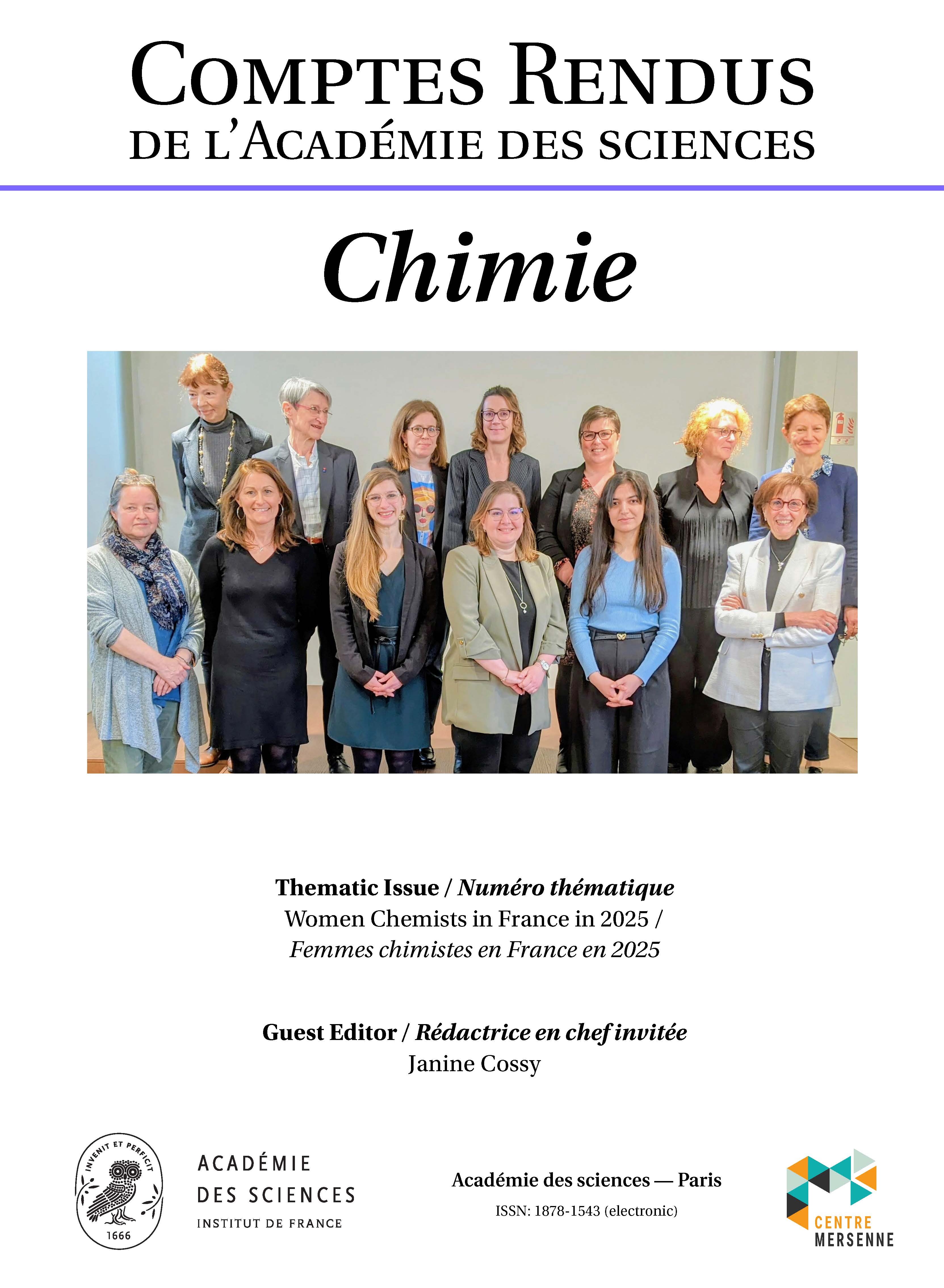
Women Chemists in France in 2025
[Femmes chimistes en France en 2025]
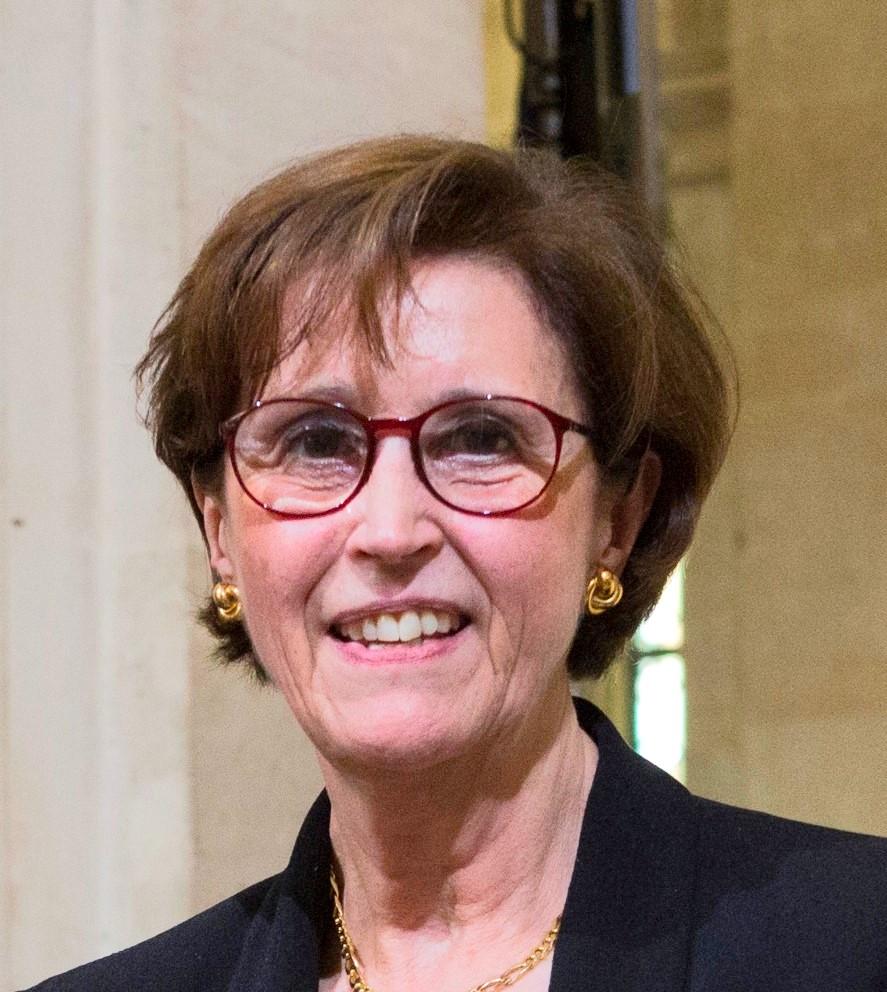 Janine Cossy a fait ses études à l'Université Champagne-Ardenne à Reims, et elle y a effectué une thèse en photochimie sous la direction du Prof. Jean-Pierre Pète. Après un séjour postdoctoral de deux ans chez le Prof. Barry M. Trost, à l'Université du Wisconsin (États-Unis), elle revient à Reims où elle devient, en 1990, directrice de recherche au CNRS. La même année, elle est nommée professeur de chimie organique à l'ESPCI Paris. Les recherches de Janine Cossy portent sur la synthèse de produits naturels et de molécules biologiquement actives (principalement avec des propriétés antitumorales et anti-inflammatoires) et sur le développement de méthodes de synthèse sélectives dans des domaines variés (photochimie, chimie radicalaire, réarrangements, couplages organométalliques, réactions enzymatiques, etc.). À l’heure actuelle, ses travaux s’incrivent dans le cadre de la chimie verte où elle met au point des méthodes de synthèse catalytiques utilisant des enzymes et des réactifs peu polluants.
Ses travaux de recherche ont donné lieu à plus de 570 publications et 18 brevets. Elle a été élue à l'Académie des sciences en 2017 et à l'Académie nationale de pharmacie en 2022. Signalons qu’elle a été présidente de la Division de Chimie Organique de la SFC (à l’heure actuelle SCF), membre de la Division «Organic and Biomolecular Chemistry» à l’IUPAC. Elle a été éditrice adjointe d’Organic Letters (ACS) et, à l’heure actuelle, elles est éditrice associée de Tetrahedron et des Comptes-Rendus Chimie de l’Académie des sciences. Elle est la cofondatrice de deux entreprises, CDP-Innovation et Acanthe Biotech.
Innovative Solutions for Biomass Resources and Wastewater Management
[Solutions innovantes pour les ressources en biomasse et la gestion des eaux usées]
Mejdi Jeguirim
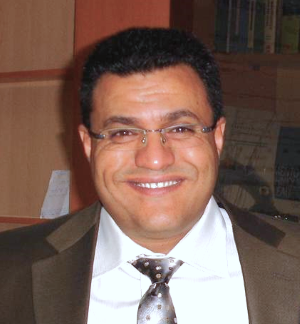 Dr. Eng. Salah Jellali est actuellement chercheur principal en ingénierie de l'eau et de l'environnement au Centre d'études et de recherches environnementales (CESAR) de l'université Sultan Qaboos. Ses recherches portent principalement sur la gestion locale et la gouvernance des déchets solides et liquides dans le cadre de l'économie circulaire et de la durabilité. Un domaine clé de son expertise concerne la conversion de la biomasse organique en biochars. Il a coordonné et participé à divers projets nationaux et internationaux axés sur la réutilisation des biochars comme adsorbants efficaces pour le traitement des eaux usées et/ou comme biofertilisants dans l'agriculture. En outre, il a participé activement, en tant que membre des comités organisateurs et scientifiques, à de nombreuses conférences internationales sur l'eau et l'environnement. Il est l'auteur de plus de 120 articles scientifiques et chapitres de livres évalués par des pairs et a supervisé plusieurs thèses de doctorat et étudiants en master. M. Jellali a reçu le prix du meilleur chercheur de la SQU en 2023.
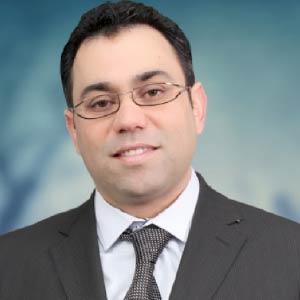 Dr. Mejdi Jeguirim est professeur à l'université de Haute-Alsace (France) dans le domaine de l'énergie, de l'ingénierie des procédés et de la modélisation cinétique. Il est coauteur de plus de 200 articles dans des revues internationales à comité de lecture dans son domaine de recherche et est membre du comité de rédaction des revues internationales suivantes : Energy, Energies, Energy for Sustainable Development, Biofuels, et International Journal of Green Energy.
Il participe en tant qu'expert scientifique à plus de 50 revues scientifiques internationales ainsi qu'à plusieurs programmes de recherche nationaux et internationaux. Il a reçu le prix d'excellence de la recherche nationale française pour les chercheurs ayant une activité scientifique de haut niveau pour les périodes 2009-2012, 2013-2016, 2017-2020 et 2021-2024. Le Dr Jeguirim figure dans le classement World's Top 2% Scientists établi par l'Université de Stanford depuis 2019.
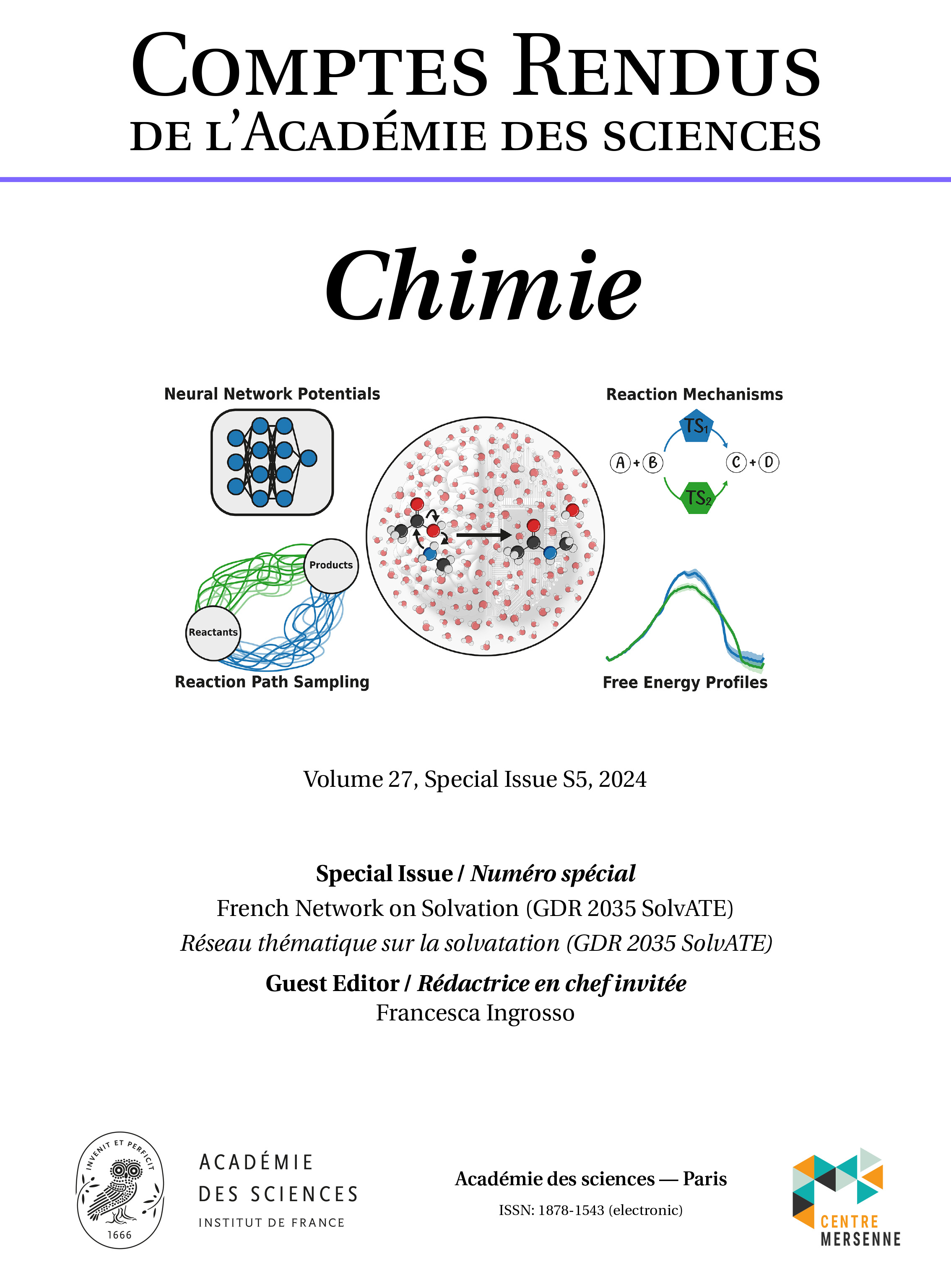
French Network on Solvation (GDR 2035 SolvATE)
[Réseau thématique sur la solvatation (GDR 2035 SolvATE)]
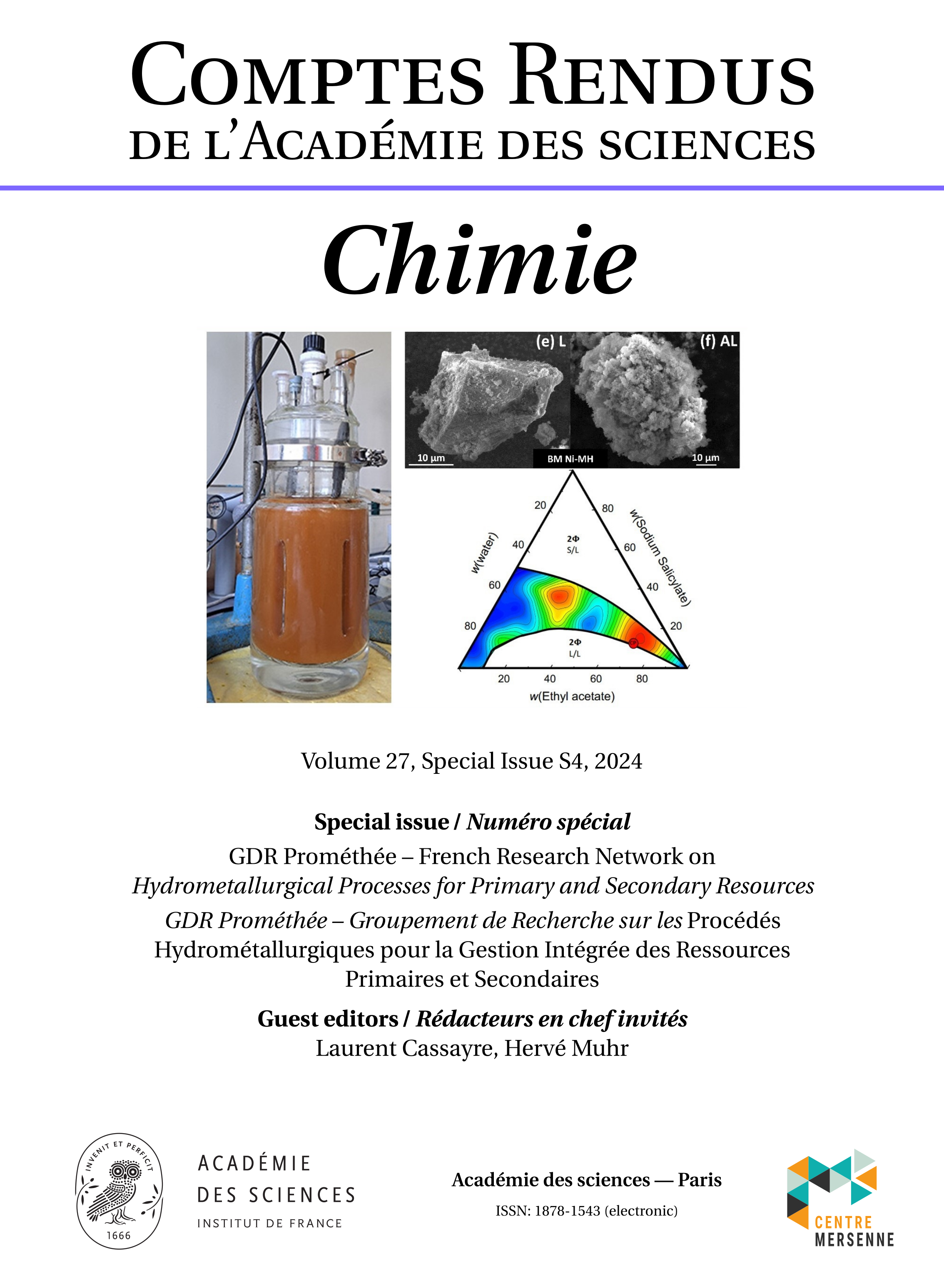
GDR Prométhée – French Research Network on Hydrometallurgical Processes for Primary and Secondary Resources
[GDR Prométhée – Groupement de Recherche sur les Procédés Hydrométallurgiques pour la Gestion Intégrée des Ressources Primaires et Secondaires]
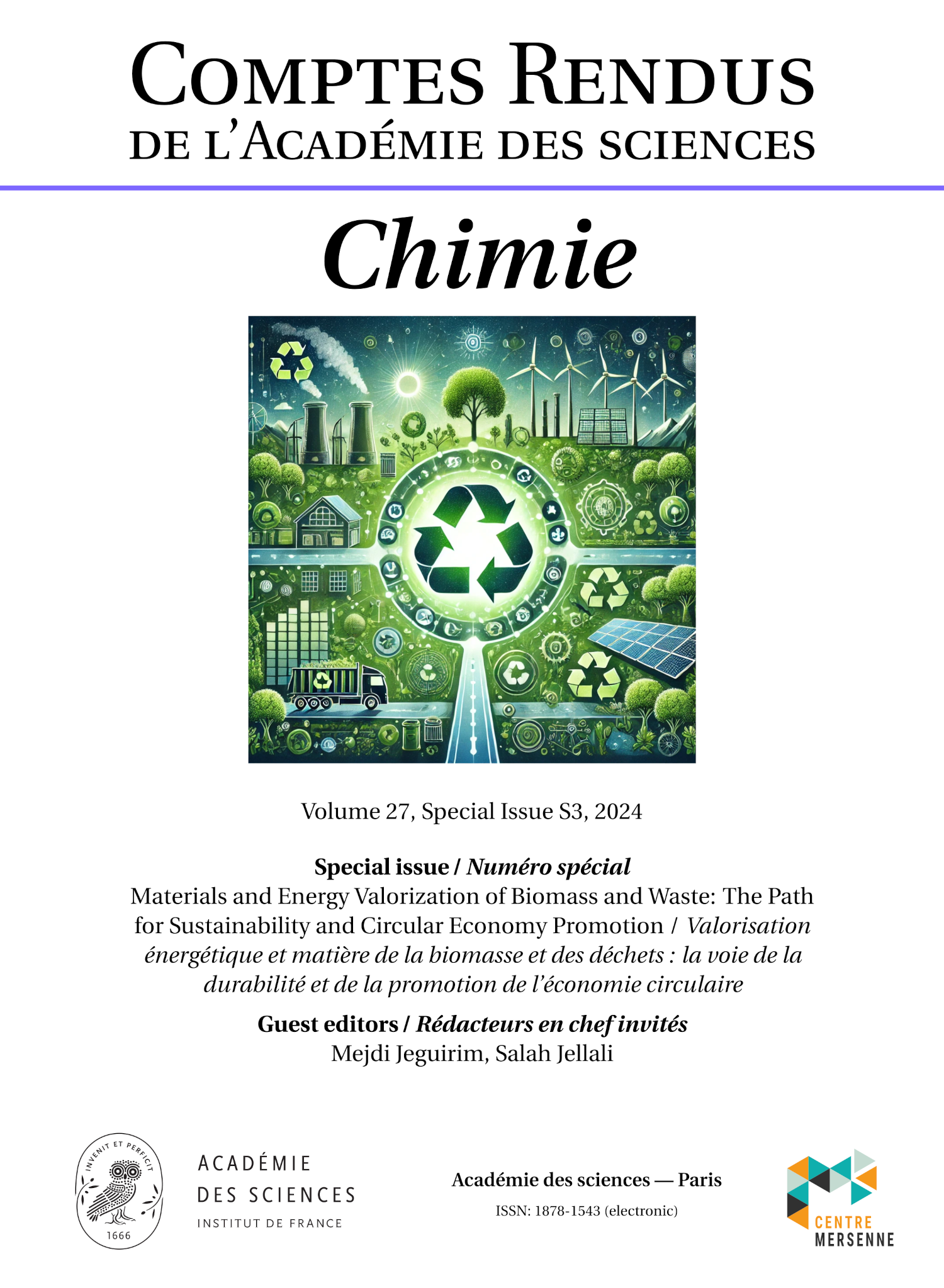
Materials and Energy Valorization of Biomass and Waste: The Path for Sustainability and Circular Economy Promotion
[Valorisation énergétique et matière de la biomasse et des déchets : la voie de la durabilité et de la promotion de l’économie circulaire]
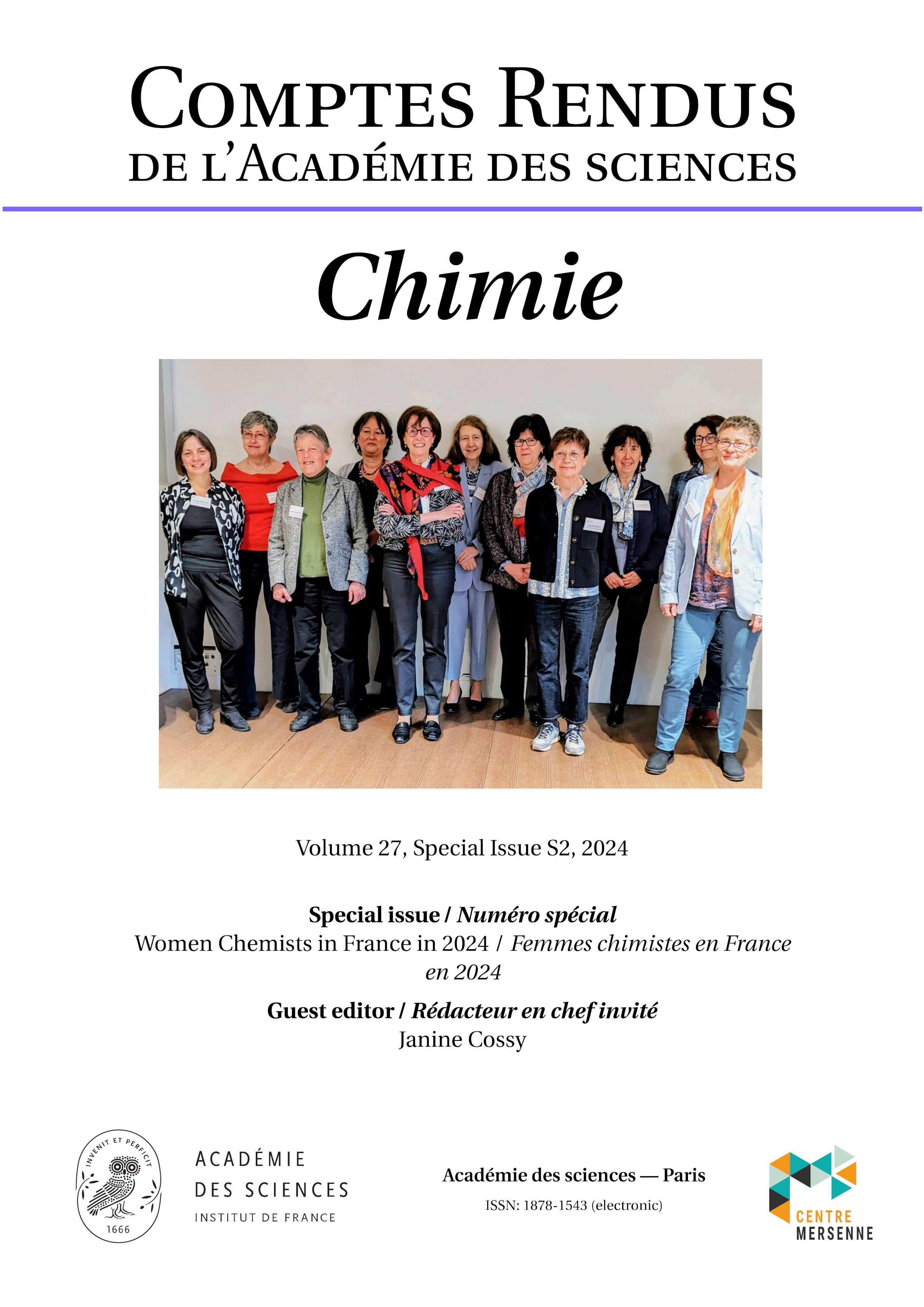
Women Chemists in France in 2024
[Femmes chimistes en France en 2024]
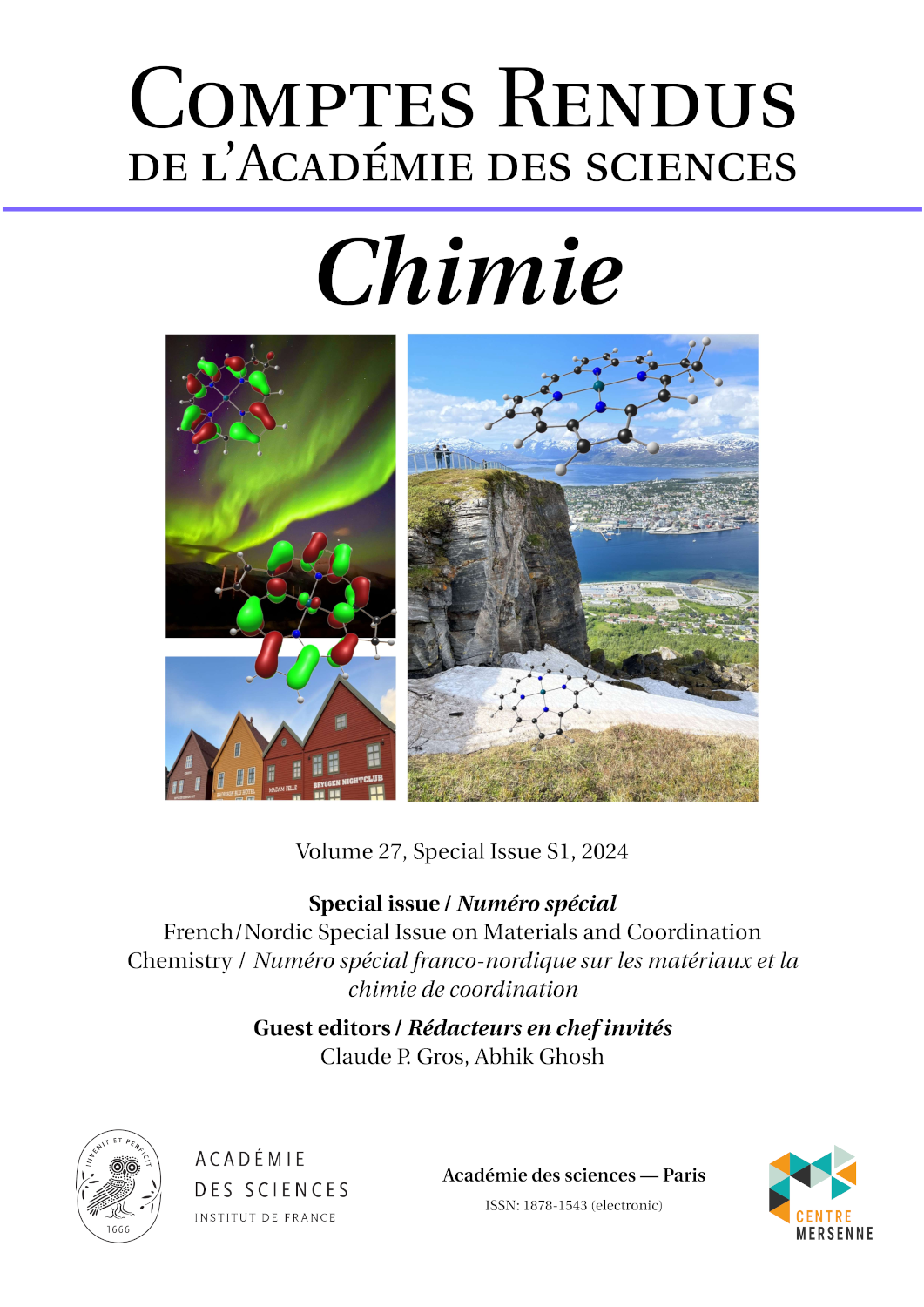
French/Nordic Special Issue on Materials and Coordination Chemistry
[Numéro spécial franco-nordique sur les matériaux et la chimie de coordination]
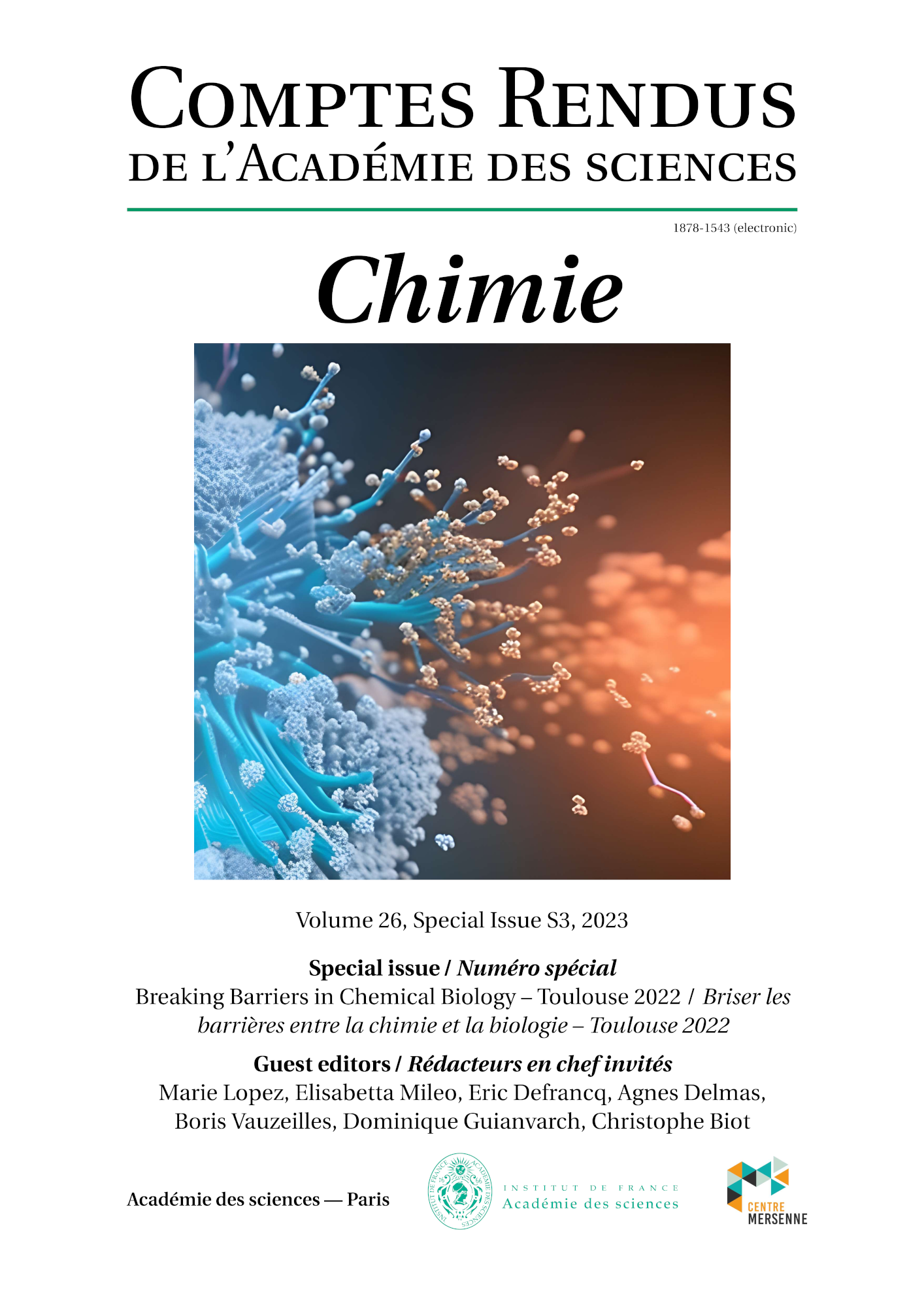
Breaking Barriers in Chemical Biology – Toulouse 2022
[Briser les barrières entre la chimie et la biologie – Toulouse 2022]
Chemical Ecology – Chemical Mediation in the Environment
[Écologie chimique – Médiation chimique dans l’environnement]
Materials and Clean Processes for Sustainable Energy and Environmental Applications
[Matériaux et procédés propres pour des applications énergétiques et environnementales]
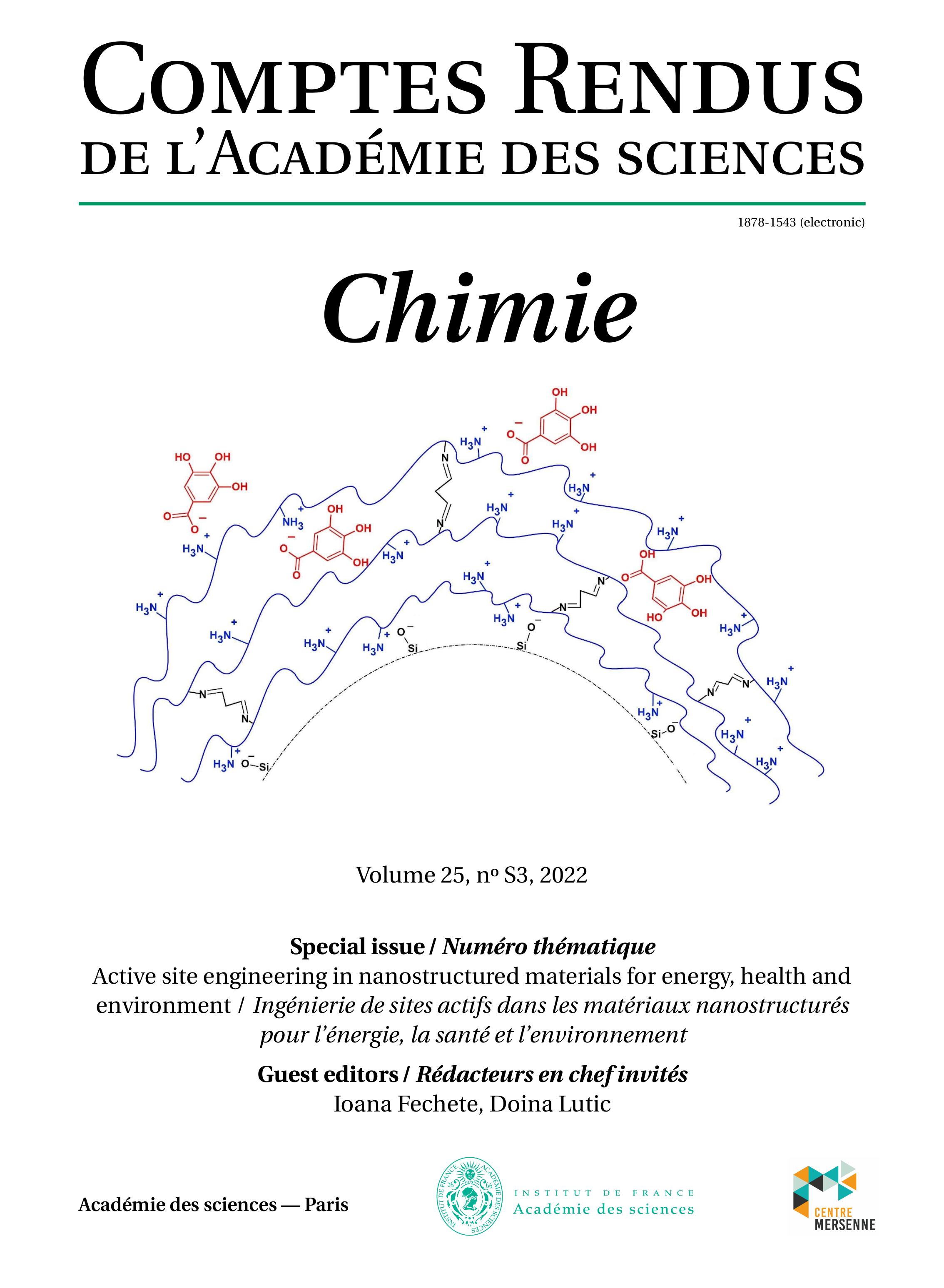
Active site engineering in nanostructured materials for energy, health and environment
[Ingénierie de sites actifs dans les matériaux nanostructurés pour l’énergie, la santé et l’environnement]
Sustainable Biomass Resources for Environmental, Agronomic, Biomaterials and Energy Applications 3
[Ressources de biomasse durables pour des applications environnementales, agronomiques, de biomatériaux et énergétiques 3]

Microcrystalline pathologies: Clinical issues and nanochemistry
[Pathologies microcristallines : questions cliniques et nanochimie]
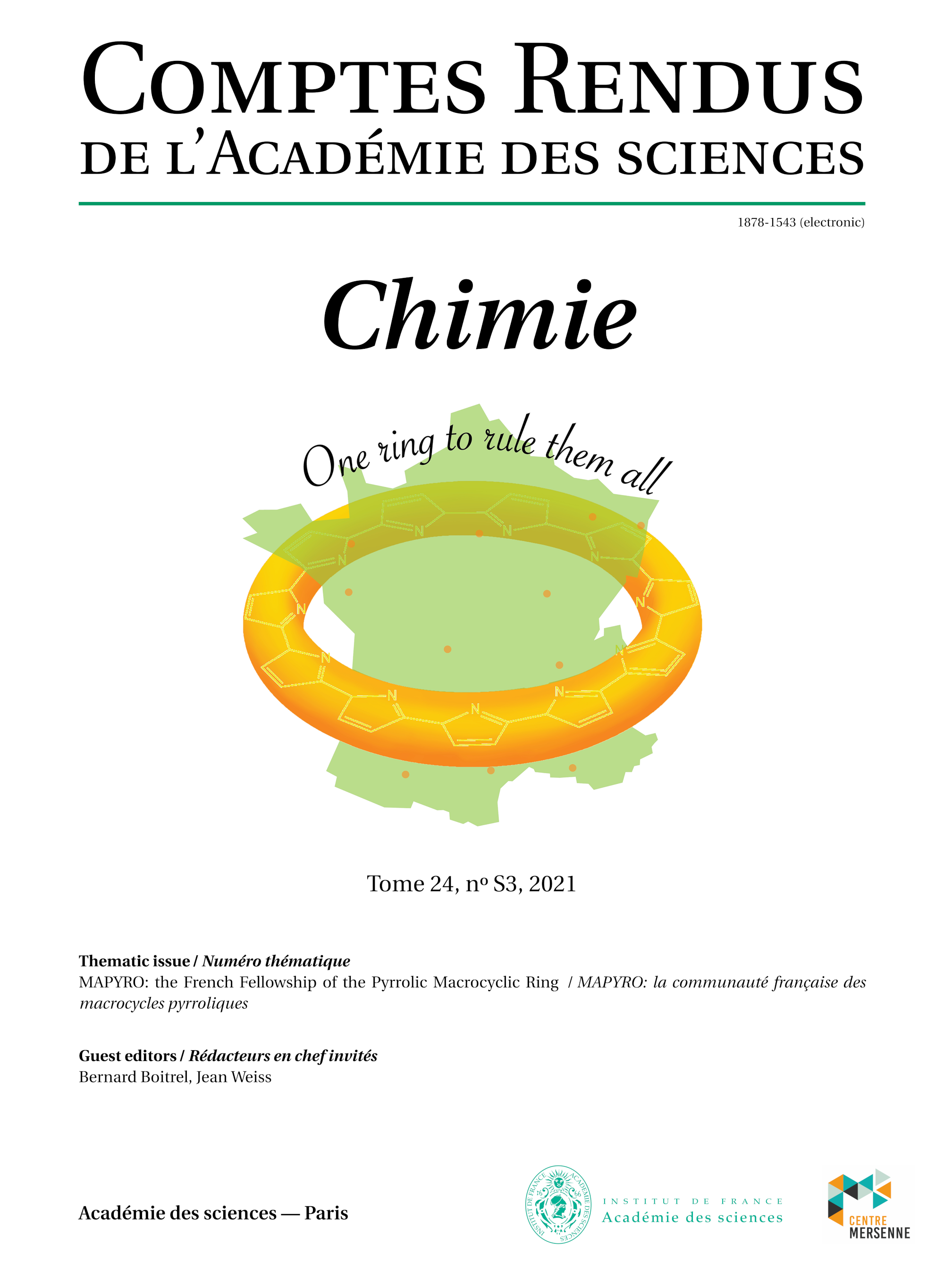
MAPYRO: the French Fellowship of the Pyrrolic Macrocyclic Ring
[MAPYRO : la communauté française des macrocycles pyrroliques]
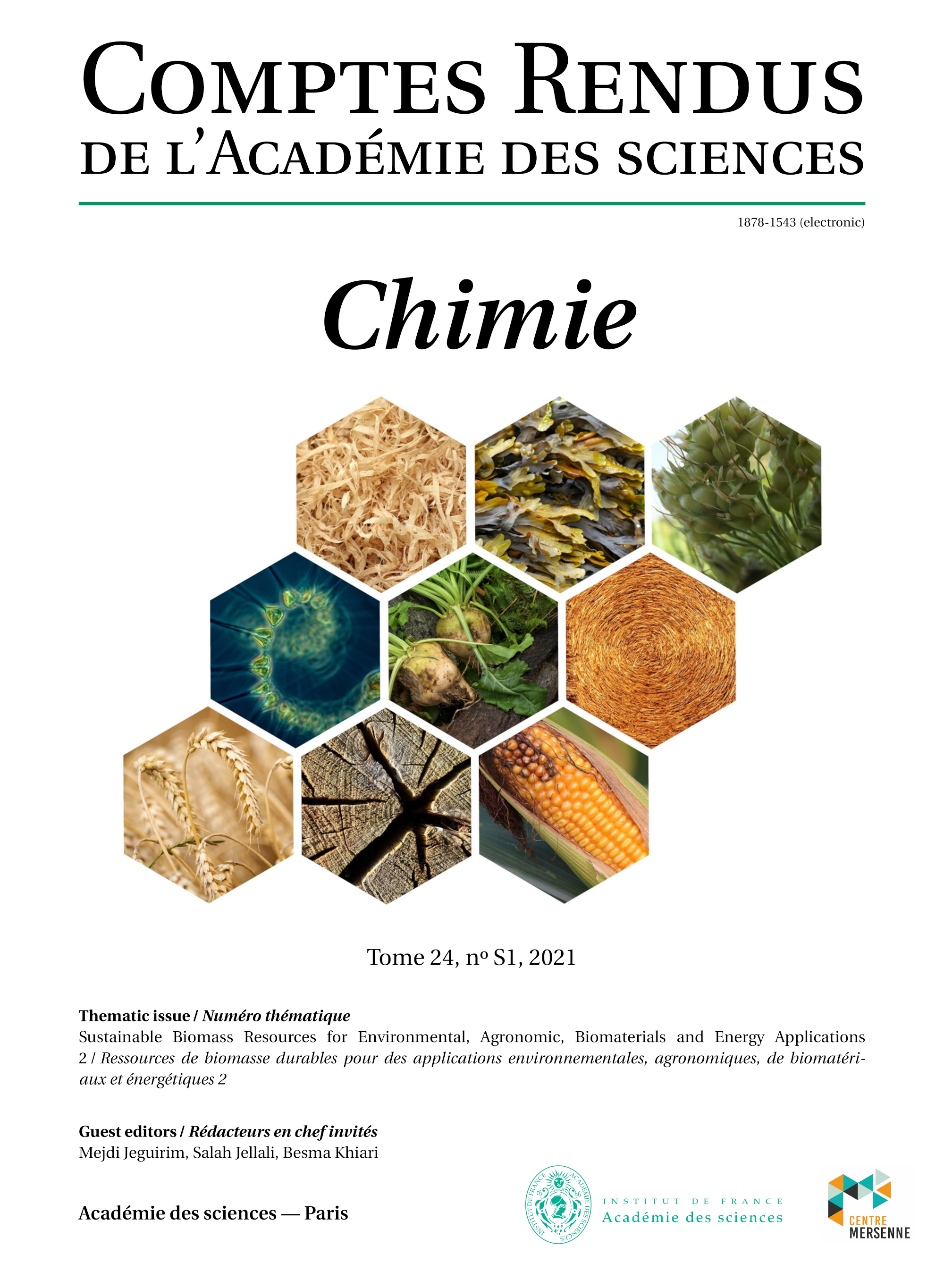
Sustainable Biomass Resources for Environmental, Agronomic, Biomaterials and Energy Applications 2
[Ressources de biomasse durables pour des applications environnementales, agronomiques, de biomatériaux et énergétiques 2]
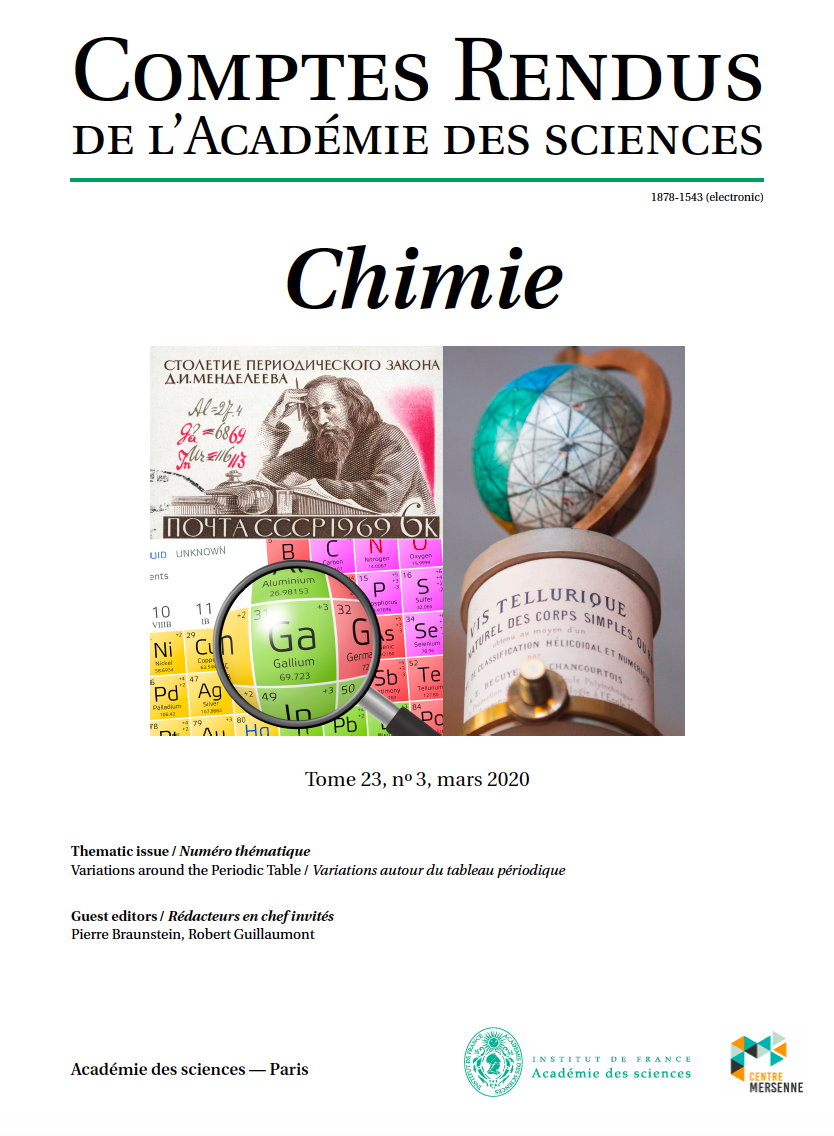
Variations around the Periodic Table
[Variations autour du tableau périodique]
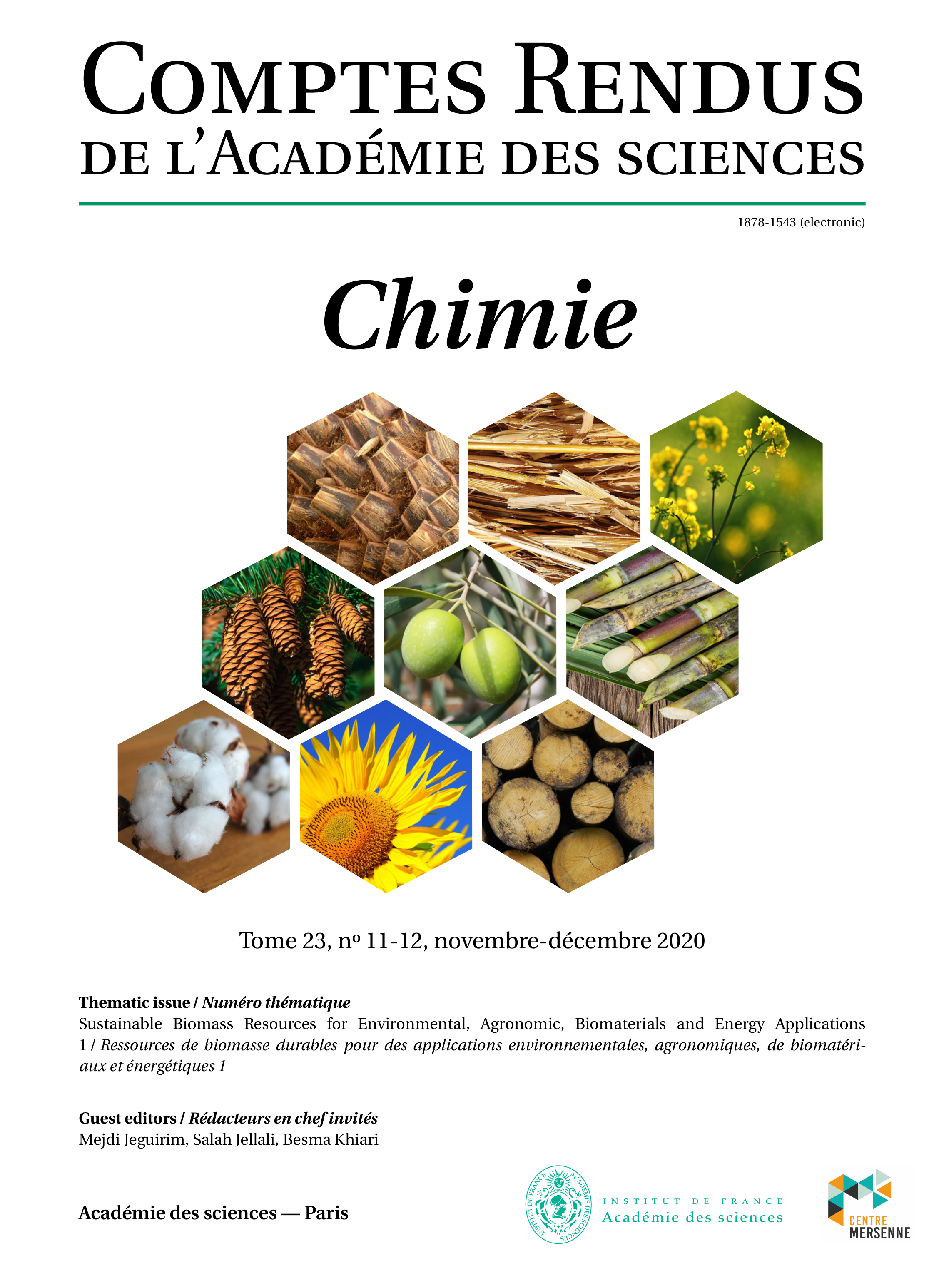
Sustainable Biomass Resources for Environmental, Agronomic, Biomaterials and Energy Applications 1
[Ressources de biomasse durables pour des applications environnementales, agronomiques, de biomatériaux et énergétiques 1]


Matériaux naturels, matériaux de synthèse et chimie moléculaire en Afrique de l'Ouest francophone
[Natural materials, synthesis materials, and molecular chemistry in French-speaking western Africa]
Catalyse biomimitique d'oxydation
[Biomimetic oxydation catalysis]
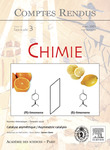
Catalyse asymétrique
[Asymmetric catalysis]
Corrélations de spin et de charge dans les matériaux moléculaires - Propriétés physiques, chimie et aspects « matériaux »
[Spin- and charge-correlations in molecule-based materials - Physical properties, chemistry, and materials aspects]