


Quelques chimistes nés en janvier
Texte d'introduction
|
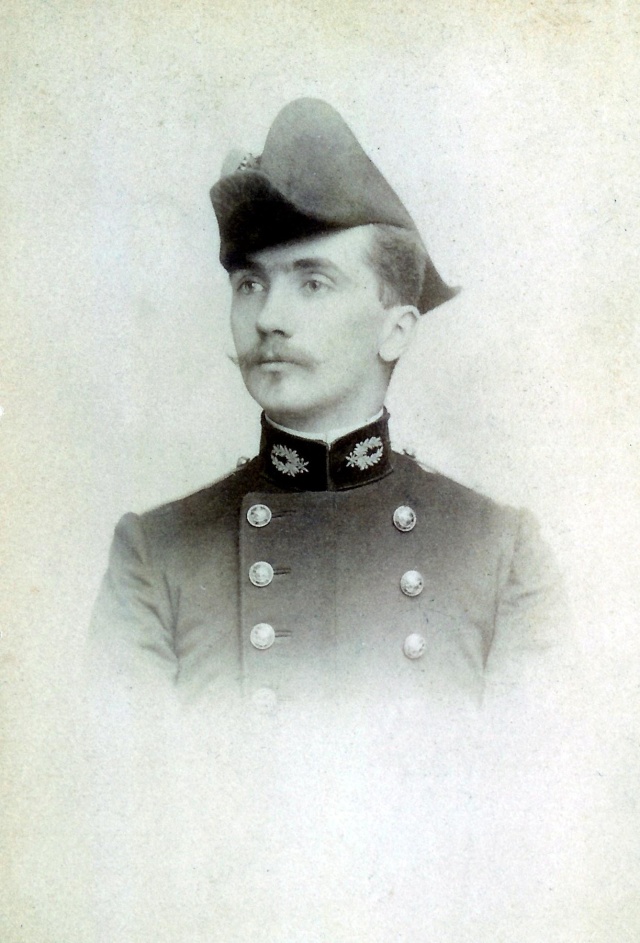
Pourquoi pas une image ici ? Un exemple avec Maximilien Marie. |
Lorem ipsum dolor sit amet, consectetur adipiscing elit. Maecenas vitae pretium dolor, quis scelerisque eros. Suspendisse orci est, pharetra auctor dignissim ac, porttitor vulputate justo. Praesent justo libero, porttitor vitae felis id, tincidunt porttitor neque. Morbi euismod in dui ut ornare. In venenatis sodales porttitor. Nullam semper ornare convallis. Ut nec nisi fermentum, lacinia erat at, placerat leo. Maecenas mattis diam in elementum eleifend. Fusce fringilla sagittis nibh, in sodales orci rutrum et. Mauris ac aliquet nulla. Aliquam quis eleifend mi. Quisque vitae lacus condimentum, convallis ex non, venenatis sapien. Proin dignissim dictum accumsan. Vivamus aliquam felis ut odio lobortis tempus. Donec cursus eros a felis tincidunt, sed ultrices nunc maximus. Donec pellentesque sapien consequat, tincidunt leo a, elementum arcu. Donec velit arcu, venenatis non erat vel, efficitur tempus libero. Vestibulum ante ipsum primis in faucibus orci luctus et ultrices posuere cubilia curae; Sed accumsan tortor sit amet nisi sollicitudin, sed aliquam odio venenatis. Vestibulum lacinia dapibus luctus. Morbi at turpis ac orci egestas vestibulum sed et lectus. Nullam pharetra risus sit amet ligula imperdiet ultrices. Curabitur vitae magna sodales, tincidunt eros sit amet, vehicula elit. Pellentesque at dictum sem. Quisque tristique erat sit amet fermentum commodo. Pellentesque condimentum, nibh et consequat rutrum, tellus purus blandit mauris, quis lobortis libero lacus vitae metus. Sed sagittis, enim vitae faucibus rhoncus, magna arcu pulvinar libero, non volutpat metus enim non lectus. In volutpat orci id lacus faucibus imperdiet. Vivamus placerat rutrum diam et porttitor. Ut sodales libero eget diam aliquet viverra id et sapien. |
Ioana Fechete
Université de Lorraine, CNRS, LEMTA, F 54000 Nancy – France.
ioana.fechete@univ-lorraine.fr
i_fechete@yahoo.com
| January | Scientists |
|---|---|
| 1 |
Maximilien Marie (1 January 1819 - 27 April 1891), French mathematician and polytechnician. He made significant contributions to the field of mathematics and was known for his work in various branches of science. Satyendranath Bose (1 January 1894 – 4 February 1974), Indian physicist who specialized in mathematical physics. He is best known for his work in the field of quantum mechanics, particularly in statistical mechanics and the theory of Bose-Einstein statistics, which laid the foundation for the development of quantum statistics. Abbas Bahri (1 January 1955 – 10 January 2016), Tunisian mathematician known for his significant contributions to the fields of partial differential equations, topology, and mathematical analysis. His work focused particularly on the mathematical study of critical points, variational problems, and geometric analysis. In 1983, the ARPANET (Advanced Research Projects Agency Network), which was the precursor to the modern Internet, officially transitioned to the TCP/IP (Transmission Control Protocol/Internet Protocol) communication protocol. This switch marked a significant milestone in the development of the Internet. |
| 2 |
Roger Adams (2 January 1889 – 6 July 1971), American organic chemist known for his groundbreaking contributions to the field of organic chemistry. One of his most notable achievements was the development of Adams’ catalyst, a key catalyst used in the hydrogenation of organic compounds. This catalyst played an important role in chemical reactions, particularly in the pharmaceutical and food industries. |
| 3 |
Vladimir Aleksandrovitch Fock (3 January 1899 – 27 December 1974), Russian theoretical physicist renowned for his fundamental contributions to quantum mechanics and quantum field theory. Fock’s work significantly influenced the development of modern physics, especially in the areas of wave mechanics, quantum electrodynamics, and relativistic quantum theory. Keith James Laidler (3 January 1916 – 26 August 2003), English chemist, renowned for his pioneering work in chemical kinetics. Laidler is best known for his substantial contributions to the transition state theory, a fundamental concept in modern chemical kinetics. This theory explains the process of chemical reactions in terms of an energy barrier that reactants must overcome to form products. 3 January 1917, Ernest Rutherford, a New Zealand-born British physicist, conducted his famous experiment that marked a significant milestone in the understanding of atomic structure. In this experiment, Rutherford successfully penetrated the atomic nucleus by bombarding nitrogen gas with alpha particles. |
| 4 |
Anthony Bacon (4 January 1718 – 21 January 1786), British steelmaker and an important figure in the early development of the steel industry in Wales. He was influential in the development of Wales’ coal mines, a crucial resource for powering the burgeoning industrial sector during the 18th century. He worked with the newly emerging technologies of the time, which included improvements in the techniques of smelting iron and converting it into steel, using the energy from coal to fuel the process. Alexander Solomonovich Kompaneyets (4 January 1914 – 19 August 1974), Ukrainian physicist, born in the Russian Empire, known for his significant contributions to theoretical physics, particularly in the fields of quantum mechanics and cosmology. |
| 5 |
Joseph-Aignan Sigaud de Lafond (5 January 1730 – 26 January 1810), French physicist and educator, best known for his contributions to the promotion of experimental physics and its teaching in France. |
| 6 |
David Dale (6 January 1739-1806), Scottish merchant and industrialist who played a pivotal role in the early stages of the Industrial Revolution in Britain. Dale became one of the first British cotton entrepreneurs in the late 18th century, helping to establish Britain as a leading industrial power. One of the key features of New Lanark was its use of the energy from the waterfalls of the River Clyde. The site was strategically chosen to harness the natural water power, which drove the machinery in the mills. This was an early example of sustainable energy use in industrial production. |
| 7 |
Eilhard Mitscherlich (7 January 1794 – 28 August 1863), German chemist and mineralogist. He is best known for his contributions to the field of chemistry, particularly in crystallography and the study of minerals. Mitscherlich is credited with the discovery of the phenomenon of isomorphism. His scientific work covered several areas of study, including kinetics, electrocapillarity and adsorption processes, optical methods in interfacial electrochemistry, single crystal electrode processes, electrochemical double layers. |
| 8 |
Walther Wilhelm Georg Bothe (8 January 1891 – 8 February 1957), German nuclear physicist best known for his development of coincidence methods in particle physics, a technique that revolutionized the study of subatomic particles. This method allowed physicists to detect and analyze simultaneous particle interactions, leading to a more precise understanding of atomic and nuclear processes. Bothe was awarded the Nobel Prize in Physics in 1954, alongside Max Born, for their work in the field of quantum mechanics and particle physics. |
| 9 |
Maurice Marie Alfred Couette (9 January 1858 – 18 August 1943), French physicist renowned for his significant contributions to the study of fluid dynamics, particularly in the field of fluidity and rheology. He developed a mathematical model to study the flow of viscous fluids between two rotating cylinders. This led to the concept of Couette flow, which is now a fundamental experiment in fluid mechanics used to study the viscosity of fluids. 9 January 1968: The American probe Surveyor 7 successfully lands on the Moon. This mission marked the seventh and final spacecraft of NASA’s Surveyor program, aimed at exploring the lunar surface to prepare for the upcoming Apollo missions. |
| 10 |
Gordon Kidd Teal (10 January 1907 – 7 January 2003), American engineer and pioneer in the field of semiconductor technology. He is best known for his groundbreaking work in developing methods for producing high-purity germanium and silicon single crystals. Together with Morgan Sparks, Teal developed a modification of the Czochralski process that allowed for the creation of the crystal configuration necessary for manufacturing bipolar junction transistors, which became a key element in the development of modern electronic devices. |
| 11 | |
| 12 | |
| 13 | |
| 14 | |
| 15 | |
| 16 | |
| 17 | |
| 18 | |
| 19 | |
| 20 | |
| 21 | |
| 22 | |
| 23 | |
| 24 | |
| 25 | |
| 26 | |
| 27 | |
| 28 | |
| 29 | |
| 30 | |
| 31 |