





 CC-BY 4.0
1. Introduction
Heterocycles of medium size (five- or six-membered rings most generally) contain at least one heteroatom, most generally nitrogen, oxygen, or sulfur atoms, which are gaining widespread interest due to their numerous properties, particularly for medicinal uses [1, 2, 3, 4]. Among the different types of heterocycles, nitrogen heterocycles are the most widely represented both in Nature and in medicinal compounds [5, 6]. Recent reviews have emphasized the role of nitrogen heterocycles in U.S. FDA-approved pharmaceuticals (2013–2023) [7], in particular as anticancer drugs [8, 9, 10] and anti-viral agents [11]. More specific reviews have gathered the properties of pyridine [12, 13], piperidine [14], quinoline [15], pyrrole [16], pyrrolidine [17], and triazole [18, 19] derivatives. A few other elements have been used for the synthesis of heterocycles, in particular oxygen, as emphasized in a review about recent FDA-approved drugs containing oxygen heterocycles (including carbohydrates) [20]. Sulfur heterocycles are less common, but also display medicinal properties, as they make up an important part of FDA-approved drugs [21]. Despite the very large number of heterocycles, their synthesis is still of current interest, in particular for their functionalization [22].
Dendrimers are highly branched, monodisperse macromolecules, synthesized stepwise, generally by a divergent process from a multifunctional core [23]. Each time the number of terminal functions is multiplied, most frequently by two [24], a new generation is created. It should also be kept in mind that their synthesis must be efficient and selective to obtain high generations. Among the different types of dendrimers [25], those based on “inorganic” elements [26], in particular phosphorus, i.e., having phosphorus atoms both at the core and at the branching points [27, 28], display specific properties that have been recently emphasized [29]. Their easy characterization by 31P NMR has to be underlined in particular [30]. In most cases, phosphorus dendrimers were built from a trifunctional core (P(S)Cl3) up to generation 12 [31] or from a hexafunctional core (N3P3Cl6) up to generation 8 [32]. Both families of phosphorus dendrimers will be considered in this review, but with the emphasis of the most widely used, based on N3P3Cl6 as core, which affords twice the number of terminal functions at a given generation, compared to the P(S)Cl3 core. Figure 1 displays both the full chemical structures and the abbreviated chemical structures (linear with parentheses after each branching point) of these dendrimers based on poly(phosphorhydrazone) (PPH) linkages. These PPH dendrimers have, as terminal functions, either P(S)Cl2 or aldehyde groups both being highly reactive and suitable for the grafting of new chemical functions, depending on the desired properties.
Full structures and corresponding abbreviated linear structures of different generations of PPH dendrimers built from two different cores.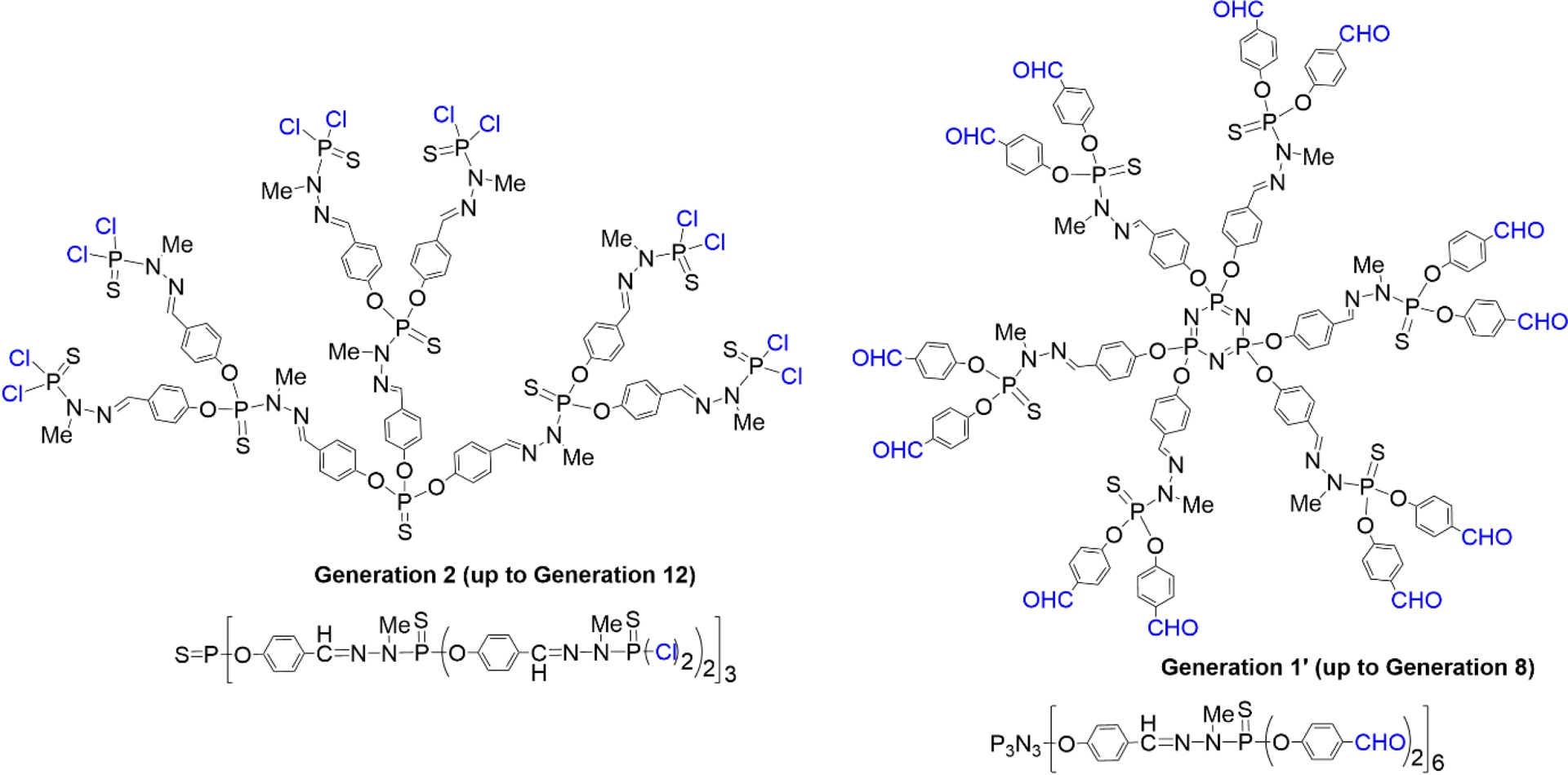
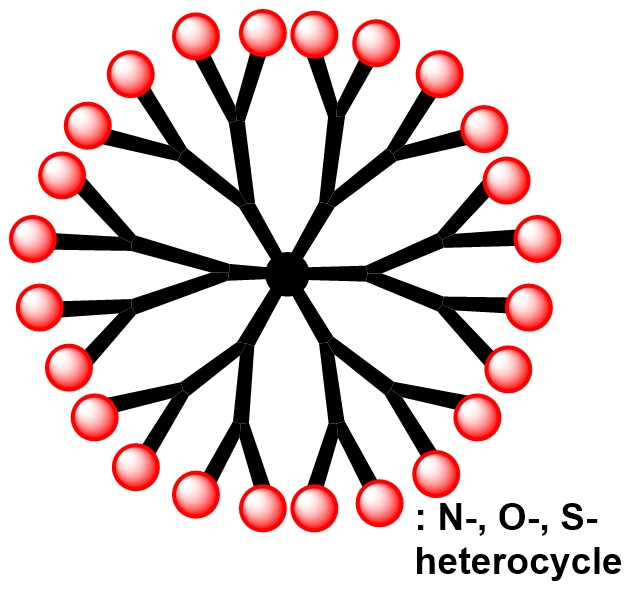
This review will display the peripheral functionalization of phosphorus dendrimers with different types of heterocycles. It will be organized depending on the element included in the heterocycle, beginning with nitrogen, followed by oxygen, then by sulfur, and it will end with heterocycles containing two types of heteroatoms, such as P and N, P and O, N and O. Each part will begin with fundamental research followed by applications, in catalysis, for materials, and mainly for biological uses.
First functionalization examples of aldehyde-decorated PPH dendrimers by nitrogen heterocycles. (A) Condensation. (B) Other condensation followed by protonation. (C) Horner–Wadsworth–Emmons reaction.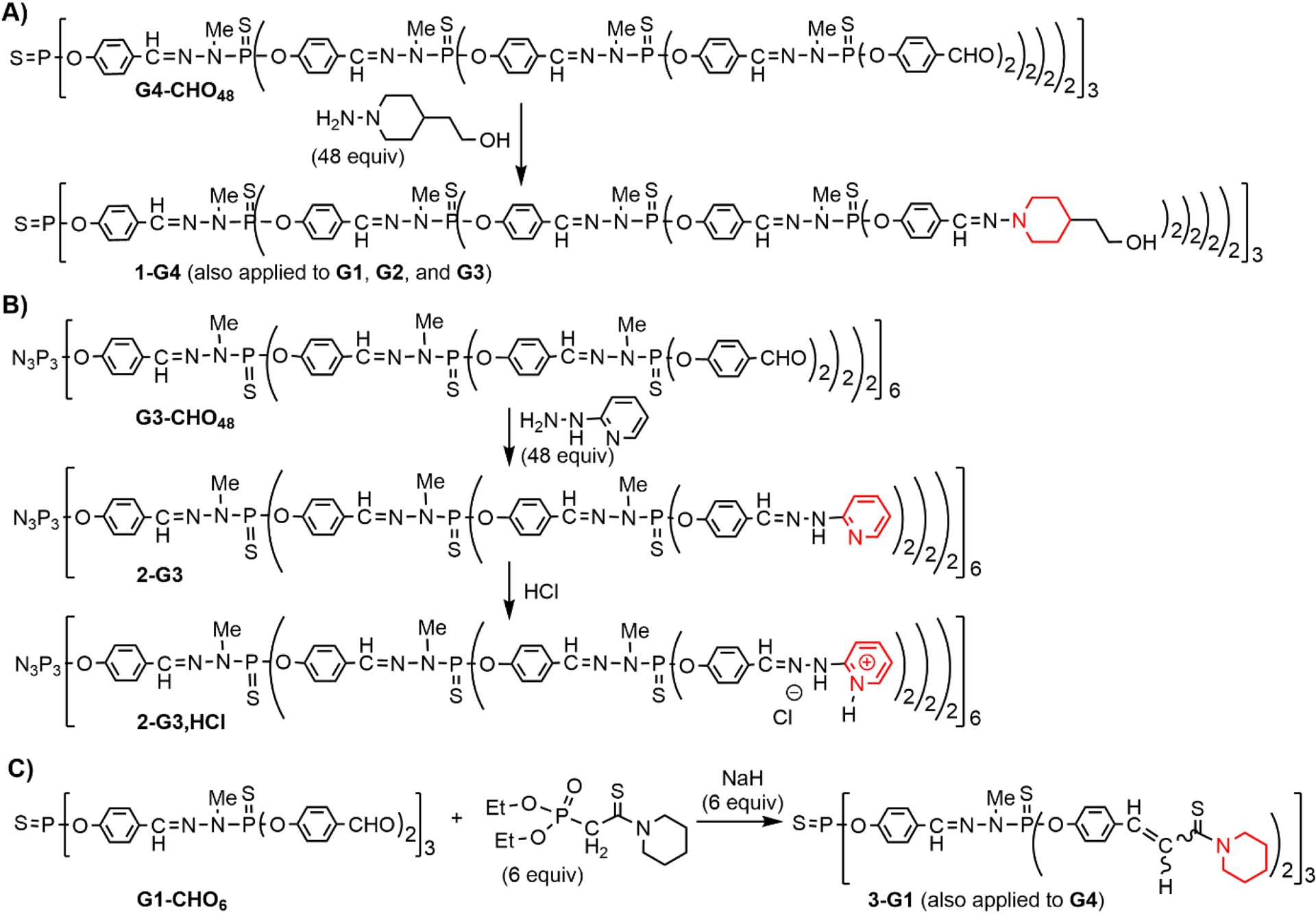
2. PPH dendrimers functionalized with nitrogen heterocycles
2.1. Methods of synthesis and characterization
The very first examples of PPH dendrimers functionalized with heterocycles concerned nitrogen heterocycles, grafted on the aldehyde terminal functions. Characterization was essentially carried out by NMR. Simple condensations with various hydrazine derivatives were first carried out on the fourth generation, bearing 48 aldehyde terminal functions [33]. One of them was 1-amino-4-(2-hydroxyethyl)piperazine, which was reacted with generations 1 to 4 of PPH dendrimers built from the trifunctional core, affording dendrimers 1-Gn (n = 0 to 4) (Scheme 1A) [34]. Another example of condensation concerned the reaction of a third-generation PPH dendrimer with 2-hydrazinopyridine, affording dendrimer 2-G3. To obtain a water-soluble dendrimer, the pyridines were protonated with HCl (Scheme 1B). The thermal behavior of both compounds and of many other differently functionalized PPH dendrimers was studied. The percentage of mass remaining at +1000 °C was 33.5% and 23.5% for the neutral (2-G3) and protonated (2-G3,HCl) dendrimers, respectively. These values are lower than those obtained for the dendrimers with aldehyde terminal functions (47.0% for G3-CHO48) [35]. Generation 1 PPH dendrimers were used in Horner–Wadsworth–Emmons reactions [36] with different stabilized phosphonate carbanions. The same reaction was also applied to generation 4, in particular with the phosphonate functionalized with a piperidine (Scheme 1C). Such a reaction afforded both E- and Z-isomers of the C=C double bond, in an E/Z ratio of 90:10 for both the first (3-G1) and fourth (3-G4) generations [37].
The P(S)Cl2 terminal functions of PPH dendrimers are also suitable for grafting heterocycles, using either phenol- or amine-functionalized heterocycles. The reaction of Boc-protected 4-(hydroxyphenyl) piperazine, in the presence of cesium carbonate as a base, afforded dendrimer 4-G2 (Scheme 2A). Deprotection was carried out with trifluoroacetic acid (TFA), then further functionalization was carried out through a Michael addition of the deprotected piperazine to vinylidene tetraisopropyl bisphosphonate to afford dendrimer 5-G2. The same process was applied to generations 1 and 3, affording dendrimers 5-G1 and 5-G3, respectively. These dendrimers were used for complexing gadolinium from Gd(SO3)3⋅6H2O. Measurements of magnetic susceptibility for the three generations confirmed the presence of one gadolinium per bisphosphonate group and the occurrence of antiferromagnetic Gd–Gd interactions [38].
Various examples of functionalization of PPH dendrimers P(S)Cl2 peripheral groups by nitrogen heterocycles. (A) Reaction with phenols. (B) Reaction with amines. (C) Reaction with amines on a non-symmetrical dendrimer. (D) Two-step functionalization with amines.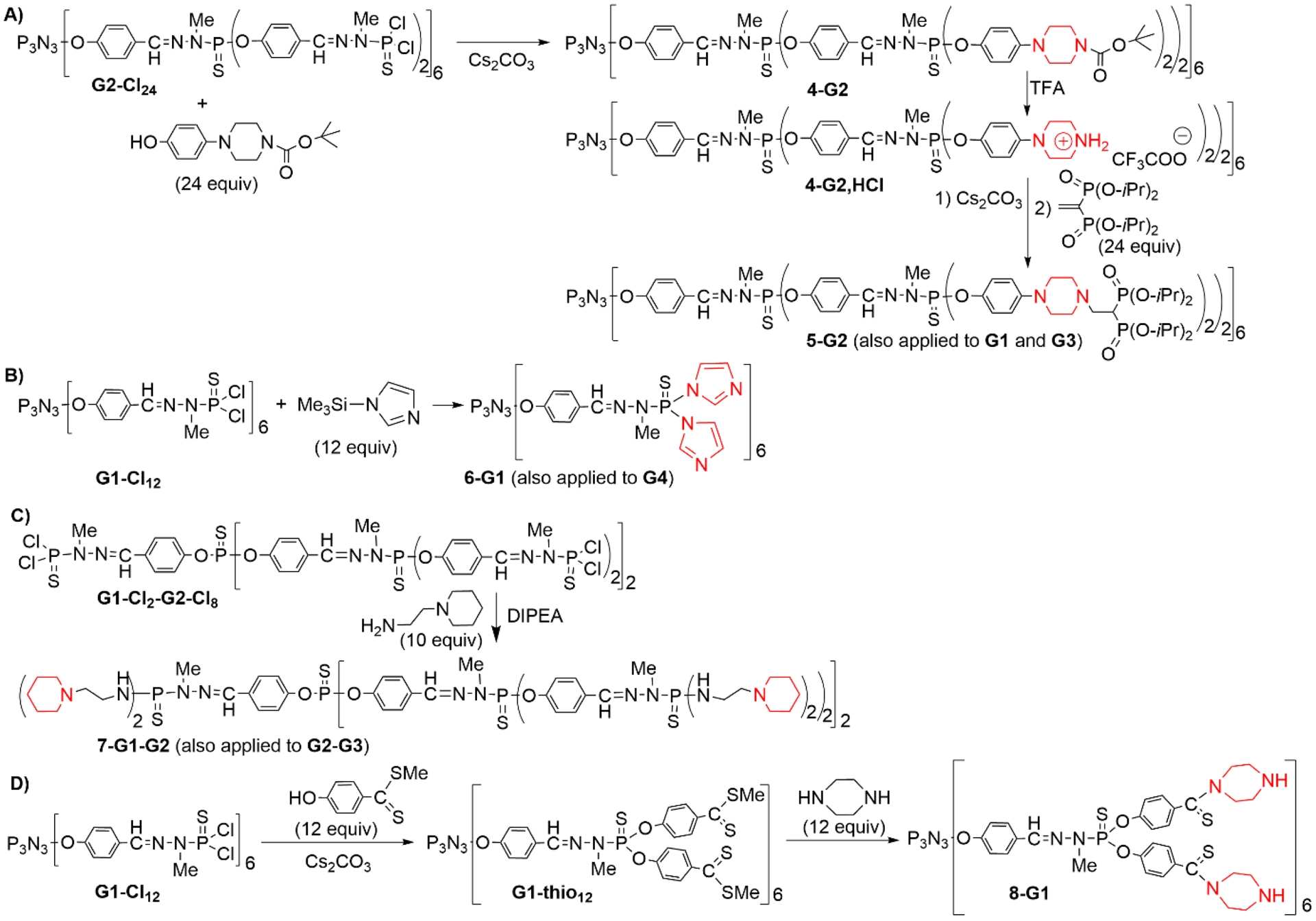
The first example of heterocycles grafted to PPH dendrimers through an amine concerned N-(trimethylsilyl)imidazole (Scheme 2B). The reaction was applied to generations 1 and 4 affording dendrimers 6-G1 and 6-G4, respectively [34]. A kind of Janus [39, 40] dendrimer G1-Cl2-G2-Cl8, reacted on both sides with 1-(2-aminoethyl)piperidine, in the presence of diisopropylethylamine (DIPEA) as a base, to afford compound 7-G1-G2 functionalized with a piperidine on both sides (Scheme 2C). The same reaction was applied to the next generation, affording dendrimer 7-G2-G3. In both cases, protonation with HCl led to water-soluble compounds [41]. In a third example, the heterocycle was not grafted directly on the P(S)Cl2 groups but in a second step. The first step consisted in the substitution of the chlorines with S-methyl-4-hydroxydithiobenzoate, affording dendrimer G1-thio12 (Scheme 2D). The second step was a thioacylation with various amines, in particular piperazine, to afford dendrimer 8-G1 [42].
PPH dendrimers functionalized with TEMPO radicals.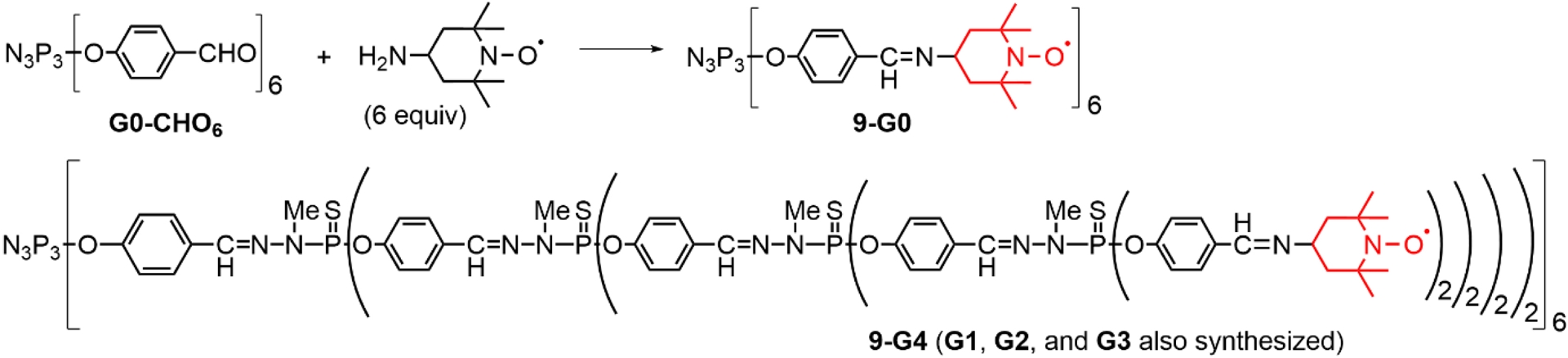
Some dendrimers were functionalized to allow specific characterizations. For instance, generation zero G0-CHO6 was condensed with the 4-amino-TEMPO (2,2,6,6-tetramethylpiperidine 1-oxyl) radical, to afford compound 9-G0 (Scheme 3). Completion of the reaction was monitored by 31P NMR, which was not too much affected by the presence of the radicals. This compound was also characterized by single-crystal X-ray diffraction and electron paramagnetic resonance (EPR). Both techniques gave identical structures in the solid state and in solution, with three arms above the cyclotriphosphazene ring, and three below [43]. The same synthetic method was applied to generations 1 to 4 of PPH dendrimers. Proportionality between the EPR signal intensity and the number of radicals of each generation was observed. These dendrimers were studied in diluted solution to detect intramolecular interactions between branches. A |ΔmS| = 2 transition at half-field was observed in all cases by EPR, giving direct evidence of the intramolecular origin of the dipolar interactions. The magnetic properties of dendrimers 9-G0, 9-G1, and 9-G4 were also investigated on a polycrystalline sample by superconducting quantum interference device (SQUID) magnetometry. The results indicated antiferromagnetic interactions between the radicals [44].
Another specific analytical method is fluorescence, used for the characterization of dendrimers functionalized with fluorophores, especially those based on heterocycles. N-(4′-hydroxyphenylethyl)-3,4-diphenylmaleimide, obtained by reaction of tyramine with 3,4-diphenyl maleic anhydride, was reacted with the P(S)Cl2 terminal functions of PPH dendrimers from generation 1 to generation 3, to afford dendrimers 10-Gn (n = 1, 2, and 3) (Figure 2A). A linear increase of the 𝜆max values in UV–Vis spectroscopy with the number of chromophores confirmed the absence of large defects in the structure of the dendrimers. The fluorescence of all these dendrimers was measured in THF at 300 and 375 nm as wavelengths for excitation, with emission at 499 nm. The fluorescence quantum yields decreased from generation 0 (78%) to generation 3 (39%). Analogous experiments were carried out in CH2Cl2 at 302 or 320 and 375 nm as the wavelengths for excitation, with emission at 506 nm. A decrease in the quantum yield was also observed, from 72% for 10-G1 to 23% for 10-G3. Such a decrease might be due to interactions between fluorophores in close proximity, or to interactions of the fluorophores with the dendritic structure, leading in both cases to a nonradiative deactivation process [45]. Rhodamine B was functionalized with tyramine to be grafted to the first-generation PPH dendrimer having P(S)Cl2 terminal functions, to afford compound 11-G1, having both a nitrogen and an oxygen heterocycle, associated in a spirolactam structure (Figure 2B). Such a closed form is not fluorescent, and it was not possible to open it to recover fluorescence, even when adding HCl [46].
Fluorescent PPH dendrimers based on heterocycles. (A) 3,4-Diphenylmaleimide. (B) Spirolactam form of rhodamine B. (C) Stilbazole chromophores for TPA.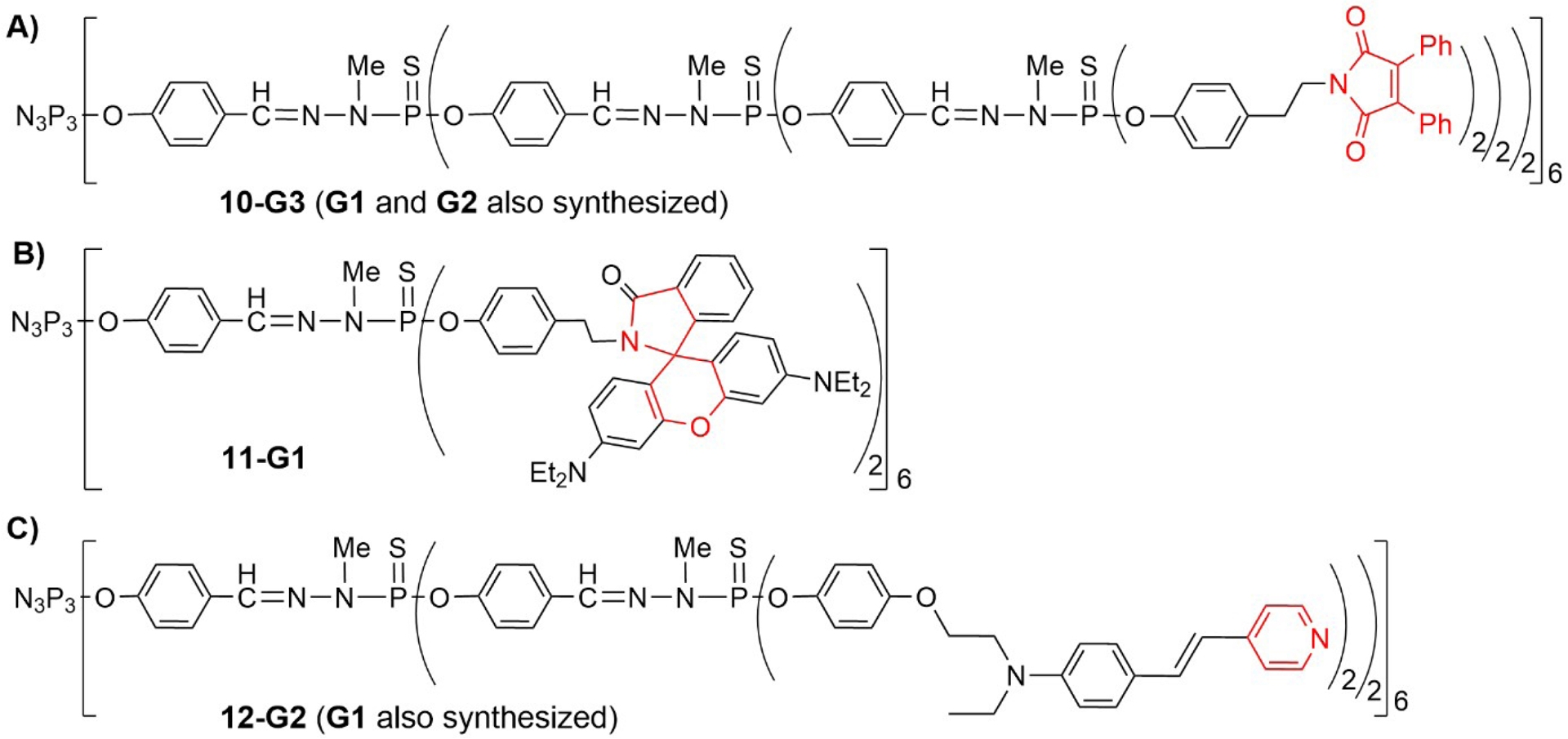
Two-photon absorption (TPA) processes are involved in a wide range of applications, and different types of dendrimers have been functionalized with TPA fluorophores [47], in particular PPH dendrimers [48]. A series of compounds functionalized with push–pull stilbazole chromophores, including dendrimers 12-G1 and 12-G2, were synthesized, to study the magnitude of the potential cooperative effects between fluorophores (Figure 2C). A reduction in the molar extinction coefficient per chromophoric subunit was observed in dendrimers compared to the monomer. The same molar extinction per chromophoric subunit was also observed when increasing the generation of the dendrimers, probably due to an increased proximity between the chromophores. Interestingly, the TPA maximum cross section $\sigma _{2}^{\mathrm{max}}$ per chromophoric subunit increased from monomer to dendrimers on the contrary [49].
2.2. Catalytic properties of PPH dendrimers functionalized with N-heterocycles
PPH dendrimers have many catalytic properties, as shown in a recent review [50]. Most of them bear nitrogen heterocycles as ligands or organocatalysts, as it will be shown in this part of the review. A series of dendrimers (generations 1 to 3) and the corresponding monomer functionalized with the pyridine-imine ligand were used for the complexation of copper, affording dendrimers 13-G1, 13-G2, and 13-G3, and monomer 13-M (Scheme 4A). These compounds were used as catalysts in several reactions. It should be noted that in all catalytic experiments performed with different generations of PPH dendrimers, the same quantity in catalytic sites is used. It means that the efficiency of one equivalent of 13-G3 is compared with that of two equivalents of 13-G2, four equivalents of 13-G1, and 48 equivalents of 13-M. These catalysts were used in different reactions, in particular for the arylation of pyrazole with iodobenzene and bromobenzene (Scheme 4B). A large difference in catalytic efficiency was observed between the monomer (very low efficiency) and the dendrimers. A difference between the different generations of the dendrimers was also observed in the case of bromobenzene (Scheme 4C), displaying a nice positive dendrimer (or dendritic) effect [51]. Other catalyzed reactions with these dendritic complexes comprised the coupling of 3,5-dimethylphenol with iodobenzene (Scheme 4D) and the coupling of bromostyrene with N- and O-nucleophiles, pyrazole and 3,5-dimethylphenol, respectively (Scheme 4E) [52].
Catalysis with copper complexes of dendritic pyridine-imine ligands.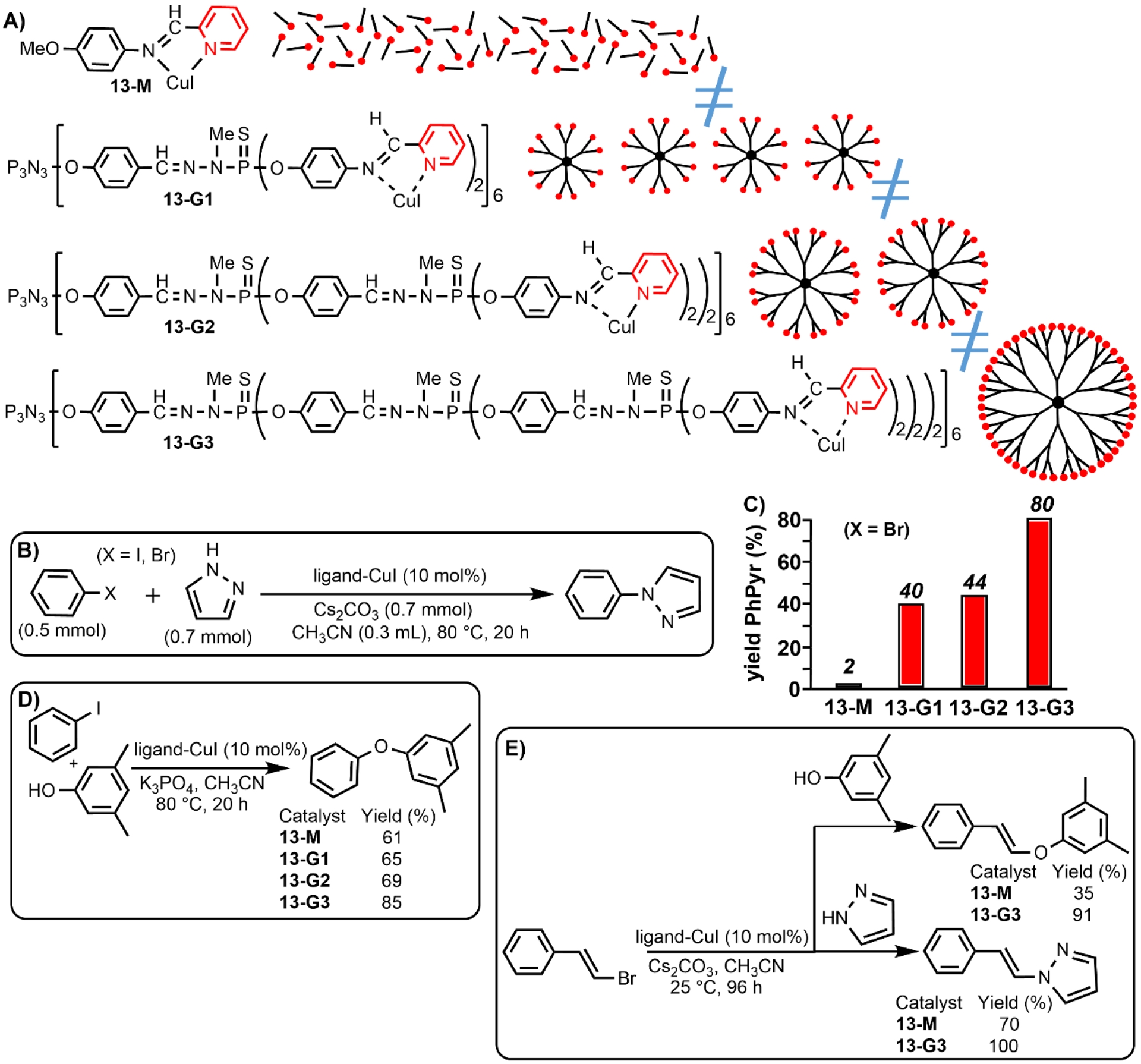
A terpyridine complexing scandium at the surface of a fourth-generation PPH dendrimer (compound 14-G4 in Scheme 5) was used as catalyst in Friedel–Crafts acylations under microwave heating. A wide range of aromatics were used, in twelve consecutive runs, by recovering the dendritic catalyst through precipitation with diethyl ether and reusing it in the next run with different substrates. It can be noted that runs 4 and 12 were carried out with the same substrates and afforded identical yields [53].
Generation 4 of dendritic terpyridine–scandium complex for catalyzing Friedel–Crafts acylations under microwaves (MW), using a wide range of aromatics, by recovering and reusing the dendritic catalyst eleven times.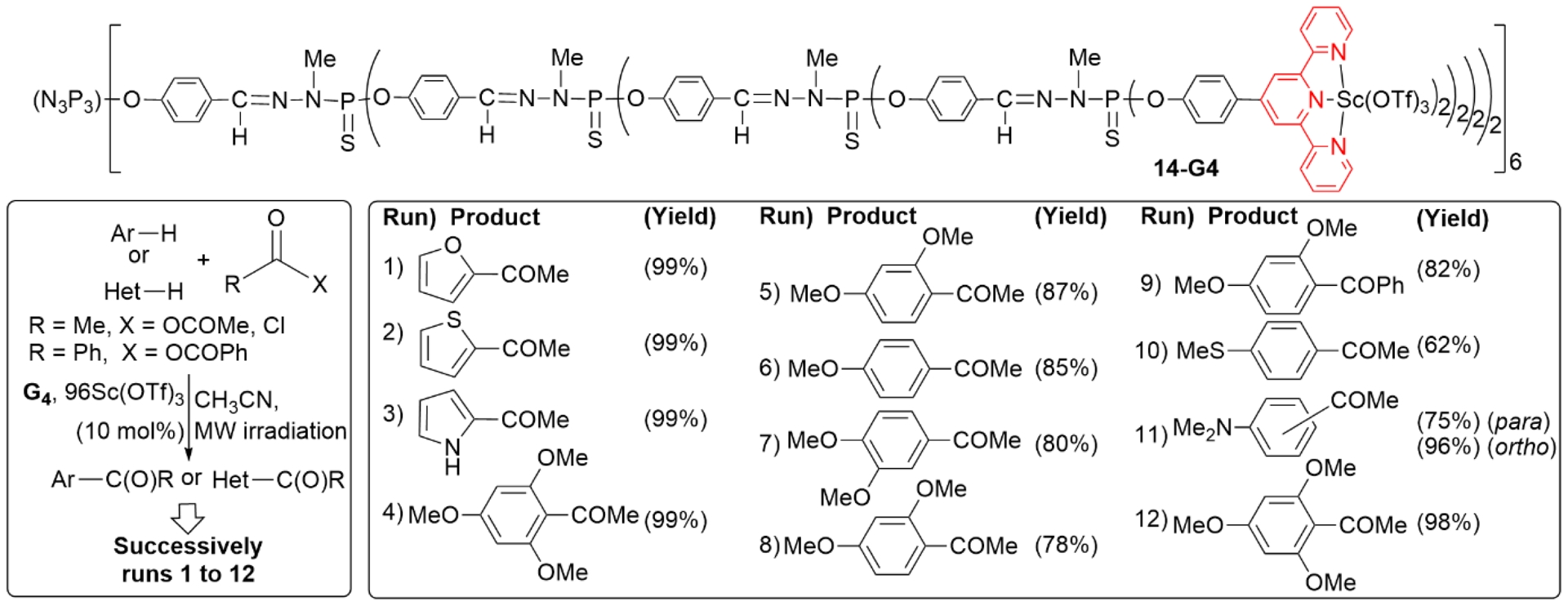
A tripodal C-scorpionate ligand [tris-2,2,2-(1-pyrazolyl)ethanol], was used both as monomer (15-M) and grafted to a first-generation PPH dendrimer (15-G1) for complexing Pd(OAc)2. These complexes were used for catalyzing a Sonogashira reaction between phenylacetylene and iodobenzene, and a Heck reaction between styrene and iodobenzene (Scheme 6). Monomer and dendrimer gave almost the same yield in coupling product in the case of the Sonogashira reaction, but the dendrimer was much better (63%) than the monomer (24%) in Heck couplings [54].
Pd-complexing monomeric and dendritic C-scorpionate ligands used as catalysts in Sonogashira and Heck couplings.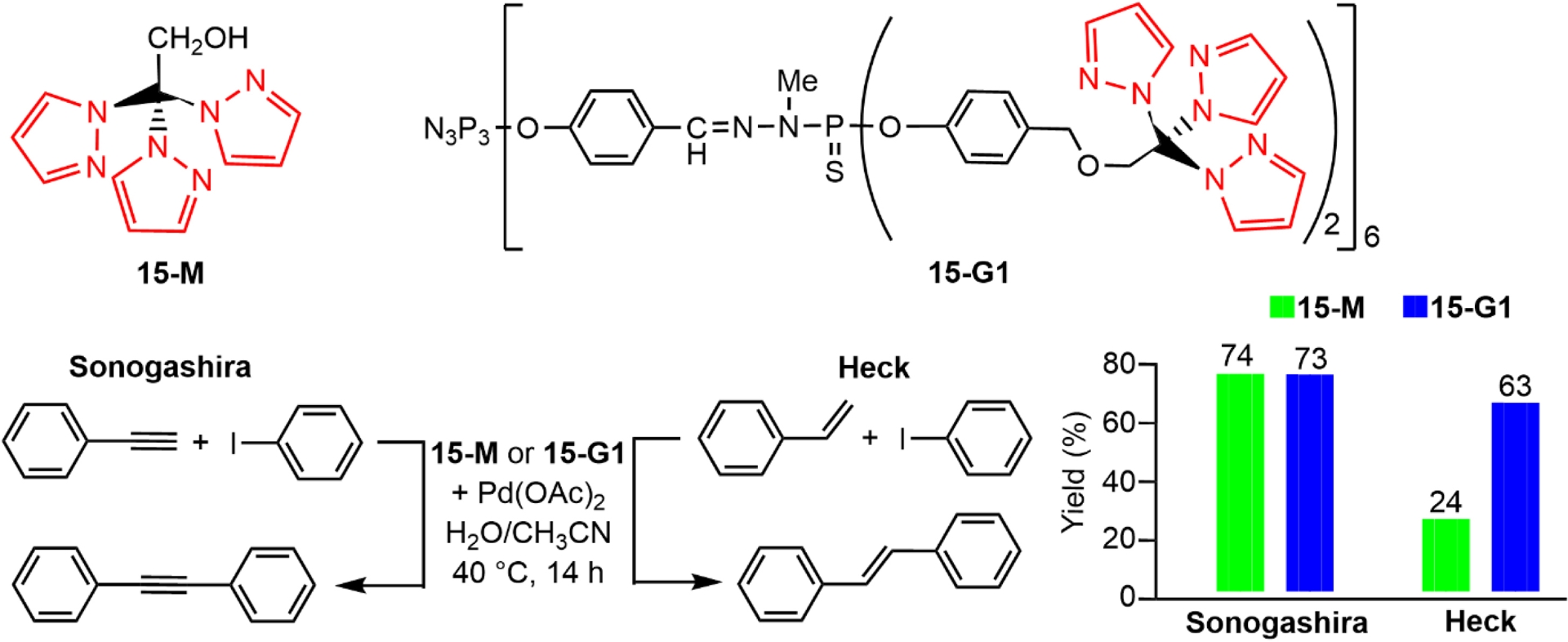
Cheaper and safer than organometallic catalysis, organocatalysis is increasingly used. A review has emphasized the early times of dendritic organocatalysts [55]. The Jørgensen–Hayashi catalyst ((S)-α,α-diphenylprolinol trimethylsilyl ether [56, 57]) was grafted to the surface of generations 1 to 3 of PPH dendrimers (compounds 16-G1, 16-G2 and 16-G3), and to cobalt nanoparticles covered by a few graphene layers (16-NP, Scheme 7). Both types of compounds were applied as organocatalysts (10 mol% of catalytic sites in all cases) in the addition of propanal to β-nitrostyrene at 10 °C. Dendrimers 16-G2 and 16-G3, and the nanoparticles 16-NP gave excellent yields at the first run. However, when trying to recover the catalysts, only dendrimer 16-G3 still gave excellent results after four runs (graph in Scheme 7). Compounds 16-G3 and 16-NP were then used as organocatalysts for the coupling of a series of nitroolefins with a series of aldehydes. Dendrimer 16-G3 gave yields over 99% in all cases, whereas nanoparticles 16-NP gave yields between 42% and 99% [58].
Organocatalysis with dendrimers and nanoparticles using 10 mol% of prolinol moieties in all cases, and recovery and reuse experiments.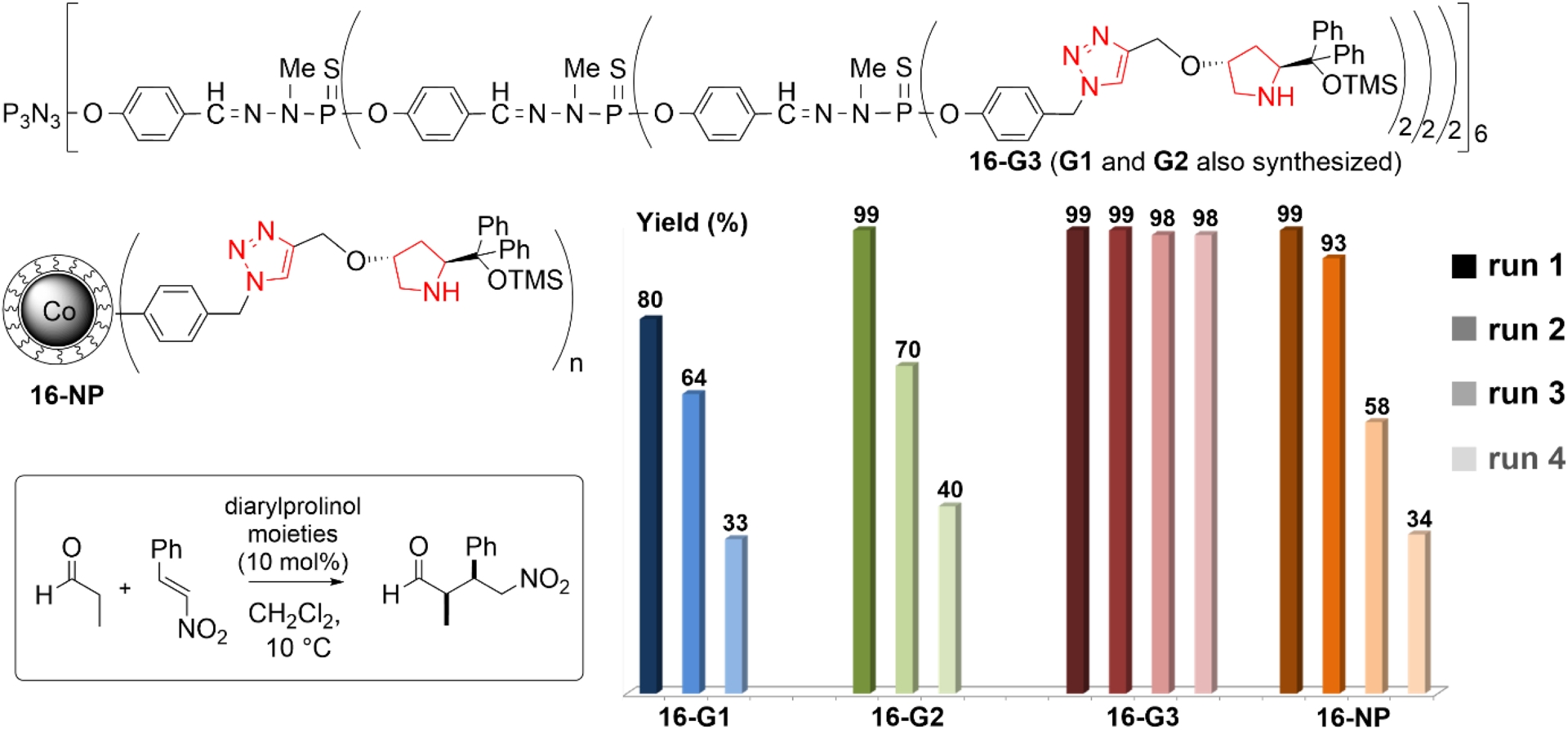
Two other examples of organocatalysis involved (+)-cinchonine, differently grafted to PPH dendrimers. In the first case, the ethylenic function of (+)-cinchonine was involved in a thiol-ene reaction with 4-(2-mercaptoethyl) phenol, affording monomer 17-M, which was grafted to a branch, to afford 17-B and to generations 1 and 4 of PPH dendrimers, to afford compounds 17-G1 and 17-G4, respectively. All these compounds were applied as catalysts in asymmetric amination of β-keto esters, using in particular ethyl 2-oxocyclopentanecarboxylate and benzyl azodicarboxylate (Scheme 8). The reaction was extremely rapid (2 min) except with the fourth-generation 17-G4, which necessitated 30 min. The branch 17-B and the first-generation 17-G1 gave the best enantiomeric excesses, whereas 17-G4 afforded a racemic mixture. Recycling experiments were carried out with 17-B and 17-G1. The branch 17-B could be recovered and reused five times, whereas the dendrimer 17-G1 could be recovered at least nine times, displaying still very good yield (90%) and enantioselectivity (82%) at run 10. The scope of this reaction was evaluated using cyclic and noncyclic esters, cyclic β-diketones, and opened-chain esters. In practically all cases, the dendrimer 17-G1 was more efficient than the branch 17-B [59].
Organocatalysis with (+)-cinchonine derivatives.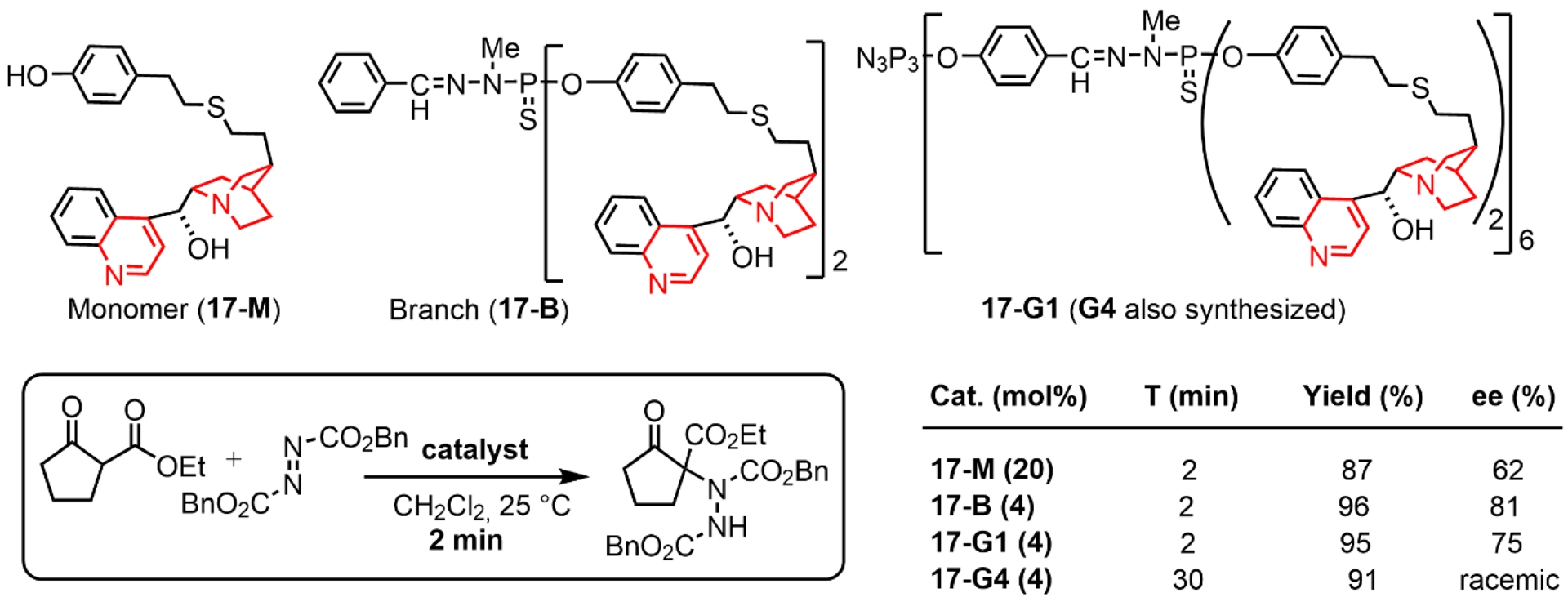
The second method for grafting various derivatives of (+)-cinchonine necessitated first to modify the surface of the first-generation PPH dendrimer, to have iodine as terminal functions. In the last step, the dendrimer was used to alkylate (+)-cinchonine, affording dendrimers 18-G1a–d, functionalized with twelve quaternary ammonium salts, and different types of R substituents (H, allyl, benzyl, TMS). This family of dendrimers was used as organocatalyst (0.1 mol%) in the reaction of glycinate with benzyl bromide at 25, 0, and −25 °C (Scheme 9). The resulting imines were derivatized to the corresponding trifluoroacetamides, and deprotected with trifluoroacetic anhydride to get stable compounds, easier to analyze. Dendrimer 18-G1b (R = allyl) afforded the best enantioselectivities, and the enantiomeric excess (ee) was better when the reactions were performed at 0 °C. It was possible to recover and reuse 18-G1b at least four times with still good yield (77%) and enantioselectivity (79%) [60].
First generation of PPH dendrimer functionalized with twelve quaternary ammonium salts and used as organocatalyst.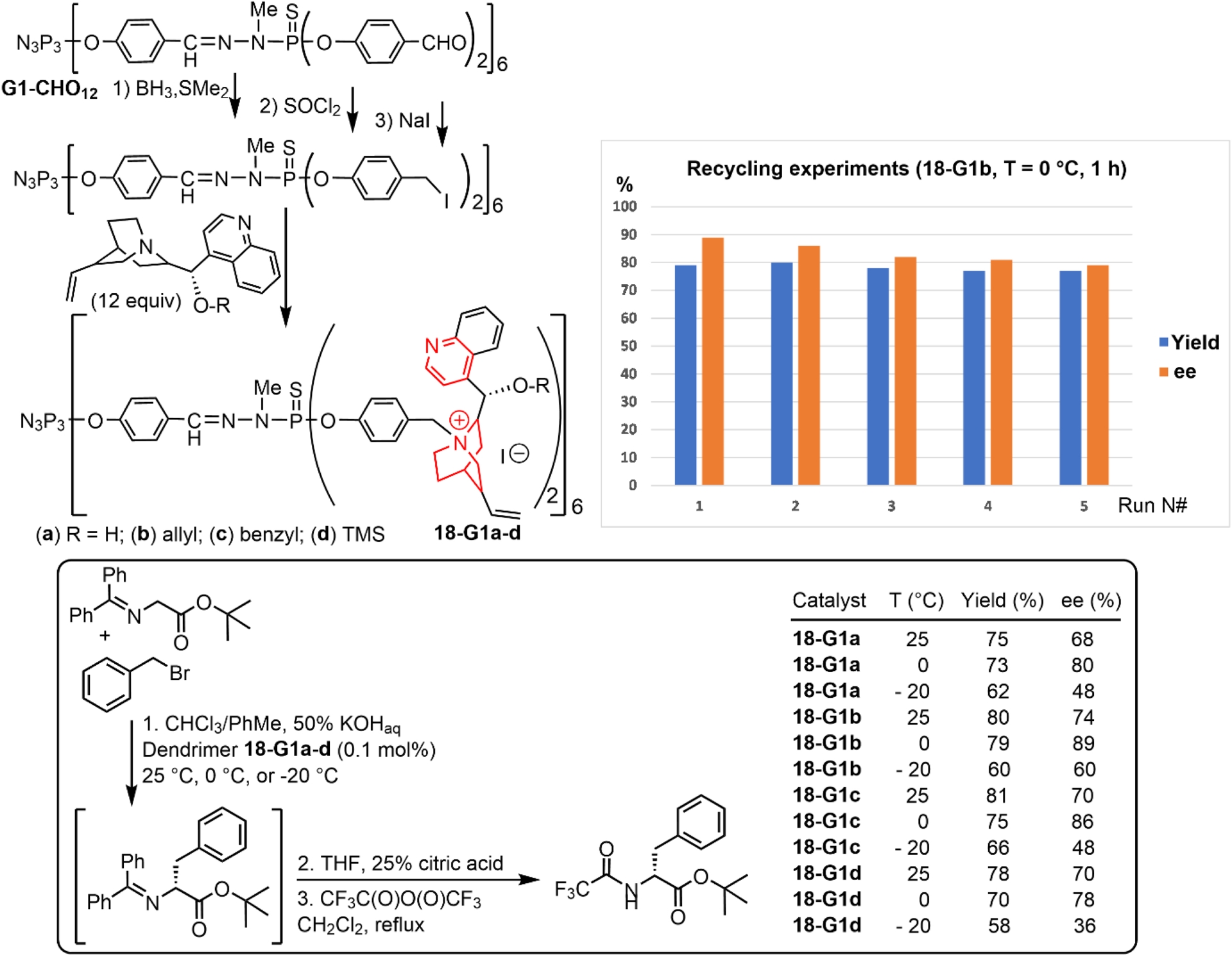
2.3. Materials functionalized with PPH dendrimers bearing N-heterocycles
Condensation between the aldehyde terminal functions of PPH dendrimers and hydrazones of type Girard P (pyridinium) afforded dendrimers functionalized with pyridiniums, either built from a trifunctional core (family 19-Gn) or an hexafunctional core (family 20-Gn). All these dendrimers were soluble in water, but when heated at 60–65 °C for 11–13 days, the solutions became rigid hydrogels, as illustrated by the reversed flask in Figure 3. Each terminal pyridinium group was able to gel around 1200–1400 molecules of water, regardless of the dendrimer generation. Gelation time can be dramatically reduced in the presence of water-soluble substances such as acids (citric, ascorbic, lactic, L-tartaric acid, etc.), buffer [TRIS (tris(hydroxymethyl)aminomethane)], dithioerythritol (DTE), sodium salt of ethylenediamine tetraacetate (EDTA), or even metallic salts (Ni, Y, Er acetates). Freeze-drying of these hydrogels at low temperature gave rise to aerogels that retained the shape and size of the hydrogels, presumably in relation to the supramolecular interactions shown in Figure 3 [61]. These dendrimers were also used for the production of fibers when depositing them through a moving needle in a flocculating bath containing 10 mol% La(NO3)3. These fibers displayed an elastic behavior (reversible deformation) contrarily to fibers produced with polymers in the same condition, which displayed a plastic behavior (irreversible deformation), as shown by mechanical measurements [62].
Hydrogel obtained with dendrimers functionalized with the Girard P reagent.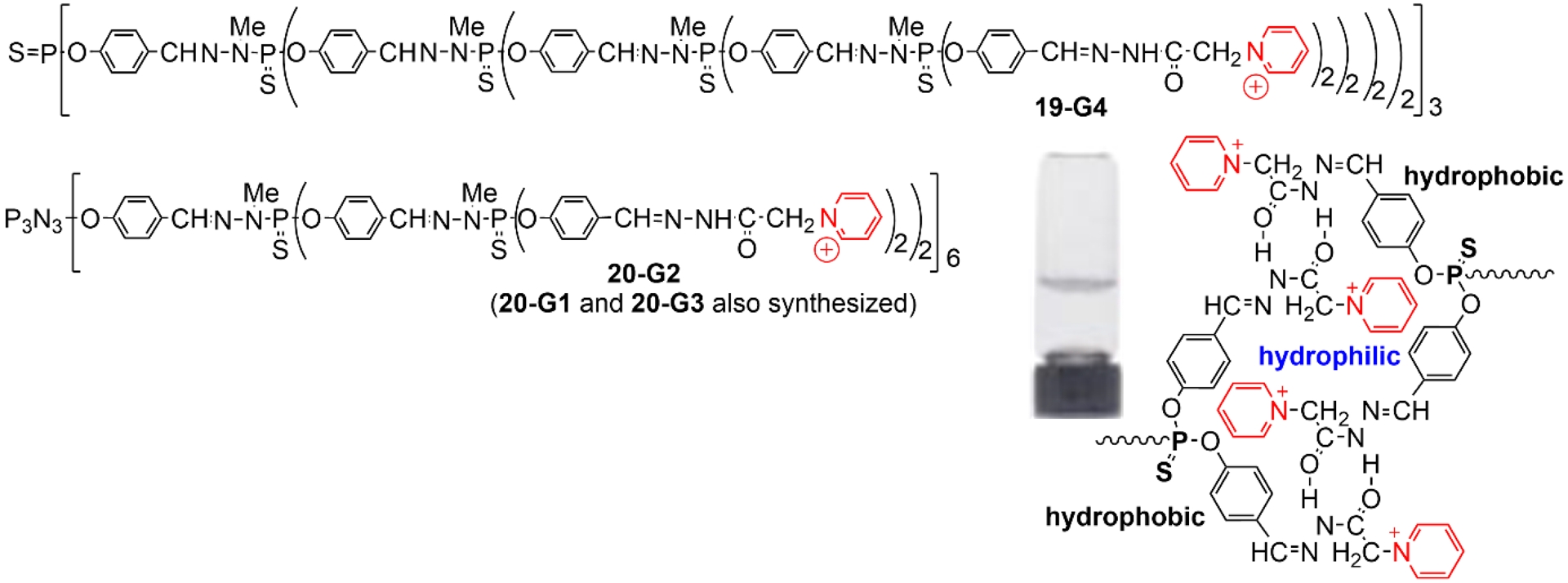
Later on, the hydrogels based on the 20-Gn family were also prepared in the presence of biocompatible additives such as glucose, glycine, or polyethylene glycol. They were used to efficiently bind and slowly release nucleic acids [63].
Graphene oxide is generally produced by oxidation of graphite [64], inducing the formation of various oxygenated functional groups, potentially suitable for grafting different entities, including dendritic structures. Dendrons are dendritic wedges, having one function at the core different from the functions at the surface [65], which are in particular suitable for the grafting to materials. Different types of PPH dendrons have been grafted to graphene oxide, first modified to be suitable to react with the function located at the core of dendrons. Modification of graphene oxide with SOCl2 produced acid chloride functions, suitable to react with primary-amine functions in peptide-coupling-type reactions. Different dendrons equipped with Boc-protected tyramine at the core and various types of functions at the surface were deprotected, but the deprotection was successful only in the case of ethacrynic acid terminal functions. It was shown previously that small derivatives [66] and PPH dendrimers functionalized with ethacrynic acid [67, 68] displayed moderate anticancer properties. A first-generation dendron functionalized with ethacrynic acid linked to the dendrimer through 4-hydroxy-phenylpiperazine was grafted to modified graphene oxide, affording 21-G1@GO (Figure 4). Dendron 21-G1 alone displayed a moderate anticancer activity, which vanished when it was grafted to graphene oxide [69].
Dendrons functionalized with ethacrynic acid and grafted to graphene oxide.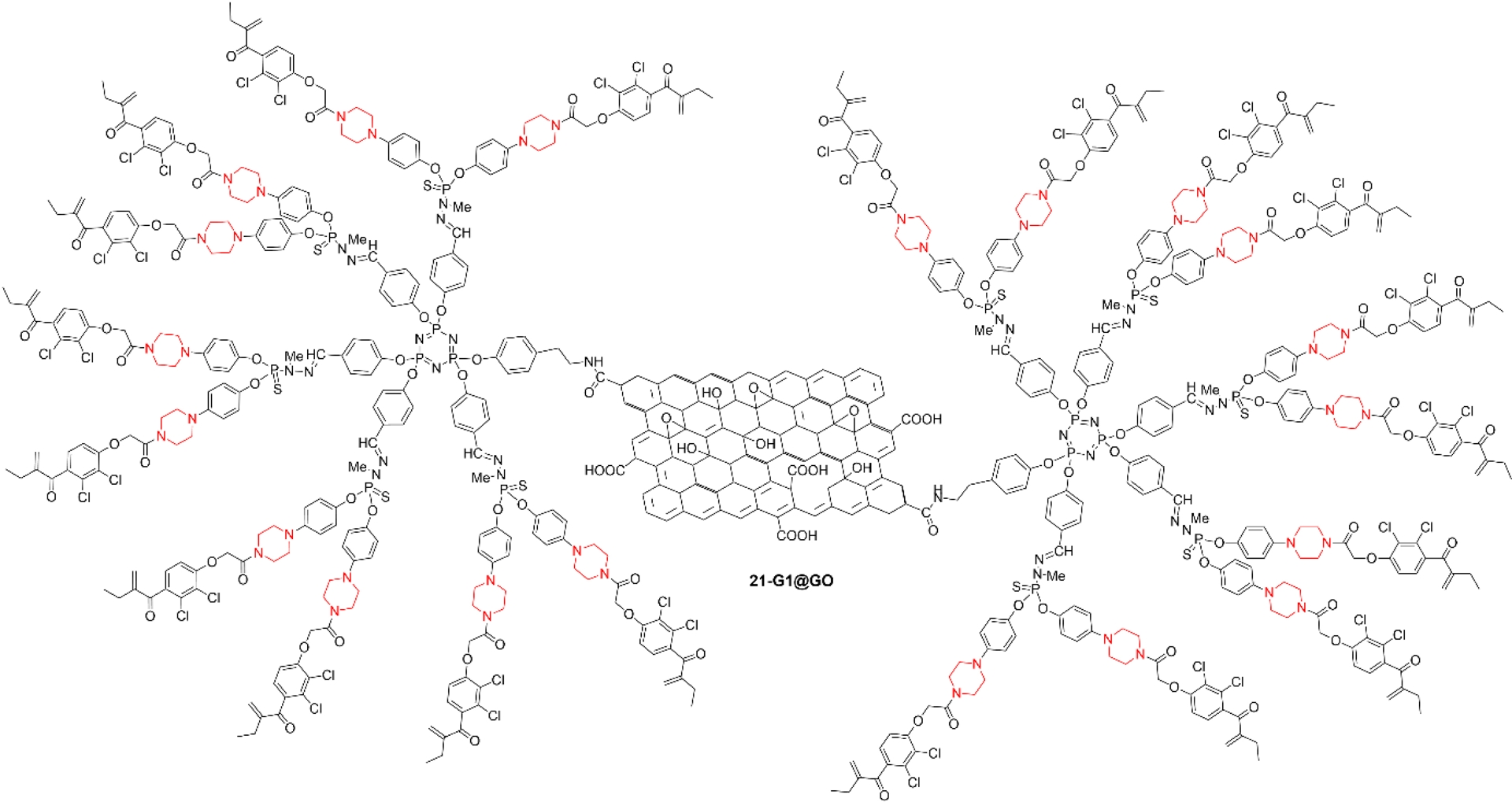
A series of dendrons having different types of pyridine-imine peripheral functions, and either an alkyne [series 22x-G1 (x = a, b, c)] (Figure 5A) or an azide [series 23x-G1 (x = a, b, c)] (Figure 5B) at the core, were grafted via “click” reactions [70] to graphene oxide previously functionalized with azide or alkyne, respectively. Materials 22x-G1@GO and 23x-G1@GO (x = a, b, c) were obtained in this way, functionalized via a triazole ring for both families (Figure 5). Only material 23a-G1@GO displayed moderate anticancer properties against HCT116 cells (human colon cancer), with a percentage of viability of 60.5% at 10−5 M, but this material was by far less efficient than the corresponding dendron alone 23a-G1 (4.2% viability at 10−5 M) [71].
Graphene oxide (GO) functionalized with two series of pyridine-imine dendrons, grafted by click chemistry.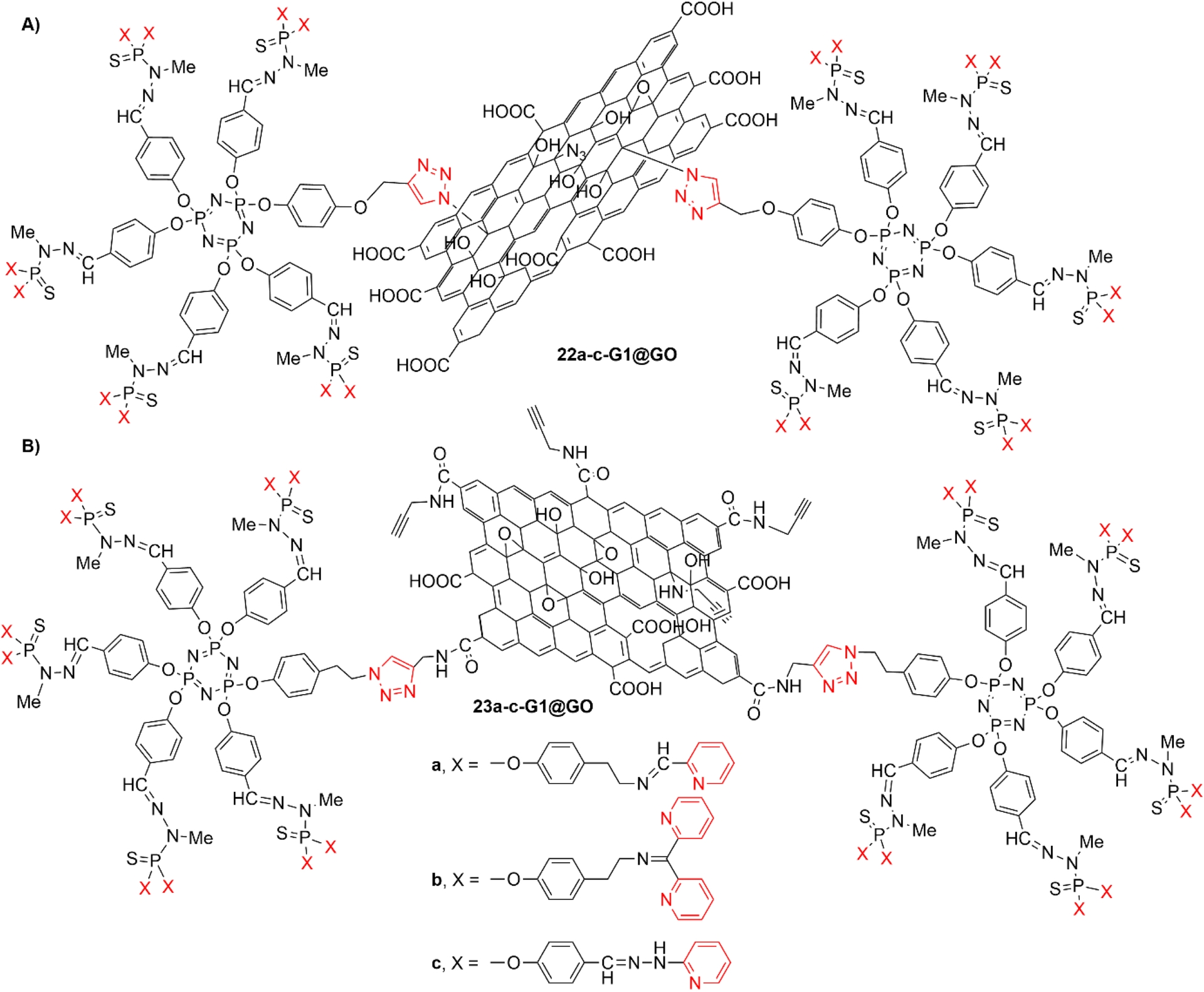
2.4. Biological properties of PPH dendrimers functionalized with N-heterocycles
PPH dendrimers functionalized with nitrogen heterocycles can have either biological properties by themselves or can be used to bind and deliver bioactive substances. The pyridine-imine functions shown in Figure 5 were also grafted to the surface of PPH dendrimers, from generation 1 to generation 3, and they were used first for the complexation of copper dichloride, affording dendrimers 24-G1a,b,c-Cu12, 24-G2a,b,c-Cu24, and 24-G3a,b,c-Cu48 (Figure 6). Both the “free” dendrimers and those complexing copper were tested for the growth inhibition of HL60 cells (leukemia). The third generation was in all cases the most efficient, thus further experiments were carried out only with the third generation dendrimers against KB cells (epidermal carcinoma). Dendrimers functionalized with ligands of type a were more efficient than those functionalized with ligands of type b or c, and the copper complexes were more efficient than the free dendrimers. Thus, only dendrimers 24-G3a and 24-G3a-Cu48 were tested against a panel of cancerous and non-cancerous cells. The IC50 values (quantity of dendrimers necessary to kill 50% of cells) were measured. The Cu-complex 24-G3a-Cu48 was more toxic against the cancerous cells KB, HL60, HCT116 (human colon cancer), MCF-7 (hormone-responsive breast cancer), OVCAR8 (ovarian carcinoma), and U87 (human glioblastoma) than against the non-cancerous cells MCR-5 (proliferative human lung fibroblasts) and the quiescent EPC (endothelial progenitor cells, Cyprinus carpio), contrarily to the free dendrimer 24-G3a [72]. In order to understand the large difference observed between the different types of ligands (a, b, or c), comparative electron paramagnetic resonance (EPR) studies were carried out, in the presence (or absence) of HCT116 cancer cells and MRC-5 normal cells. It was shown that dendrimer 24-G3a-Cu48 bound copper more firmly than 24-G3b-Cu48 and 24-G3c-Cu48, which may explain its better efficiency [73]. To gain insight in the differences observed between 24-G3a and 24-G3a-Cu48, their mode of action and cell death pathways were examined. Dendrimer 24-G3a moderately activated caspase-3 activity, an apoptosis inducer leading to DNA fragmentation. Dendrimer 24-G3a-Cu48 induced a noticeable translocation of Bax (pro-apoptotic protein) to the mitochondria, resulting in the release of apoptosis inducing factor (AIF protein) into the cytosol, which led to a severe DNA fragmentation without alteration of the cell cycle. Such a mechanism is in line with the higher activity of the Cu complex compared to the non-complexed dendrimer [74].
Generations 1 to 3 of PPH dendrimers functionalized with different types of pyridine-imine fragments and complexing Cu, Au, or Fe.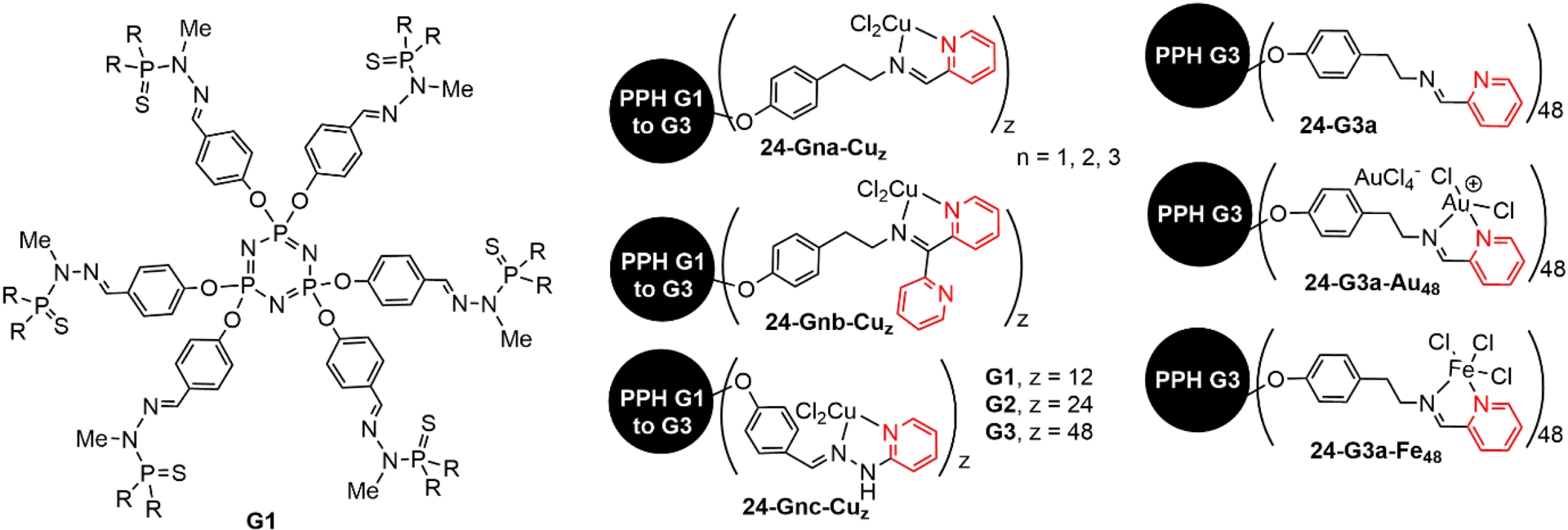
Dendrimer 24-G3a-Cu48 was associated with different types of anticancer drugs, cisplatin (alkylating agent that binds to DNA), camptothecin (topoisomerase I inhibitor), paclitaxel (antimitotic agent), doxorubicin (DNA intercalator, topoisomerase II inhibitor), and MG132 (proteasome inhibitor) (Figure 7). The combinations were tested at the active dose of each compound on KB and HL60 cancer cell lines. No effect was observed with the combination of 24-G3a-Cu48 with camptothecin on either type of cells. No effect was neither observed in the case of 24-G3a-Cu48 + cisplatin on KB cells, but an additive effect was observed with this combination on HL60 cells, as well as in the case of the combinations of paclitaxel or MG132 on both types of cells. A synergistic effect was observed for the combination 24-G3a-Cu48 + doxorubicin, meaning that the effect of this combination exceeds the sum of the inhibition of each single active compound [75].
Association of different anticancer drugs with dendrimer 24-G3a-Cu48 and the effect of these combinations on the viability of two cancer cell lines.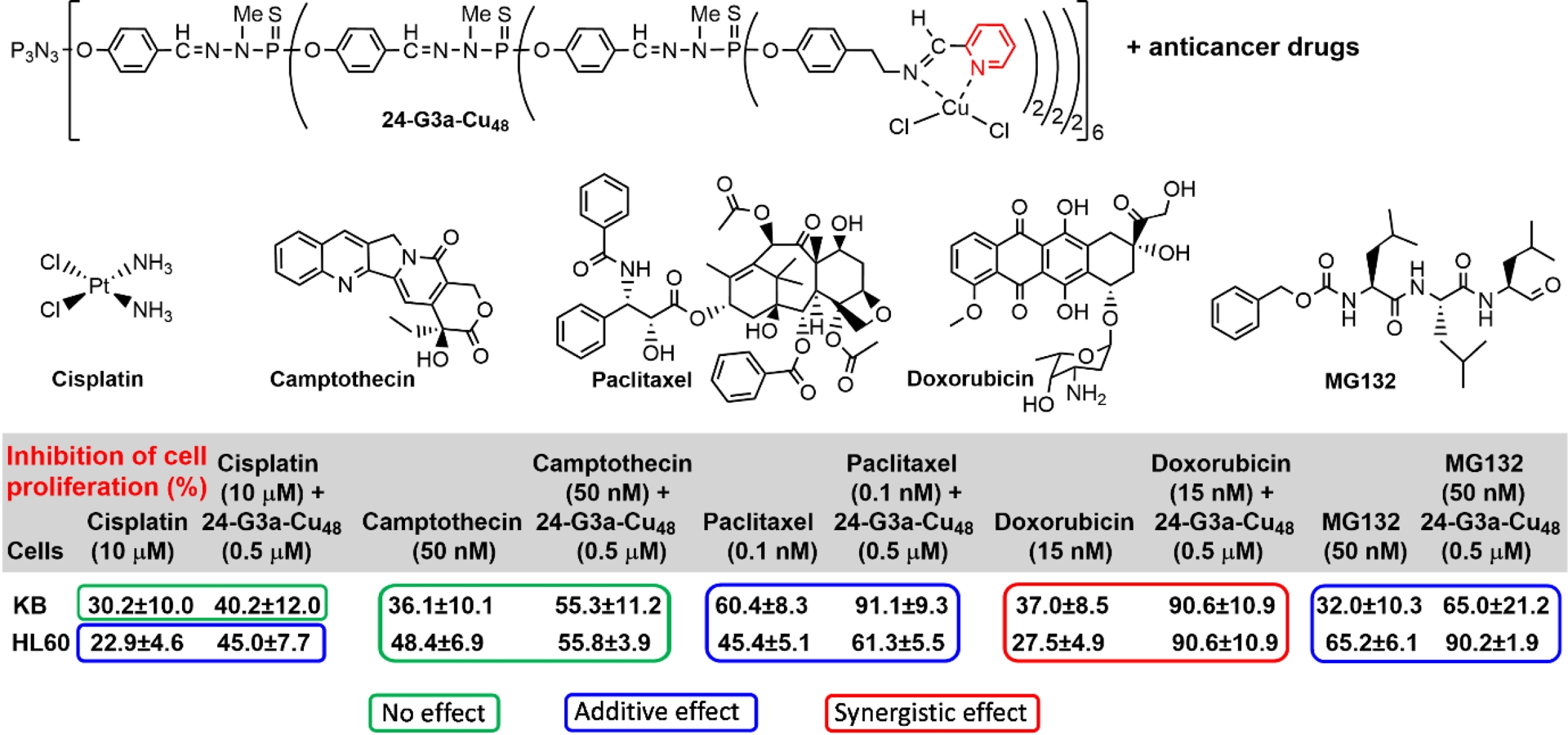
After copper, the complexation of gold by the same dendritic ligands was attempted using AuCl3. Interestingly, complexation occurred differently in this case with [AuCl2]+ being complexed by the ligand, while [AuCl4]− was the counter ion (compound 24-G3a-Au48) (Figure 6). This gold complex 24-G3a-Au48 was found active at the low nanomolar range against KB (IC50 = 7.5 nM) and HL60 (IC50 = 3.3 nM) cells, to be compared to the copper complex 24-G3a-Cu48 against KB (IC50 = 470 nM) and HL60 (IC50 = 580 nM) cells. In view of this striking difference, a series of dendrimers stochastically functionalized with copper, gold, free ligand a, or polyethylene glycol (PEG) was synthesized (Figure 8) in order to evaluate a potential synergistic effect. It was shown that ten gold complexes per dendrimer were sufficient to observe an activity in the low nanomolar range, regardless of the other substituents [76]. In addition, an iron complex (compound 24-G3a-Fe48) was synthesized and tested, but it was found less active than the corresponding Cu complex [75] (Figure 6).
Random functionalization at the surface of PPH generation 3 dendrimers.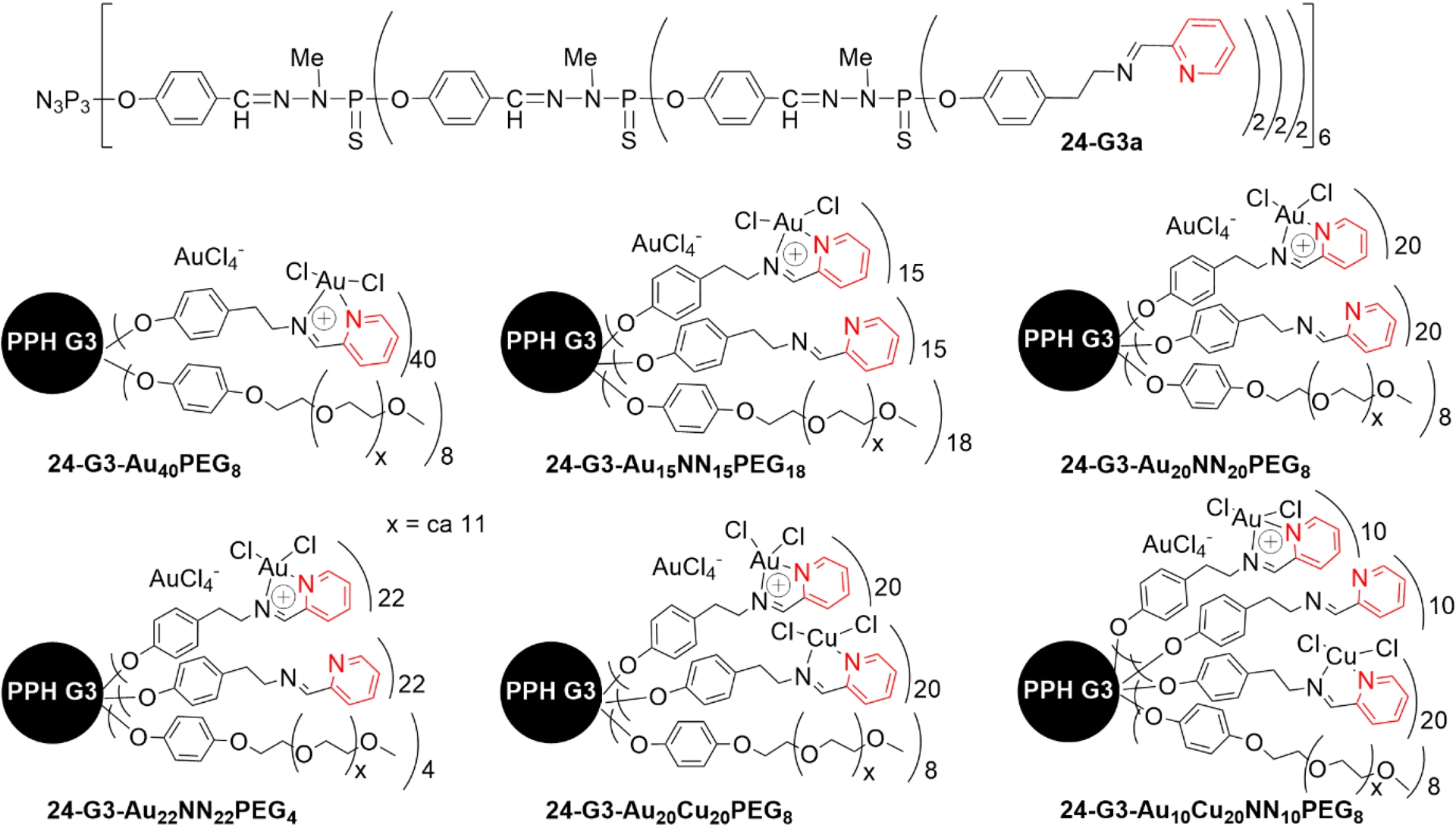
A series of dendrons having an alkyl chain at the core and the same ligands at the surface as the dendrimers shown in Figures 6 and 8 was synthesized. These dendrons were equipped with an alkyl chain of variable length at the core (C11 for 25a-C11-G1, or C17 for 25a-C17-G1), and complexed either with copper or gold on the pyridine-imine ligands of type a (Figure 9A). These dendrons were tested against aggressive breast cancer cell lines (4T1, MCF-7). All these dendrons displayed significant antiproliferative activities. The best results were obtained with the shorter-chain dendron complexing gold (25a-C11-G1-Au10). The mechanism of action involved the translocation of Bax into the mitochondria as previously [77]. Another family of dendrons was equipped with two alkyl chains at the core linked to a triazine and having as peripheral functions a type-c ligand for complexing either copper or gold (Figure 9B). These dendrons formed micelles in water (mean diameter ∼9 nm for 26c-G0-Cu5) and multimicellar aggregates (mean diameter ∼60 nm for 26c-G0-Au5). Both dendritic complexes were tested against several strains of glioblastoma, a malignant brain tumor (BTSC233, JHH520, NCH644, SF188 [pediatric], and U87 cell lines). IC50 values were in the 3–6 μM range with 26c-G0-Cu5 and 11–15 μM with 26c-G0-Au5, to be compared to IC50 > 100 μM with temozolomide, the clinical standard used against glioblastoma [78].
Dendrons equipped with one (A) or two alkyl chains (B) at the core and having copper or gold complexes at the periphery.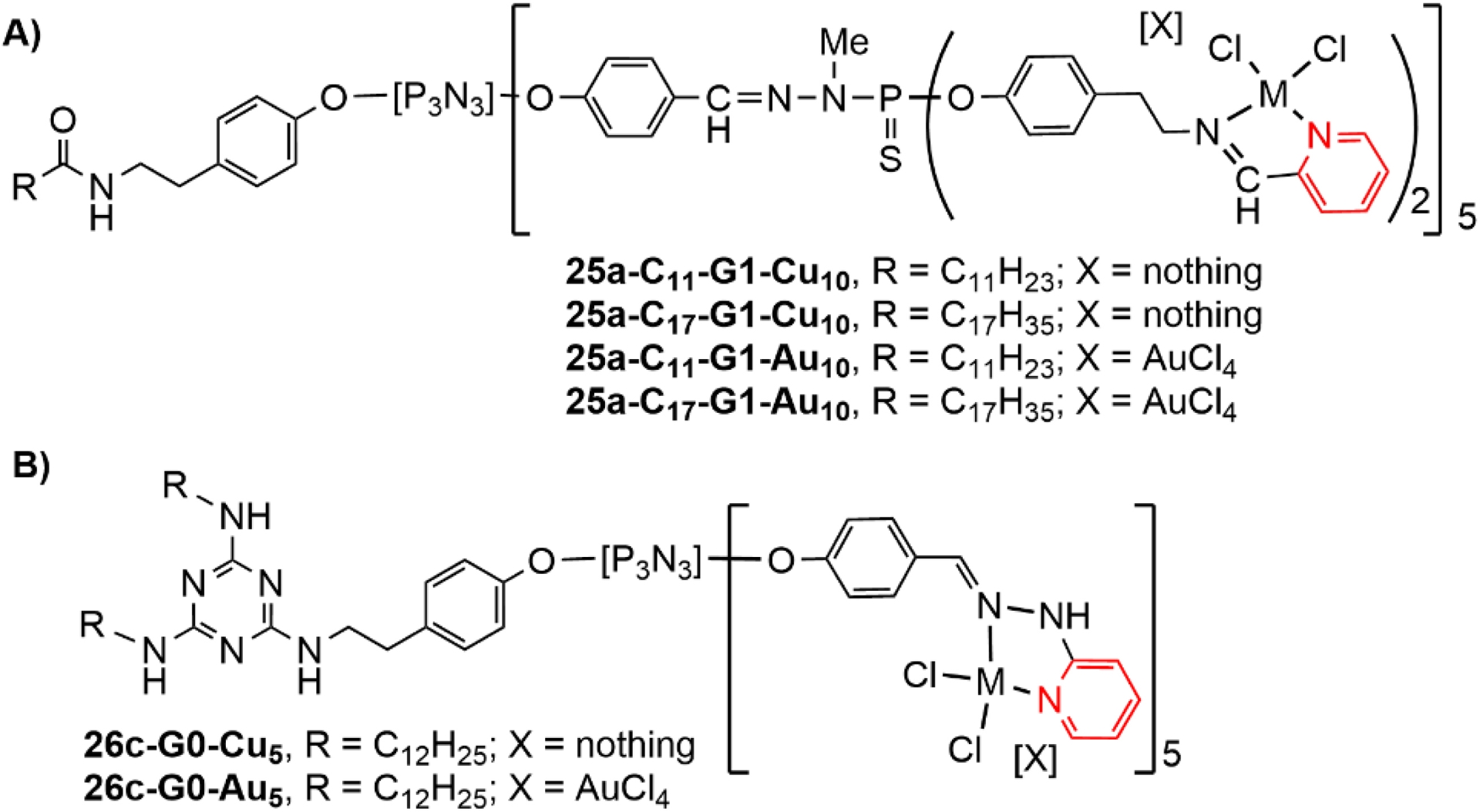
Two series of first- and second-generation dendrons having a fluorescent group or an azabisphosphonate group at the core and either pyrrolidinium (27a-c-Gn, n = 1,2) or piperidinium (28a-c-Gn, n = 1,2) peripheral functions were synthesized (Figure 10), and their critical micelle concentrations (CMC) were measured. The lower CMC values (1.42 to 3.56 μM) were obtained with the pyrene series (dendrons 27a-Gn and 28a-Gn, n = 1,2), whereas the higher values (45.5 to 153.7 μM) were obtained in the case of the azabisphosphonate group at the core (dendrons 27c-Gn and 28c-Gn, n = 1,2). The antiproliferative activity of these dendrons were tested against HL60, K562, and HCT116 tumor cell lines. Best results were obtained with the piperidinium family, in particular of generation 2 (dendrons 28a-c-G2). Dendron 28c-G2 was tested against a larger panel of cancerous and non-cancerous cells, and it displayed lower toxicity toward normal mouse fibroblast L929 cells (8.75 μM) than toward nine tumor cell lines (0.27 to 4.1 μM) [79].
Different types of dendrons functionalized with N-heterocycles.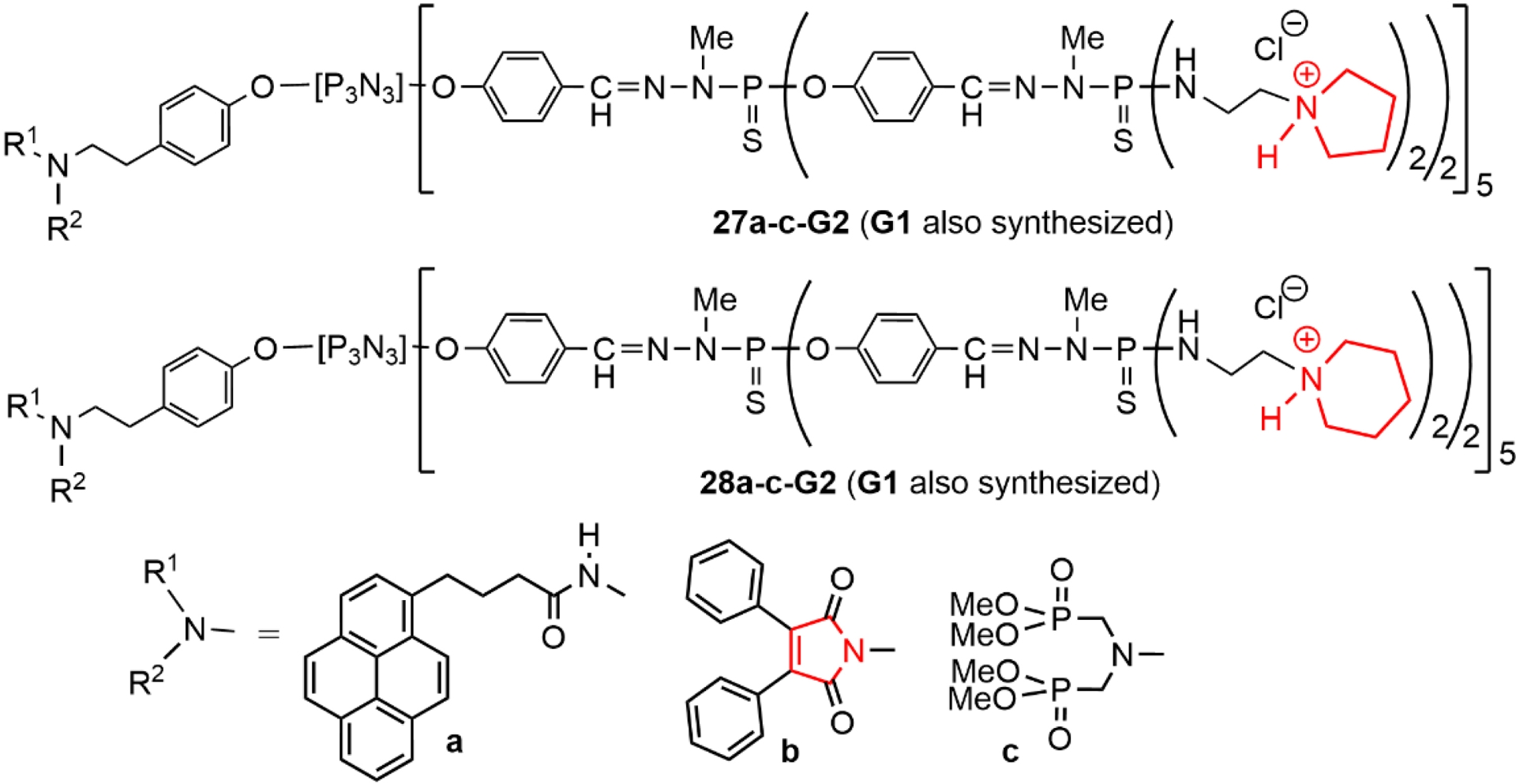
Besides the anticancer properties, a few PPH dendrimers were tested against bacterial strains. For instance, a few dendrimers shown in Figures 6 and 8 (24-G3a-Au48, 24-G3a-Au10Cu20NN10PEG8, 24-G3a-Au20NN20PEG8, 24-G3a-Cu44PEG4) were also tested against Gram-positive (Staphylococcus aureus) and Gram-negative (Escherichia coli, Pseudomonas aeruginosa) bacteria, as well as against yeasts (Candida albicans). Dendrimer 24-G3a-Au48 had the highest antimicrobial activity, whereas 24-G3a-Au10Cu20NN10PEG8 displayed a marked synergistic effect between both metals, granting this compound the highest anti-fungal activity [76]. A series of viologen-containing dendrimers was synthesized, and the antibacterial properties were assessed. As the viologens are inside the branches, and not at the surface, they are out of the scope of this review, but one of them is shown in Figure 11A (29-G1), as it displayed the best antibacterial properties against the Gram-positive strain S. aureus, and limited the growth of Gram-negative strains E. coli and P. vulgaris, due to the presence of a large number of charges inside the structure [80]. Two series of small dendrimers (30a-g-G0 and 31a-c,e-g-G0) functionalized with diverse acetohydrazides, most of them bearing a nitrogen heterocycle, were synthesized (Figure 11B). All of them displayed activities against a panel of bacterial pathogens, the most active being compound 30a-G0 [81].
(A) Viologen dendrimer and (B) small dendrimers, both having antibacterial activities.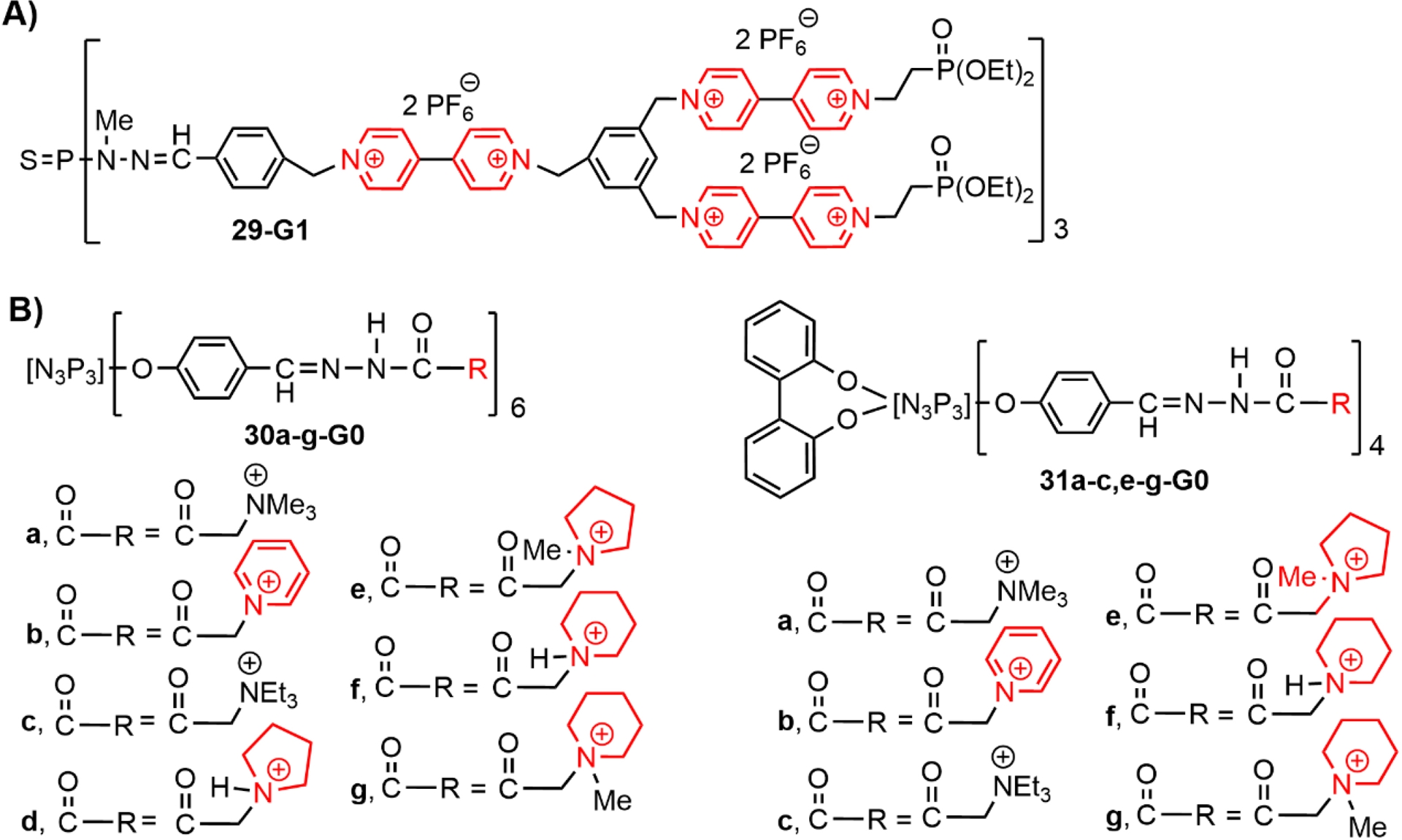
Tuberculosis is an infectious disease caused by the bacillus Mycobacterium tuberculosis (Mtb), which, according to the World Health Organization (WHO), has already infected more than one third of the world’s population [82]. Three families of phosphorus dendrimers functionalized with nitrogen heterocycles were synthesized (compounds 32a-e-G0, 33a-g-G1, 33a-b-G2,G3,G4, and 34a-i-G1) (Figure 12). They were tested against three bacterial strains: attenuated Mycobacterium tuberculosis H37Ra, virulent M. tuberculosis H37Rv, and Mycobacterium bovis BCG. The smallest compounds were found to be the most active, in particular compounds 32a-G0 (six pyrrolidinium groups) and 32b-G0 (six piperidinium groups). In addition, 32b-G0 showed relevant efficiency against M. tuberculosis strains resistant to widely used drugs such as rifampicin, isoniazid, ethambutol, or streptomycin. Thus, compound 32b-G0 was tested in vitro and in vivo. It was administered orally once a day for two weeks to mice infected by the attenuated H37Ra Mtb strain. A superior efficiency of this compound compared to ethambutol and rifampicin was observed in vivo [83].
Three families of PPH dendrimers functionalized with cationic N-heterocycles against tuberculosis.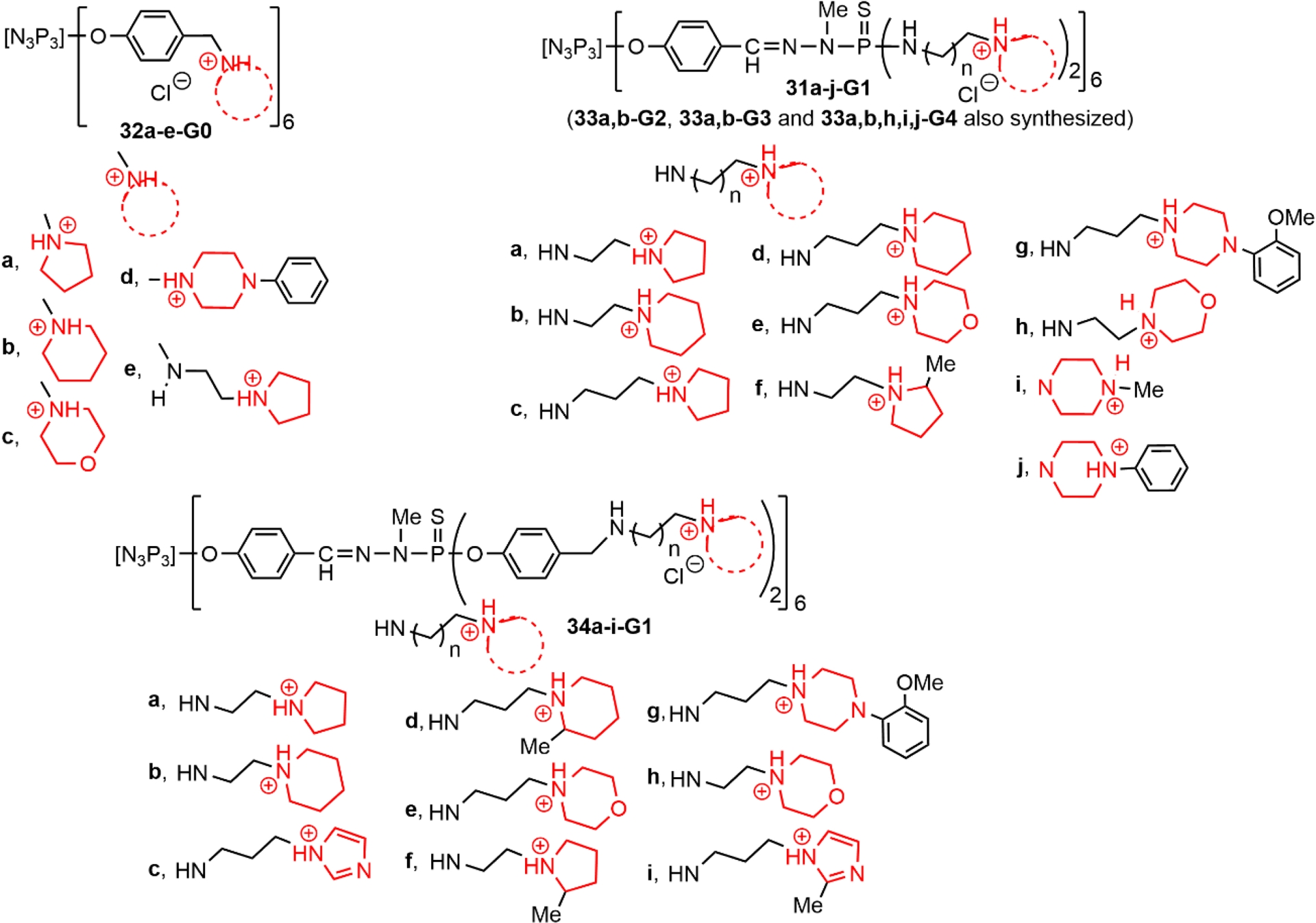
Beside the properties observed as drugs per se, PPH dendrimers have been also used as drug and DNA carriers. Dendrimers 33a,h,i,j-G1,G4 (Figure 12) were synthesized, but only the fourth generations were tested, except compound 33j-G4 which was discarded as it was not soluble in water. Cytotoxicity of dendrimers 33a,h,i-G4 was found to be low against both cancerous and normal cells. Their ability to interact with DNA was tested by electrophoresis. Only the dendrimer bearing the pyrrolidinium groups (33a-G4) was found to be suitable for transfection experiments, to deliver single-stranded (labelled with FITC) and double-stranded (GFP-coding plasmids) DNA into one healthy (HUVEC) and two cancerous (HEK 293 and HeLa) cell lines [84]. The third generation of the same dendrimer (33a-G3) was used to carry a small interfering RNA, anti-Lyn, as a potent anticancer agent against glioma. In addition to delivery, the dendrimer itself influenced various cell parameters, in particular those suggested to be regulating glioblastoma cell invasion [85]. Generations 1 to 3 of the same dendrimer (33a-G1,G2,G3) were used to condense plasmid DNA (pDNA) encoding enhanced green fluorescent protein (EGFP), and to deliver it to HeLa cancer cells. Compound 33a-G1 displayed the best gene-delivery efficiency. This small dendrimer was then used to deliver pDNA encoding both EGFP and p53 protein, resulting in cell cycle arrest for cancer-gene-therapy applications. Such properties were also validated in vivo with mice bearing a xenografted tumor [86]. Dendrimers 33a-G3 and 20-G3 complexing Mcl-1 siRNA were used as dopants of hydrogels (agarose gels). Combinations of both dendrimers in various proportions permitted to adjust the speed of siRNA release [87].
Different types of PPH dendrons functionalized with nitrogen heterocycles were also used as carriers. A third-generation dendron, having additional phenyl groups inside the structure to increase the hydrophobicity, a C17 alkyl chain at the core, and 40 pyrrolidinium groups at the periphery (compound 35-G3) (Figure 13A) formed micelles that possessed good intrinsic anticancer activity. These micelles were suitable for encapsulation of the hydrophobic anticancer drug doxorubicin (DOX) with high drug-loading content (42.4%) and encapsulation efficiency (96.7%). The micelles of dendrons loaded with doxorubicin acted collectively to take down breast cancer cells, both in vitro and in vivo, in a xenografted tumor model. Furthermore, the micelles 35-G3@DOX significantly decreased the intrinsic toxicity of free doxorubicin [88]. A first-generation dendron bearing also pyrrolidinium peripheral groups and a long alkyl chain at the core (compound 36-G1) (Figure 13B) also formed micelles suitable to encapsulate doxorubicin with optimal loading content (80%) and encapsulation efficiency (98%). Compound 36-G1@DOX was able to compress microRNA-21 inhibitor (miR-21i), and to co-deliver it for combination therapy of triple-negative breast cancer. This polyplex was readily phagocytosed by cancer cells, which killed them in vitro. It was also used to efficiently treat an orthotopic triple-negative breast tumor model in vivo, as demonstrated by a large decrease in tumor size for the polyplex-treated mice [89]. Even a very small dendron (37-G0) (Figure 13C) was able to compress microRNA-30d (miR-30d) and form polyplexes that effectively transfected miR-30d to cancer cells. miR-30d is known to significantly inhibit the migration and invasion of a murine breast cancer cell line. This phenomenon was indeed observed with 37-G0@miR-30d both in vitro and in vivo in a subcutaneous tumor mouse model [90].
Different types of dendrons functionalized with N-heterocycles and used as carriers of RNA.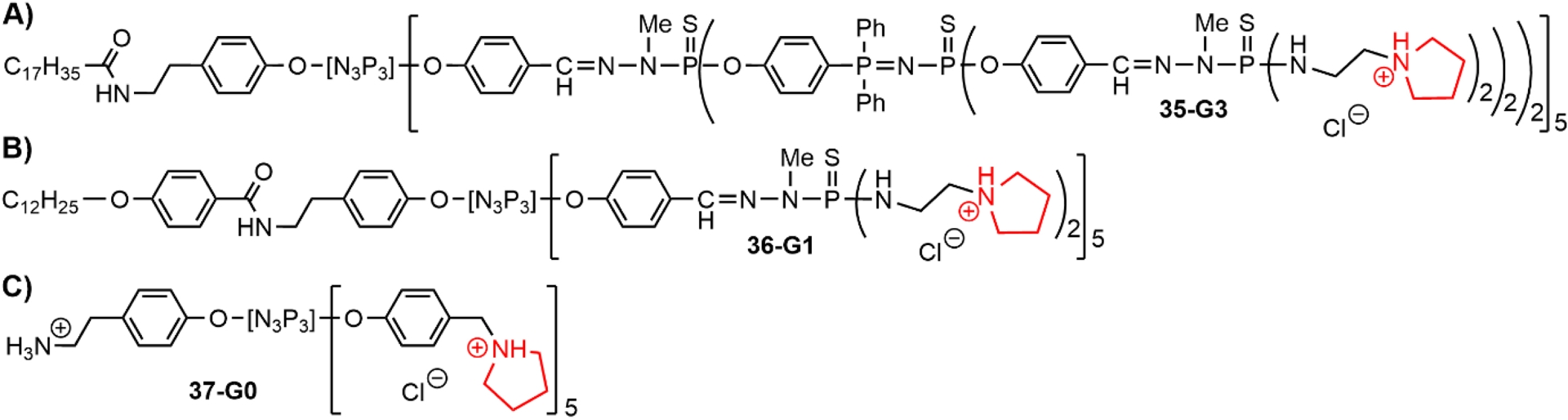
Another way to deliver active substances consists in grafting them to the surface of dendrimers through a cleavable bond. Such a concept was illustrated with PPH dendrimers for fipronil, an insecticide having a poorly reactive NH2 group, which was nevertheless reacted with the aldehyde terminal functions of generation 1 and 4 dendrimers to generate compounds 38-G1 and 38-G4 (Figure 14). The imine bonds were very sensitive to water, which would release fipronil. These dendrimers, kept as powders under air for 35 days, released 12% and 37% of fipronil from 38-G1 and 38-G4, respectively. As it was difficult to keep these compounds pure and prevent the hydrolysis of the imine bonds, another attempt was carried out to have an amine instead of an imine for the grafting to the dendrimers (compounds 39-Gn, n = 1,4) (Figure 14). These compounds were stable for months as powders under air. Despite being much less sensitive to hydrolysis than the 38-Gn family, the 39-Gn family retained a certain persistence of the pesticide activity, possibly through a different mechanism of action [91].
Dendrimers functionalized with fipronil.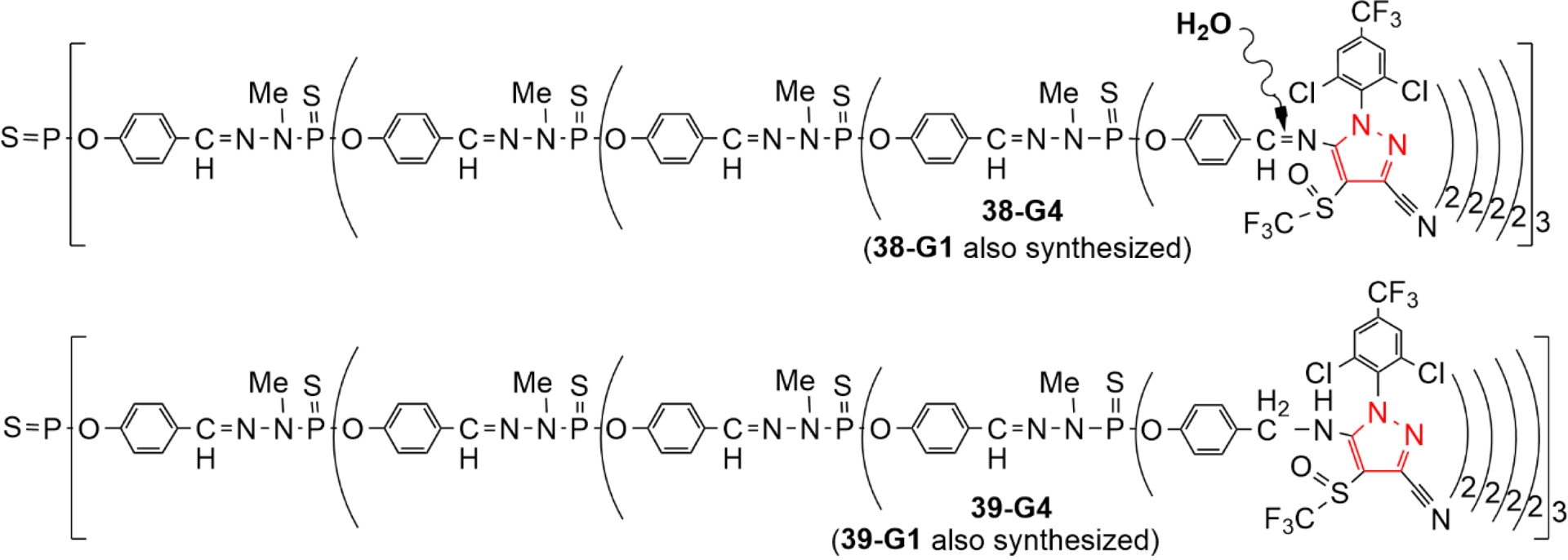
3. PPH dendrimers functionalized with oxygen heterocycles
Few oxygen heterocycles were grafted to the surface of phosphorus dendrimers and dendrons, all of them being of the carbohydrate type. Very small dendrons bearing a phenyl, a ferrocene, or a phosphonate group at the core were functionalized with β-D-glucoside groups (compounds 40a,b,c-G0) (Figure 15) [92, 93]. Generations 1 and 4 of dendrimers (41-G1 and 41-G4) were functionalized with the same β-D-glucoside groups. Isomers of the hydrazone bonds were observed by 31P, 1H, and 13C NMR [94].
Functionalization of dendrons and dendrimers with β-D-glucoside groups.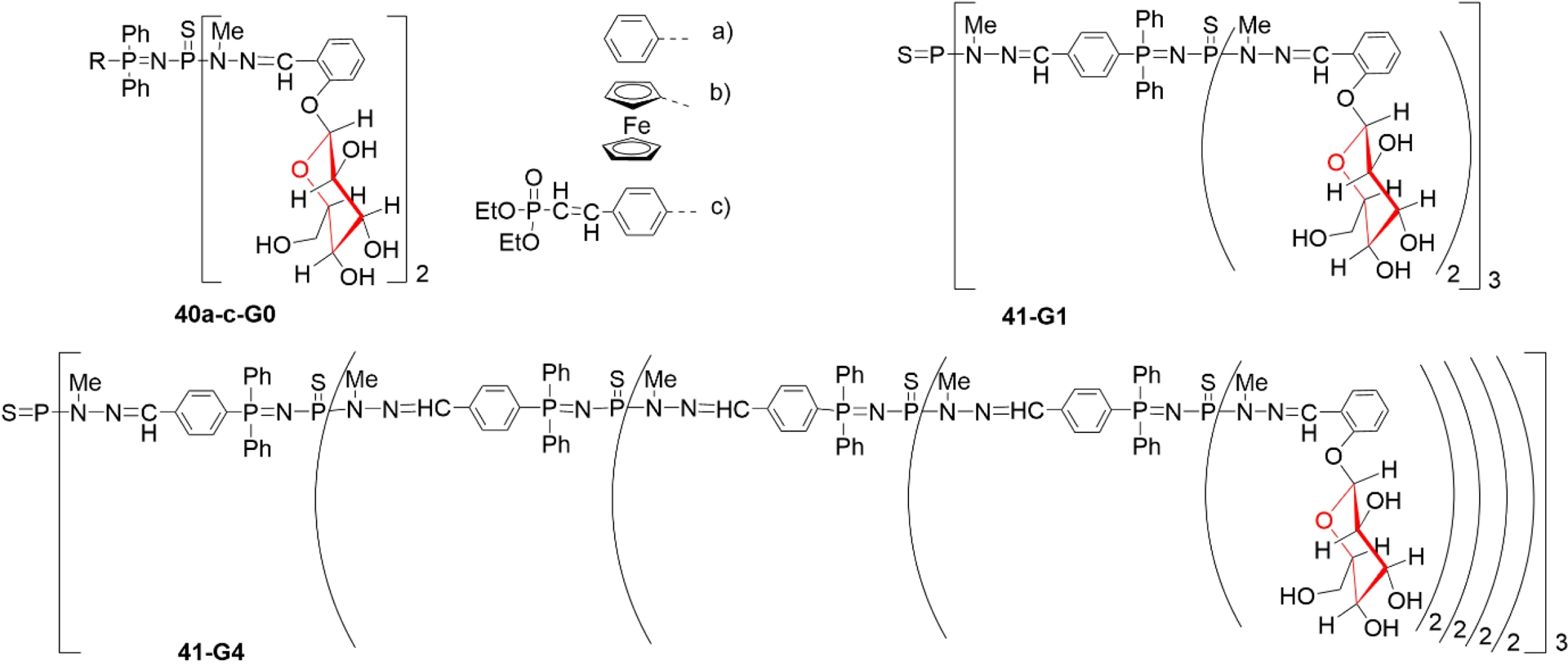
Generations 1 to 3 of PPH dendrimers were functionalized with para-hydroxyphenyl-2,3,4-tri-O-acetyl-β-D-xylopyranoside, affording dendrimers 42a-Gn (n = 1,2,3), then deprotection of the alcohols by hydrolysis of the acetate groups produced dendrimers 42b-Gn (n = 1,2,3) (Scheme 10) [95].
Grafting protected D-xylose at the surface of dendrimers and its deprotection.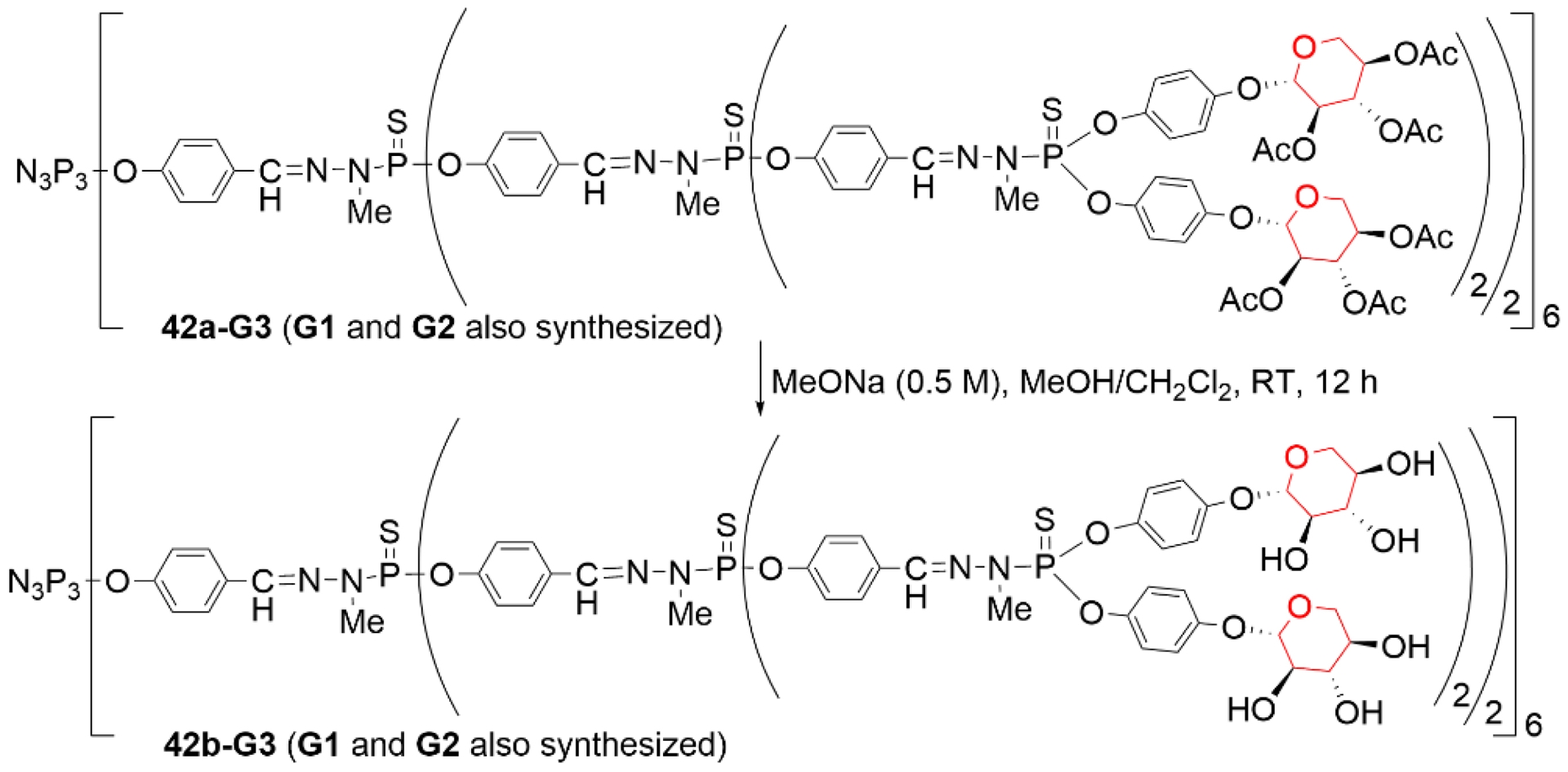
A series of dendrimers capped with mannose units was synthesized with the aim of mimicking the bioactive supramolecular structure of mannose-capped lipoarabinomannan, one of the most abundant glycolipids in the M. tuberculosis cell wall, which decreases the immune response in favor of promoting the infection. The series of dendrimers 43-Gn-X differs by the generation (n = 1 to 4) and the type of mannose caps, being constituted of a single mannose (X = M), or two mannoses connected (α1→2) (X = D), or even three mannoses (X = T) (Figure 16). The binding avidity of all these dendrimers for DC-SIGN (dendritic cell-specific intercellular adhesion molecule-3-grabbing non-integrin) was measured. The best results (highest binding avidity) were obtained with 43-G3-T (48 trimannosides) and 43-G4-D (96 dimannosides). These dendrimers inhibited proinflammatory cytokines. Furthermore, per os administration of the 43-G3-T mannodendrimer to mice exposed to aerosolized lipopolysaccharide (LPS), as a model of acute lung inflammation, induced a significantly reduced neutrophil influx. It was thus found suitable for the potential treatment of lung inflammatory diseases [96]. Later on, dendrimers 43-G2-M and 43-G2-D were used in a structure/function relationship study, which demonstrated that dimannoside caps (as in 43-G2-D) and multivalent interactions were required for efficient ligand binding [97].
Dendrimers functionalized with 1, 2, or 3 mannose units on each terminal function.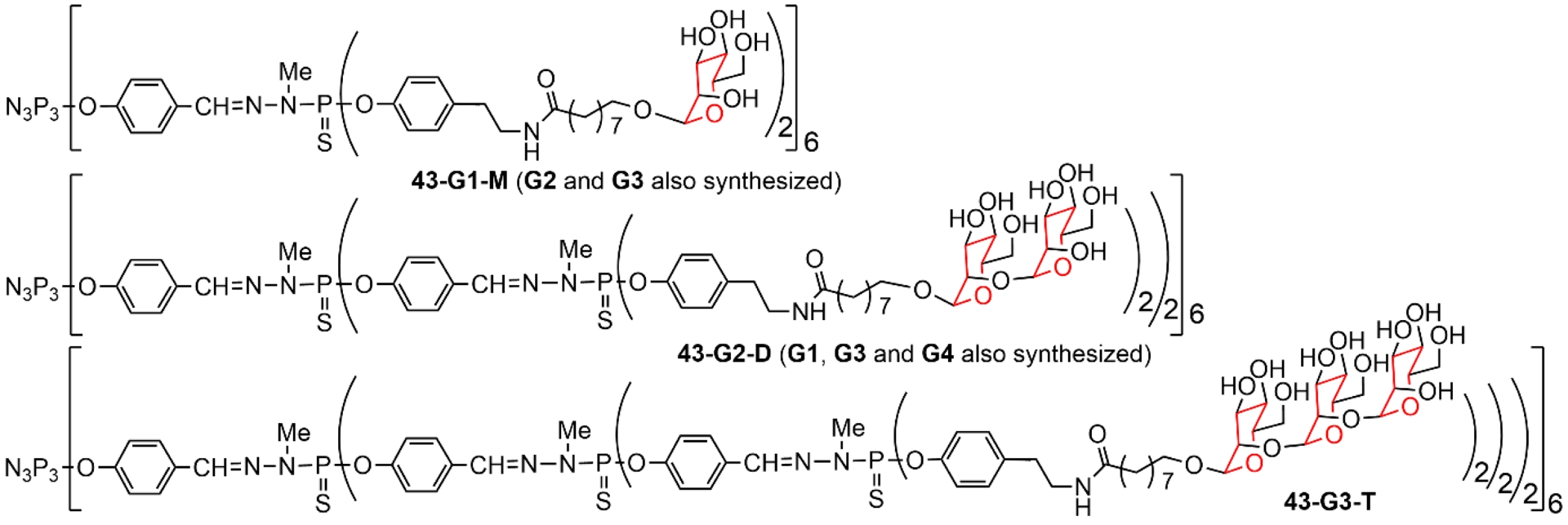
Alternative methods of synthesis of phosphorus dendrimers.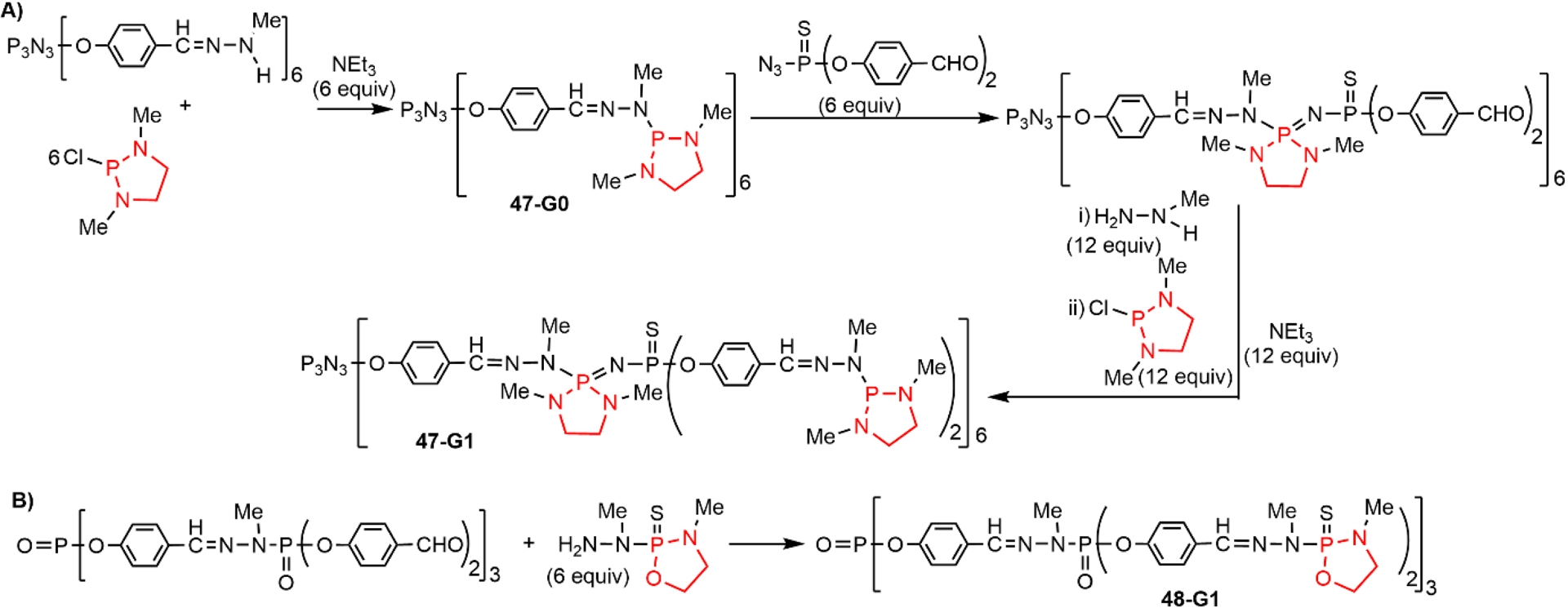
4. PPH dendrimers functionalized with sulfur heterocycles
Very few S-heterocycles were used for the functionalization of PPH dendrimers, all of them were synthesized for electrochemical experiments. In a first example, generations 0 to 4 of phosphorus dendrimers were functionalized with two thiophene groups, using Wittig reactions on the aldehydes (compounds 44-Gn, n = 0 to 4) (Figure 17A). Electropolymerization of these dendrimers was obtained by applying recurrent potential scans, which induced the growing of a polymer in the form of a dark blue film on the anode surface. Polymers formed with 44-G0 and 44-G1 essentially contained inter-dendrimer linkages, whereas an increasing part of intra-dendrimer linkages was observed for higher generations [98]. PPH dendrimers were also functionalized by Wittig reactions with tetrathiafulvalene (TTF) derivatives (45a-Gn, n = 1 to 5, from 6 to 96 TTF moieties) (Figure 17B), sometimes linked to a crown ether (45b-G3). Electrodes modified with these dendrimers were obtained by electrodeposition, with no significant difference observed between the different dendrimer generations. Electrodes modified with dendrimer 45b-G3 were suitable for detecting and quantifying Ba2+ cations, which could be coordinated by the TTF–crown ether ligands [99]. Generation 1 of PPH dendrimers was functionalized with TTF linked through different types of linkers (46a,b,c,d,-G1) (Figure 17C). Thin-layer cyclic voltamperometry results were in full agreement with twelve TTF units per dendrimer in all cases. Chemical oxidation of the TTF moieties with PhI(OAc)2/CF3SO3H induced the formation of mixed-valence cation radical salts, which were conductive. They were characterized by measurement of optical density in the solid films and by UV–Vis–NIR spectroscopy in solution [100].
PPH dendrimers functionalized with S-heterocycles, thiophene, and TTF derivatives.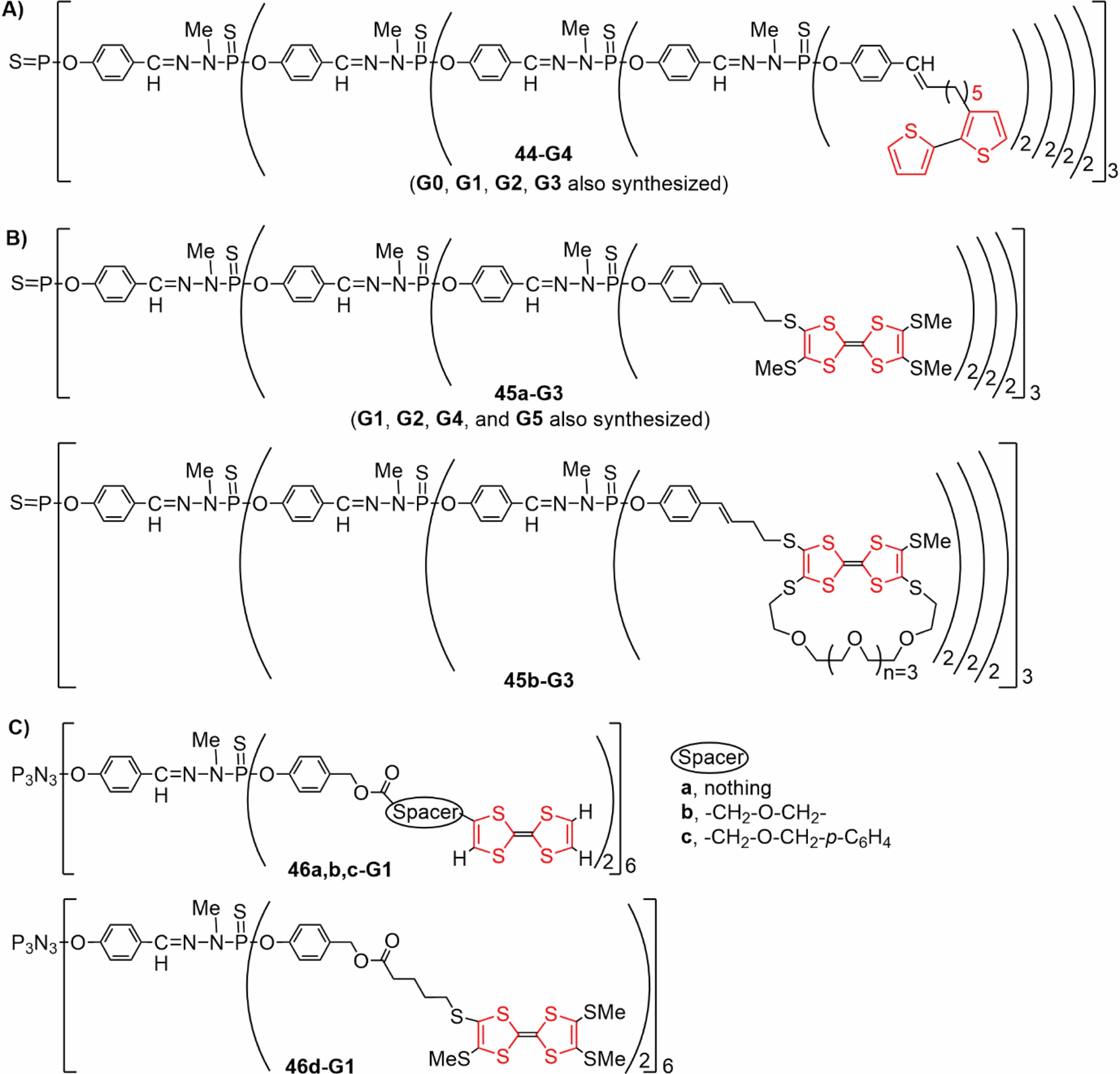
5. PPH dendrimers functionalized with mixed heterocycles
A few mixed heterocycles incorporating both nitrogen and oxygen have been already shown in Figure 12, as they were part of a series of nitrogen heterocycles. However, other types of mixed heterocycles incorporating other elements, in particular phosphorus, were used for the functionalization of PPH dendrimers. In that case, either the P-heterocycles were pre-synthesized before the grafting to dendrimers, or they were obtained by reaction of the P(S)Cl2 terminal functions with diamines.
Besides the classical two-step synthesis of PPH dendrimers, several alternative methods for the synthesis of phosphorus dendrimers have been proposed. One of them consisted in the repetition of three steps and involved the use of a chlorodiazaphospholane. As illustrated in Scheme 11A, this diazaphospholane was reacted with N–H peripheral functions to afford dendrimer 47-G0, which was reacted with a phosphorus azide in a Staudinger reaction [101], then with methylhydrazine, and again with the chlorodiazaphospholane to afford dendrimer 47-G1 [102]. Another alternative method for the synthesis of phosphorus dendrimers consisted in using P=O instead of P=S derivatives. Condensation of the aldehyde peripheral functions with a methylhydrazine derivative of oxazaphospholidine afforded dendrimer 48-G1 (Scheme 11B) [103].
PPH dendrimers functionalized with cage compounds, such as PTA, and used as catalysts.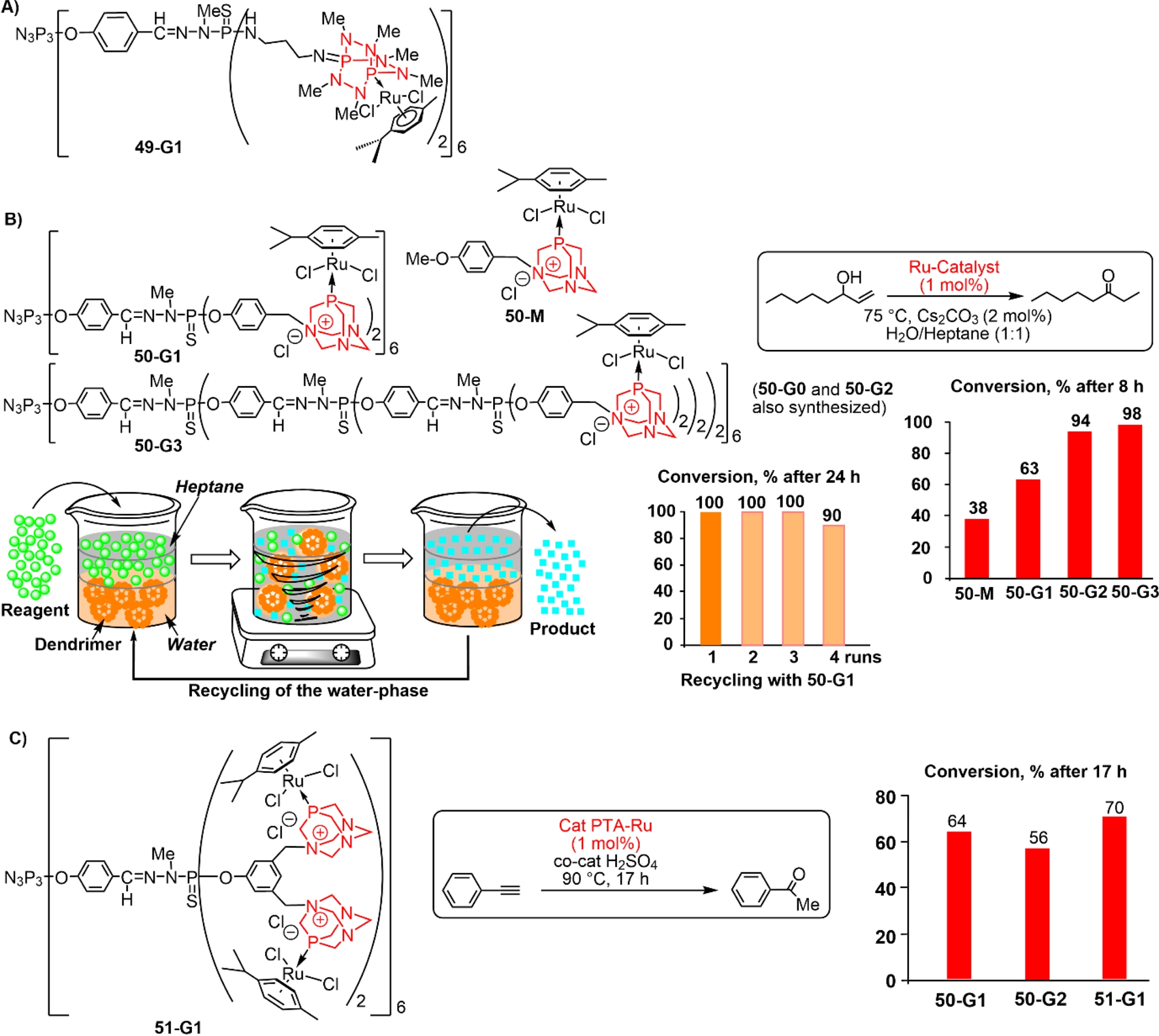
Cage compounds based on phosphorus and their complexes are mainly used in catalysis [104]. A trihydrazino phosphoadamantane functionalized with a pendant amine was reacted with the P(S)Cl2 functions of a first-generation dendrimer, and then the remaining free phosphine was complexed with ruthenium para-cymene, to afford complex 49-G1 (Scheme 12A), but this complex was not used in catalysis experiments [105]. 1,3,5-Triaza-7-phosphaadamantane (PTA) [106] was grafted to the surface of PPH dendrimers from generation 1 to 3 and used for complexing ruthenium, affording dendrimers 50-Gn (n = 1 to 3), and the corresponding monomer 50-M was also synthesized (Scheme 12B). These complexes were tested as catalysts in the hydration of phenylacetylene, and also in the isomerization of 1-octan-3-ol (Scheme 12B). In that case, biphasic water/heptane reaction conditions were used, which enabled the easy recovery of the product in the organic phase, and of the dendritic catalysts in the aqueous phase. The efficiency of the catalysts increased as the generation increased, and recycling experiments with the first-generation dendrimer 50-G1 were efficiently carried out three times [107]. Another dendrimer having twice the number of PTA at a given generation (51-G1) was synthesized. The efficiency of dendrimer 51-G1 (24 PTA-Ru) was compared to that of 50-G1 (12 PTA-Ru) and 50-G2 (24 PTA-Ru) in the hydration of alkynes (Scheme 12C). The dense dendrimer 51-G1 was the most efficient in this reaction [108]. As some ruthenium derivatives were proposed as anticancer agents, these dendrimers were also tested for their ability to interact with DNA. Dendrimer 50-G3 was discarded as insoluble in water, whereas dendrimers 50-G1 and 50-G2 were poorly soluble. Only the monomer 50-M and the smallest dendrimer 50-G0 were soluble in water. Tests for unwinding supercoiled DNA indicated that dendrimer 50-G0 was the most efficient [109].
A chiral phosphoramidite ligand, suitable for the complexation of rhodium, was grafted on a model 52-M, on a branch (52-B), and at the surface of dendrimers from generation 1 (52-G1) to generation 3 (52-G3) (Figure 18). The resulting Rh-complexes were used as catalysts in the [2 + 2 + 2]-cycloaddition reaction of three alkynes, between N-tosyl-1,6-diyne and 2-methoxynaphthalene alkynyl derivatives. A strong positive dendritic effect was observed both in yield and enantioselectivity of this reaction (determined by chiral HPLC), leading to axially chiral biaryl compounds [110].
Rh-complexing chiral phosphoramidite ligand linked to the surface of dendrimers used as enantioselective catalysts.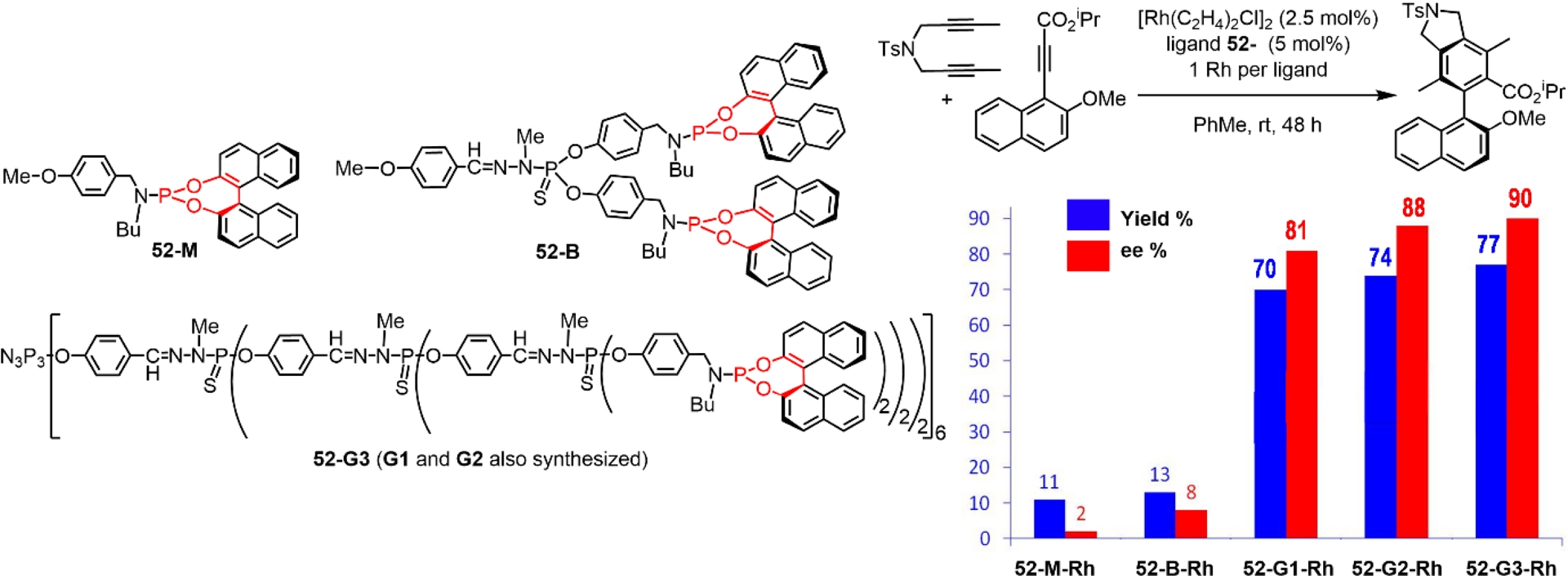
Besides the direct grafting of phosphorus-containing heterocycles, the P(S)Cl2 terminal functions are particularly suitable to react with diamines to produce five- or six-membered heterocycles involving a N–P–N linkage. Such a reaction was first applied to generations 1 and 3, reacted with different tetraazamacrocycles (1,4,8,11-tetraazacyclotetradecane, 1,4,8,12-tetraazacyclopentadecane, and 1,4,8,11-tetraazacyclotetradecane-5,7-dione) (Scheme 13). Five-membered rings (diazaphospholanes) were preferred when either five- or six-membered rings could be produced (cases 53a-Gn and 53b-Gn). A six-membered ring (diazaphosphorinane) was obtained only in the case 53c-Gn, where there was no possibility of creating a five-membered ring because of the presence of the amide moieties [111].
Reaction of macrocyclic tetraamine derivatives with P(S)Cl2 functions of dendrimers.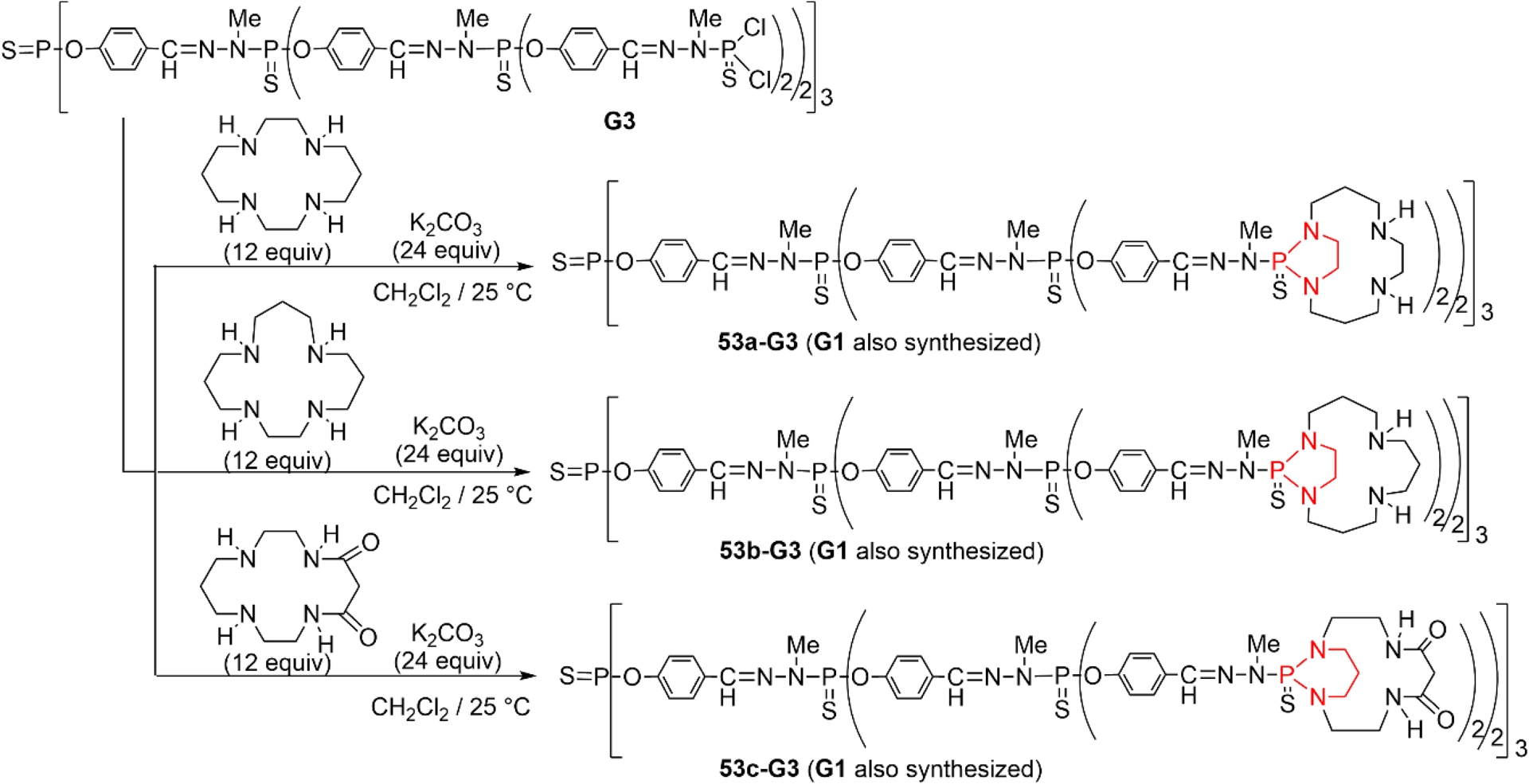
The same process was applied for the grafting of triazatriolefinic macrocycles functionalized with a diamine linker. Generations 1, 2, and 4 were synthesized by using the diamine to produce diazaphospholane rings (compounds 54-Gn, n = 1,2,4) (Figure 19) [112]. The dendritic macrocycles reacted with Pt2(dba)3 (dba = dibenzylideneacetone) and formed platinum nanoparticles (Pt-NPs) in very mild conditions. Interestingly, the dendrimers assembled these Pt-NPs in branched networks, for which the degree of branching and the length increased as the generation of the dendrimers increased. A very unique organization of organic dendritic structures interweaved with inorganic dendritic structures was observed for the first time with these dendrimers [113].
Triazatriolefinic macrocycles grafted to PPH dendrimers through diazaphospholane rings.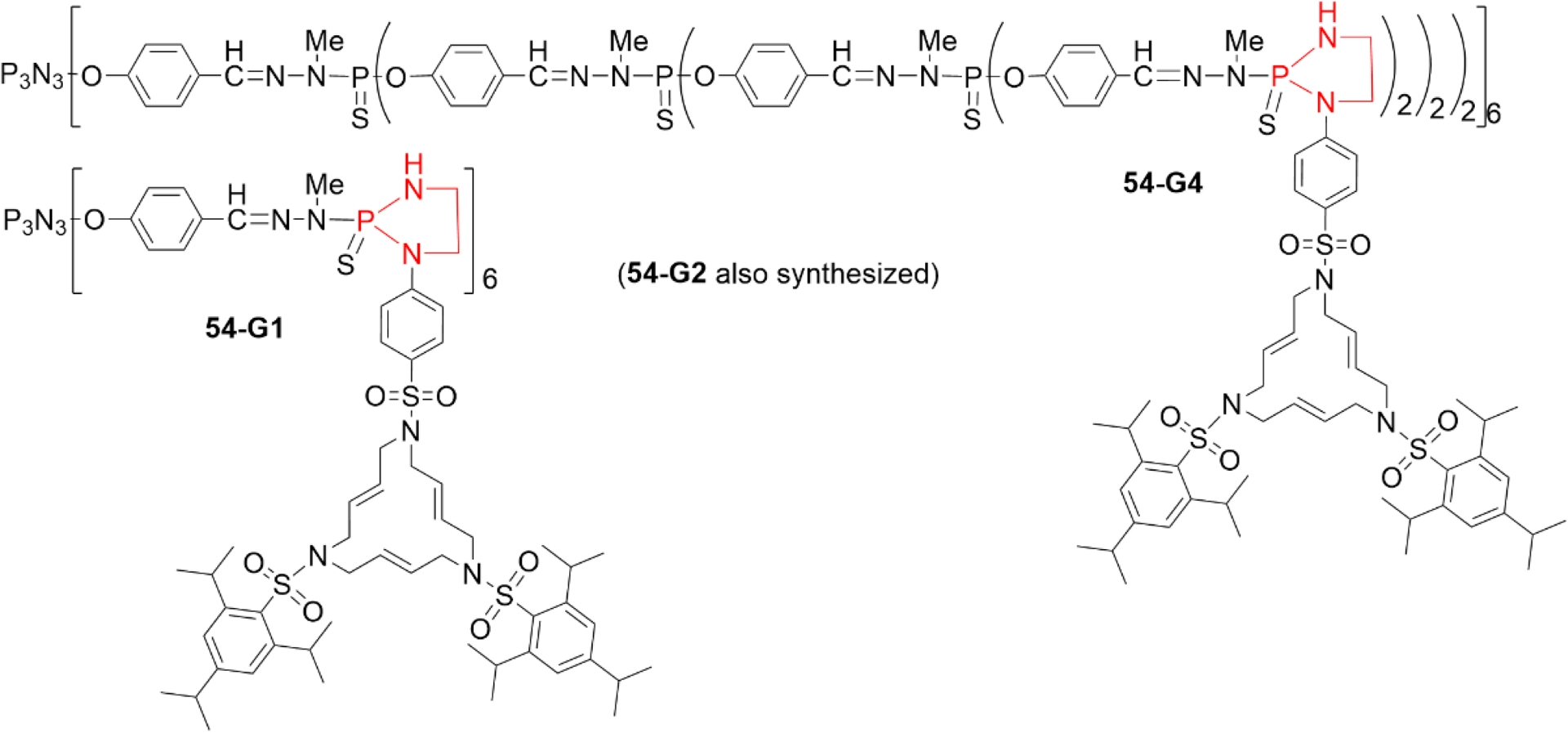
A few mixed heterocycles not involving phosphorus were grafted to the surface of PPH dendrimers, essentially for catalytic experiments. Two families of dendrimers functionalized with bis(oxazoline) ligands, either linked through a phenol (dendrimers 55a-Gn, n = 1,2,3) or through a triazole issued from a click reaction (dendrimers 55b-Gn, n = 1,2,3, Scheme 14) were found suitable for complexing CuCl2. The resulting Cu complexes were used as catalysts in asymmetric benzoylation of linear (case a in Scheme 14) and cyclic diols (case b). Best results were obtained in the case of the acyclic diol. The 55b family was more efficiently recovered than the 55a family, and it could be reused twice with still good yield and enantioselectivity [114].
Two families of dendrimers functionalized with bis(oxazoline) ligands and used in asymmetric catalysis.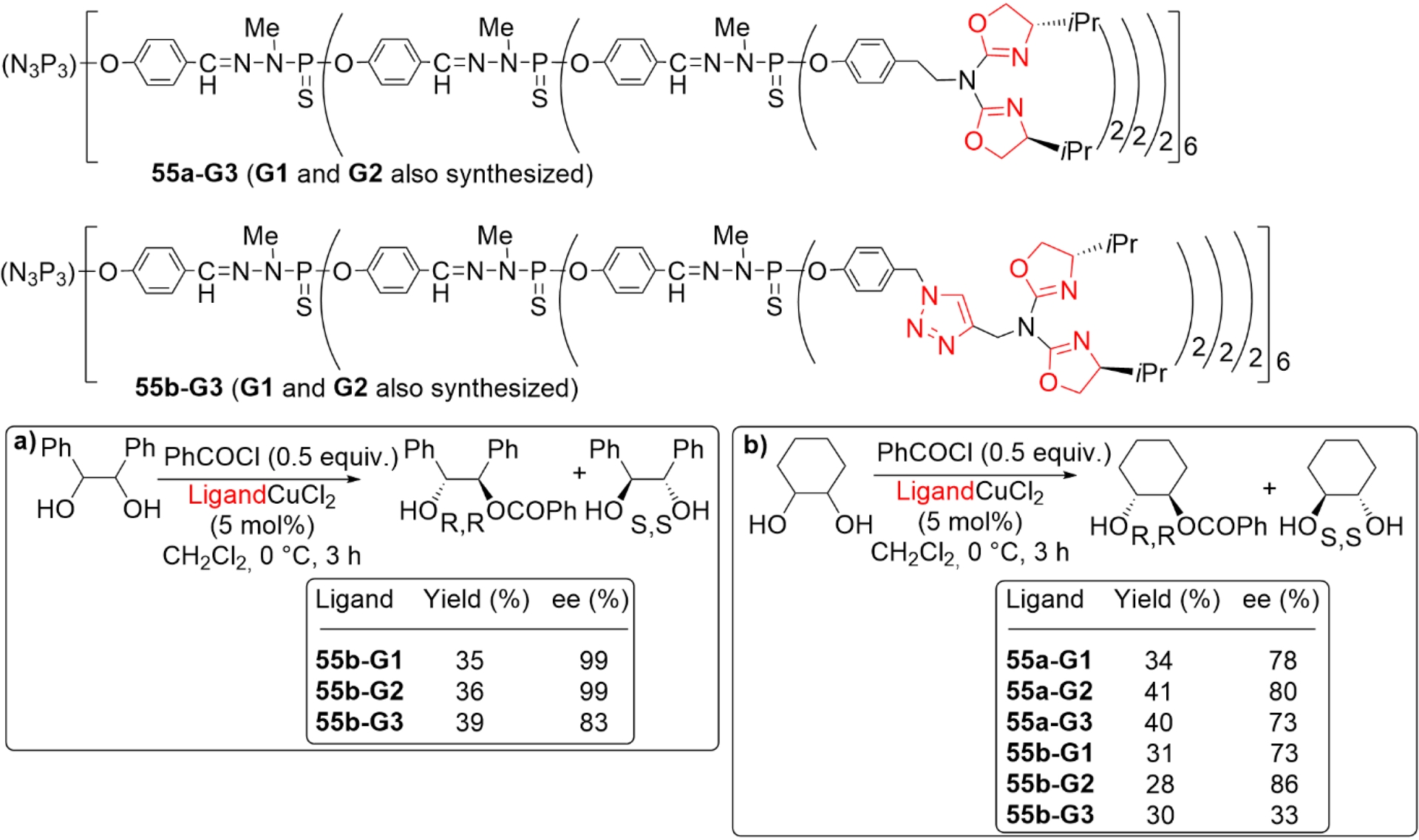
Thiazoles have many biological properties [115], but they were grafted to the surface of dendrimers for their catalytic properties. Indeed, depending on the substituents they bear, in particular phosphines, they can complex metals, to be used as catalysts [116]. A thiazolyl phosphine was grafted to the surface of generations 1 and 3 of PPH dendrimers affording compounds 56-Gn (n = 1 and 3, Scheme 15), which were suitable for complexing Pd(OAc)2. The dendritic Pd complexes and the corresponding monomer were used as catalysts in a panel of Suzuki couplings between diversely functionalized phenyl bromide and phenyl boronic acids. A negative dendritic effect was observed, as the first generation 56-G1 and the monomer 56-M were more efficient than the third generation 56-G3. The first-generation 56-G1 could be recovered and reused at least four times, with still the same efficiency, whereas recovery was not possible with the monomer 56-M. Leaching measured by inductively coupled plasma mass spectrometry (ICP-MS) was very high for the monomer, but undetectable with the dendrimer, displaying an important advantage when using dendrimers instead of monomers as catalysts [117].
Dendrimers functionalized with thiazolyl phosphine and use of these Pd complexes as catalysts in Suzuki couplings.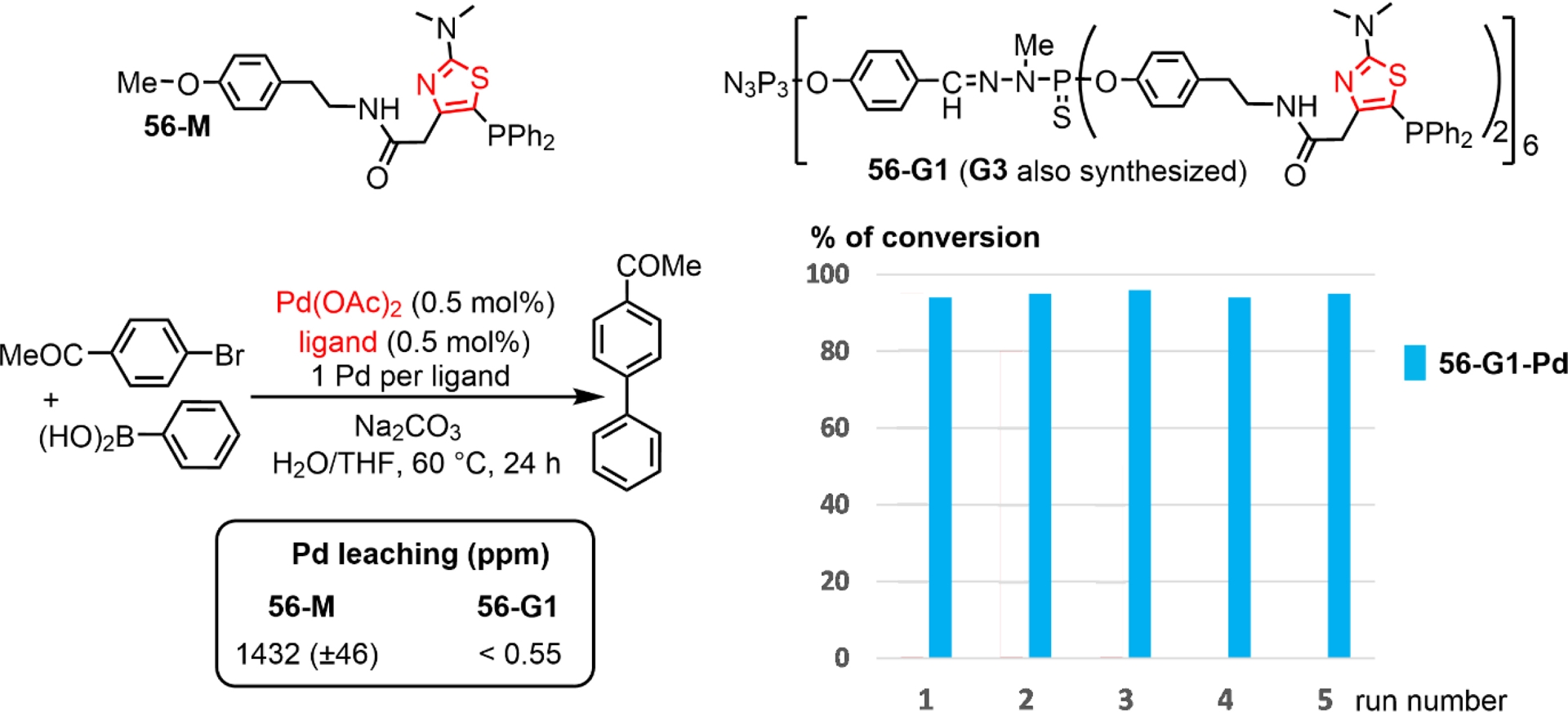
6. Conclusion
Phosphorus dendrimers functionalized with a panel of heterocycles (N-, O-, S- and mixed-heterocycles) represent versatile platforms for advanced catalysis, materials, and biomedical applications. These dendrimers with surface heterocycles can stabilize metal complexes, forming catalytic systems for organic transformations. These systems were used in reactions such as Stille couplings, Knoevenagel condensations, and Michael additions, with the advantage of catalyst recoverability and reusability. The high reproducibility of the results is explained by the fact that the proposed dendrimers containing heterocyclic rings have a specific chemical formula and a specific stereochemical structure, which can be easily confirmed by spectroscopic methods.
The tunable properties of dendrimers functionalized with heterocycles and multivalency also make them ideal candidates for gene delivery and cancer therapeutics. Such phosphorus dendrimers are being actively explored as non-viral nanoplatforms for gene delivery, showing promise in cancer therapeutics. Their biocompatibility and multivalency allow for efficient encapsulation and targeted delivery of therapeutic genes and drugs. It should be noted that by programming the synthesis, grafting, and enhancement of potentially biologically active heterocycles using various methods, it is possible to program the relative stability of target dendrimers in the relevant biological environment. Thus, stable dendrimers can be tested for their diverse biological activities, while in dendrimers specially synthesized for the delivery of future and already existing drugs, focus can be placed on hydrolysis or another mechanism for releasing heterocyclic compounds at the right time and in the required spatial location.
In conclusion, recent advances in the synthesis and applications of phosphorus dendrimers functionalized with heterocycles highlight their versatility and potential. Innovations in eco-friendly synthesis, biomedical applications (especially in drug delivery against cancers), and catalysis are driving the field forward. The integration of heterocycles not only enhances the functionality of dendrimers but also opens new avenues for targeted therapies, advanced materials, and sustainable catalysis.
Given the high potential of useful practical properties, it is important to emphasize that this branch of chemistry makes a significant contribution to fundamental science, both in enriching the fields of dendrimer chemistry and heterocyclic chemistry, if only because the simultaneous or sequential extension of the branches of a phosphorus dendrimer requires virtuosity and precision in practical methods of working with high-molecular weight compounds, especially chemo-, regio-, and stereoselective modifications.
Declaration of interests
The authors do not work for, advise, own shares in, or receive funds from any organization that could benefit from this article, and have declared no affiliations other than their research organizations.