





 CC-BY 4.0
1. Introduction
Organometallic dendrimers and polymers have emerged over the past three decades as highly versatile redox-active macromolecules [1, 2, 3, 4, 5, 6, 7, 8, 9, 10, 11, 12, 13, 14, 15]. The well-defined architectures of dendrimers, combined with the unique electronic properties of metallocene units such as ferrocene and cobaltocenium, offer unprecedented opportunities for tuning electrochemical behavior, constructing molecular reservoirs for charge storage, and developing functional interfaces for sensing and catalysis.
From the early 1990s, the effort of our group was directed toward the incorporation of organometallic moieties into silicon-based scaffolds, such as carbosilanes, cyclosiloxanes and silsesquioxanes, yielding some of the first examples of redox-active organometallic polymers. These studies established the fundamental design principles of electronically active macromolecular systems, in which the proximity and connectivity of metal centers dictate the degree of intramolecular communication and cooperative redox behavior [16].
This chemistry expanded into the field of carbosilane and carbosiloxane dendrimers, whose flexible frameworks enabled the controlled positioning of organometallic units at the periphery or within the interior of the macromolecule [17, 18].
A parallel line of development emerged through the design of amine-based organometallic dendrimers, which provided exceptionally versatile platforms for peripheral functionalization across multiple generations. Their branching amine frameworks enabled the systematic incorporation of diverse terminal groups, including thiol and organometallic amide and urea functionalities. The ability to tailor the outer shell greatly expanded the scope of organometallic dendritic materials, establishing amine-based dendrimers as key scaffolds for coupling structural complexity with functional responsiveness. Such architectures proved particularly attractive for constructing hybrid systems in which the dendrimer periphery acts as a chemically addressable interface, facilitating supramolecular recognition, selective coordination to metal surfaces, and the formation of electroactive thin films.
A major turning point came with the application of these macromolecules to sensing and bioelectrochemistry. Dendrimers and polymers were exploited as mediators in amperometric biosensors, as scaffolds for the immobilization of enzymes, and as nanoscale hosts for fluorescent or electroactive probes. This transition marked the evolution from structural organometallic chemistry to device-oriented applications, with a strong impact on the detection of biologically and environmentally relevant analytes [19].
2. Early developments. Redox-active polymers
The early 1990s marked the emergence of redox-active organometallic polymers as a coherent research field in Morán’s group. Within this framework, the fundamental synthetic principles that would later guide dendrimer and macromolecular design were established. Initial efforts focused on the strategic incorporation of organometallic units—such as arene chromium tricarbonyl, ferrocene, and cobaltocenium fragments—into silicon-based polymeric scaffolds. These studies provided some of the earliest examples of macromolecules exhibiting well-defined, reversible redox behavior (i.e., reversible electrochemistry).
One of the earliest and most versatile synthetic strategies was Pt-catalyzed hydrosilylation, which enabled efficient formation of Si–C bonds between Si–H-containing siloxanes, silsesquioxanes or cyclosiloxanes and vinyl-substituted ferrocene derivatives (Figure 1). In 1993, Casado and coworkers used this methodology to prepare the first ferrocenyl-functionalized octasilsesquioxanes [20], by reacting octakis(hydrodimethylsiloxy)silsesquioxane with vinylferrocene or divinylferrocene. These reactions, catalyzed by Karstedt’s catalyst, afforded mono- and poly-ferrocenyl silsesquioxanes and ultimately poly(ferrocenyl-octasilsesquioxanes). This hydrosilylation route was later extended to cyclosiloxane frameworks [21], demonstrating that Si–H-functionalized cyclotetrasiloxanes could also serve as efficient platforms for organometallic incorporation. Hydrosilylation of 1,3,5,7-tetramethylcyclotetrasiloxane with vinylferrocene afforded a fully substituted tetranuclear ferrocenyl model compound, confirming that clean and complete functionalization of the Si–H groups could be achieved under mild Pt-catalyzed conditions without siloxane ring degradation. Using analogous reactions with divinylferrocene or divinyloctamethylferrocene, the corresponding ferrocenyl and octamethylferrocenyl cyclosiloxane-based polymers were prepared, representing a new class of silicon–ferrocene hybrid materials in which the organometallic units are embedded directly within a siloxane ring framework.
Representative examples of ferrocenyl polymers.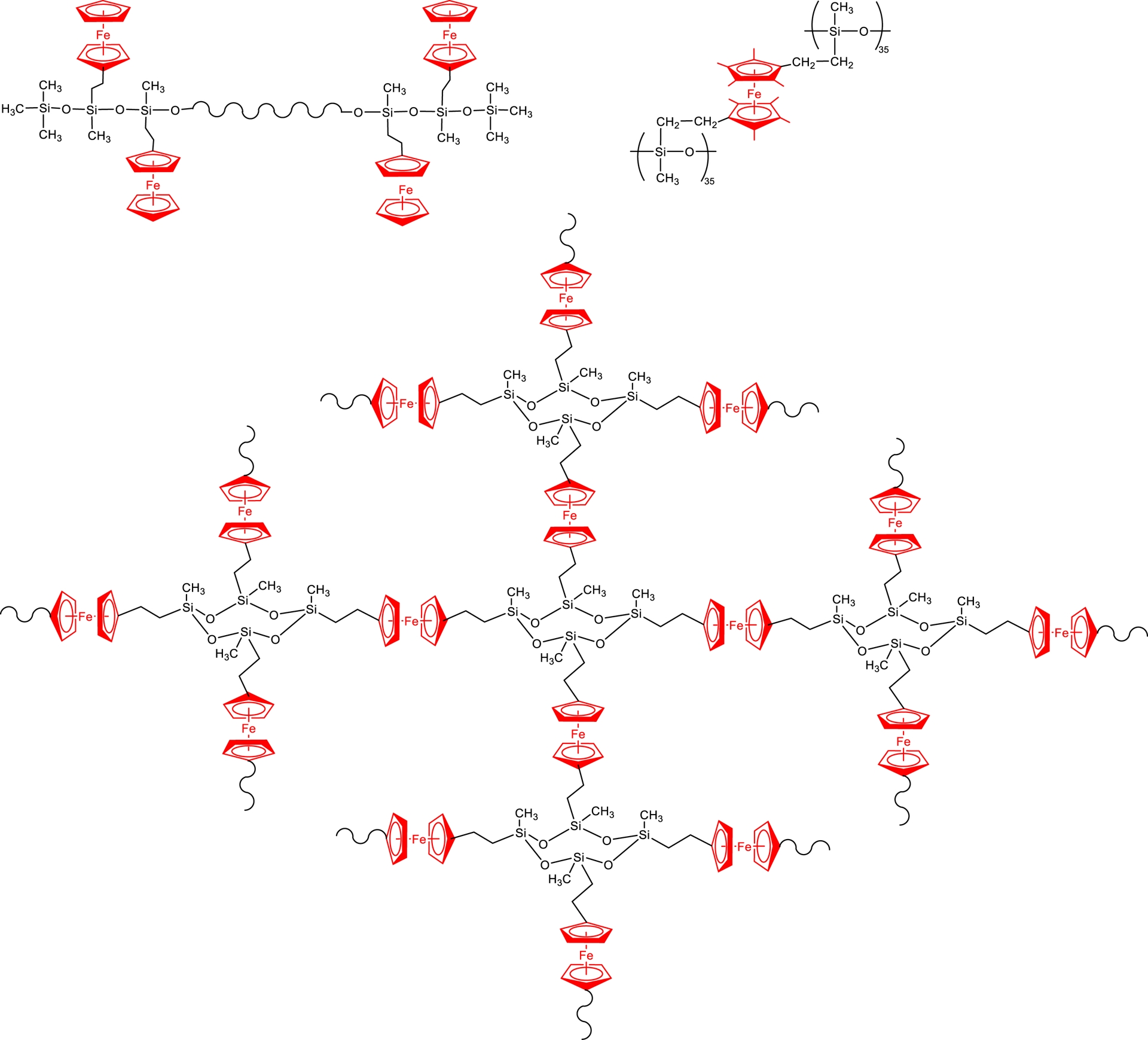
These two families of cyclosiloxane- and silsesquioxane-based polymers were shown to form stable free-standing films and exhibited distinct electrochemical signatures that depended on the steric and electronic properties of the cyclopentadienyl substituents. Films of the ferrocenyl polymers displayed sharp, surface-confined redox waves, whereas the permethylated analog exhibited broader, diffusion-controlled responses and significantly more negative redox potentials due to the strong electron-donating effect of the additional methyl groups. This work not only expanded the scope of hydrosilylation-based access to ferrocene–siloxane hybrid architectures but also provided early insights into how siloxane frameworks and Cp-ring substitution patterns govern redox behavior in silicon-containing organometallic polymers.
Parallel work explored condensation reactions to produce polysiloxanes and polysilanes in which ferrocenyl groups were connected via amide linkages (Figure 2). These studies demonstrated that polymer architecture could be modulated through linker choice and chain topology [22]. Two general synthetic routes were explored. The first method consisted in exploiting the ability of (chlorocarbonyl) ferrocene and 1,1′-bis(chlorocarbonyl)ferrocene to undergo classical condensation reactions, with amine-functionalized siloxanes in the presence of a base to neutralize the acidic byproduct liberated in the reaction. In the second approach, an organometallic moiety that chemically behaves as a Lewis base was allowed to react with an organosilane and a poly(methylsiloxane) functionalized with acid chloride groups. In this method, the key starting ferrocene monomers were (β-aminoethyl)ferrocene and 1,1′-bis(β-aminoethyl)ferrocene. These synthetic routes produced polymers in which the ferrocene units could be positioned either as main-chain elements or as pendant groups, allowing systematic investigation of mobility, electronic communication, chain topology, and redox behavior. Electrochemical measurements demonstrated that the ferrocenyl centers behaved as independent redox sites, generating single reversible waves corresponding to multiple simultaneous one-electron oxidations—an early demonstration of “molecular multielectron” behavior in macromolecules.
Example of a polysiloxane with amide-linked ferrocenyl moieties.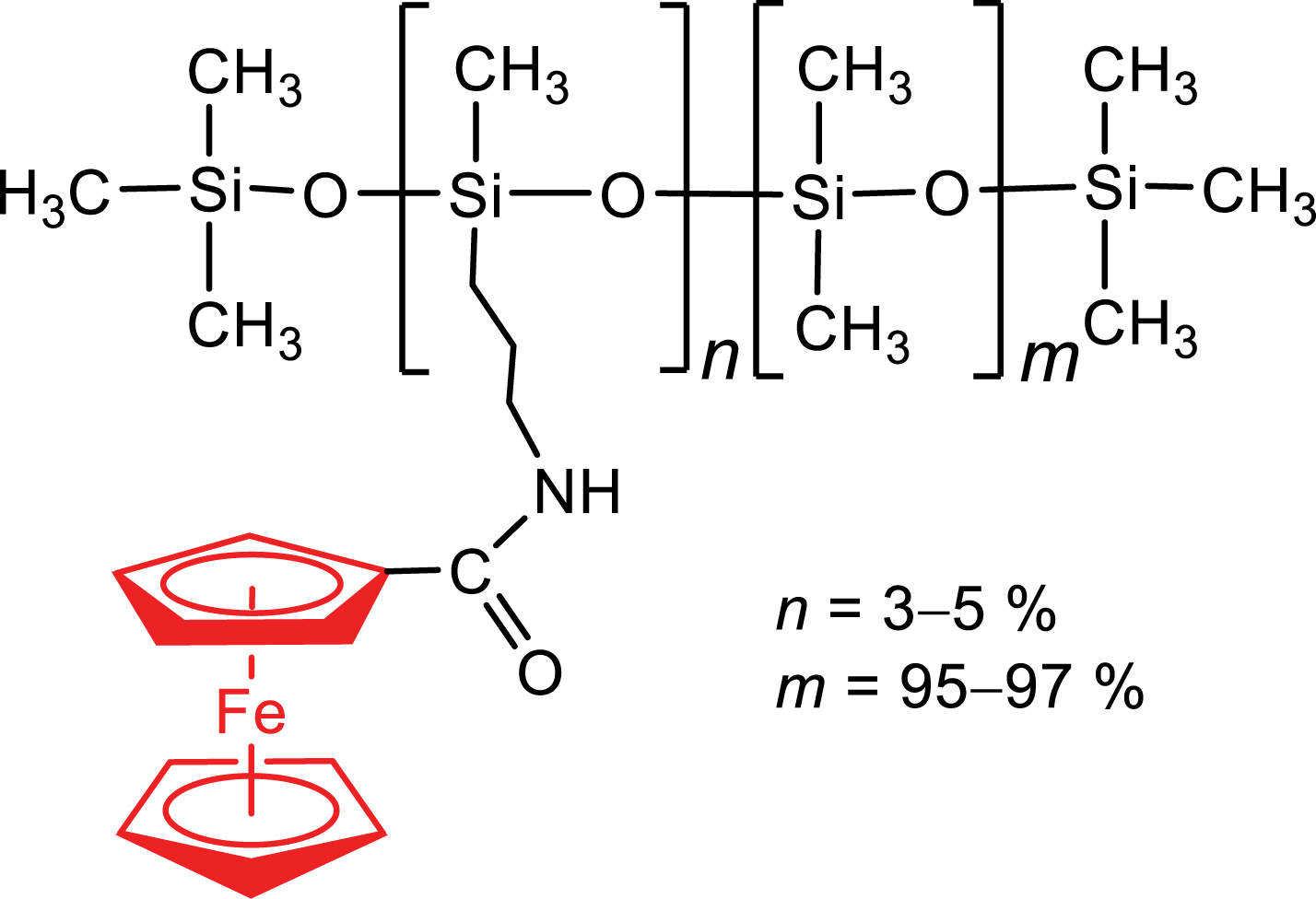
To extend the scope beyond ferrocene, synthetic efforts were also directed toward chromium tricarbonyl–functionalized derivatives [23]. Notably, early polymers were obtained by reacting Cr(CO)6 with preformed aromatic polymers such as phenyl-substituted polysiloxanes. Polymers incorporating η6-arene–Cr(CO)3 fragments provided a distinct electrochemical signature and established the viability of integrating low-valent transition-metal carbonyl units into macromolecular frameworks while retaining reversible redox behavior. These chromium-containing systems broadened the conceptual landscape of redox-active polymers beyond metallocenes, revealing alternative strategies for tuning multielectron processes through metal–ligand interactions.
A major milestone was achieved with the introduction of cobaltocenium-based polymers (Figure 3) [24], which expanded the electronic versatility of the field by adding a permanently charged, chemically robust redox unit. The key to incorporating cobaltocenium units into polymeric scaffolds lay in the high reactivity of (chlorocarbonyl)cobaltocenium and its bis(chlorocarbonyl) analog toward amine- or alcohol-functionalized organic and silicon-based precursors. Cuadrado and coworkers adapted classical condensation chemistry—previously applied to amide-linked ferrocene polysiloxanes—to access both pyrrole- and allyl-functionalized cobaltocenium monomers as well as siloxane-based macromolecules containing cobaltocenium fragments either in the polymer backbone or as pendant redox-active side groups. In a complementary advance, the authors introduced electropolymerizable cobaltocenium monomers—notably the pyrrole-functionalized species—which, upon oxidative electropolymerization, produced surface-confined polypyrrole films embedding cobaltocenium units with well-defined, reversible electrochemistry. These electrogenerated polymer films, displaying robust adhesion and persistent redox activity in both organic and aqueous media, provided one of the first demonstrations that cationic metallocene motifs could be integrated into conducting polymer matrices without loss of electrochemical stability. Taken together, these studies established condensation-driven routes as a powerful complement to hydrosilylation for preparing redox-active organosilicon polymers, and they highlighted the distinctive opportunities offered by cobaltocenium, whose intrinsic positive charge and accessible Co(III)/Co(II) couple opened new design principles for multielectron processes and electrode–polymer interfaces. These cationic organometallic polymers offered new opportunities for studying charge transport in polyelectrolyte systems, designing redox-responsive materials with inherent ionic conduction, and creating positively charged interfaces for electroanalytical applications. Their emergence marked a transition from neutral metallocene systems toward redox-active polymers with built-in ionic functionalities.
Example of a polysiloxane with amide-linked cobaltocenium moieties.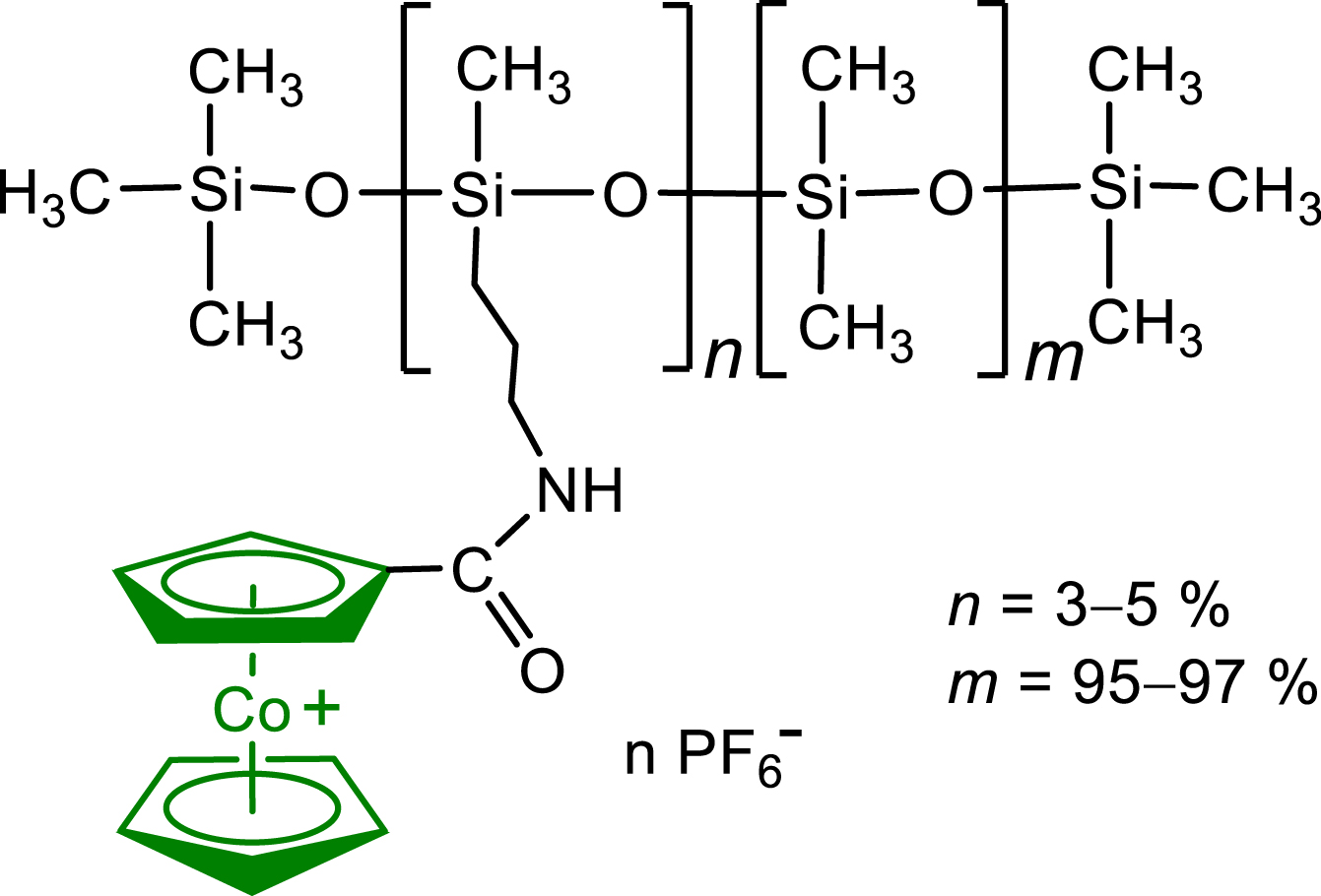
A further expansion of hydrosilylation-based strategies emerged with the incorporation of silyliron dicarbonyl fragments into linear and cyclic siloxanes as well as dendritic carbosilane scaffolds, demonstrating the versatility of Si–H-functionalized backbones for the construction of multimetallic macromolecular architectures. In close analogy to the ferrocene–siloxane systems prepared in the early 1990s, Ramírez-Oliva and coworkers employed Karstedt-catalyzed hydrosilylation to attach the vinyl-substituted silyliron complex (η5-C5H5)Fe(CO)2Si(CH3)2CH=CH2 to Si–H-containing frameworks spanning cyclotetrasiloxanes, poly(methylhydrosiloxane-co-dimethylsiloxane) copolymers, and carbosilane dendrimers [25]. This methodology parallels the classical Pt-catalyzed hydrosilylation used for ferrocenyl silsesquioxanes and cyclosiloxanes but adapts it to a distinct organoiron fragment whose vinyl handle enables clean, quantitative consumption of the Si–H functionality. The resulting tetrametallic siloxane, tetrametallic carbosilane dendrimer, and polymeric siloxane derivative (Figure 4), represent a cohesive family of multimetallic polymers in which the organometallic units are tethered to the siloxane or carbosilane framework through a flexible two-methylene spacer. Electrochemical studies revealed redox processes characteristic of electron-deficient iron carbonyl fragments, proceeding through EC-type mechanisms involving oxidative CO loss—behavior distinct from the reversible redox waves of metallocene-based polymers, yet equally instructive in demonstrating how metal–ligand electronic structure governs redox accessibility within hybrid silicon–organometallic materials.
Example of a polysiloxane with silicon-linked cyclopentadienyl dicarbonyl iron moieties.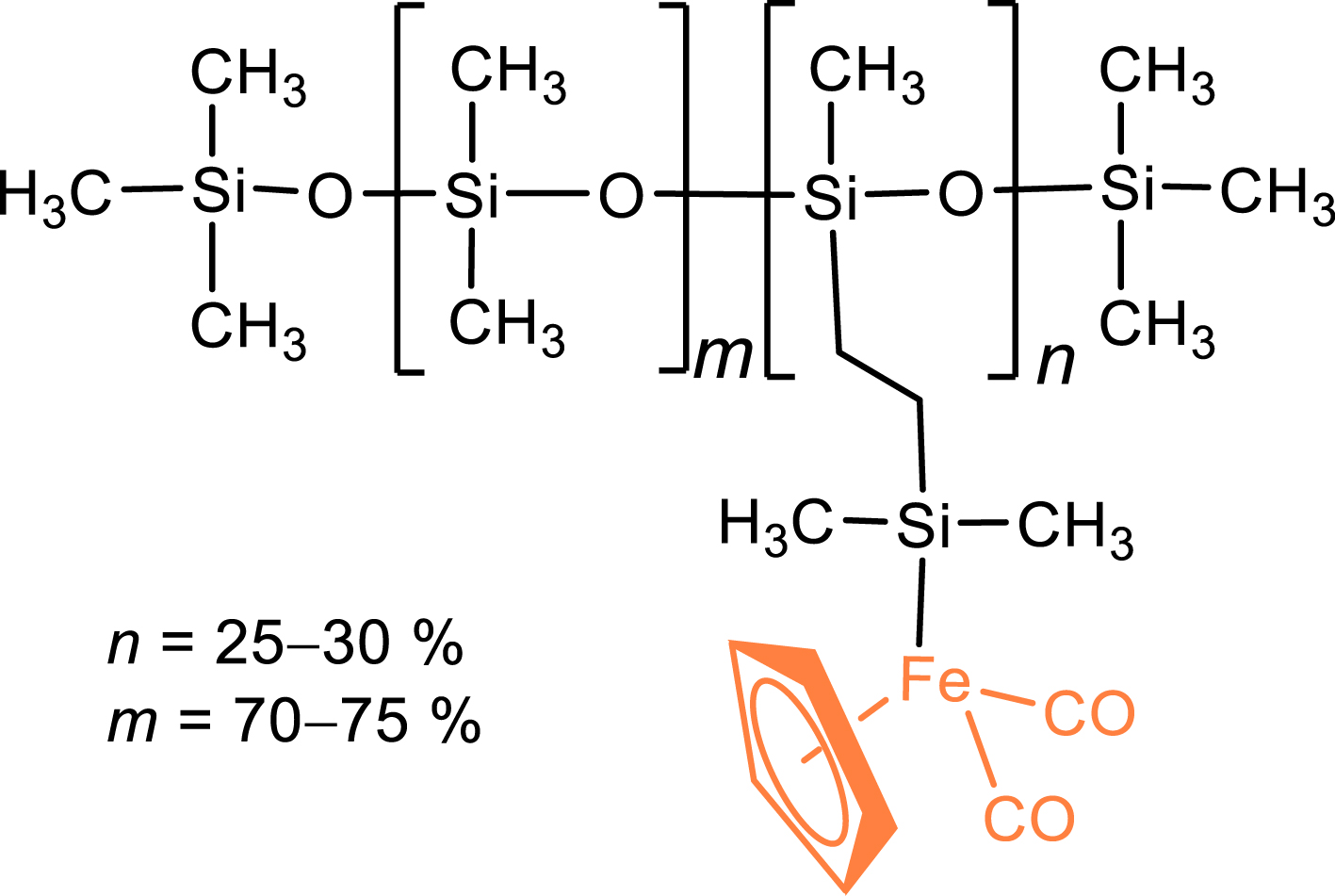
By the end of the 1990s, organometallic polymer chemistry had reached a mature and well-defined stage. Subsequent decades would build upon this foundation with more complex architectures, but the essential principles of redox-active macromolecular design were solidly rooted in this early period.
3. Growth of organometallic carbosilane dendritic architectures
In 1994, with Alonso’s doctoral thesis, we moved toward more structurally defined architectures, exploring dendritic systems and focusing on organosilicon dendrimers as ideal platforms for incorporating ferrocenyl units [26]. This shift allowed us to exploit the pronounced reactivity of Si–Cl, Si–H, and Si–allyl or Si–vinyl functionalities in dendritic frameworks, enabling efficient attachment of diverse organometallic monomers at their peripheries and ultimately providing access to different families of electroactive dendrimers. The development of carbosilane dendrimers functionalized with organometallic units marked a turning point in the construction of redox-active macromolecules, providing unprecedented control over molecular topology, surface functionality, and the spatial disposition of organometallic groups. Unlike earlier siloxane- and silsesquioxane-based frameworks, carbosilane dendrimers rely on robust Si–C linkages and modular branching units, making them particularly suited for stepwise elaboration under hydrosilylation, allylation, and condensation conditions.
3.1. Ferrocenyl-functionalized carbosilane dendrimers and dendritic wedges
Carbosilane dendrimers with peripheral ferrocenyl units were among the earliest and most thoroughly studied families [26]. Initial growth of carbosilane dendritic frameworks relied on a divergent strategy centered on iterative hydrosilylation and allylation cycles [27, 28, 29]. Using polyfunctional silicon nodes such as tetraallylsilane, cyclotetrasiloxane or octasilsesquioxane derivatives as initiation points, dendritic generations were expanded through Pt-catalyzed hydrosilylation of terminal allyl or vinyl groups with chlorosilanes (Me2SiHCl, MeHSiCl2), producing dendritic intermediates bearing Si–Cl functionalities and further alkenylation reactions via Grignard reagents, typically allyl or vinylmagnesium halide, regenerating outward-pointing allyl or vinyl termini for further growth. This methodology furnished up to three-generation dendritic chlorosilanes with four, eight, and sixteen terminal Si–Cl, Si–H and Si–allyl or Si–vinyl periphery sites (Figure 5) [17, 26, 30, 31].
Representative examples of carbosilane dendritic frameworks.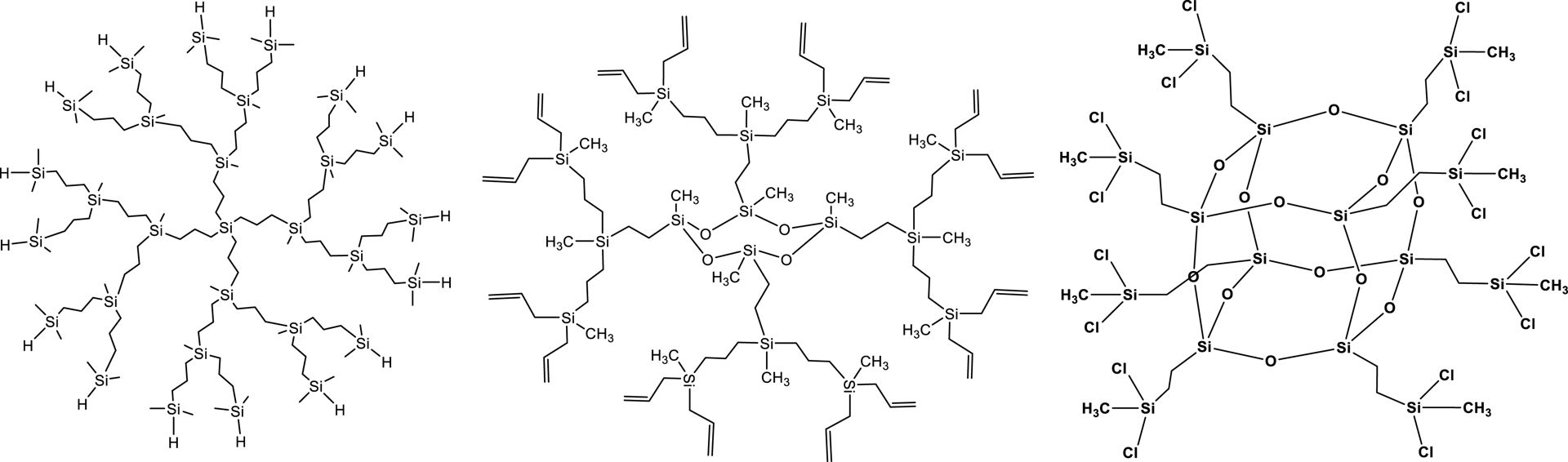
For the functionalization with ferrocenyl units, three principal synthetic routes were employed (Scheme 1): (i) Reaction of dendritic Si–Cl groups with ferrocenyllithium afforded polyferrocenyl dendrimers, among the first examples of organometallic dendritic molecules with a controlled number of identical redox units [26, 30]; (ii) Hydrosilylation of vinylferrocene with Si–H-functionalized carbosilanes provided alternative access to tetra-, octa-, and hexadeca-ferrocenyl dendrimers [18]; (iii) The condensation reaction of (β-aminoethyl)ferrocene with the highly reactive Si–Cl peripheral groups in the dendrimers also offered access to dendrimers with four, eight and sixteen ethylferrocenyl units and Si–NH groups [26].
Three synthetic routes to polyferrocenyl carbosilane dendrimers.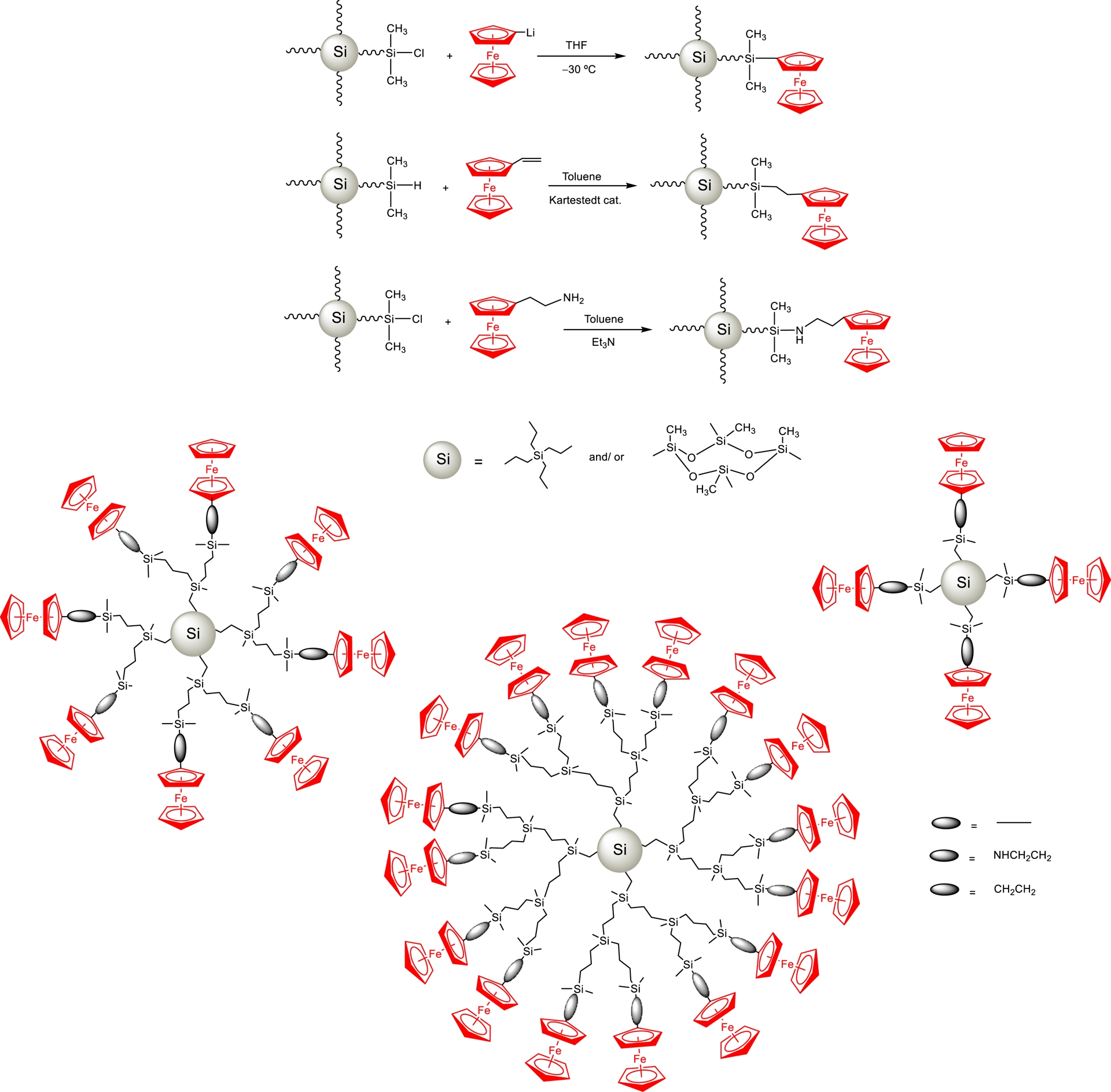
Electrochemical studies revealed a single, reversible oxidation wave in each dendrimer, corresponding to a simultaneous multielectron oxidation of all ferrocenyl centers, four, eight, and sixteen electrons for first-, second-, and third-generation examples, respectively, which demonstrates their electronic independence (Figure 6a). These findings established a key principle in carbosilane dendrimer electrochemistry: the dendritic scaffold electrically isolates peripheral ferrocene units, enabling predictable multielectron responses and facilitating the design of dendrimer-based electron reservoirs and sensing interfaces.
Representative cyclic voltammograms of polyferrocenyl carbosilane dendrimers (a) in dichloromethane solution (b) immobilized on a Pt disk electrode. (Adapted with permission from [17]. Copyright 1999 Elsevier.)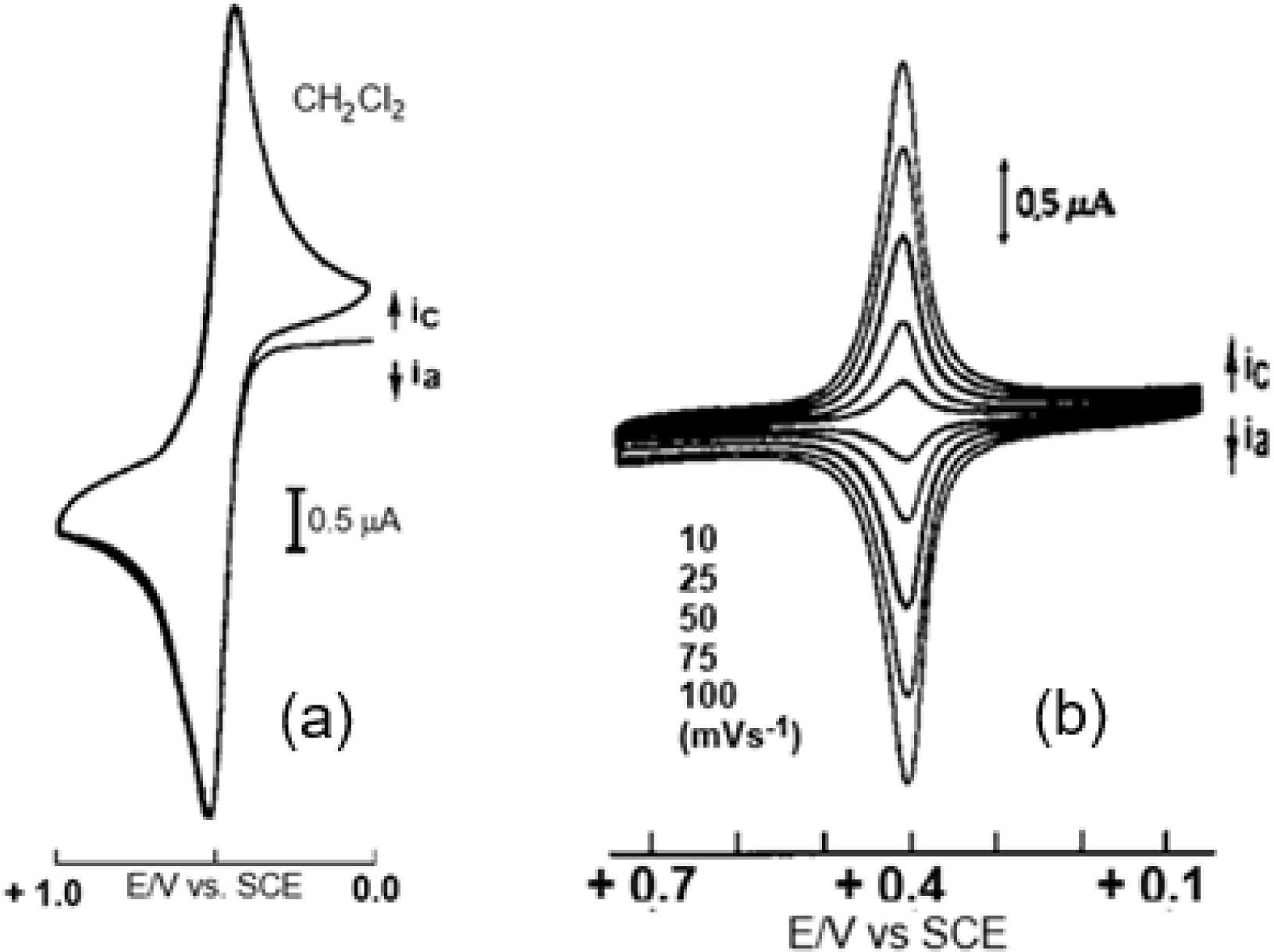
Interestingly, upon oxidation, these ferrocenyl-functionalized carbosilane dendrimers were shown to spontaneously deposit onto electrode surfaces, forming coherent electroactive films that preserved the characteristic single multielectron redox wave of the molecular precursors. Cyclic voltammetry of the surface-bound tetra- and octaferrocenyl species revealed well-defined, symmetric redox responses with the expected linear dependence of peak current on scan rate, confirming true surface-confined electron transfer behavior (Figure 6b). Importantly, the formal potentials of the immobilized dendrimers remained essentially identical to those measured in solution, indicating that surface confinement does not perturb the intrinsic redox properties of the peripheral ferrocenyl units. A notable feature of these dendrimer-derived films is their exceptional stability and robustness. Overall, these results confirmed the practical feasibility of using organometallic carbosilane dendrimers as well-defined multielectron platforms for electrode modification [32].
Beyond their well-defined multielectron redox behavior, ferrocenyl-functionalized carbosilane dendrimers bearing peripheral Si–NH groups were shown to act as redox-responsive receptors for anionic species. In their neutral state, anion recognition occurs through cooperative hydrogen-bonding interactions, while upon electrochemical oxidation of the ferrocenyl units, electrostatic attractions further enhance guest binding. Notably, these dendrimers can be readily immobilized onto electrode surfaces by electrooxidation, yielding modified electrodes that display a clear and sensitive electrochemical response to anions. This behavior demonstrated the feasibility of employing such organometallic dendrimers as electrochemical sensors, combining controlled multielectron redox activity with selective molecular recognition [33].
To improve synthetic efficiency and facilitate modular variation of organometallic groups, carbosilane dendrimers were also constructed using a convergent approach. This strategy involves the preparation of dendritic “wedges”—organometallic silanes containing a single terminal vinyl, allyl or Si–H group—followed by attachment to Si–H or alkenyl-functionalized carbosilane cores, respectively, via hydrosilylation [31, 34, 35, 36, 37, 38].
The smallest dendritic wedges were the silicon-bridged biferrocenes 1 and 2, and ferrocenylmethylphenylvinylsilane (3) (Figure 7), which were prepared by reaction of ferrocenyllithium with vinylmethyldichlorosilane, dichloromethylsilane [37], and methylphenylvinylchlorosilane, respectively. Further growth of the first-generation dendrons 1 and 3 was achieved by Pt-catalyzed hydrosilylation with phenylchlorosilane, resulting in dendrons which contain a reactive chlorosilane functionality available for an ensuing alkenylation step with allylmagnesium bromide, to afford the desired growth dendrons 4 and 5 (Scheme 2).
Silicon-based dendritic wedges.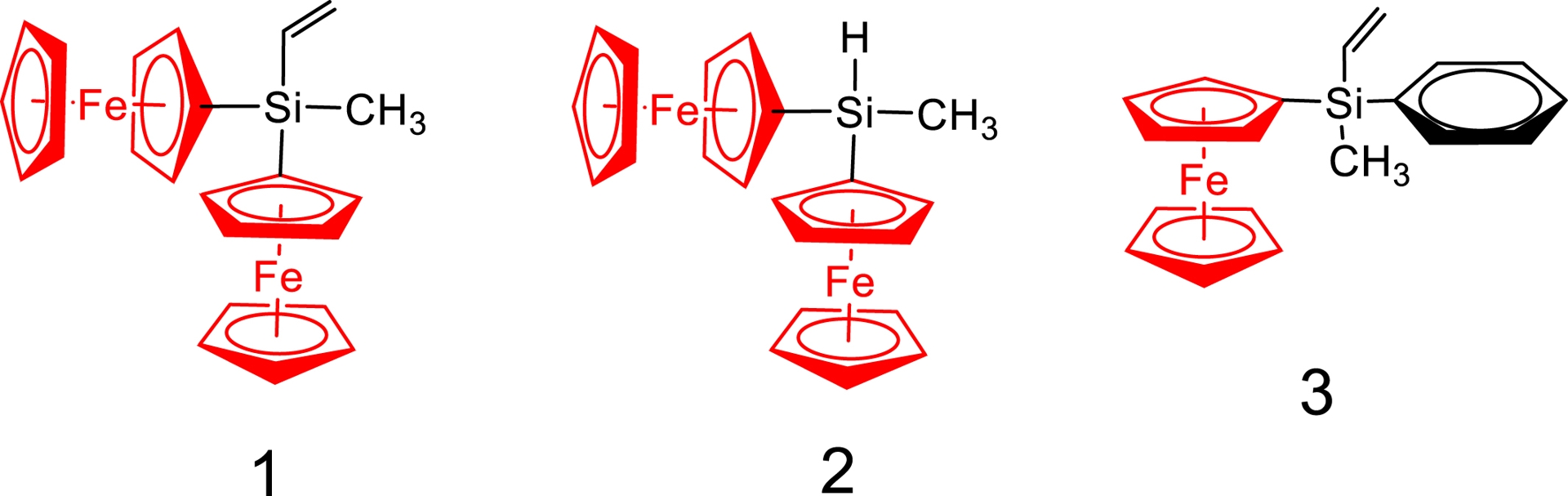
Growth of dendritic wedges.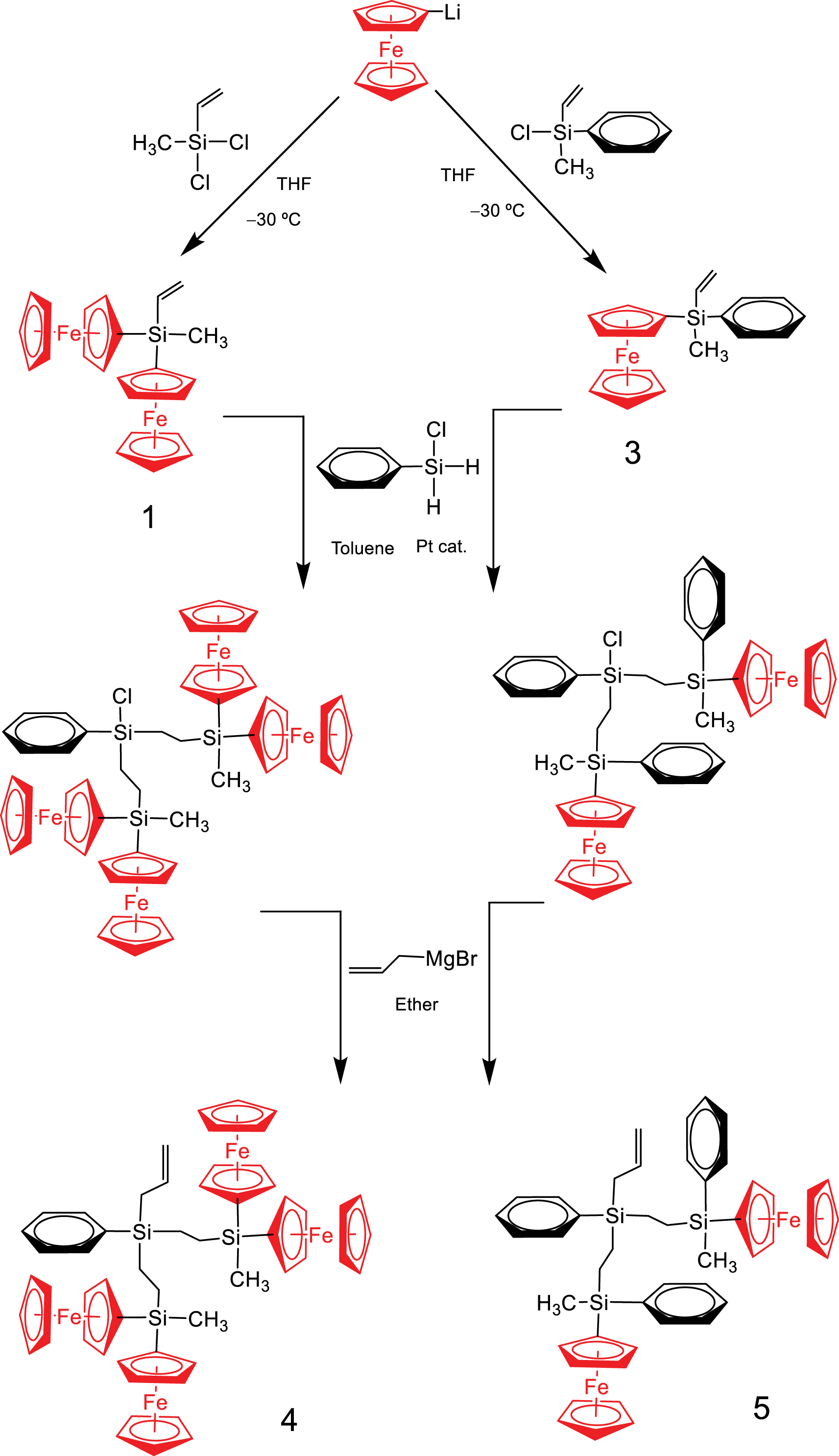
The availability of alkenyl or Si–H substituents at the focal point of the dendritic wedges enabled their incorporation into different Si–H- or alkenyl-polyfunctionalized carbosilane, cyclotetrasiloxane and silsesquioxane dendritic cores as well as linear polysiloxanes via hydrosilylation chemistry (Scheme 3). The electrochemical behavior observed for these dendritic molecules is consistent with the presence of significant interactions between the two ferrocenyl units bridged through silicon atoms. The cyclic voltammograms recorded in dichloromethane solution are characterized by two well-separated, reversible oxidation waves of equal intensity (Figure 8). The first oxidation occurs at nonadjacent ferrocene sites within the dendritic wedges or dendrimers, making the subsequent removal of electrons from the remaining ferrocenyl centers, which are adjacent to those already oxidized, more difficult. As reported by Alonso et al., these compounds [31, 34] constituted the first examples of organometallic dendritic molecules exhibiting electronic communication between transition-metal centers, not only in solution but also when confined to electrode surfaces.
Growth of an octasilsesquioxane dendritic core and functionalization with silicon-bridged biferrocene 1.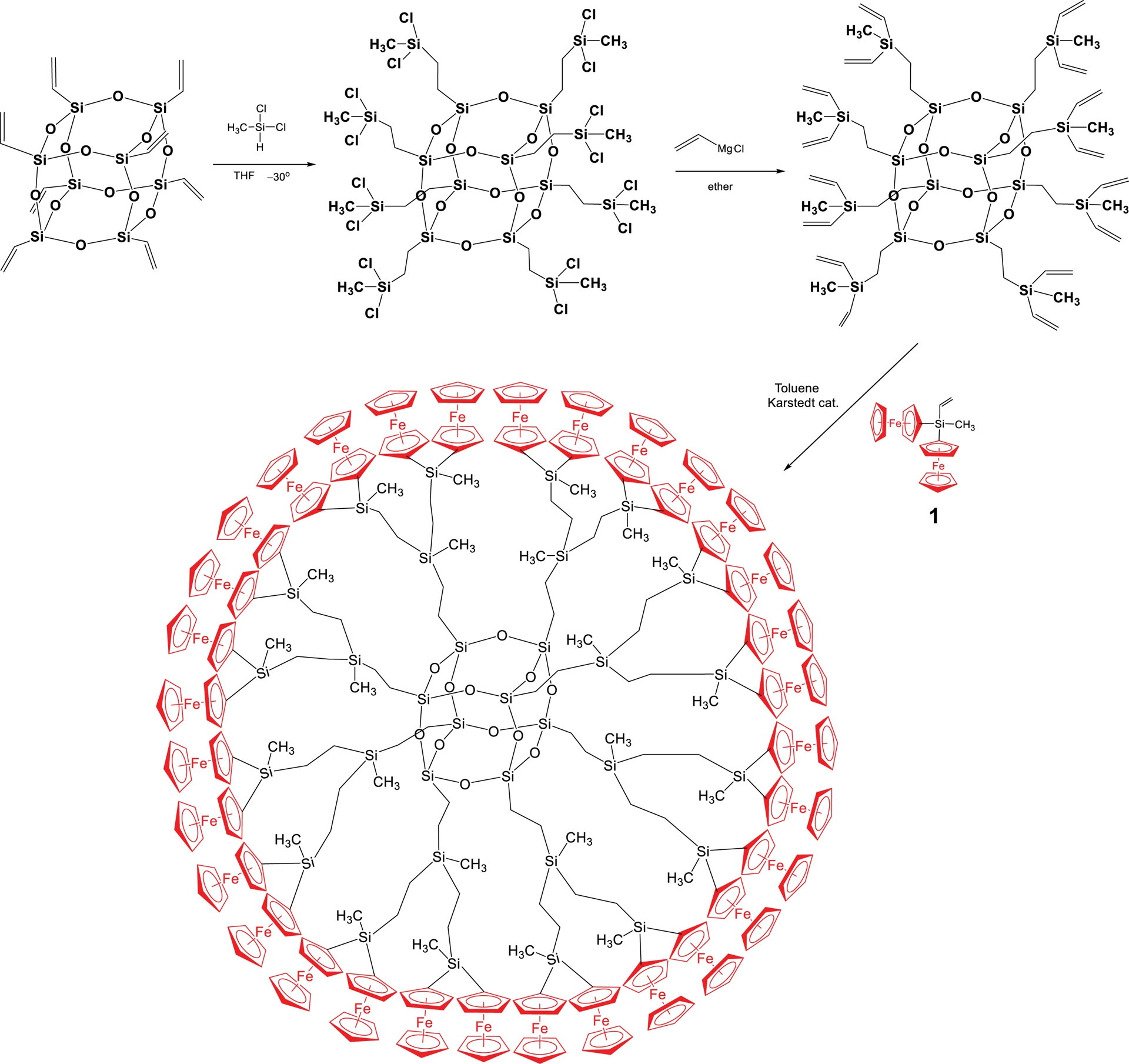
Representative cyclic voltammograms of carbosilane dendrimers with electronically communicated ferrocenyl units (a) in dichloromethane solution (b) immobilized on a Pt disk electrode. (Adapted with permission from [34]. Copyright 1997 American Chemical Society.)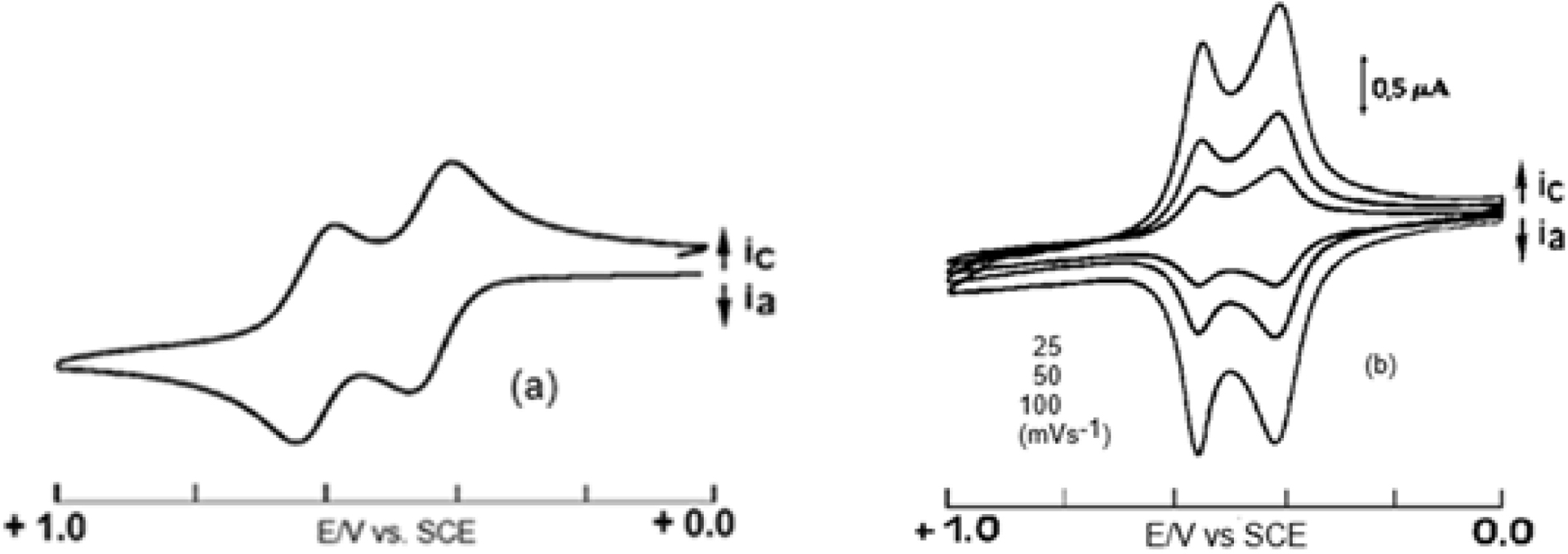
By combining divergent and convergent methodologies, ferrocenyl or ferrocenyl–aryl groups can be systematically incorporated at each generation, leading to high surface densities of organometallic units. As we will see in the following section, these transformations permit the construction not only of homometallic dendrimers but also of heterometallic arrays, a significant advancement in the design of multielectron macromolecular systems.
3.2. Arene–Cr(CO)3-functionalized dendrimers and heterometallic arrays
Lobete and coworkers [39] reported one of the earliest examples of silicon-based organometallic dendrimers bearing η6-arene metal fragments, demonstrating how dendritic architectures can serve as multidentate platforms for surface organometallic coordination. Using a divergent synthetic strategy from tetrapropenylsilane, we prepared first- and second-generation organosilicon dendrimers functionalized at their periphery with phenyl groups. These terminal arene sites were then exploited as η6-binding motifs for Cr(CO)3 units, enabling construction of a family of dendritic organometallic species. Thermal treatment of the first generation phenyl-terminated dendrimer with Cr(CO)6 at 140 °C yielded either a tetrametallic dendrimer—with full coordination of four arene groups—or a monometallic analog, depending on stoichiometry. Reaction with the second-generation dendrimer afforded a tetrachromium complex, although full octa-functionalization could not be achieved under these conditions due to decomposition at the elevated temperatures required.
As part of our efforts to develop dendrimeric macromolecules bearing redox-active organometallic units at predetermined positions, polyfunctional ferrocenyl derivatives were explored as core building blocks [40]. In a further step toward heterometallic dendrimers, we combined in a single dendritic scaffold an electron-donating ferrocenyl fragment with the electron-withdrawing (η6-aryl)Cr(CO)3 moiety. In this context, 1,1′-bis(dimethylvinylsilyl)ferrocene, synthesized by reaction of 1,1′-dilithioferrocene with dimethylvinylchlorosilane, was successfully employed as a two-directional core for the synthesis of novel redox-active homo- and heterometallic pentanuclear systems, which can be regarded as first-generation dendrimer models. Peripheral functionalization with ferrocenyl and (η6-C6H5)Cr(CO)3 moieties was achieved (Scheme 4), and electrochemical studies revealed that the extent of electronic communication between the metal centers bridged by silicon atoms depends strongly on their chemical nature.
Synthesis of homo- and heterometallic dendrimers from ferrocene as core.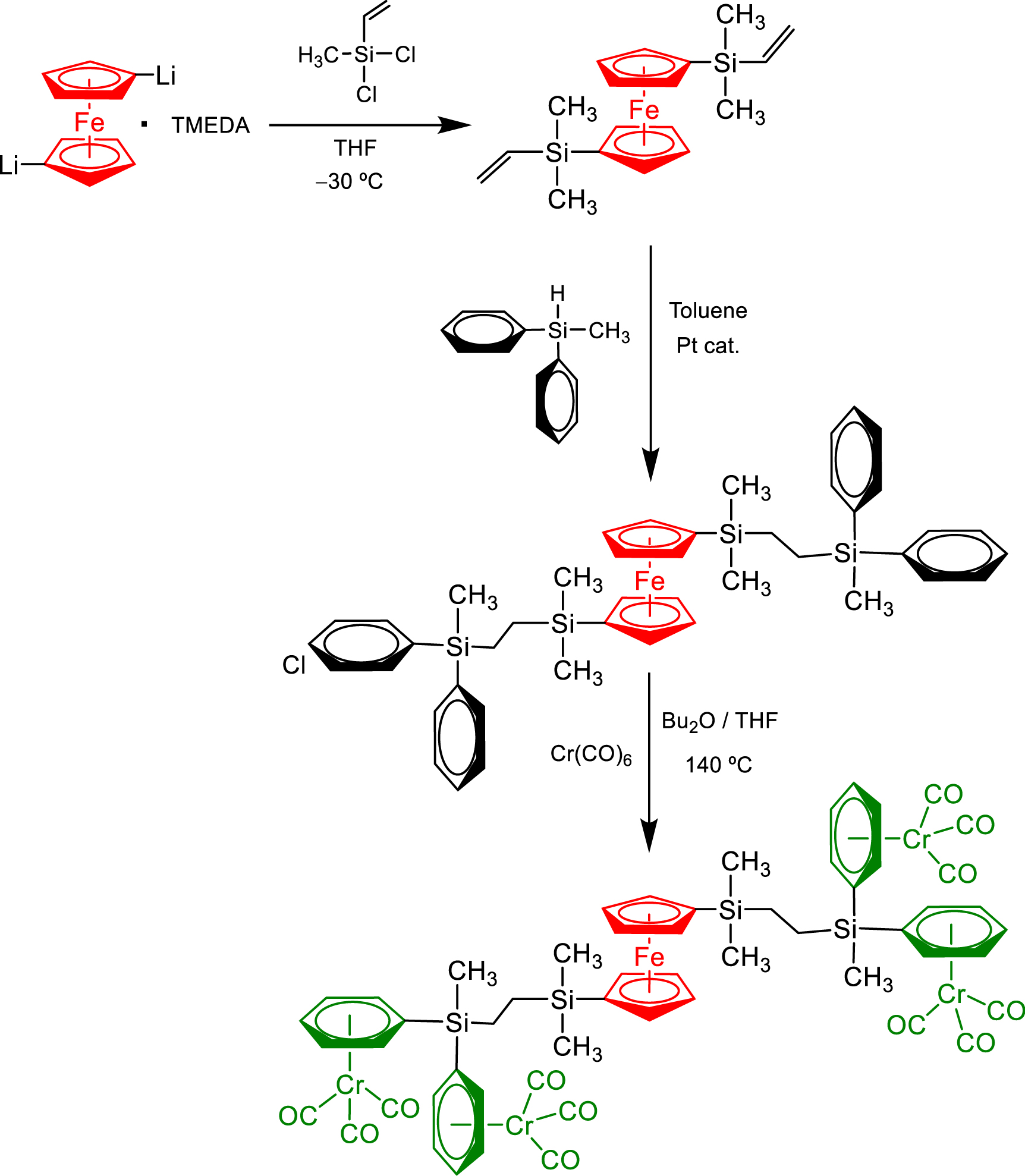
Terminal aryl groups present in certain ferrocenyl aryl carbosilane dendrimers or dendrons offer an orthogonal functionalization route via η6-coordination to Cr(CO)3 [36]. The resulting heterometallic systems featuring Si-bridged Fc–Cr(CO)3 pairs in close proximity were accessed through a convergent growth strategy, either by hydrosilylation of Cr(CO)3-functionalized dendrons or, more reliably, by post-metallation of preformed ferrocenyl dendrimers with Cr(CO)6, circumventing the reduced reactivity of Cr(CO)3-bound vinyl groups. Electrochemical studies showed that ferrocenyl and chromium centers oxidize at distinct potentials, evidencing their electronic independence within the insulating carbosilane matrix, while generation and metal loading modulate the appearance of sequential or merged multielectron redox waves.
3.3. Carbosilane dendrimers decorated with other organometallic fragments
3.3.1. Si–cyclopentadienyl, Si–Co and Si–Fe σ-bonds
Given the central role of cyclopentadienyl ligands in organometallic chemistry, our group explored their incorporation as peripheral functionalities in well-defined dendritic architectures, with the aim of generating versatile organometallic dendrimers [41]. In this context, early generations of silicon-based dendrimers bearing cyclopentadienyl, carbonylcobalt, and carbonyliron units at the periphery were developed (Figure 9). Cyclopentadienyl-functionalized organosilicon dendrimers were obtained via the reaction of alkali cyclopentadienides with a tetrafunctional silicon dendrimer scaffold. The coordinating ability of the surface-bound cyclopentadienyl ligands was demonstrated through complexation with Co2(CO)8, yielding multinuclear cobalt carbonyl derivatives. In parallel, direct reactions of dicobalt octacarbonyl or iron carbonyl anions with Si–H- or Si–Cl-functionalized dendrimers enabled the formation of cobalt–silicon and iron–silicon σ-bonded species, respectively.
Organometallic silicon-based dendrimers with peripheral Si–cyclopentadienyl, Si–Co and Si–Fe σ-bonds.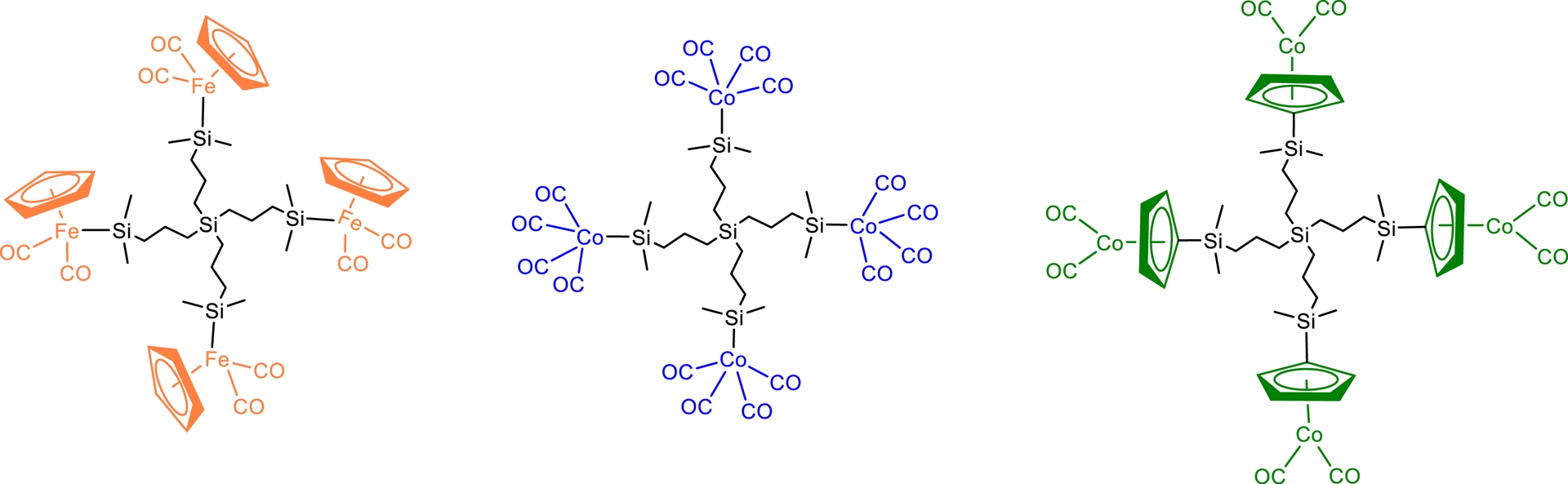
As a continuation of our work on multimetallic organometallic architectures, our group extended hydrosilylation methodologies to the construction of silane- and siloxane-based systems bearing multiple iron–silicon bonds. Building on earlier carbosilane dendrimers in which the metal centers are σ-bonded to the dendritic framework, a vinyl-functionalized silyliron fragment, (η5-C5H5)Fe(CO)2Si(CH3)2CH=CH2, was prepared and employed as a key building block [25]. Platinum-catalyzed hydrosilylation of this fragment with Si–H-functionalized linear and cyclic siloxanes, carbosilane dendrimers, and polysiloxane backbones afforded a series of multimetallic compounds with controlled incorporation of organometallic units. These results demonstrate the versatility of hydrosilylation as a general strategy for the assembly of complex iron-containing macromolecular systems.
3.3.2. Alkyne-complexed and cluster-functionalized dendrimers
Further diversification of carbosilane dendrimers has been achieved through the use of alkynyl-functionalized architectures, which provide an efficient entry to more complex organometallic and heterometallic systems [42, 43]. Ferrocenylalkynes, and in particular the Fc–C≡C motif, have long been recognized as valuable building blocks in molecular electronics and organometallic synthesis, yet dendritic systems bearing ferrocenylethynyl or butadiynyl units remain comparatively rare. Exploiting this unit, first- and second-generation carbosilane dendrimers were functionalized at their periphery with ferrocenylalkynyl and ferrocenylbutadiynyl groups via lithiation of the corresponding ferrocenylalkynes and subsequent reaction with chlorosilane-terminated dendritic scaffolds, affording well-defined homometallic dendrimers with controlled numbers of redox-active termini.
These alkynyl-linked ferrocenyl dendrimers served as effective precursors for the construction of heterometallic systems through coordination of the C≡C units to transition metal carbonyl clusters. In particular, reaction with the activated triosmium cluster Os3(CO)10(NCMe)2 led to the clean formation of novel heterometallic dendrimers in which each ferrocenylalkynyl arm is selectively coordinated to a trinuclear osmium fragment [42] (Scheme 5). Electrochemical studies revealed that, in all cases, the ferrocene units retain their reversible one-electron redox behavior, while coordination to the Os3 cluster induces a cathodic shift of the formal potential, reflecting electronic communication between the ferrocenyl donor and the carbonyl metal cluster without compromising redox reversibility.
Synthesis of homometallic ferrocenylalkynyl and heterometallic ferrocenyl-osmium cluster carbosilane dendrimers.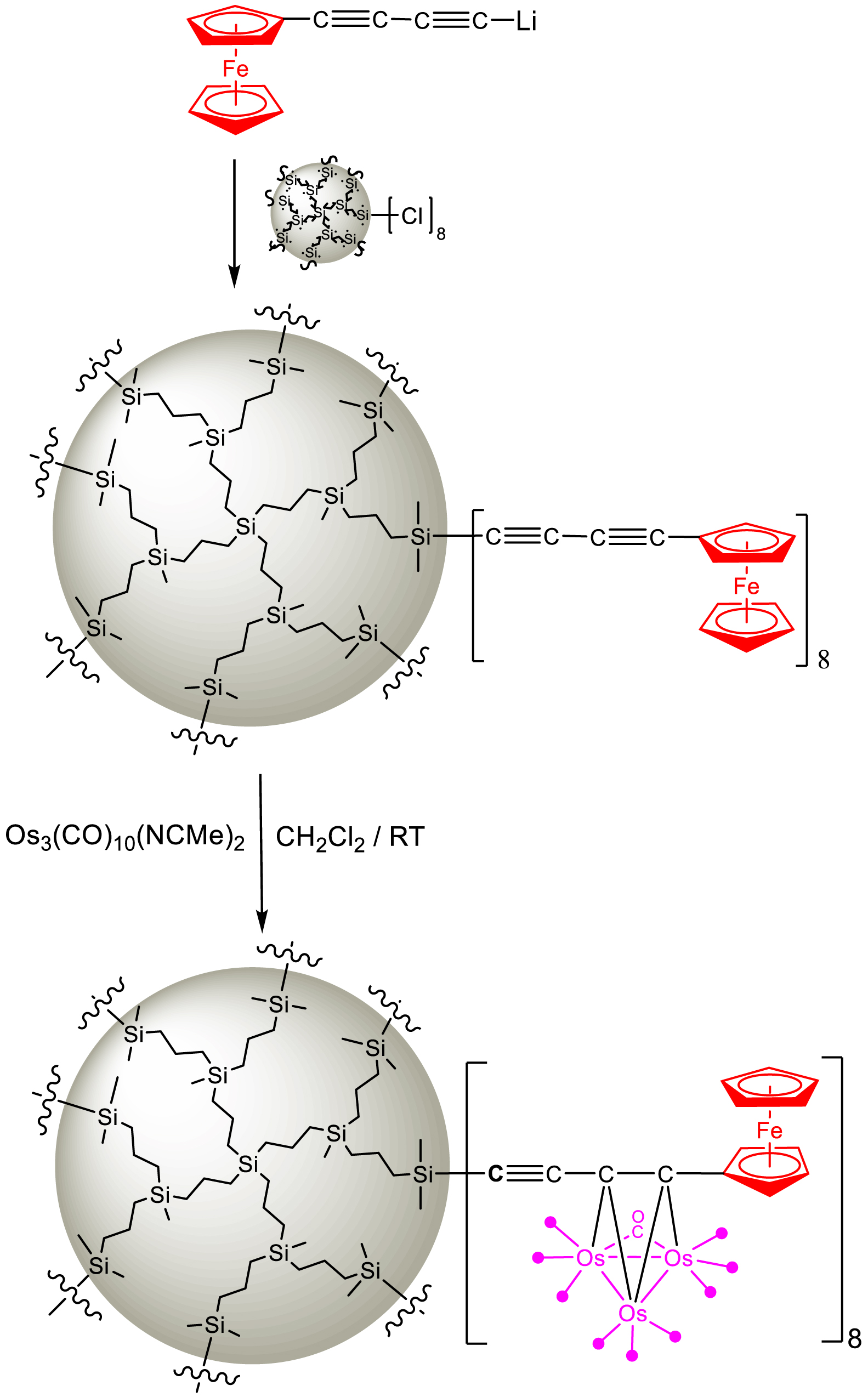
Complementary studies explored the use of cobalt carbonyl chemistry. Ferrocenylalkyne–dicobalthexacarbonyl complexes were examined as precursors for hydrosilylation reactions, with the dual objective of generating ferrocenyl-functionalized vinylsilanes and extending this approach to carbosilane dendrimers [43]. While sterically demanding silyl-substituted ferrocenylalkyne cobalt complexes proved unreactive toward hydrosilylation, terminal ferrocenylalkyne–Co2(CO)6 complexes underwent smooth transformation to ferrocenyl vinylsilanes upon reaction with trialkylsilanes, demonstrating the feasibility of controlled decomplexation–hydrosilylation pathways.
Attempts to translate this strategy to more elaborate diynyl dicobalt carbonyl systems highlighted the intrinsic limitations of such precursors, as hydrosilylation generally resulted in complete decomplexation of both Co2(CO)6 units rather than selective mono-decomplexation. Nevertheless, these studies underscore the rich coordination chemistry accessible at the dendrimer periphery and illustrate how alkynyl linkers enable the modular introduction of multiple metal fragments.
4. Amine-based organometallic dendritic frameworks
Dendritic architectures incorporating nitrogen atoms within their branching skeletons, have played a central role in expanding the chemical and functional versatility of organometallic macromolecules. Unlike purely carbosilane or siloxane frameworks, amine-based scaffolds provide sites for coordination, protonation, hydrogen bonding, and modular post-functionalization, making them exceptionally adaptable to diverse applications.
One of the key advantages of nitrogen-containing dendrimers lies in their peripheral functionalization flexibility. Amide-, urea-, thiol-, and other donor-functionalized dendrimers can be constructed from a common amine-based core, enabling the generation of tailored outer shells with specific recognition, binding, or anchoring capabilities. This modularity has been exploited to create hybrid systems in which the organometallic core governs redox behavior while the nitrogen-based periphery mediates supramolecular interactions, immobilization on electrode surfaces, or selective complexation of analytes. Such a dual-level design—redox-active interior and functionally programmable exterior—has been instrumental in bridging organometallic dendrimer chemistry and supramolecular and materials science.
4.1. Ferrocenyl-functionalized poly(propyleneimine) dendrimers
One of the earliest organometallic families based on poly(propyleneimine) (PPI) dendritic scaffolds involved the incorporation of ferrocenyl amide termini. In 1996, we reported what was the highest number of organometallic functionalities ever attached to a dendritic surface at that time [44]. The synthetic strategy mirrored the general condensation methodologies described in Section 2; however, the dendritic architecture enables precise and highly controlled placement of the ferrocenyl groups (Scheme 6).
Synthesis of ferrocenyl PPI dendrimers.
These dendrimers exhibit single, reversible one-electron waves for all generations, each corresponding to the collective oxidation of all ferrocene units with no intramolecular electronic communication. Their redox behavior in solvents such as dichloromethane or THF is accompanied by pronounced changes in solubility upon oxidation, leading to precipitation of the dendrimers onto the electrode surface (Figure 10). The adsorption thermodynamics and kinetics of these ferrocenyl–amide dendrimers on Pt electrodes were subsequently investigated by Abruña [45]. Adsorption of the reduced dendrimers in CH2Cl2 follows the Langmuir isotherm. Electrochemical quartz-crystal microbalance (EQCM) measurements revealed that the oxidized form deposits onto the Pt electrode due to its low solubility, whereas the reduced form readily redissolves, except for the first monolayer, which remains strongly adsorbed. Atomic force microscopy (AFM) provided molecularly resolved images of high-generation dendrimers adsorbed on Pt(111), offering direct insight into the organization of these surface-confined organometallic assemblies.
Cyclic voltammograms of ferrocenyl PPI dendrimers in dichloromethane and THF solutions. (Adapted with permission from [16]. Copyright 1999 Elsevier.)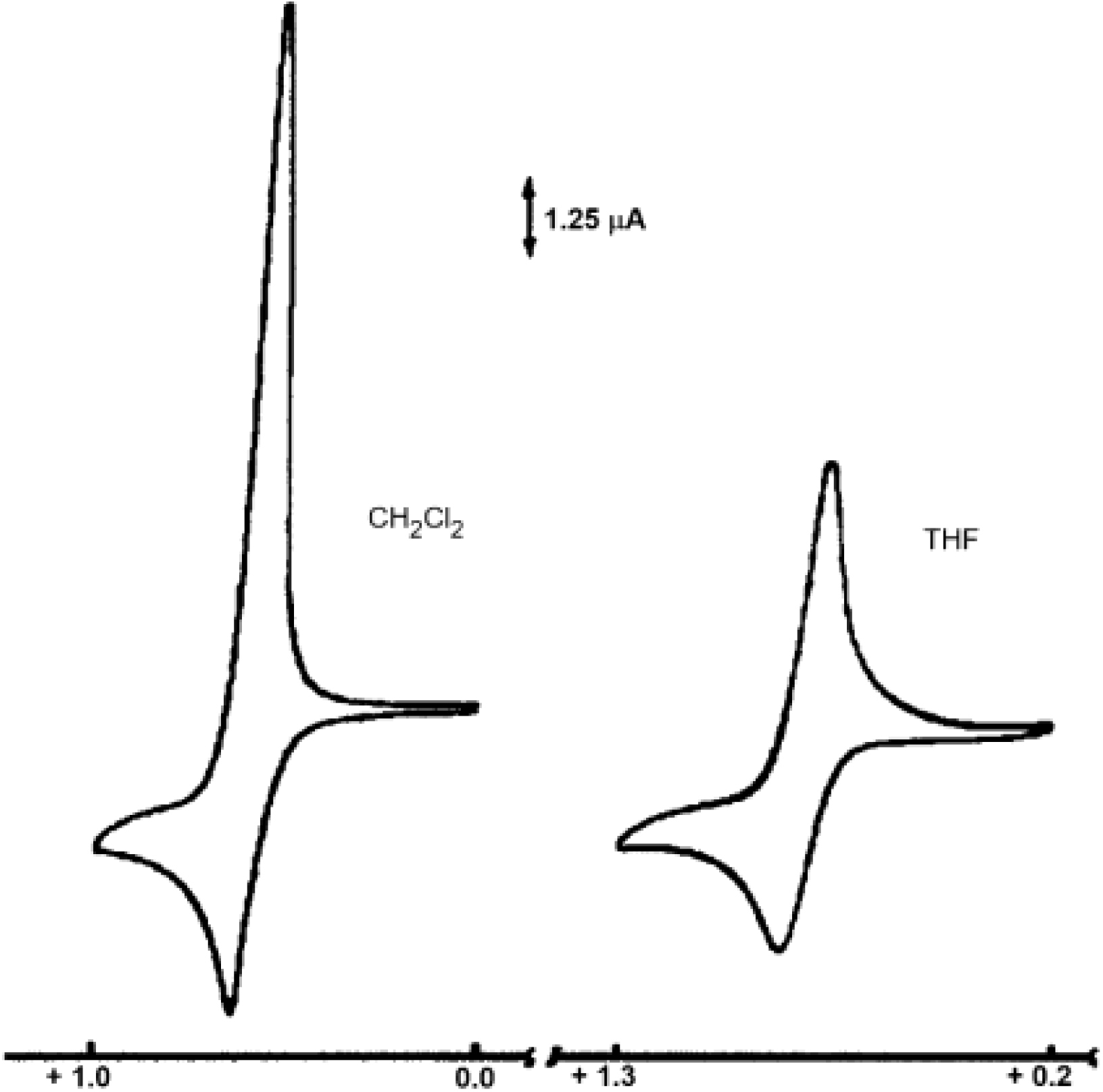
Ferrocene is shown to be an excellent guest for β-cyclodextrin inclusion complexation. In collaboration with Prof. Kaifer, we reported the first example of dendritic terminal groups undergoing complexation with cyclodextrins, demonstrating that moderately sized dendrimers act as effective multivalent guests and form very large supramolecular assemblies [46]. Despite the complexity of the equilibria, electrochemical and spectroscopic data indicate that all ferrocene units in these dendrimers are accessible to cyclodextrin hosts. Conceptually, the dendrimer serves as a three-dimensional template that organizes cyclodextrins at its periphery, giving rise to high-molecular-weight supramolecular complexes (e.g., >11 kDa for an octameric assembly). Notably, these assemblies can be reversibly dissociated by electrochemical oxidation of the ferrocene units, which significantly weakens cyclodextrin binding.
Our group also reported the first examples of mesoporous silica materials incorporating redox-active dendritic guests within their ordered channels [47]. PPI amidoferrocenyl dendrimers were successfully encapsulated in MCM-41, yielding stable dendrimer–silica composites in which the structural integrity and electrochemical activity of the dendrimers were preserved. Structural studies showed efficient channel filling for the smaller dendrimers, with reduced inclusion for larger macromolecules. Electrochemical measurements demonstrated size-dependent redox behavior that differed markedly from analogous nonporous silica systems, while preliminary results indicated sensitivity toward dihydrogen phosphate anions, highlighting the potential of these hybrid materials as redox-responsive platforms for electrochemical applications.
Also in collaboration with Prof. Kaifer, our group reported a series of PPI dendrimers bearing four, eight, sixteen, or thirty-two peripheral ferrocenyl–urea units, designed to combine redox activity with anion-binding capability [48]. These dendrimers were synthesized from diaminobutane-based PPI scaffolds via reaction with isocyanatoferrocene and were obtained in moderate yields, although they display very low solubility (Scheme 7). The incorporation of urea linkages introduces dual hydrogen-bond donor sites, which significantly strengthen supramolecular interactions with anionic guests. Their electrochemical behavior in DMSO was found to be highly sensitive to hydrogen phosphate anions at submillimolar concentrations, as demonstrated by square-wave voltammetry (Figure 11). Notably, effective anion sensing was achieved in a polar solvent where hydrogen-bonding interactions are typically weakened, underscoring the stability of the dendrimer–anion complexes and the suitability of these systems as redox-active platforms for anion recognition.
Synthesis of ferrocenyl–urea PPI dendrimers.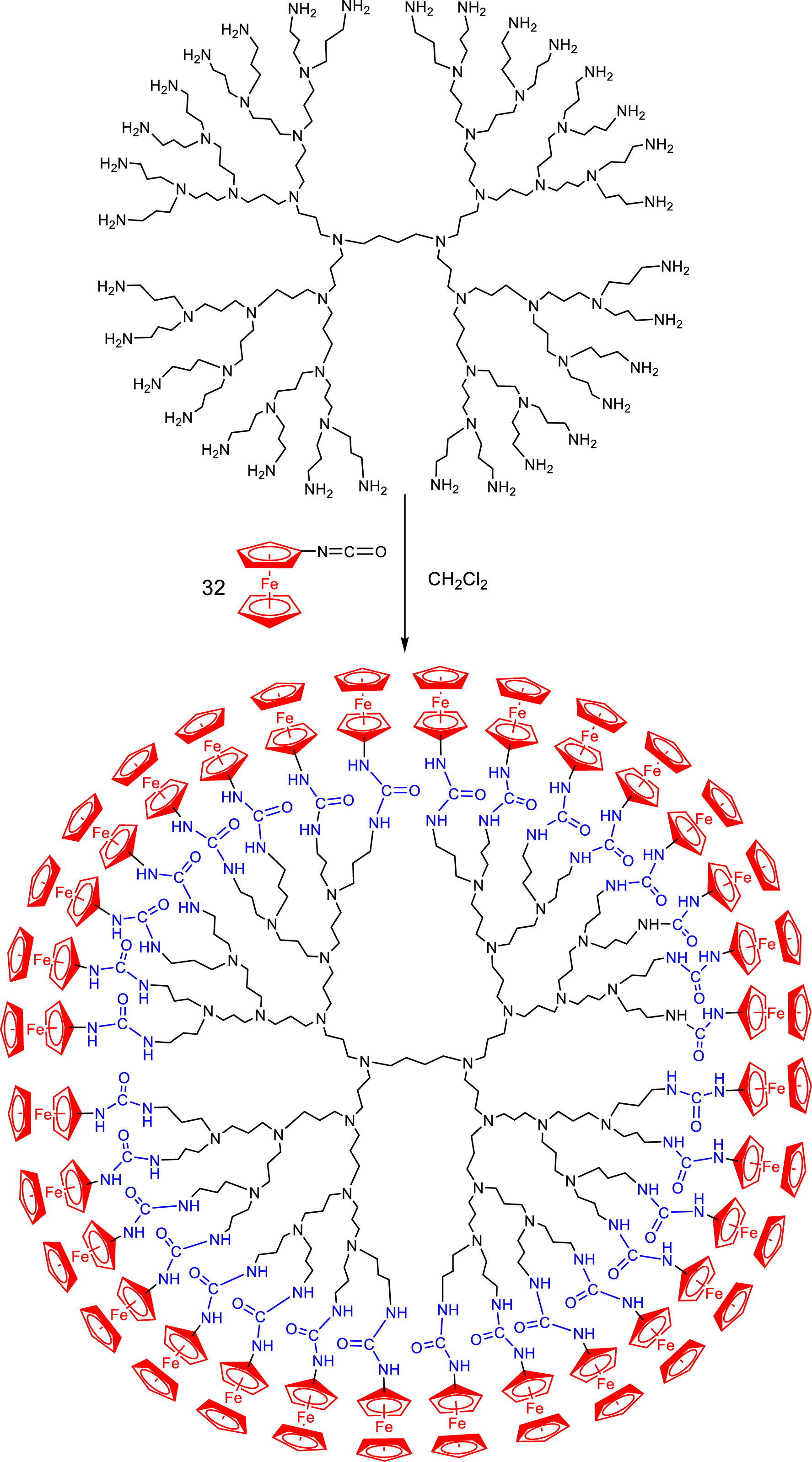
Square-wave voltammograms (SWV) of ferrocenyl–urea PPI dendrimers. (Adapted with permission from [48]. Copyright 2002 Royal Society of Chemistry.)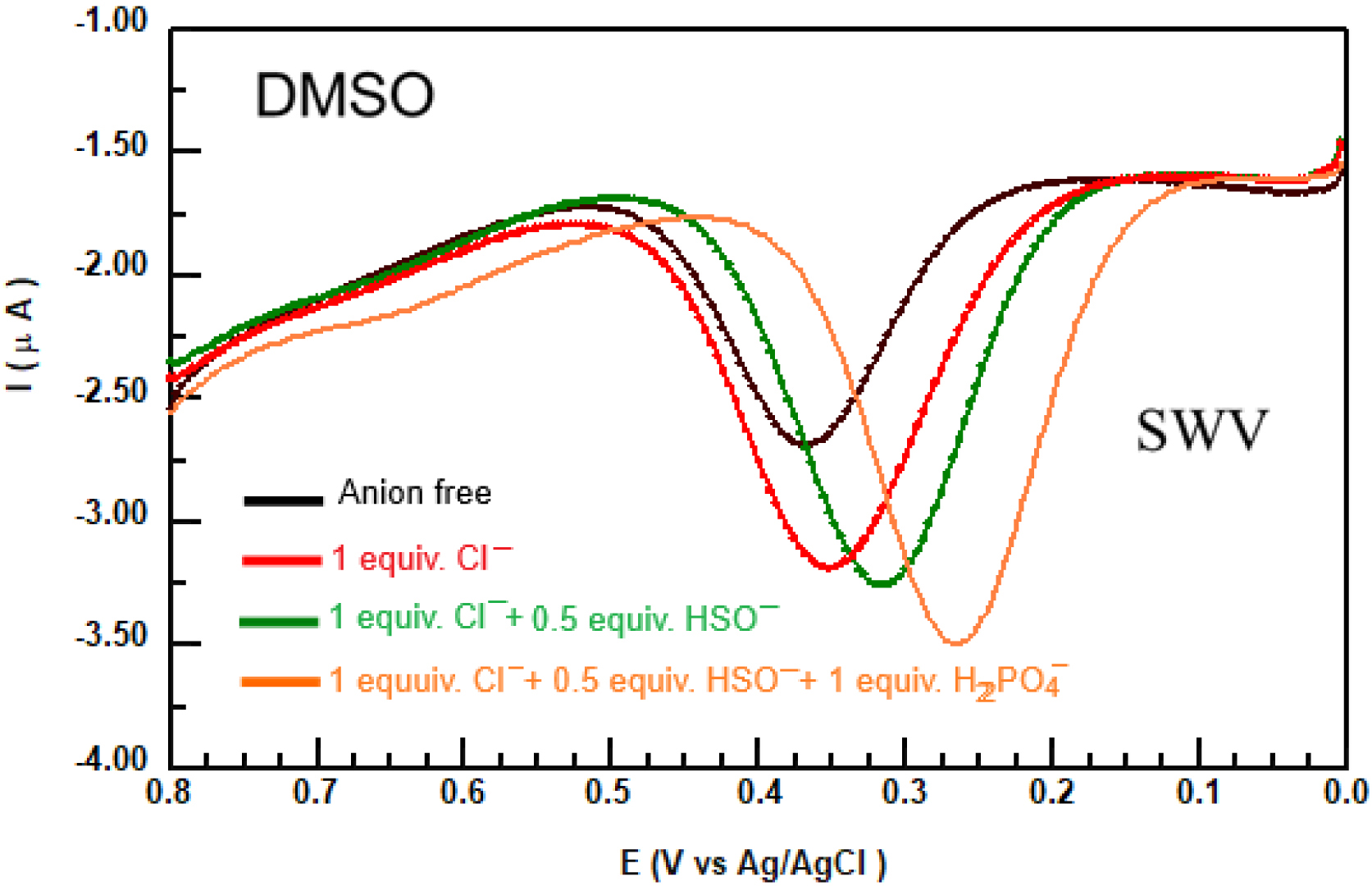
More recently, our group investigated in 2023 the effect of partially replacing ferrocenyl units with thiol functionalities to improve the sensing performance of electrode surfaces. To this end, first- and third-generation ferrocenyl–urea-thiolated dendrimers were synthesized via the reaction of ferrocenyl isocyanate and N-hydroxysuccinimide 3-mercaptopropanoyl derivatives with diaminobutane-based PPI scaffolds. The introduction of thiol groups was intended to promote stronger interactions with electrode surfaces, thereby enhancing the electrochemical sensing properties of the resulting dendrimer-modified electrodes [49].
We also developed a related new family of PPI dendrimers bearing ferrocenyl–aza-crown-ether units, representing, to our knowledge, the first examples of redox-active organometallic heteroditopic dendrimers [50]. These systems were designed to position ferrocenyl redox centers in close proximity to two distinct binding sites, enabling the simultaneous complexation of cationic and anionic guests. They were prepared via condensation of an aza-crown-ether–functionalized ferrocenyl acid chloride with three first-generation amine-terminated dendrimers (Scheme 8). NMR studies indicated cooperative binding of cations and anions through the combined action of the aza-crown ether and amide functionalities, highlighting the potential of these dendritic architectures as electrochemical sensing platforms.
Synthesis of PPI dendrimers bearing ferrocenyl–aza-crown-ether units.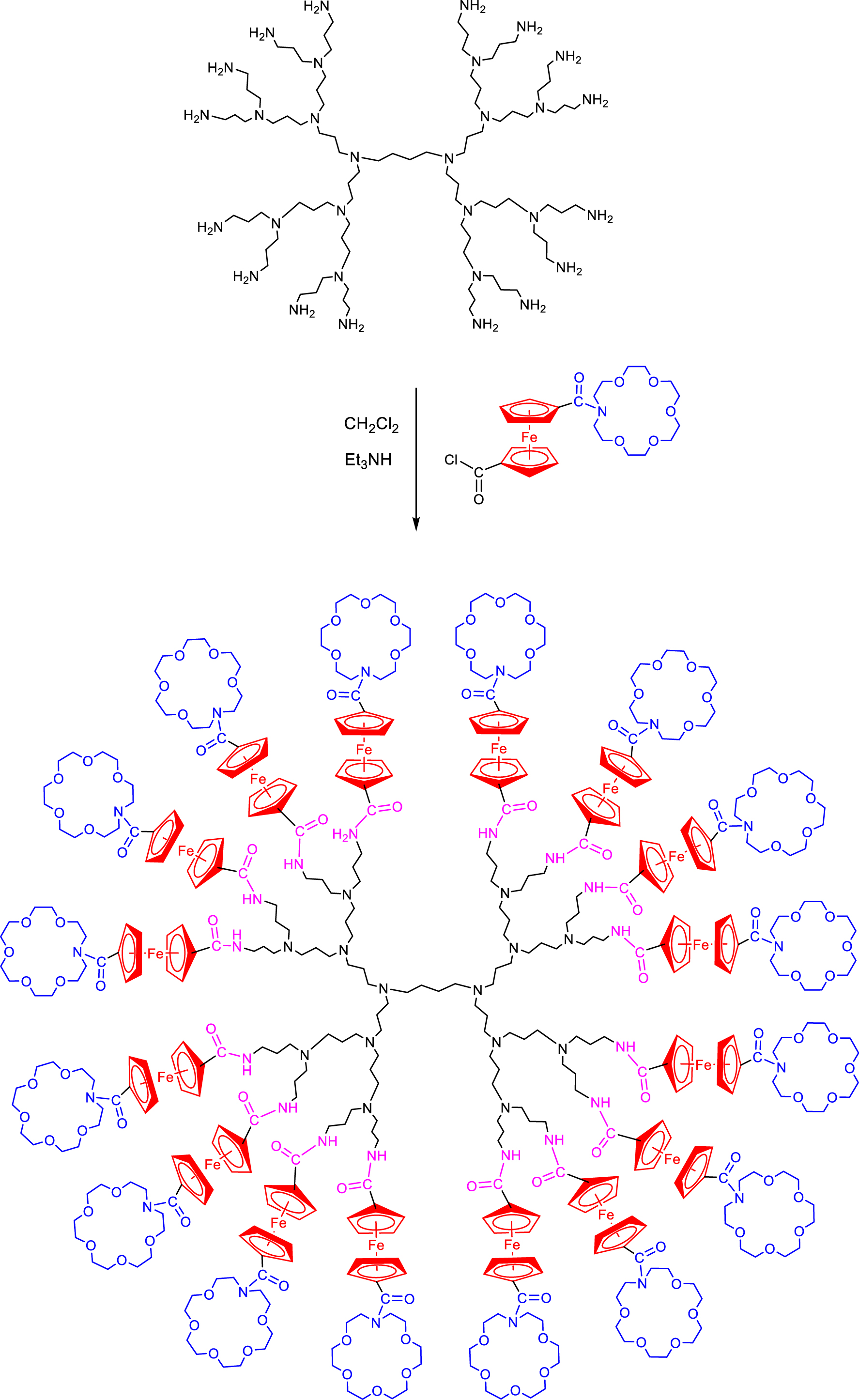
As part of our ongoing efforts in the design of organometallic dendrimers with electrochemical sensing capabilities, our group developed in 2008 a synthetic approach to a ferrocenyl dendrimer functionalized with pyrrole substituents [51] (Figure 12). This system was conceived to exploit the anodic electropolymerization of pyrrole-substituted ferrocenyl derivatives, enabling the formation of conducting polymer films immobilized on electrode surfaces. The dendrimer was obtained via a stepwise condensation strategy involving a pyrrole-containing ferrocenyl acid chloride intermediate and subsequent coupling to a PPI dendrimer bearing terminal amino groups. Its electropolymerization afforded redox-active films that were applied to the electrochemical sensing of dihydrogen phosphate anions in aqueous media, addressing the challenges associated with anion recognition in water and highlighting the potential of these materials as functional sensing interfaces.
Ferrocenyl dendrimer functionalized with pyrrole substituents.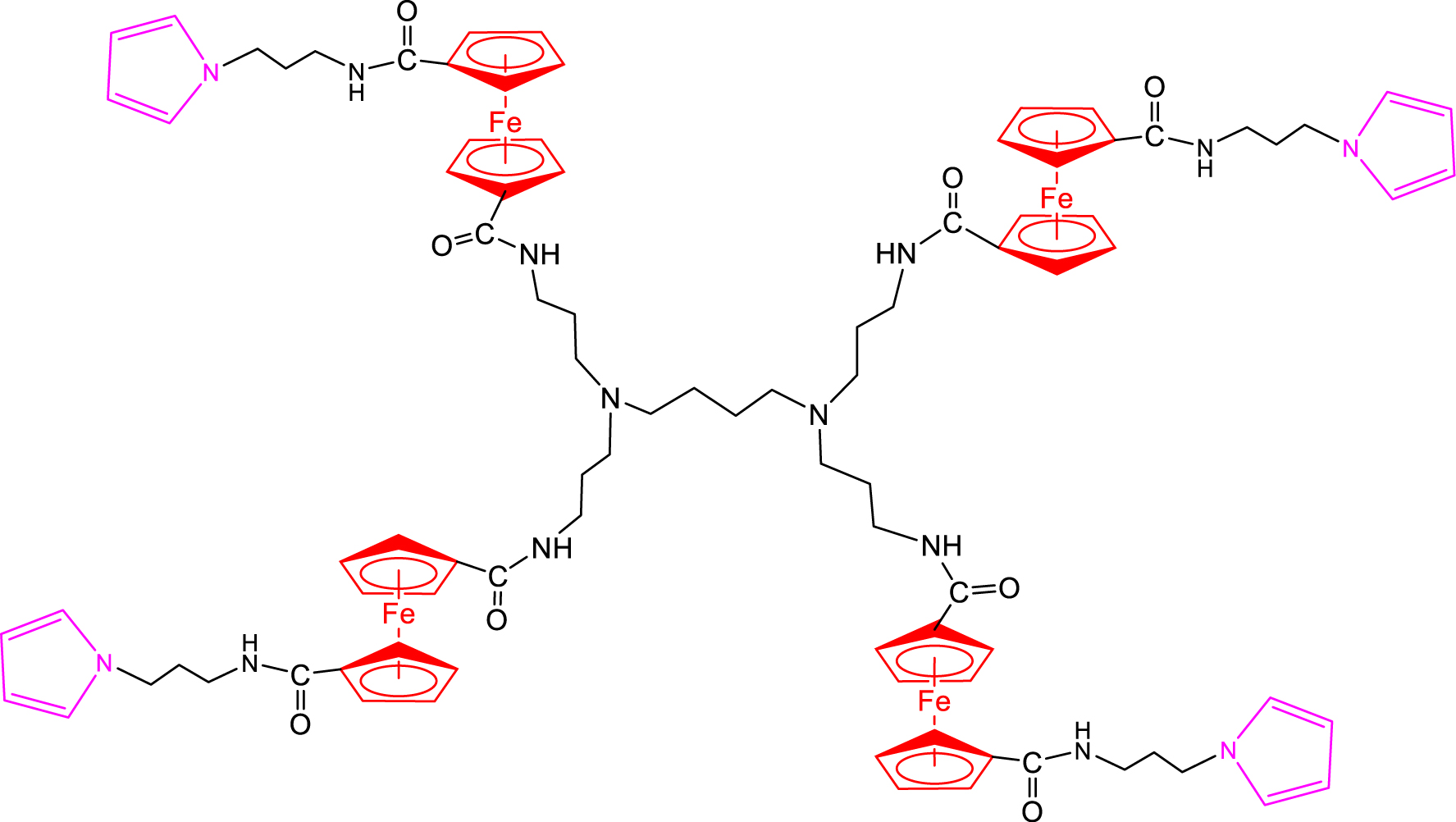
Later on, a new family of PPI dendrimers bearing large and flexible ferrocenylamidoalkyl chains at the periphery was designed to provide readily accessible ferrocenyl units for anion binding (Figure 13) [52]. Efficient synthesis of the target dendrimers was achieved through amidation using acid fluoride intermediates, thereby overcoming the limitations associated with chlorocarbonylferrocene. Electrochemical studies demonstrated that robust modified electrodes could be prepared using these materials and that their voltammetric response is sensitive to both the presence and concentration of anions in organic and aqueous media, with sensing performance strongly dependent on film thickness.
PPI dendrimer bearing thirty-two ferrocenylamidoalkyl chains.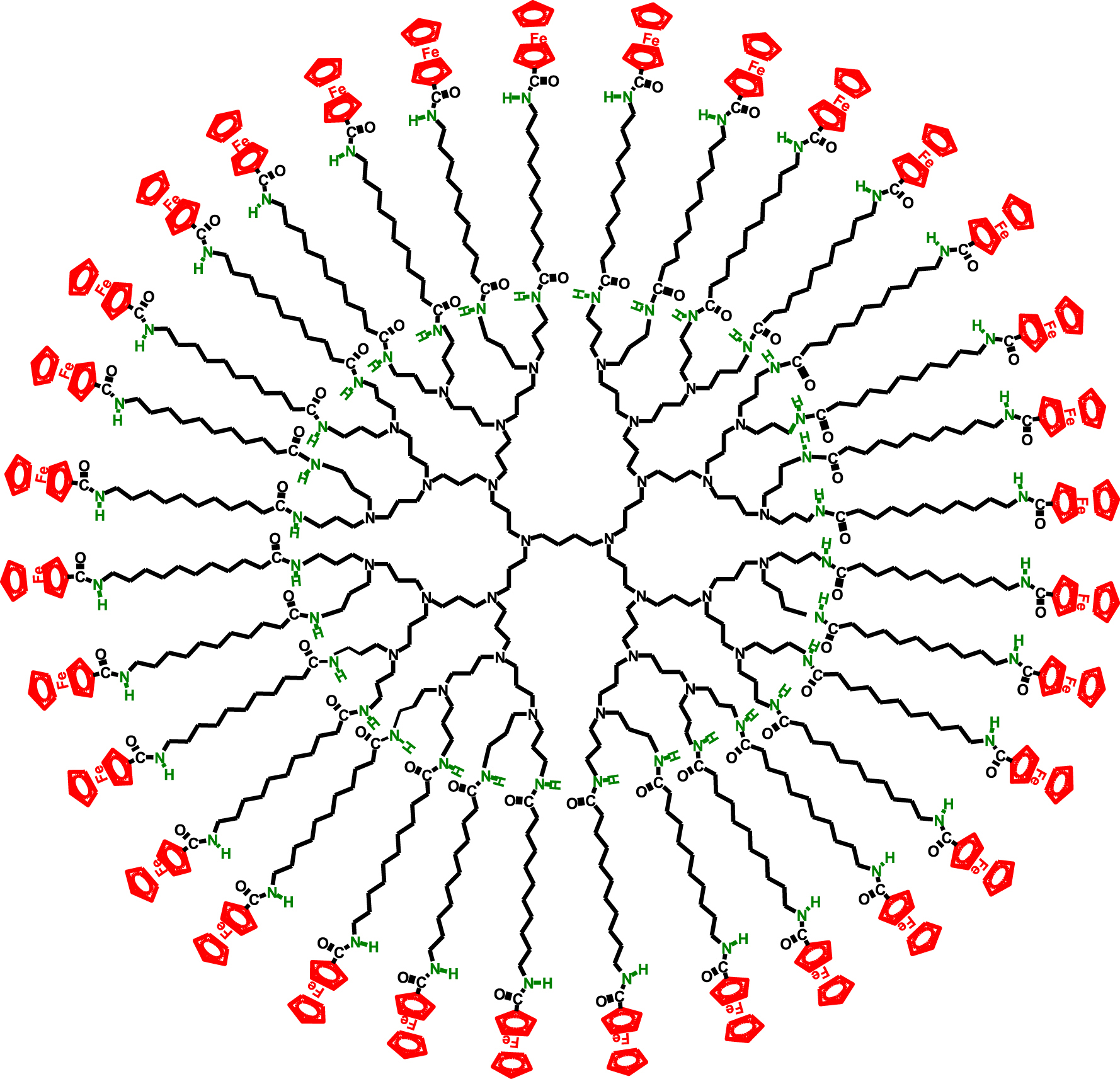
In 2012, we reported the anion-recognition properties of two PPI dendrimers incorporating either isolated ferrocene units or biferrocene motifs at the periphery [53]. The dendrimer with isolated ferrocenes [44] and the biferrocene-containing dendrimer were prepared via amidation of a first-generation PPI scaffold with chlorocarbonylferrocene and a biferrocenyl diacyl chloride intermediate (Scheme 9), respectively, affording systems in which the ferrocenyl centers are either independent or σ-bonded through C–C linkages. Electrochemical studies revealed stepwise and reversible oxidations consistent with electronic interactions between adjacent iron centers in the biferrocene-containing dendrimer. Both dendrimers exhibited effective voltammetric sensing of hydrogen phosphate anions in polar media such as DMSO, while the biferrocenyl system additionally enabled hydrogen sulfate recognition. Notably, anion sensing was achieved at submillimolar concentrations in solution, and electrodes modified with dendrimer films displayed sensitivity to HSO4− over a broad concentration range, underscoring the potential of these architectures for surface-confined electrochemical sensing applications.
Synthesis of first-generation PPI dendrimer incorporating biferrocene units.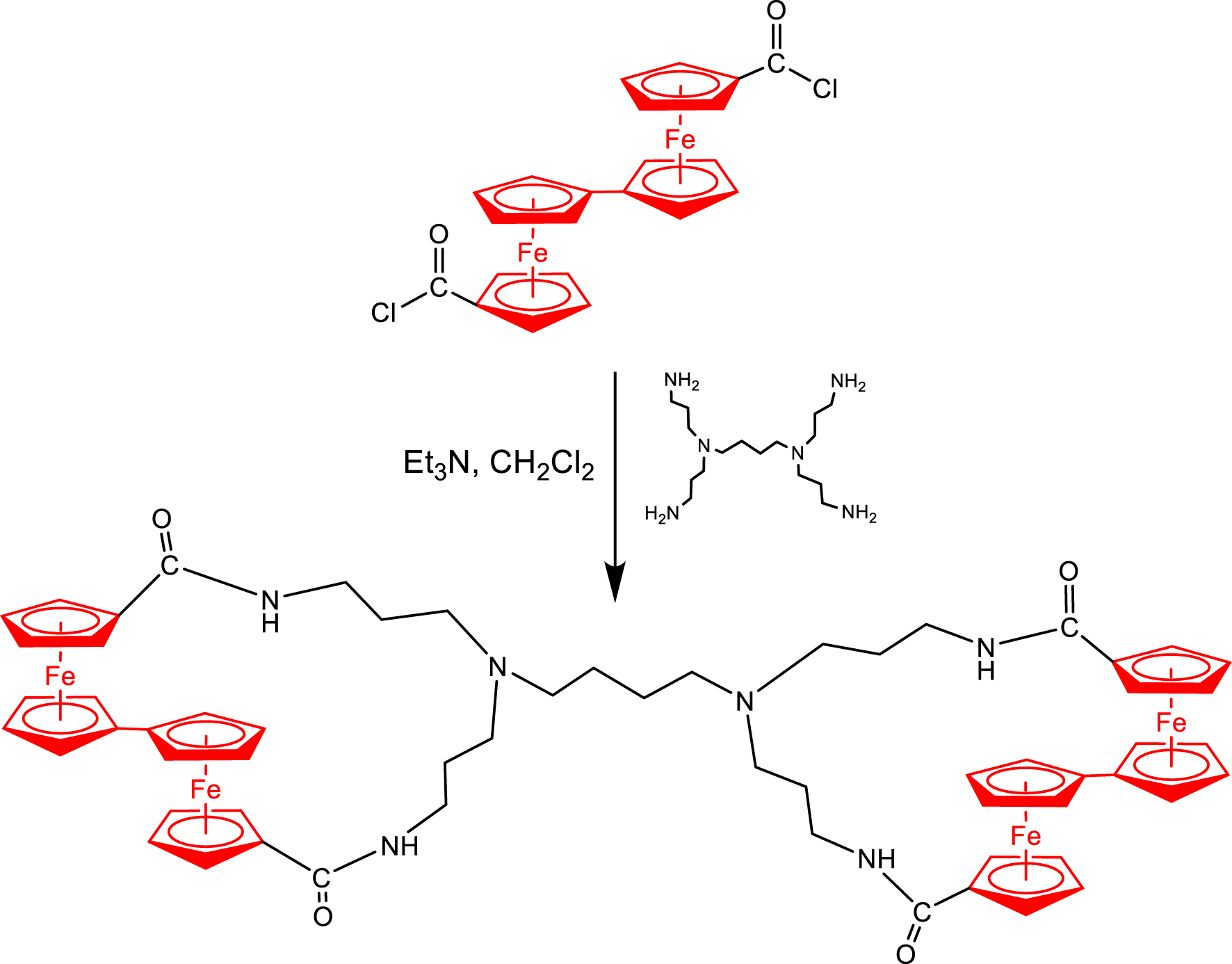
While dendrimers bearing ferrocenyl units are well established, systems decorated with permethylferrocenyl moieties remained comparatively underexplored, largely due to synthetic challenges associated with polymethylcyclopentadienyl chemistry. Motivated by the markedly different electronic properties of polymethylferrocenes, our group developed a series of dendrimers incorporating octamethylferrocenyl units, with the aim of accessing redox-active macromolecules exhibiting more negative redox potentials than their ferrocene analogs [54]. These metallodendrimers were prepared by condensation of octamethylferrocenyl aldehydes with PPI dendrimers of increasing generation, followed by reduction to yield amine-linked derivatives bearing up to thirty-two octamethylferrocenyl units per molecule (Scheme 10). Electrochemical studies revealed fully reversible oxidation processes with significantly shifted formal potentials, reflecting the strong electron-donating effect of the methyl substituents. The dendrimers of increasing generation showed an increasing tendency to adsorb onto electrode surfaces, enabling the preparation of stable modified Pt or glassy carbon electrodes displaying persistent electrochemical responses.
Synthesis of octamethylferrocenyl dendrimers.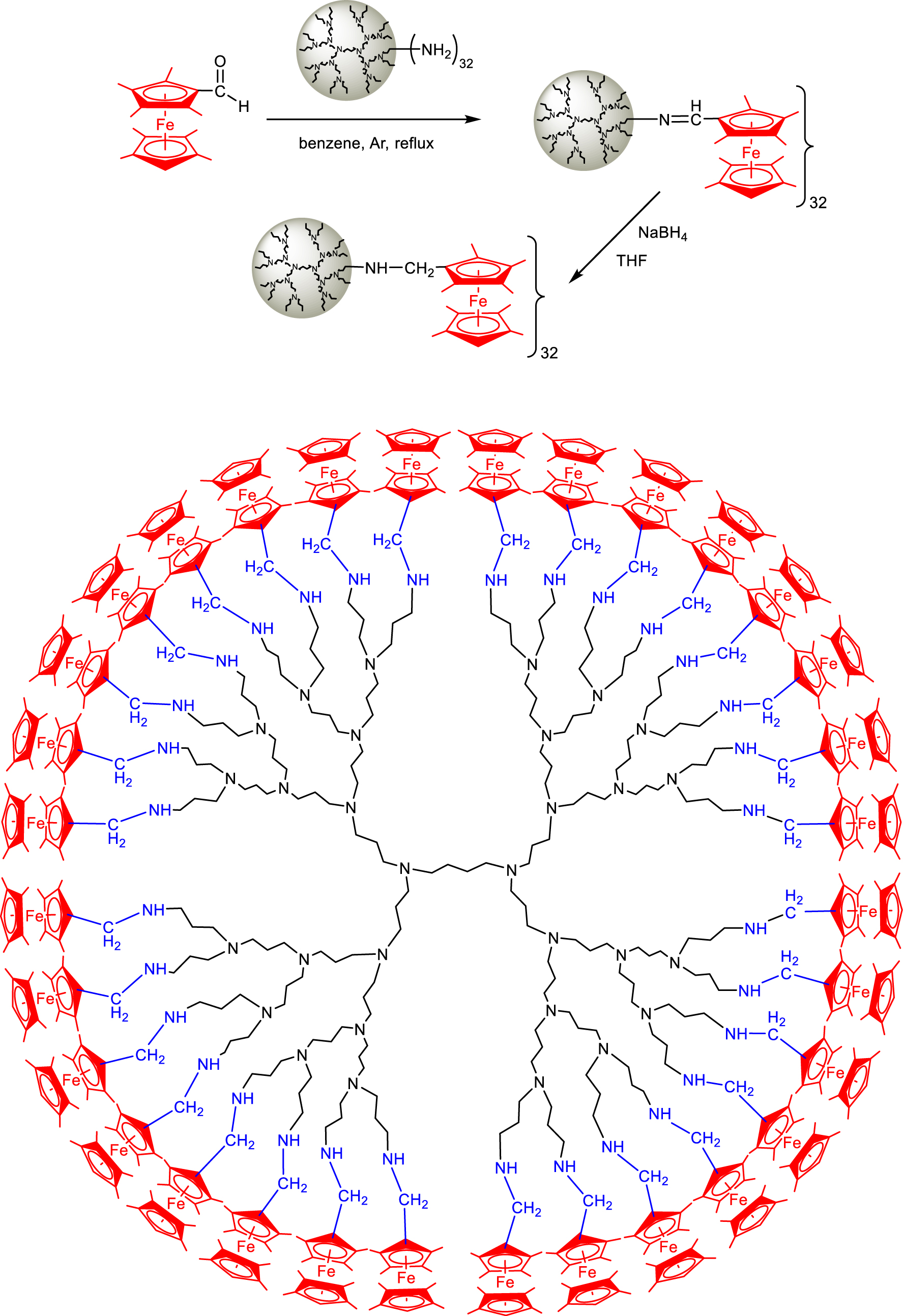
4.2. Cobaltocenium- and mixed ferrocenyl–cobaltocenium-functionalized PPI dendrimers
Whereas ferrocene has been the most widely employed redox-active unit in organometallic dendrimers, examples of polycationic redox-active metallodendrimers remain comparatively scarce. In this context, cobaltocenium constitutes a particularly attractive complementary motif, as it is a highly stable, positively charged metallocene, isoelectronic with ferrocene, and undergoes a reversible one-electron reduction to neutral cobaltocene. Along these lines, we reported the synthesis of multimetallic PPI dendrimers bearing four, eight, sixteen and thirty-two peripheral cobaltocenium units, obtained via condensation with excess 1-(chlorocarbonyl)cobaltocenium (PF6− salt) [55, 56]. Cyclic voltammetry and EQCM measurements established fully reversible redox chemistry associated with the cobaltocenium–cobaltocene couple across all generations. A distinctive feature of these dendrimers is their pronounced interfacial activity: upon electrochemical reduction, the transformation of highly charged, hydrophilic cobaltocenium peripheries into neutral, hydrophobic cobaltocene units promotes adsorption and electrodeposition onto Pt and glassy carbon, an effect that becomes increasingly pronounced with dendrimer generation. EQCM experiments revealed monolayer/submonolayer adsorption at open circuit, followed by reversible deposition of multilayer equivalents upon scanning to sufficiently cathodic potentials (≈−0.75 V), consistent with reduced solubility of the neutral dendritic species; re-oxidation induces partial desorption, leaving an approximately monolayer coverage [56].
Beyond their interfacial electrochemistry, these polycationic systems also enabled an elegant example of redox-triggered supramolecular self-assembly: although the oxidized dendrimers do not form inclusion complexes with β-cyclodextrin (β-CD) in aqueous media, electrochemical reduction drives the association of multiple peripheral cobaltocene units with freely diffusing β-CD hosts, leading to solubilization of the reduced form and suppression of the characteristic anodic stripping features in cyclic voltammetry. Thus, dendrimers in the presence of β-CD constitute a high-molecular-weight multisite host–guest system in which complex formation is effectively switched “on” by electrochemical activation of the guest (Scheme 11) [55].
Cyclodextrin binding by cobaltocenium-functionalized dendrimers.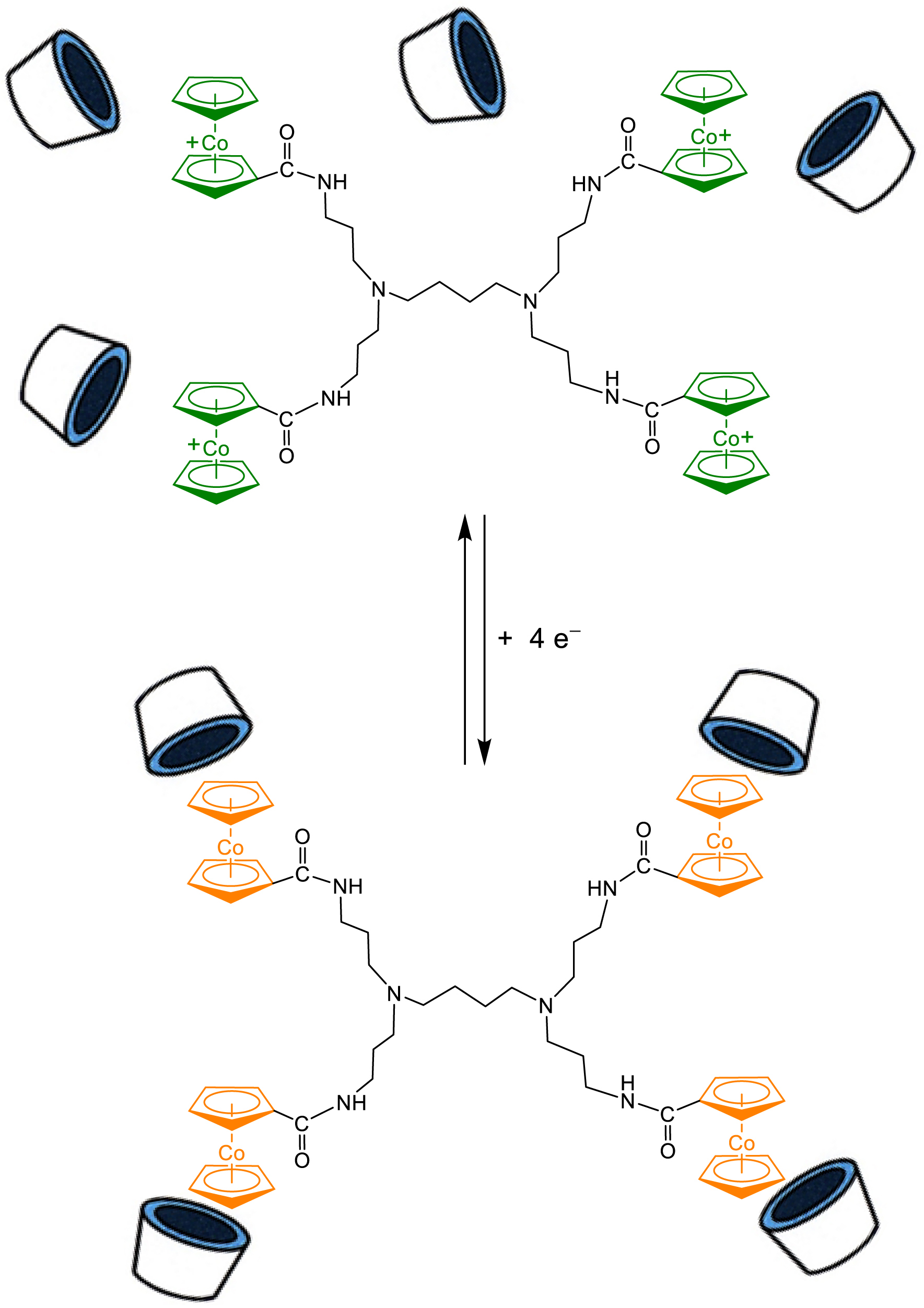
Building on the complementary redox properties of neutral ferrocene and cationic cobaltocenium, we reported the synthesis of mixed ferrocene–cobaltocenium dendrimers in which both organometallic units are simultaneously incorporated at the dendritic periphery [57]. These heterometallic systems were prepared by treating the first four generations of PPI scaffolds with an equimolar mixture of freshly prepared 1-chlorocarbonylferrocene and the PF6− salt of chlorocarbonylcobaltocenium, enabling the controlled installation of both metallocene fragments through amide formation at the terminal amine groups. As expected from the competitive coupling, the reaction afforded fractions containing different Fc/Co+ loadings; however, the overall peripheral composition could be reliably assessed by NMR (diagnostic resonances for Fc and cobaltocenium fragments) and corroborated by TXRF (total reflexion X-ray fluorescence) and ESI mass spectrometry, which reflected successive ionization states of the polyelectrolytic dendrimers. Electrochemical studies showed reversible redox activity for both organometallic units, with ferrocene oxidation occurring as a single multielectron wave and cobaltocenium reduction likewise giving rise to a well-defined collective process, consistent with largely non-interacting peripheral sites. In addition, these mixed-metal dendrimers readily modified electrode surfaces to form durable, surface-confined electroactive films displaying two distinct reversible redox systems, thereby establishing a robust platform for multifunctional electrochemical interfaces and subsequent sensing applications (Figure 14).
Cyclic voltammogram of an electrode modified with mixed ferrocene–cobaltocenium dendrimers.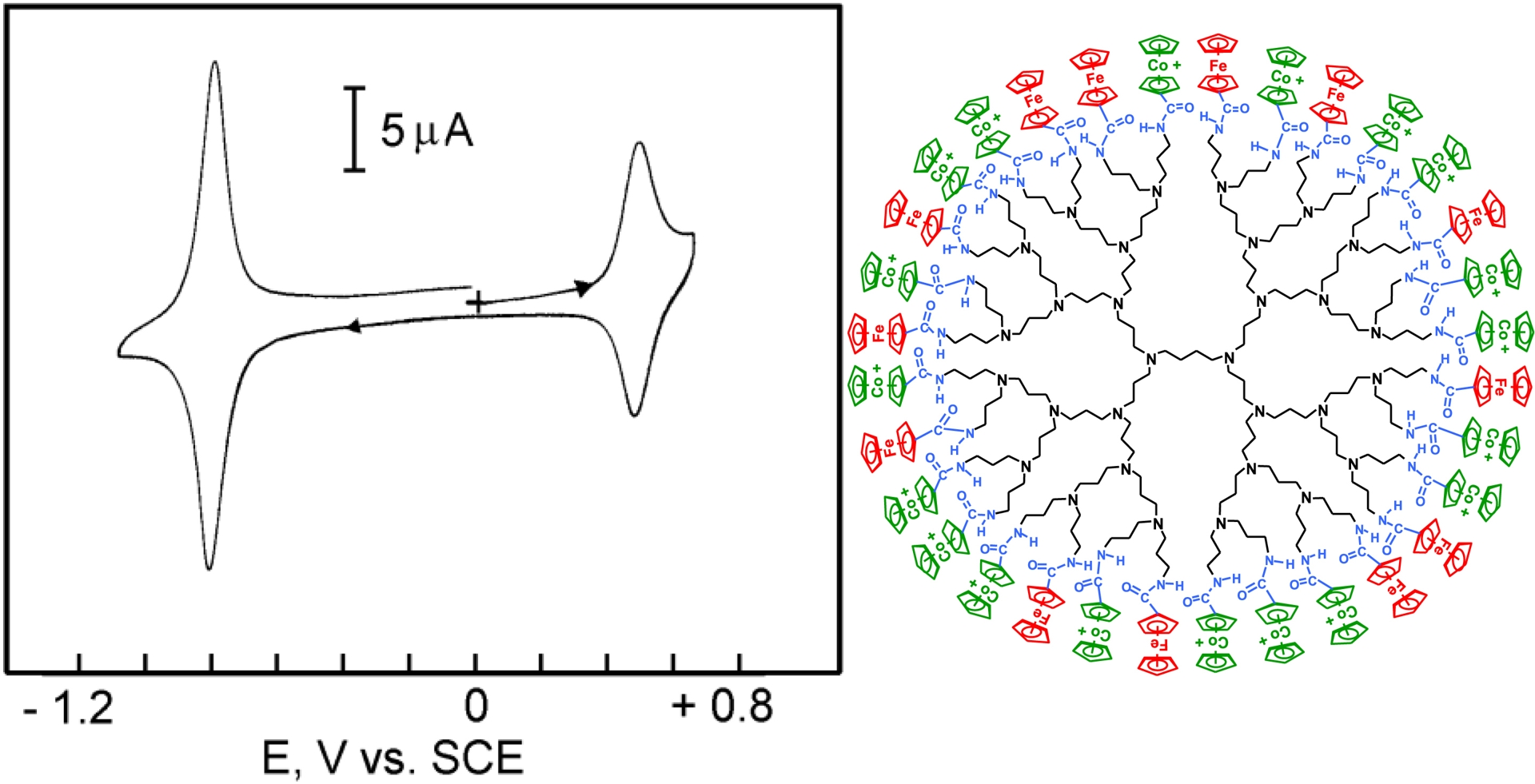
5. Functional applications: biosensors and electrochemical devices
Our contributions to functional applications constitute a natural extension of the fundamental electrochemical behavior of redox-active organometallic dendrimers and related macromolecules, particularly their ability to deliver predictable multielectron responses and to generate robust surface-confined redox films [19]. This translation from molecular redox chemistry into practical electrochemical platforms emerged progressively, starting with the use of ferrocenyl dendrimers as mediators in amperometric biosensors, and evolving toward multi-operational enzyme electrodes and, more recently, hybrid dendrimer/polymer–nanoparticle interfaces for advanced sensing and environmental monitoring.
5.1. Dendritic redox mediators in enzyme electrodes: from proof-of-concept to multi-operational biosensors
The first demonstration of the functional potential of dendritic redox architectures was achieved through the development of mediated glucose biosensors based on ferrocenyl dendrimers. In this pioneering work, carbon-paste electrodes doped with glucose oxidase (GOx) and ferrocenyl silicon-based dendrimers were shown to behave as efficient amperometric glucose sensors, displaying rapid current responses and stable steady-state signals under anaerobic conditions. The study demonstrated that dendritic “relay systems” provide a tunable alternative to classical monomeric ferrocenes, and that sensor performance depends not only on the number of ferrocenyl redox centers but also on dendrimer flexibility and framework topology [58]. A particularly relevant analytical feature was that dendrimer-based sensors exhibit improved operational stability relative to freely diffusing mediators, consistent with the reduced solubility of oxidized dendritic species and the reduced tendency of leaching from the electrode matrix.
After establishing this initial proof-of-concept, subsequent work increasingly shifted toward the design of chemically modified electrodes in which redox macromolecules provide stable electroactive coatings. In this direction, heterometallic systems introduced additional functionality beyond mediation, particularly when combining neutral ferrocene with cationic cobaltocenium fragments. Both ideas culminated in the construction of heterometallic ferrocene–cobaltocenium dendrimer films used as multifunctional electrode modifiers for enzyme-based glucose monitoring. In this study, GOx was immobilized electrostatically on carbon and platinum electrodes modified with the heterometallic dendrimers, enabling dual-mode operation: under anaerobic conditions, the ferrocene units act as efficient mediators for electron transfer between the reduced enzymatic cofactor and the electrode, whereas under aerobic conditions the cobaltocenium moieties electrocatalyze oxygen reduction, thus enabling sensitive monitoring of oxygen consumption during enzymatic turnover [59]. Importantly, this contribution represented a transition from a mediator-containing electrode mixture to a genuine functional biointerface, as it systematically explored the influence of dendrimer generation, dendrimer film thickness, substrate concentration, interferences, and storage stability on the analytical response.
In parallel, we also explored the use of redox organosilicon macromolecules as alternative mediator families, where film robustness and redox-site density can be optimized through polymer design. In particular, early investigations in 2003 already established that organosiloxane redox polymers having electronically interacting ferrocenyl units can serve as efficient electrode modifiers and electrocatalytic matrices for hydrogen peroxide sensing, a process of central relevance in oxidase-based biosensors [60, 61, 62].
A further advance toward analytically optimized devices was enabled by introducing polymethylferrocenes, which provide lower redox potentials and faster kinetics, thus supporting operation at milder potentials with improved selectivity and reducing interference in complex matrices [63, 64, 65].
Ultimately, this evolution culminated in the design of multi-operational biosensors based on carbosilane dendrimers with interacting ferrocenyl sites [66]. In these systems, immobilized oxidases (GOx and lactate oxidase LOx) could be monitored through different transduction regimes (mediated enzyme regeneration under anaerobic conditions and peroxide electrocatalysis under aerobic conditions), providing versatile platforms operating within interference-free potential windows and demonstrating the maturity of dendrimer-based bioelectrocatalytic interfaces.
5.2. Hybrid dendrimer/polymer–nanoparticle interfaces: electrocatalytic amplification and new sensing modes
Following the consolidation of dendrimer-derived redox films as enzyme electrode platforms, our research progressively incorporated nanomaterials design principles in order to enhance surface area, catalytic activity and charge transport at the electrode interface [19]. This stage was motivated by the well-established limitation of purely molecular redox films, namely finite interfacial electron transfer rates and limited catalytic amplification, particularly in peroxide- or oxygen-coupled electrochemical assays. Metallic nanoparticles (NPs) offer a direct route to overcoming these constraints, but their use requires strategies to suppress aggregation and ensure reproducibility. Here, dendritic and organosilicon redox macromolecules provide a unique advantage: they can act simultaneously as film-forming redox matrices, NP stabilizers, and nanoscale templates.
The first systematic implementations of this strategy appeared in 2016, in which ferrocenyl organosilicon macromolecules were combined with metallic NPs to construct hybrid sensing interfaces. Polyferrocenyl polycyclosiloxane–AuNP architectures were developed as robust electrode coatings enabling favorable electron-transfer pathways and supporting peroxide sensing based on horseradish peroxidase (HRP) [67]. These hybrid materials established the basic rationale that redox macromolecules provide structured and tunable electroactive matrices, whereas AuNPs and PtNPs deliver catalytic amplification and enhanced conductivity.
In 2017, dendrimer-templated routes to obtain monodispersed and size-controlled AuNPs directly from electrodeposited dendrimer films were introduced. This strategy enabled reproducible control over NP dimensions, which is critical because electrochemical performance strongly depends on AuNP size and dispersion. The resulting hybrid interfaces were exploited for sensing applications including dopamine and nitrite determination, demonstrating the versatility of dendrimer-controlled AuNP platforms as general electrocatalytic electrodes [68, 69]. The approach was refined in 2018 through systematic optimization of AuNP size using aminoferrocenyl dendrimer templates, leading to highly efficient electrocatalysts for hydrogen peroxide and enabling sensitive, non-enzymatic peroxide sensing with improved analytical characteristics [70].
García Armada et al. employed thiolated DAB (diaminobutane) dendrimers as bonding layers between electrodeposited and colloidal AuNPs to form electrocatalytic self-assembled layers optimized for the covalent immobilization and direct electrochemistry of HRP [71]. This work provided a comprehensive kinetic and analytical characterization of the hybrid films and established optimized conditions for obtaining fast electron transfer and high sensitivity toward hydrogen peroxide. The resulting interfaces were conceived as modular platforms for more complex devices, including oxidase/peroxidase bienzymatic architectures or inhibition biosensors.
The most recent stage of this development expanded the NP concept toward new electrode architectures and sensing mechanisms. In 2021, ferrocenyl and perferrocenyl polycyclosiloxanes were used not only as electrode modifiers but also as templates for PtNP formation, taking advantage of the synergistic coupling between ferrocene-mediated electrocatalysis and PtNP surface properties. These PtNP-containing interfaces were further applied as platforms for immobilization of oxidase enzymes such as xanthine oxidase, enabling efficient bioelectrocatalysis and reinforcing the value of the hybrid approach for biosensing [72].
Finally, our work culminated in 2023 with electrocatalytic multilayer structures based on thiolated ferrocenyl PPI dendrimers acting as bonding layers between electrodeposited and colloidal AuNPs (Figure 15). A particularly significant advance was the direct comparison between ferrocenyl-thiolated dendrimers and thiolated analogs lacking ferrocene, clearly demonstrating the beneficial role of redox-active dendritic fragments for enhancing charge transfer and catalytic performance. Beyond peroxide sensing, these HRP-based systems were successfully converted into inhibition-based electrochemical devices for heavy metal analysis, enabling the determination of Pb2+ and Cu2+ by both amperometric and impedimetric detection modes [49].
Schematic structure and operation of the biosensor.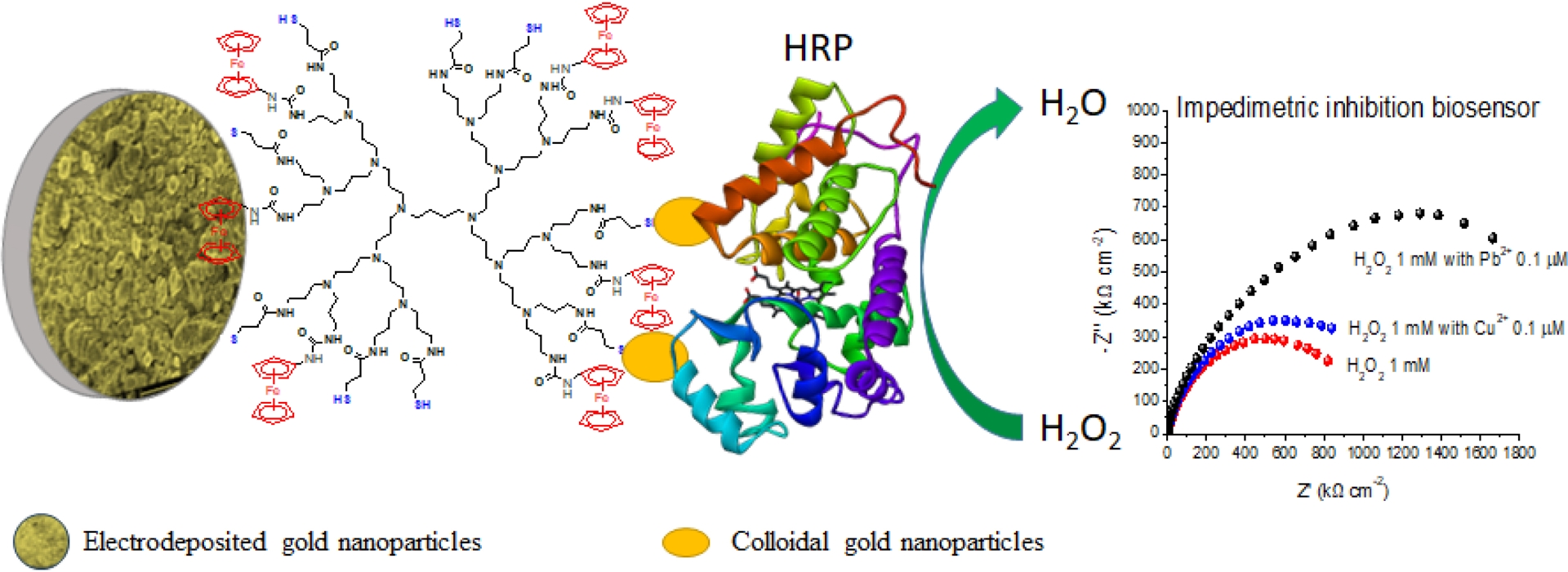
6. Dendrimer–nanomaterial hybrids and fluorescent sensing platforms
In parallel with our developments in electrochemical dendrimer films and biosensing, a complementary research direction was established through collaborative work with M. Algarra, focused on the integration of dendritic scaffolds with semiconductor nanomaterials to produce hybrid sensing platforms. In these studies, dendrimers were not only employed as redox-active architectures, but also as multifunctional nanoscale ligands able to stabilize quantum dots (QDs), control their surface chemistry, and confer water solubility and analyte responsiveness.
A representative example is the development of Hg(II) fluorescent sensors based on cadmium sulfide QDs coated with the fifth-generation PPI dendrimer [73]. The resulting CdS–PPI nanocomposites were synthesized in aqueous media and characterized by EDXA (energy dispersive X-ray analysis) and SEM, which revealed macroscopic spherical nanocomposite structures and confirmed the coexistence of CdS and the nitrogen-rich dendritic coating. The hybrid nanocomposites displayed intense fluorescence, with an emission maximum around 535 nm (excitation at 351 nm), and their luminescence could be selectively modulated by metal-ion binding. Although Cu(II) and Pb(II) were identified as potential interfering quenchers, several other common cations such as Cd(II), Zn(II), Co(II), and Ni(II) displayed negligible influence. Additionally, the work revealed the crucial role of dendrimer conformation: changes in pH and ionic strength affect the emission wavelength and intensity by modifying the dendrimer/QD environment, thus highlighting both opportunities and limitations associated with using dendritic scaffolds as adaptive nanostructured hosts.
This collaborative line was further expanded through the preparation of thiolated PPI dendrimers coupled with CdSe QDs to afford fluorescent nanocomposites responsive to heavy-metal ions [74, 75]. In these systems, the presence of thiol groups enhances coordination ability and promotes strong interactions at the QD surface, resulting in sensors capable of responding to Cd(II) and Pb(II) through enhancement or quenching mechanisms, respectively, with analytically useful concentration ranges and detection limits in the micromolar regime.
This collaborative line was further extended to ZnSe-based QD systems [76]. A water-soluble nanocomposite obtained by a thiolated PPI-dendrimer coated with fluorescent ZnSe showed a set of favorable properties to be used as a sensor for the selective recognition of C-reactive protein in human serum samples at concentrations of risk [77].
7. Conclusions and perspectives
Over the past three decades, our research on organometallic dendrimers and related macromolecules has evolved from fundamental synthetic developments to the demonstration of functional devices and hybrid sensing platforms. Early efforts established efficient methodologies for incorporating redox-active organometallic units into robust dendritic frameworks—particularly carbosilane and amine-based scaffolds—enabling precise control over nuclearity, site isolation, and redox organization. These studies revealed key electrochemical principles, notably the simultaneous multielectron behavior of peripheral redox sites and the insulating role of dendritic matrices in maintaining electronic independence.
Subsequent generations of work expanded the chemical scope toward heterometallic dendrimers and redox-asymmetric architectures, where different organometallic fragments introduce complementary and addressable redox responses. Such systems offered insight into cooperativity and redox communication, while also enabling new modes of interfacial reactivity, including robust electrodeposition and formation of electroactive dendritic films. The transition from molecular systems to surface-confined assemblies ultimately provided a direct bridge to applications, particularly in electrochemical devices and biosensing, where dendritic films function as multielectron mediators, enzyme immobilization matrices, and multifunctional sensing interfaces.
Looking forward, organometallic dendrimers remain highly attractive as programmable macromolecular platforms at the interface of molecular electronics, electroanalysis, and functional materials. The modularity of dendritic synthesis, combined with the broad palette of redox-active organometallic fragments available, opens opportunities for rational design of multi-state charge reservoirs, electrocatalytic interfaces, and hybrid nanomaterials. Future efforts will likely benefit from deeper integration with nanotechnology and surface science, including dendrimer-derived electrode architectures, dendronized polymers, and mixed redox/optical platforms that combine electrochemical addressability with photophysical functionality. In this broader context, our work illustrates how dendritic organometallic chemistry can provide not only structurally elegant macromolecules but also practical and versatile building blocks for next-generation electrochemical and sensing technologies.
Acknowledgements
The authors are greatly indebted to their colleagues and collaborators, all the students and PhD students who have contributed to these works.
Declaration of interests
The authors do not work for, advise, own shares in, or receive funds from any organization that could benefit from this article, and have declared no affiliations other than their research organizations.
Funding
The Dirección General de Investigación Científica y Técnica (87/0123, N 90/0227 and 93/0287), the Dirección General de Enseñanza Superior e Investigación Científica (PB97-0001), the Spanish Dirección General de Investigación (CTQ2004-07381-C02 and CTQ2009-12332-C02) and the Consejería de Educación, Comunidad de Madrid (S-0505/PPQ-0328) are thanked for their financial support.