




 CC-BY 4.0
1. Introduction
Coordinative Chain Transfer Polymerization, or CCTP, is a degenerative chain transfer process allowing the growth of several macromolecular chains per transition metal ([1, 2, 3], Scheme 1). This is allowed by the reversible transalkylation of the growing macromolecular chain from the transition metal or rare earth center of the catalyst to the metal of a chain transfer agent. The latter is usually a magnesium, aluminum, or zinc alkyl compound. Ideally, no chain termination reactions such as β-H transfer or elimination should occur in the process. As such, if the transfer rate is high enough in comparison with the polymerization or propagation rate, narrow molecular weight distributions are obtained. Another point of interest lies in the amount of alkyl groups of the chain transfer agent effectively involved in the chain transfer. The catalyzed chain growth performance, where all alkyl chains of the chain transfer agent are involved, was achieved by Mortreux et al. using a neodymocene and magnesium dialkyl for the polymerization of ethylene in the 90s [4]. This resulted in the formation of a dipolyethylenyl magnesium compound, which can be further used for the production of various end-functionalized polyethylenes (see, e.g., the work of D’Agosto, Boisson et al. [5]).
Coordinative chain-transfer polymerization or CCTP. [Cat. M] and [CTA M] are the metal of the catalyst and the metal of the chain-transfer agent, respectively. kp and ktr are the propagation and chain transfer rate constants, respectively.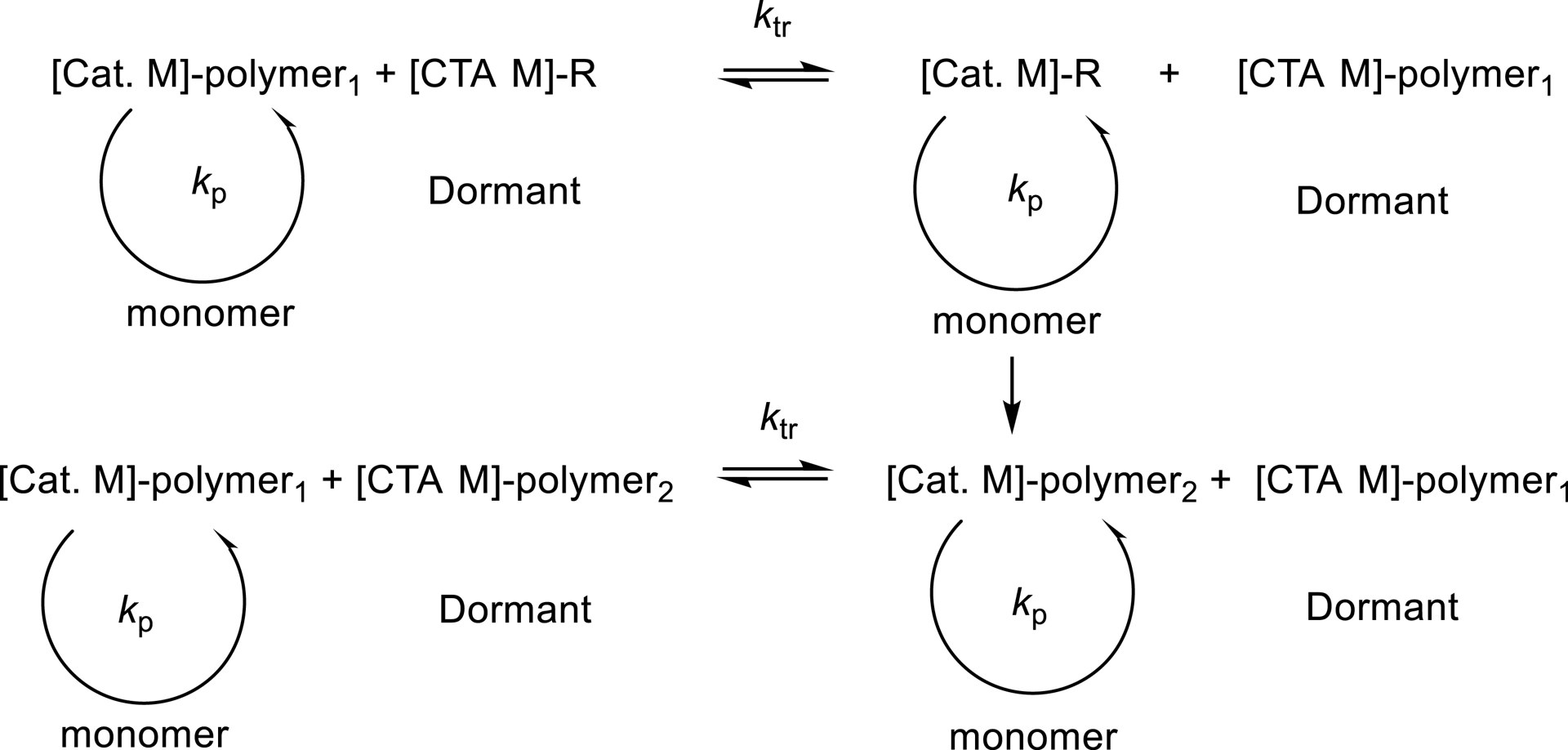
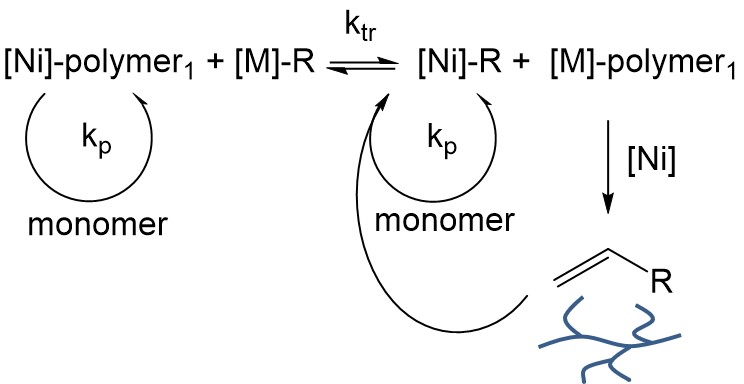
The premises of CCTP were laid down by Natta in the 60s on the Al(C2H6)TiCl3 catalytic system with dialkyl zinc as chain transfer agent [6], and the concept was rationalized by Kempe in the 2000s [1]. Group 4 metals, as well as rare earths, are among the most commonly used metals for CCTP catalysts. Regarding group 10 metals, Pd was never reported in this field as far as we know, and only a few CCTP polymerization catalysts are based on nickel. Indeed, such metals usually lead to significant β-H transfer/termination reactions in the course of polymerization reactions (see Schemes 2 and 6), which render the CCTP process difficult to achieve sensu stricto. This ability of Ni coordination complexes to catalyze β-H transfer reactions was in turn advantageously used for chain displacement in the course of CCTP catalyzed by other metals, which leads to interesting applications such as the selective production of α-olefins [7]. On the other hand, Ni catalysts such as α-diimine Brookhart catalysts, which were thought as reducing significantly the occurrence of β-H processes, provide access to branched polyolefins via chain walking polymerization ([8], see Scheme 2). Branched polyethylene elastomers with an impressive range of microstructures have been reported since the advent of Ni-catalyzed chain walking polymerization [9]. When combined with CCTP approaches, this provides an interesting tool for the design of advanced macromolecular architectures. With this in mind, we discuss in this perspective the peculiar role played by Ni complexes in the realm of CCTP and emphasize its potential in terms of macromolecular and molecular engineering.
β-H elimination and chain walking polymerization with Ni catalysts.
2. Discussion
2.1. Ni α-diimine complexes for CCTP of ethylene
The CCTP of ethylene using the Ni α-diimine complex 1 (see Scheme 3), MAO (methylaluminoxane), and ZnEt2 as chain transfer agent was assessed [10]. It was found that chain transfer does occur, with a very low efficiency however, as only 2% of the alkyl groups of the chain transfer agent were involved. The presence of ZnEt2 did not affect significantly the level of branching, which is interesting when it comes to macromolecular engineering. Similar trends, i.e., low transfer efficiency and little effect on the degree of branching, were reported for the Ni α-diimine complex 2a also in combination with MAO in the presence of ZnEt2 as chain transfer agent [11].
Catalysts or catalyst precursors.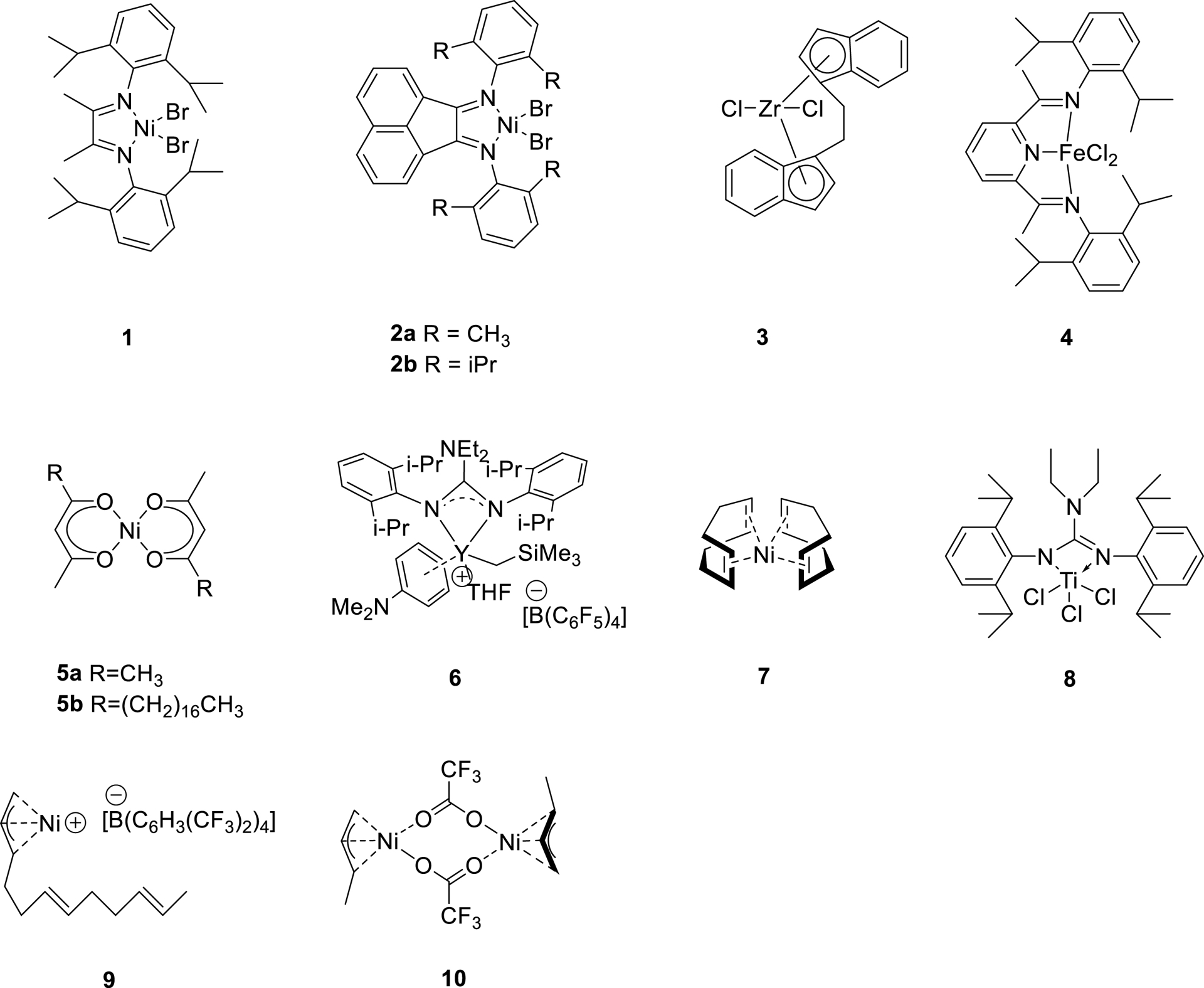
Complex 1 was further used for a chain shuttling polymerization of ethylene [12]. Such a process, initially developed for statistical copolymerizations, involves two catalysts and a chain transfer agent, and leads under favorable conditions to original multiblock microstructures/architectures [13, 14, 15]. This is represented in Figure 1 for the homopolymerization of ethylene. The ansa-zirconocene 3 produces linear polyethylene, while the Ni α-diimine 1 allows the synthesis of branched polyethylene via chain walking polymerization. Transalkylation of the growing chain from both Zr and Ni metals to Zn was shown to operate with a much higher efficiency for the Zr catalyst. The occurrence of shuttling reactions leading to the formation of a multiblock copolymer was advanced after comparing the molecular weight distributions obtained in the presence of each catalyst without and with chain transfer agent. In the latter case, a monomodal molecular weight distribution was obtained, whereas in the former case, two distributions were observed, characteristic of two catalysts working independently. As reported in previous aforementioned works, the chain transfer efficiency of the Ni α-diimine bromide catalyst combined with MAO (methylaluminoxane) and ZnEt2 was also found to be extremely low. Actually, when it comes to chain shuttling polymerization, a prerequisite to obtain a multiblock microstructure with interesting properties is that the chain transfer rate (ktr) must not be too fast in comparison to the propagation rate (kp) to allow the growth of blocks of significant length on each of the two catalysts. If ktr ≫ kp, microstructures close to conventional statistical copolymers will be obtained. As such, the low transfer efficiency of the Ni α-diimine catalyst is not an issue, as it allowed producing the multiblock microstructure. It may even be considered an asset in that specific context. The ability of Ni catalysts to undergo chain transfer to various metals in the course of ethylene polymerization was then studied by Tonks et al. [16] A screening conducted among various Ni α-diimine and Ni salicylaldimine complexes combined with several chain transfer agents revealed that cationic α-diimine Ni catalysts combined with ZnEt2 show the highest efficiency under the selected experimental conditions.
Chain-shuttling polymerization of ethylene between Ni and Zr centers after [12].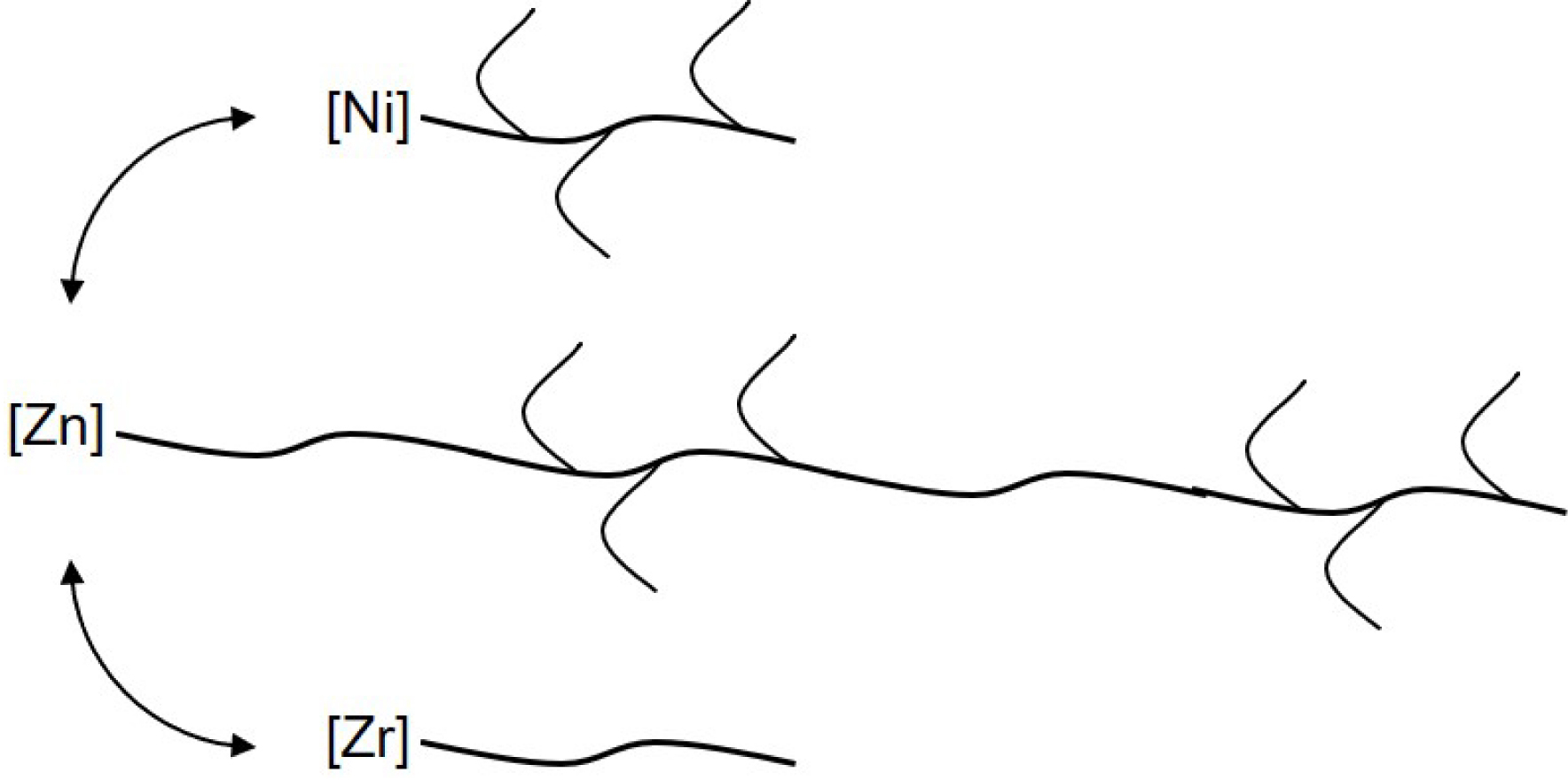
2.2. Ni complexes as chain displacement catalysts
Ni compounds can also be used as catalysts for chain displacement in the course of CCTP reactions via β-H transfer [7, 17] as depicted in Scheme 4. This was reported by Gibson et al. using a bis(imino)pyridine iron complex (seen as 4 in Scheme 3) in combination with MAO and ZnEt2 as chain transfer agent, together with Ni(acac)2 (Ni bis(acetylacetonate), seen as 5a in Scheme 3) to afford alkene-terminated oligoethylene [17]. The process can also be advantageously used for the selective production of α-olefins. This was reported via an yttrium-catalyzed CCTP of ethylene using 6 (see Scheme 3) activated with N,N-dimethylaniliniumtetrakis(pentafluorophenyl)borate, and in combination with AlEt3 as chain transfer agent. Various Ni compounds, such as Ni(acac)2, Ni(O) bis(cyclooctadiene) (Ni(COD)2 seen as 7 in Scheme 3), or Ni(CO2(CH2)16CH3)2 (5b in Scheme 3), were assessed for chain displacement and the best results were obtained with Ni(acac)2. 1-Butene could be selectively produced via this system, while α-olefinswith a number average molecular weight up to 750 g⋅mol−1 could also be obtained. The synthesis of even longer α-olefins was reported later by the same group via this strategy. Molecular weight up to 7000 g⋅mol−1 were reached using the Ti based catalyst 8 with AlEt3 and Ni(COD)2 [18].
(a) Nickel-catalyzed chain displacement of alkenes from alkyl metals. M = Zn, Al, m = 2,3. (b) Ni displacement catalysis in the course of CCTP. M = Zn or Al in the examples reported so far and n = 2 and 3, respectively.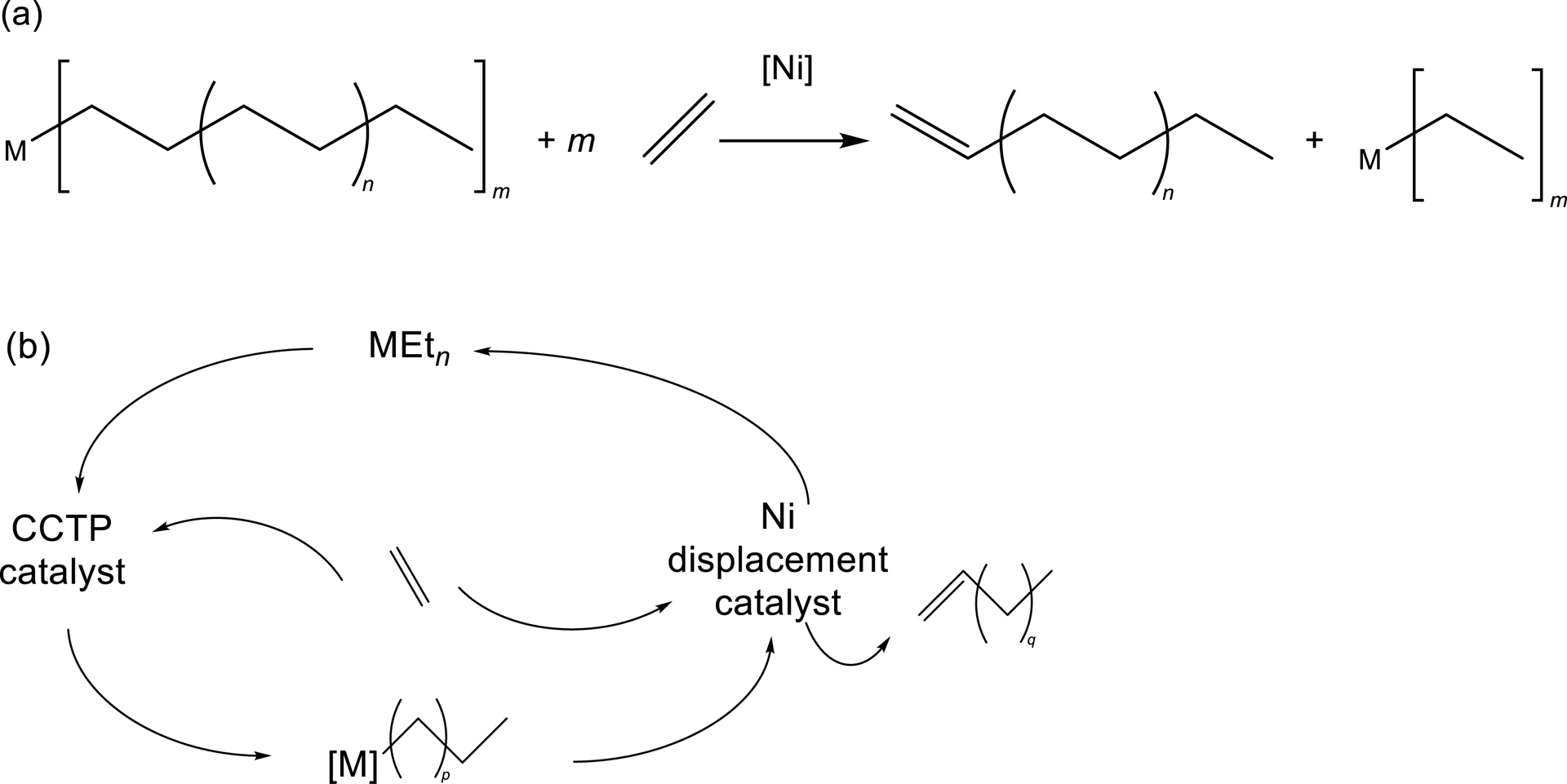
Tandem processes leading to multibranched polyethylene were further reported by this approach using the Ni α-diimine polymerization catalyst 2a combined with Ni(acac)2 as chain displacement catalyst by Ahmadi et al. [19] The principle is shown in Scheme 5. A similar process was also reported using the Ni α-diimine precursor 2b as CCTP catalyst and an iron complex as chain displacement catalyst [20].
Ni displacement catalysis in the course of Ni α-diimine-catalyzed CCTP leading to multibranched polyethylene. R = (multi)branched polyethylene.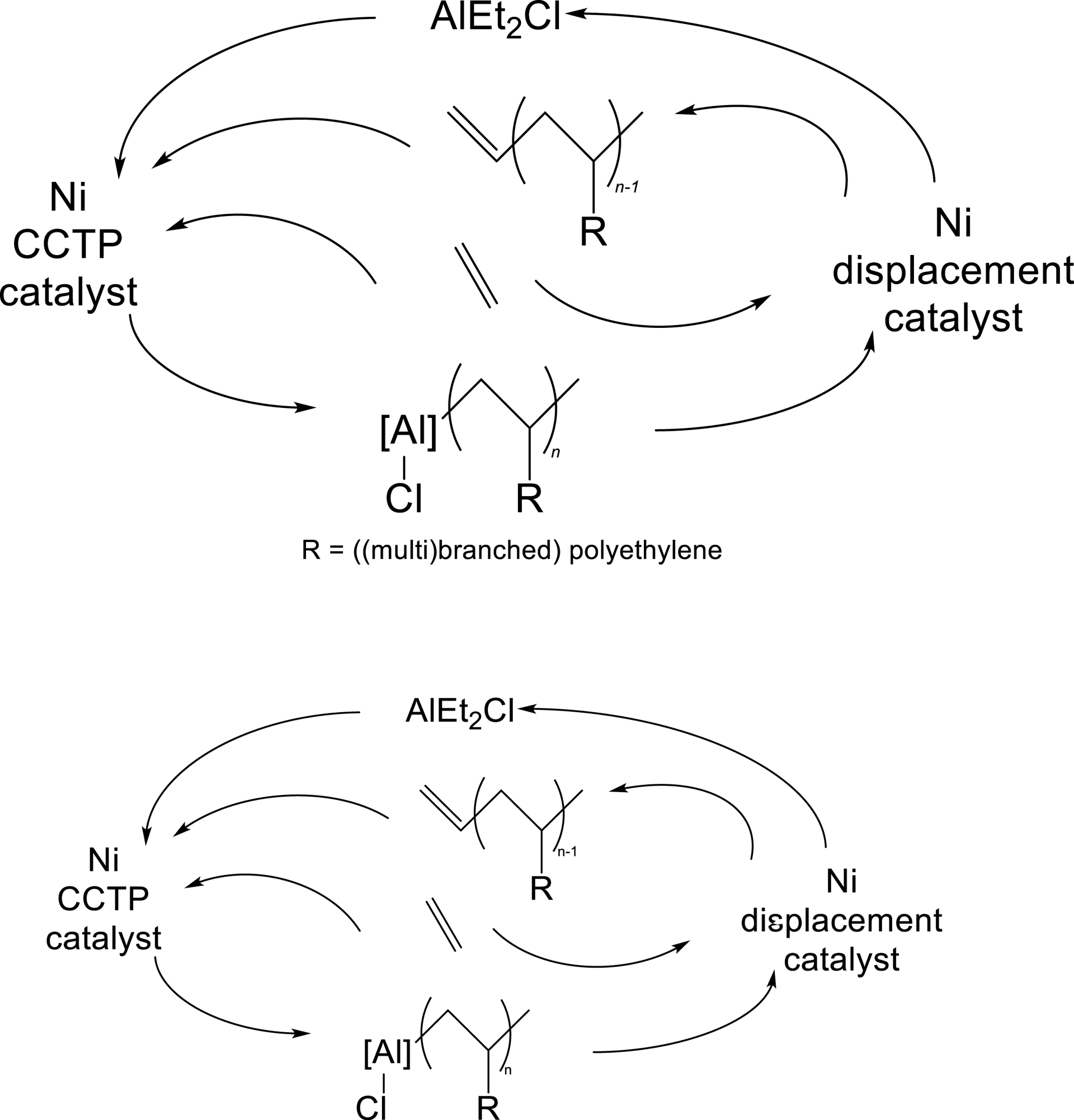
It is clear from these studies that Ni catalysts can play a dual role, being able to polymerize ethylene with the ability to operate transalkylation to Al or Zn alkyl, and also to proceed to substantial β-H transfer leading to chain displacement. Such a dual character for a single catalyst has been reported for the polymerization of butadiene using Ni allyl systems.
2.3. Ni catalysts for CCTP of conjugated dienes
If the occurrence of β-H elimination/transfer processes in the course of Ni-catalyzed ethylene and α-olefinpolymerizations is well documented, only few reports can be found for conjugated dienes. The occurrence of β-H elimination in the course of a Ni-allyl-mediated polymerization of butadiene was evidenced by Taube [21] with the Ni allyl cationic catalyst 9 (Scheme 3). The formation of the diene chain end was established after trapping it by a Diels–Alder reaction with azodicarbonic acid diethyl ester as the dienophile, and subsequent 13C NMR characterization of the adduct. The mechanism represented in Scheme 6 goes through a η3 allyl–η1 equilibrium where the Ni center is bonded to the C3 carbon. In this configuration, an agostic interaction is possible with the C4–H bond, leading to β-H elimination.
Another Ni allyl cationic system, the bis(η3-allylnickeltrifluoroacetate) complex [22] (seen as 10 in Scheme 3), initially believed to lead to a perfectly living polymerization of butadiene in the presence of electron-donating species such as triphenylphosphine or electron-withdrawing species such as tetrachlorobenzoquinone [23] was also shown later to undergo a chain transfer reaction, most probably β-H elimination [24]. The bis(η3-allylnickeltrifluoroacetate) complex was later assessed for the CCTP of butadiene by Zinck et al. [25] Diene-terminated chains were produced without chain transfer agents, most probably by the mechanism depicted in Scheme 6, but were not reinserted in the active species, as the resulting polybutadiene was found to be linear. In sharp contrast, in the presence of aluminum or magnesium alkyls, the one-pot formation of branched polybutadiene was obtained. The reinsertion of diene-end-capped polybutadiene in the presence of the main group metal alkyl may be attributed to a different active species. The initiation of chain transfer polymerization was evidenced by the formation of alkenes observed in NMR model experiments most probably resulting from Ni-alkyl species undergoing β-H elimination or transfer to the monomer, as depicted in Scheme 7, and also by the lower molecular weight obtained. A dual role of the Ni catalyst for both CCTP and chain displacement is thus observed in this case. The latter affords the formation of a conjugated diene-end-capped polybutadiene, and the proposed mechanism continues through the reinsertion of that macroconjugated diene into the growing polymer chain, as depicted in Scheme 7.
η3 allyl–η1 equilibrium leading to β-H elimination in the course of Ni-catalyzed polymerization of conjugated dienes (butadiene as a case study).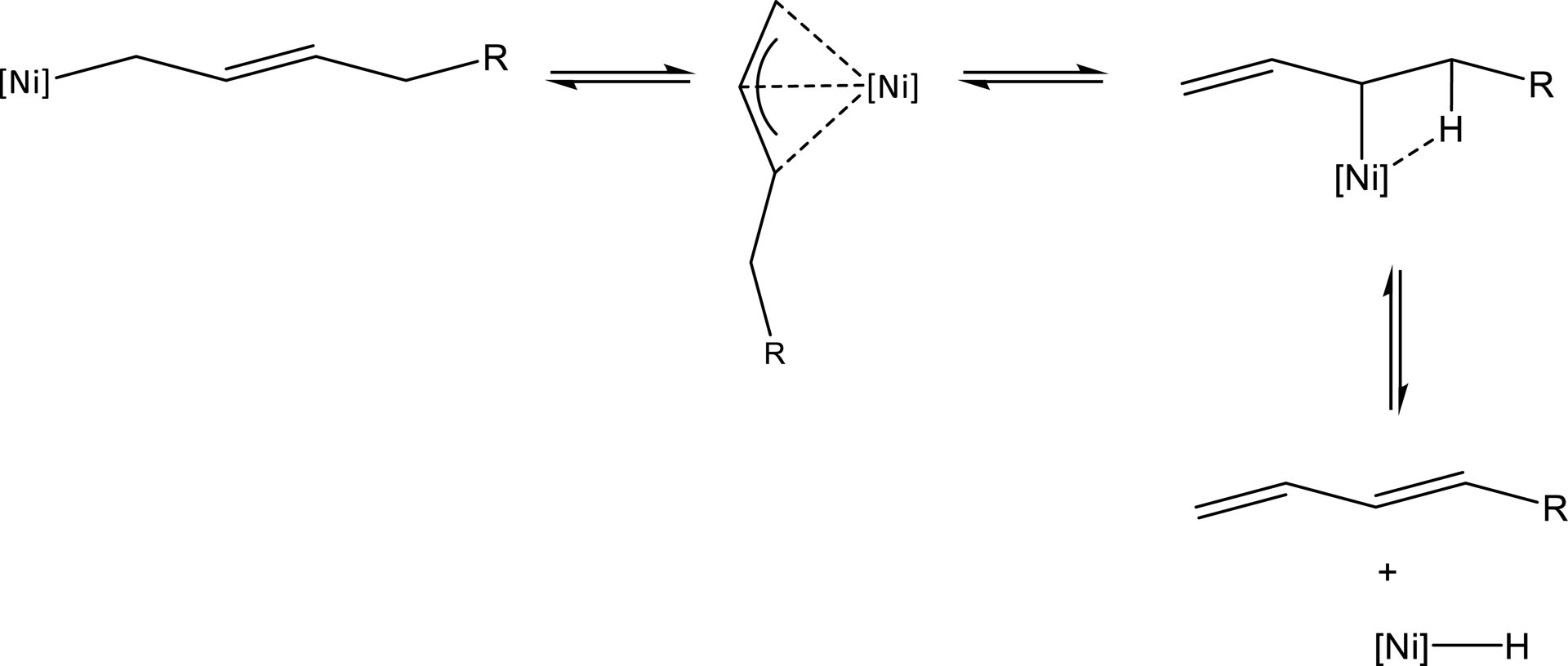
Proposed mechanism for the CCTP of butadiene catalyzed by the bis(η3-allylnickeltrifluoroacetate) catalyst combined with butyl ethyl magnesium as a case study leading to branched polybutadiene. R = H or polybutadiene.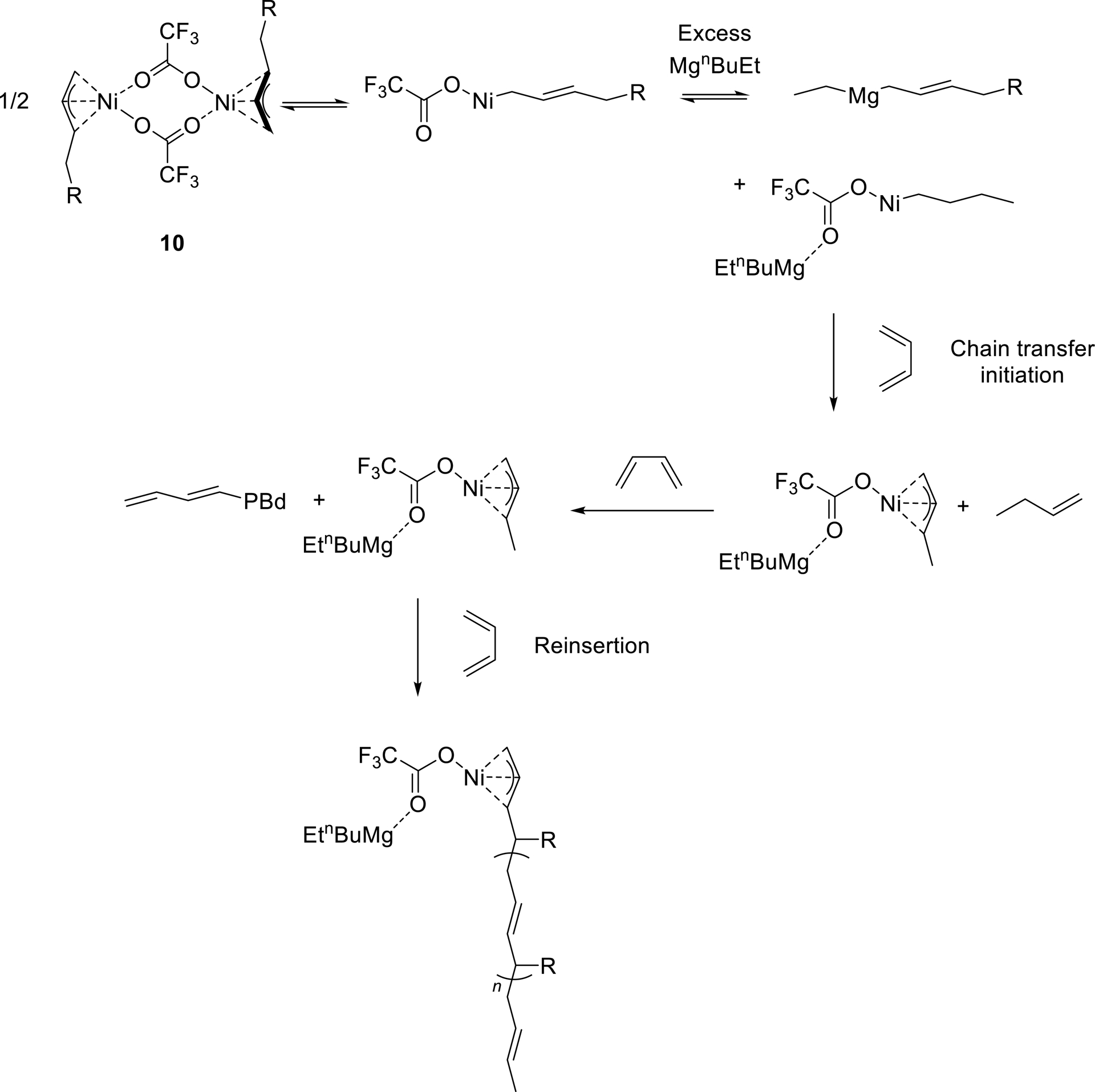
3. Conclusion
Despite their ability to catalyze β-H transfer processes, Ni catalysts can be used as CCTP catalysts. Ni α-diimine complexes were combined with MAO and ZnEt2 as chain transfer agent for the CCTP of ethylene, and chain transfer reactions were found to occur. Even if the transfer efficiency is very low, these polymerization catalysts can be used for macromolecular engineering notably via chain shuttling polymerization allowing the production of original multiblock branched microstructures. Ni complexes can also be used as chain displacement catalysts. Combined with CCTP catalysts, the resulting tandem processes affords selective access to 1-alkenes, such as 1-butene, and to unsaturated chain-ended oligoethylene. Regarding conjugated dienes, a single Ni allyl catalyst was shown to afford in a one-pot one-step tandem process the formation of branched polybutadiene, highlighting the duality of Ni catalysts. Much remains to be done in the field, such as the combination of Ni α-diimine catalysts in a chain shuttling copolymerization with other monomers that should afford original multiblock copolymers of applicative interest. The end functionalization of branched polyolefins may also benefit from this approach.
Declaration of interests
The author does not work for, advise, own shares in, or receive funds from any organization that could benefit from this article, and has declared no affiliations other than their research organization.