




 CC-BY 4.0
1. Introduction
Isoquinolines, an important class of nitrogen heterocycles, exhibit diverse bioactivities and are widely present in natural products, such as isoquinoline alkaloids as key examples. As a ubiquitous motif, the isoquinoline scaffold possesses a bicyclic architecture, found in the secondary metabolites of plants (e.g., aforementioned alkaloids) and microbial natural products. Notably, these molecules show remarkable bioactivities, e.g., anti-inflammatory, antispasmodic, antiallergic, anticancer [1, 2, 3, 4, 5, 6].
Alkyne annulation of nitrogen-containing arenes via C–H/N–H functionalization enables the installation of vicinal C–N and C–C bonds across an alkyne in a single transformation. This approach has emerged as a powerful tactic for step-economical assembly of diverse heterocycles, which exhibit activities relevant to medicinal chemistry and biology [7, 8, 9]. As an illustration, the Larock group reported that a broad range of 3,4-disubstituted isoquinolines can be synthesized via Pd-catalyzed annulation of alkynes (or allenes) with aldehydes and tert-butylamine [10, 11, 12, 13, 14, 15]. Additionally, 2-alkynylbenzyl azides serve as suitable substrates for synthesizing isoquinoline derivatives [16, 17, 18, 19]. For instance, Li et al. [16] described a PdI2/I2-catalyzed thiolation-annulation route involving alkynes, azides, and disulfides for the synthesis of 4-sulfenylisoquinolines. Separately, the Liang group [17] and the Yamamoto group [18] independently reported the Ag- or Au/Ag-catalyzed cyclization of 2-alkynylbenzyl azides, which affords 1,3-disubstituted isoquinolines.
Metal-free strategies have further expanded the utility of 2-alkynylbenzyl azides, particularly under mild conditions. Visible-light-promoted selenylation/cyclization of 2-alkynylbenzyl azides with selenosulfonates produces 4-selenoisoquinolines in up to 83% yield using AcOH as the solvent and 50 W white LEDs, simultaneously forming C(sp2)–Se and C–N bonds [20].
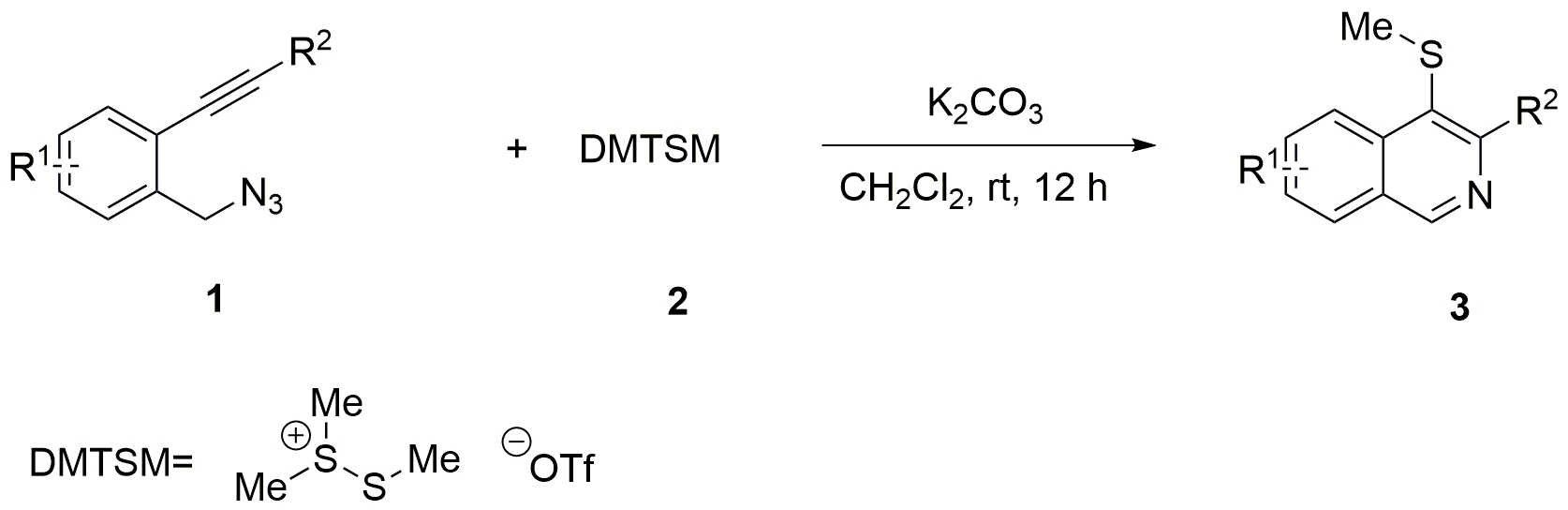
Nevertheless, the prevailing approaches to produce sulfur-containing groups still depend heavily on hazardous, malodorous reagents—including thiols and disulfides. As an electrophilic methylthiolating reagent, dimethyl(methylthio)sulfonium trifluoromethanesulfonate (DMTSM) is particularly notable, featuring unique advantages including safety, good crystallinity, and convenient handling [21, 22, 23]. In recent years, the application of dimethyl(methylthio)sulfonium salts in organic synthesis has garnered significant attention, with their utility in direct alkylthiolation [24], cycloaddition [25, 26, 27], and C–C bond formation reactions [28] being extensively investigated. Over the past few years, the Xie group has reported a series of outstanding studies in the fields of alkene hydrofunctionalization [29], direct addition reactions of terminal alkyl alkynes [30], and intermolecular alkene arylsulfenylation via episulfonium ion intermediates using DMTSM [31, 32, 33]. Building on this body of research, we herein report a novel and practical method for the synthesis of substituted 4-(methylthio)-3-phenylisoquinolines using DMTSM as a key component under ambient temperature conditions (Scheme 1).
Synthesis of 4-(methylthio)-3-phenylisoquinolines.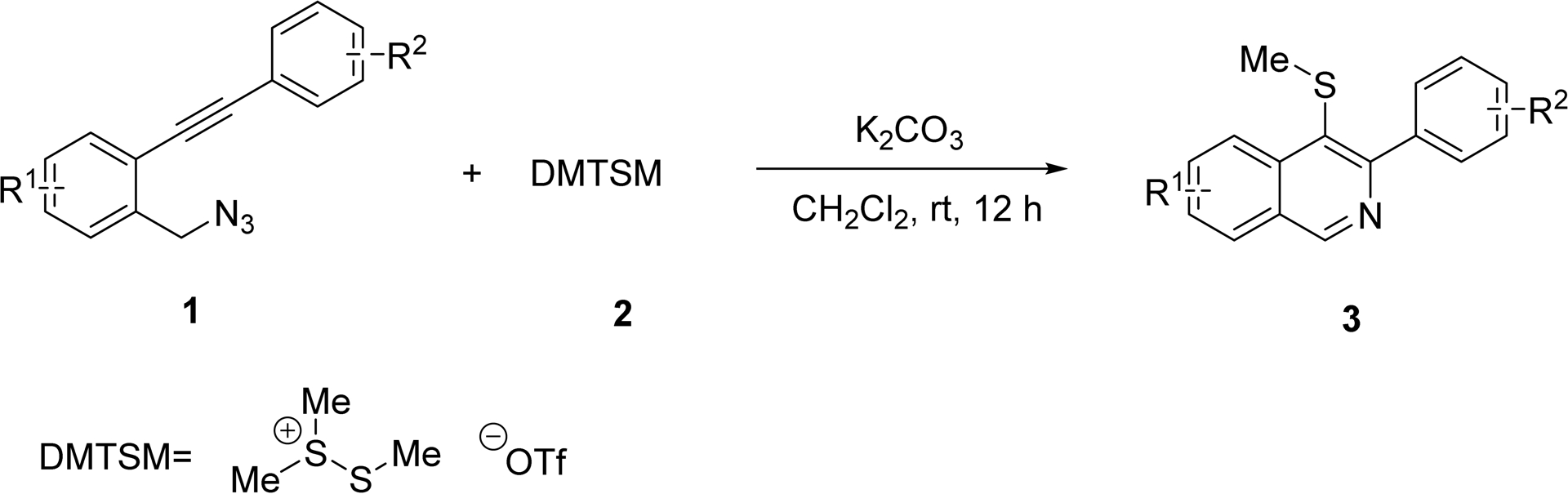
2. Results and discussion
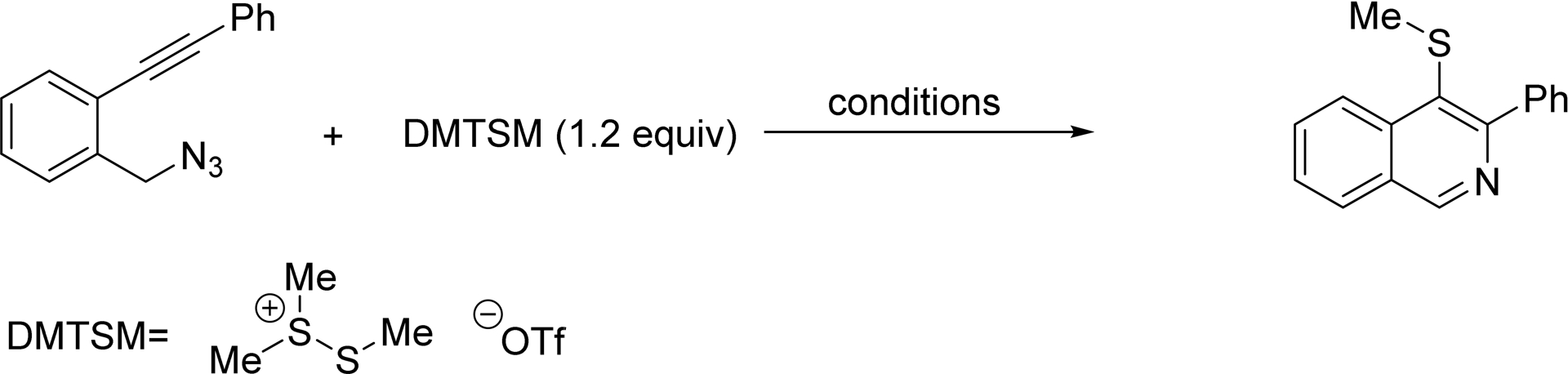
The initial study was initiated by adding 1-(azidomethyl)-2-(phenylethynyl)benzene and dimethyl(methylthio)sulfonium trifluoromethanesulfonate (DMTSM) to acetonitrile. Subsequently, the resulting substrate mixture was stirred at ambient temperature under an air atmosphere. After 12 h of reaction, the target compound, 1-(azidomethyl)-2-(phenylethynyl)benzene (3a), was successfully synthesized in a 21% yield. To improve the yield of this transformation, the effects of solvents, reaction temperature, bases, and catalysts were systematically investigated (Table 1).
Optimization of reaction conditionsa
| Entry | Solvent | Temp (°C) | Base (1.5 equiv) | Yield (%)b | Entry | Solvent | Temp (°C) | Base (1.5 equiv) | Yield (%)b |
|---|---|---|---|---|---|---|---|---|---|
| 1 | MeCN | rt | None | 21 | 8 | CH2Cl2 | 70 | None | 11 |
| 2 | CH2Cl2 | rt | None | 32 | 9 | CH2Cl2 | rt | AcONa | 60 |
| 3 | DCE | rt | None | 26 | 10 | CH2Cl2 | rt | t-BuOK | 15 |
| 4 | THF | rt | None | 11 | 11 | CH2Cl2 | rt | K2CO3 | 77 |
| 5 | Dioxane | rt | None | 7 | 12c | CH2Cl2 | rt | K2CO3 | 72 |
| 6 | CH2Cl2 | 40 | None | 34 | 13d | CH2Cl2 | rt | K2CO3 | 70 |
| 7 | CH2Cl2 | 55 | None | 29 | 14e | CH2Cl2 | rt | K2CO3 | 71 |
aReaction conditions: 1a (0.5 mmol), DMTSM (0.6 mmol), base (0.75 mmol), and solvent (2 mL) under air for 12 h.
bIsolated yields.
cCuI (0.05 mmol) was added as the catalyst.
dCu(OAc)2 (0.05 mmol) was added as the catalyst.
eFeCl3 (0.05 mmol) was added as the catalyst.
CH2Cl2 = dichloromethane, DCE = dichloroethane, THF = tetrahydrofuran.
An initial solvent screening was conducted, evaluating dichloromethane (CH2Cl2), dioxane, 1,2-dichloroethane (DCE), and tetrahydrofuran (THF) as reaction media (Table 1, entries 2–5). The reactions were conducted at room temperature without the addition of an external base. Notably, dichloromethane (CH2Cl2) proved to be the optimal solvent, affording the desired product in 32% yield—outperforming all other tested solvents. Specifically, 1,2-dichloroethane (DCE) gave a yield of 26%, whereas the polar aprotic solvents tetrahydrofuran (THF) and dioxane resulted in substantially lower yields at 11% and 7%, respectively. These results underscore the superior performance of CH2Cl2 in promoting this transformation relative to the other evaluated solvents. Furthermore, elevating the reaction temperature was found to be detrimental to the product yield (Table 1, entries 6–8). Various bases were tested to accelerate the reaction (Table 1, entries 9–11), It was found that K2CO3 yields better results than AcONa and t-BuOK. This outcome was primarily attributed to the degradation of DMTSM by the strong base. Meanwhile, catalysts including CuI, Cu(OAc)2, and FeCl3 exerted no significant effect on the reaction (Table 1, entries 12–14). Consequently, an optimized yield of 77% was achieved by using DMTSM (1.2 equiv) under the reaction conditions specified in Table 1, entry 11: CH2Cl2 as the solvent at rt, K2CO3 (1.5 equiv) for 12 h.
The scope of the reaction was then evaluated and various 1-(azidomethyl)-2-(phenylethynyl)benzene derivatives, bearing different groups, were treated with DMTSM(1.2 equiv), affording the 4-(methylthio)-3-phenylisoquinolines in various yields (Table 2). Generally, when R2 was a para-alkyl-substituted phenyl group (Alkyl = Me-, Et-, and t-Bu-), the target products 3b–3d were obtained in good yields. A slight decrease in the yield was observed when the methyl group was at the meta or ortho position of the aromatic ring; yields of only 69% and 67% were obtained, respectively (3e,3f). An 83% yield was obtained when the methoxy group was at the para position of the aromatic ring, and a 76% yield was reached with the methoxy group at the meta position. When R2 was 3,4,5-trimethoxyphenyl, an excellent yield (81%) was still attained, demonstrating the favorable electron-donating effect of methoxy groups (3g–3i). However, when R2 was a halogen at the para position on the aryl group, the yield decreased significantly; in contrast, a good yield was still obtained when R2 was a biphenyl group (3j–3m). When R2 was a heterocyclic group or an alkyl group, the yields of all corresponding products were less than 60% (3n–3r).
Scope of 1-(azidomethyl)-2-(phenylethynyl)benzene olefinations

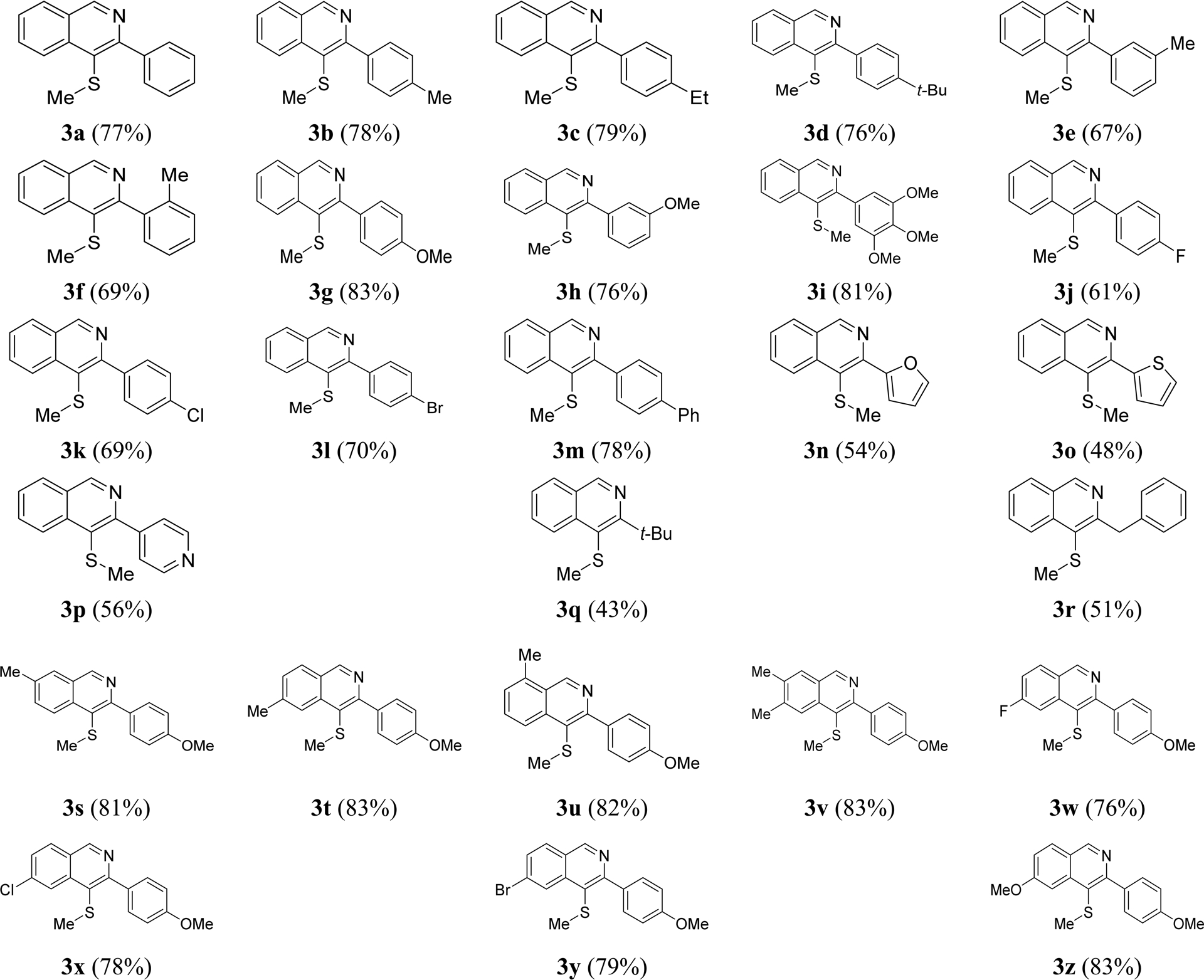 |
As expected, when the R1 group of substrates 1 was replaced by one or two methyl groups, the corresponding cyclized products 3s–3v were also isolated in excellent yields. Similarly, when R1 was an electron-withdrawing group, the cyclized products 3 were still obtained in good yields (3w–3y, yield up to 79%). While a methoxy group at the R1 position also afforded excellent yields, it did not lead to any further increase in the yield (3z, 83%).
To gain insights into the reaction mechanism, a series of control experiments were performed. First, butylated hydroxytoluene (BHT) and 2,2,6,6-tetramethylpiperidin-1-oxyl (TEMPO) were employed as radical inhibitors of the reaction (Scheme 2, Equations (1) and (2)), and no significant impact on the isolated yield was observed. Upon substituting DMTSM with CH3SSCH3 in the presence of I2, product 3a could still be formed, yet the yield was merely 38% (Scheme 2, Equation (3)).
Control experiments.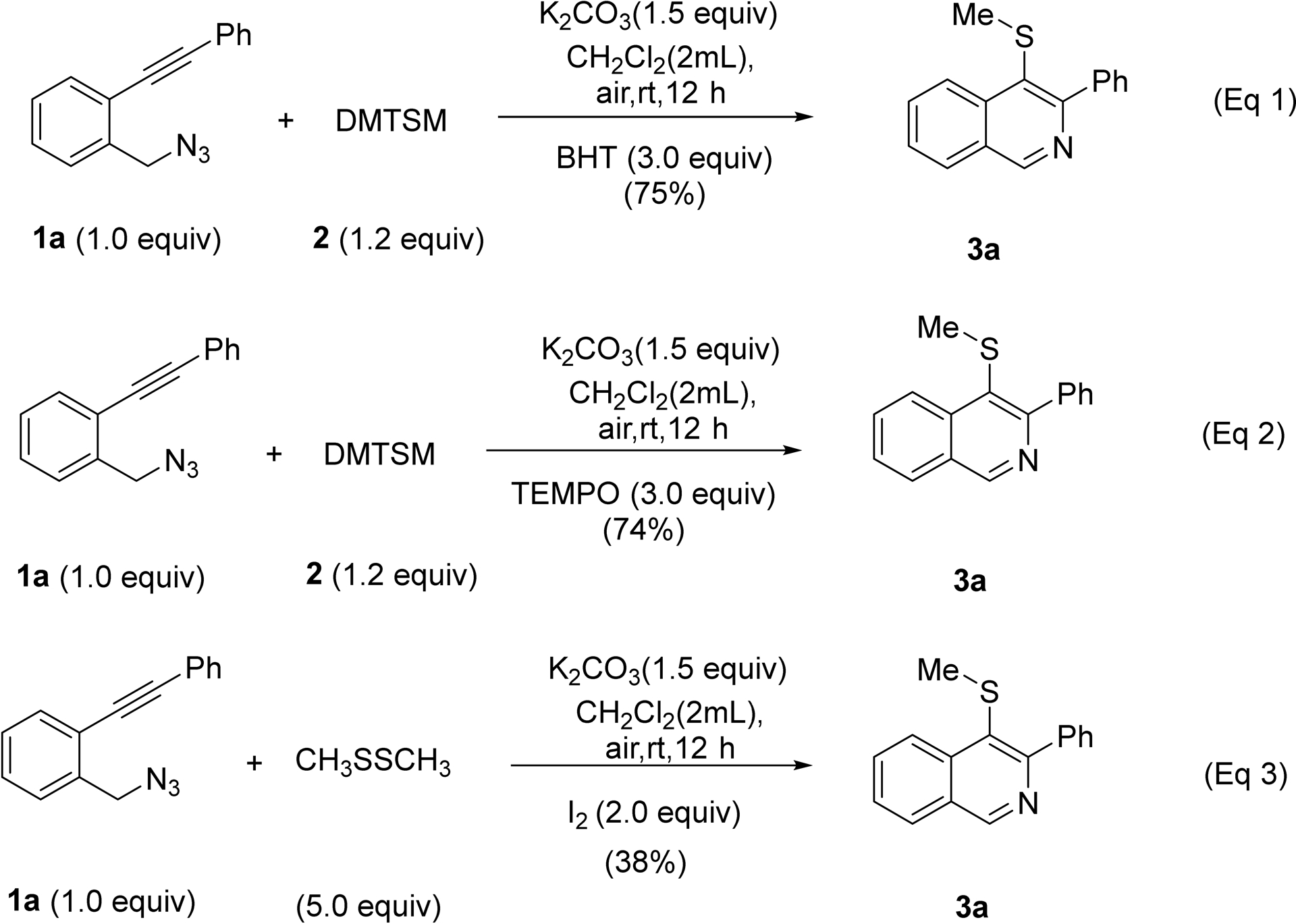
Based on these results and the literature [16, 20], a reaction mechanism (Scheme 3) was proposed as follows: the sulfonium group transfer from DMTSM to 2-styrylbenzoic acid generates the intermediate episulfonium ion (I); subsequently, the formation of the cyclic intermediate (II) is achieved through intramolecular cyclization; ultimately, the anticipated product is generated when the cyclic intermediate (II) experiences the concomitant processes of deprotonation and N2 elimination.
Proposed mechanism.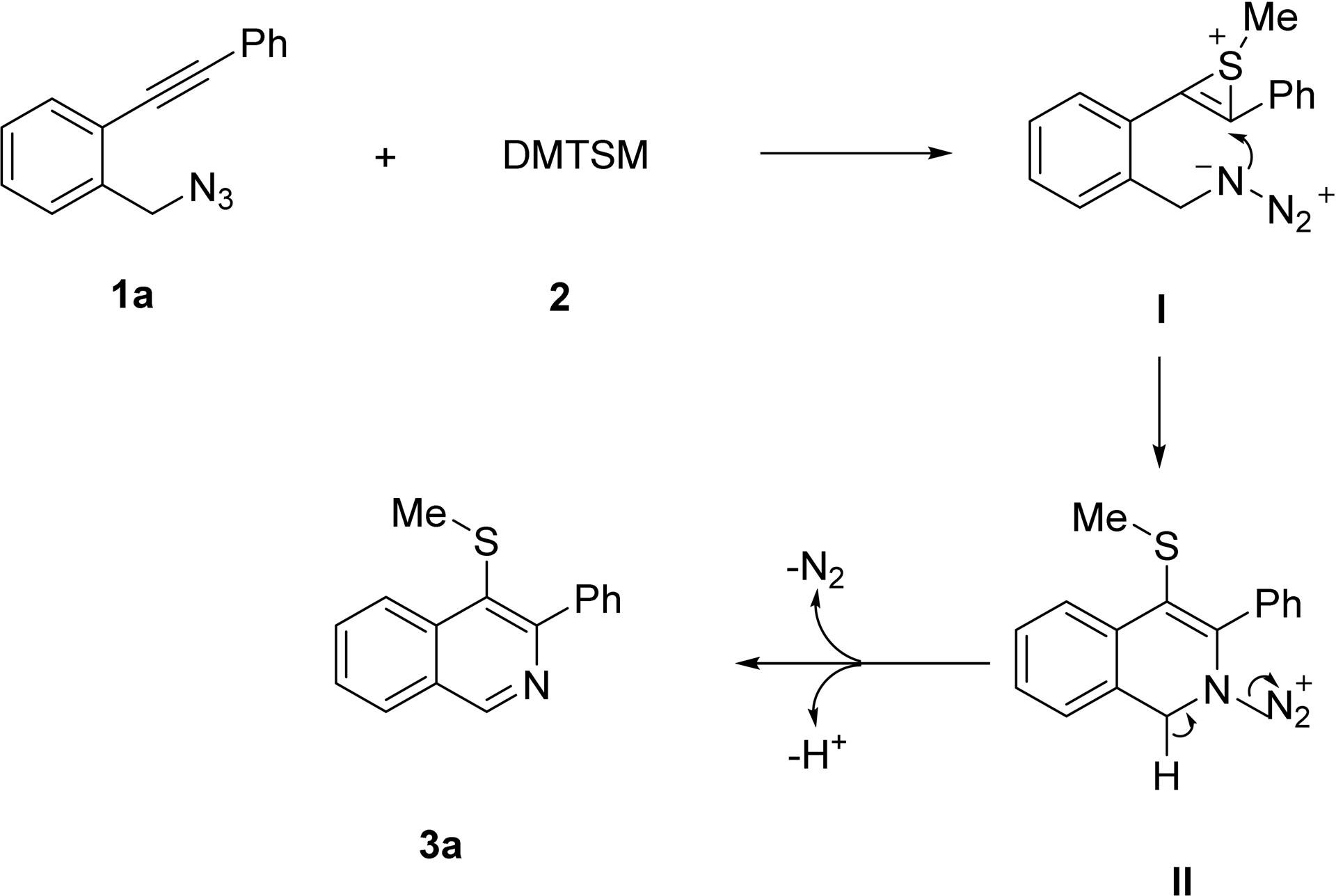
3. Conclusion
In conclusion, we herein report a straightforward and efficient protocol for the synthesis of 4-(methylthio)-3-phenylisoquinolines. This protocol involves the reaction of 1-(azidomethyl)-2-(phenylethynyl)benzene with dimethyl(methylthio)sulfonium tetrafluoroborate (DMTSM) under mild, metal-free conditions, and exhibits good tolerance toward a diverse range of functional groups on the aromatic ring, thus affording the corresponding products in good to excellent yields.
4. Experimental part
4.1. General information
All reagents were purchased from Aladdin, Macklin, or Merck and directly used without further purification. Column chromatography separations were carried out on silica gel (200–300 mesh).
NMR spectra were performed on a Bruker 400MHz (1H: 400 MHz; 13C: 100 MHz; 19F: 376 MHz) spectrometer, using CDCl3 as a solvent and TMS as the internal standard. Melting points are uncorrected. The NMR results were processed using the MestReNova program. HRMS was carried out on a high-resolution mass spectrometer (LCMS-IT-TOF) by Agilent 7890 LECO PEGASUS HRT 4D.
4.2. Experimental procedures
4.2.1. General procedure for the synthesis of DMTSM [30]

At 0 °C (ice bath), to a solution of methyl trifluoromethanesulfonate (12 mmol, 1.36 mL, 1.2 equiv) in CH2Cl2 (10 mL), Me2S2 (10 mmol, 0.89 mL, 1.0 equiv) was added dropwise in 30 min. The mixture was stirred for 1 h at that temperature, followed by 18 h at room temperature. Upon completion, the resulting white solid was collected by filtration and washed with fresh distilled Et2O under nitrogen atmosphere, affording dimethyl(methylthio)sulfonium trifluoromethanesulfonate (2.27 g, 88% yield) as a white solid.
4.2.2. Synthesis of 1-(azidomethyl)-2-(phenylethynyl)benzene [20]
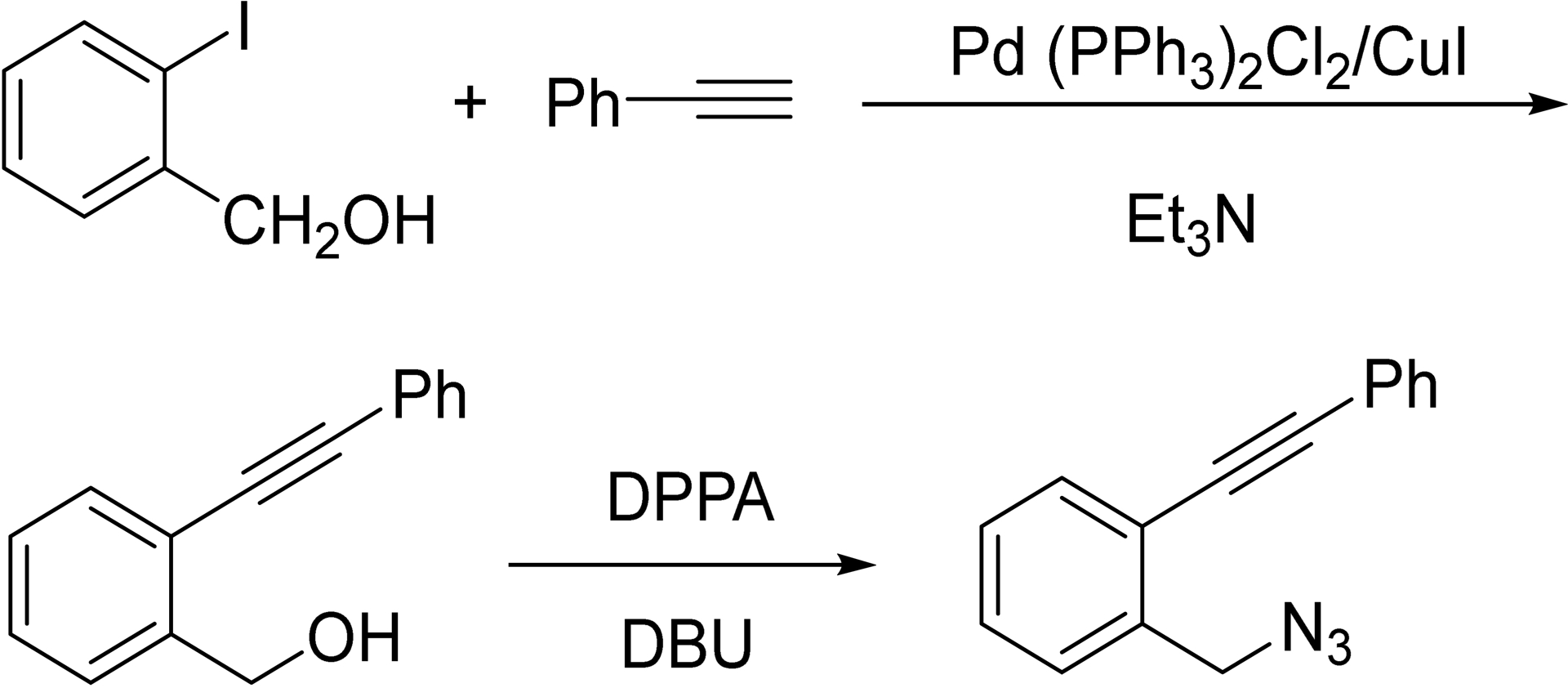
Pd(PPh3)2Cl2 (0.03 mmol, 1 mol%) and CuI (0.06 mmol, 2 mol%) were sequentially added to a stirred solution of phenylacetylene (3.6 mmol, 1.2 equiv) in Et3N (10 mL) under an argon atmosphere at rt. The mixture was stirred for 10 min. Then (2-iodophenyl)methanol (3.0 mmol, 1.0 equiv) was added. The mixture was stirred overnight. An aqueous saturated solution of NH4Cl (8 mL) was added to the resulting mixture, and the mixture was extracted with EtOAc (2 × 10 mL). The organic layers were combined to be washed with brine and dried over Na2SO4 for 20 min. The solution was then concentrated under reduced pressure. The obtained residue was further purified by flash column chromatography on silica gel to give (2-(phenylethynyl)phenyl)methanol.
DBU (1.3 mmol, 1.3 equiv) and diphenyl phosphoryl azide (DPPA, 1.2 mmol, 1.2 equiv) were sequentially added portionwise to a solution of (2-(phenylethynyl)phenyl)methanol (1.0 mmol, 1.0 equiv) in toluene (2 mL) at rt. The mixture was stirred overnight. After completion of the reaction, determined by TLC analysis, the reaction mixture was extracted with EtOAc (2 × 5 mL). The organic layers were combined, then washed with brine and dried over Na2SO4 for 20 min. The solution was concentrated under reduced pressure. The obtained residue was further purified by flash column chromatography on silica gel to give pale yellow oil 1-(azidomethyl)-2-(phenylethynyl)-benzene.
Other compounds 1 were synthesized according to the above procedures.
4.2.3. General procedure for the synthesis of 4-(methylthio)-3-phenylisoquinolines
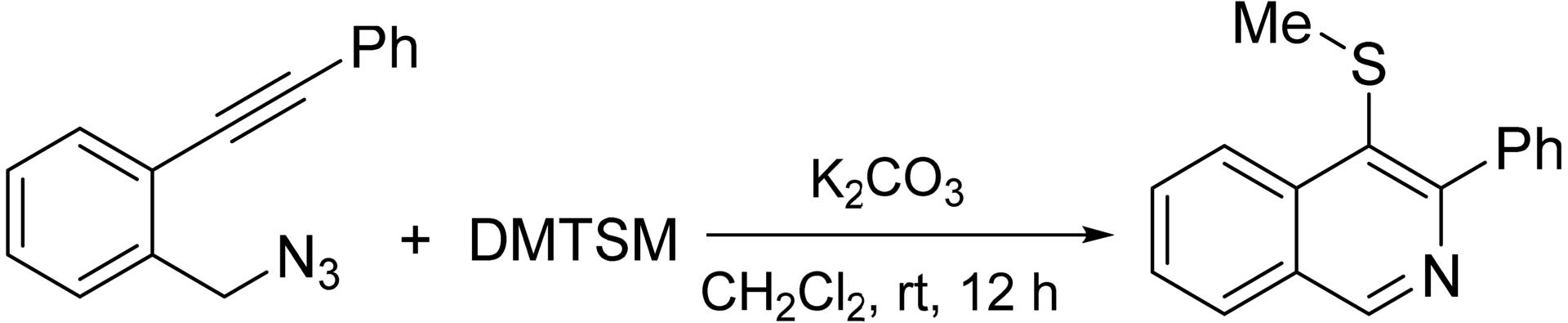
To a solution of 1-(azidomethyl)-2-(phenylethynyl)benzene (0.5 mmol, 1 equiv) at rt in CH2Cl2 (2 mL), DMTSM (0.6 mmol, 1.2 equiv) and K2CO3 (0.75 mmol, 1.5 equiv) were added to the solvent. The mixture was stirred for 12 h (TLC-monitored). The reaction mixture was extracted with CH2Cl2 after adding the saturated brine. Then the organic phases were combined and dried with anhydrous Na2SO4. The solvent was evaporated in vacuo, the crude product was purified by column chromatography on silica gel, eluting with petroleum ether/EtOAc to afford the desired products.
4.3. Characterization data of products
4.3.1. 4-(Methylthio)-3-phenylisoquinoline (3a)

Brown solid (97 mg, 77%); mp = 129–132 °C.
1H NMR (400 MHz, CDCl3): 𝛿 = 9.32 (s, 1H), 8.29 (d, J = 7.5 Hz, 1H), 8.24 (dd, J = 8.8, 3.2 Hz, 2H), 8.07 (d, J = 7.4 Hz, 1H), 7.80 (dd, J = 6.8, 1.2 Hz, 1H), 7.65–7.58 (m, 3H), 7.57–7.52 (m, 1H), 2.79 (s, 3H); 13C NMR (100 MHz, CDCl3): 𝛿 = 155.9, 146.8, 139.6, 138.8, 130.0, 129.2, 129.1, 128.6 (2C), 127.4 (2C), 127.1, 125.9, 124.6, 120.8, 18.9; HRMS (ESI) (m/z): [M+H]+ calcd. for C16H14NS+: 252.0841, found: 252.0841.
4.3.2. 4-(Methylthio)-3-(p-tolyl)isoquinoline (3b)

Brown solid (103 mg, 78%); mp = 125–128 °C.
1H NMR (400 MHz, CDCl3): 𝛿 = 9.27 (s, 1H), 8.10 (d, J = 8.0 Hz, 1H), 7.98 (d, J = 8.3 Hz, 2H), 7.90 (dd, J = 7.8, 1.6 Hz, 1H), 7.65–7.60 (m, 1H), 7.47–7.42 (m, 1H), 7.24 (d, J = 8.3 Hz, 2H), 2.59 (s, 3H), 2.35 (s, 3H); 13C NMR (100 MHz, CDCl3): 𝛿 = 158.5, 150.2, 144.7, 139.2, 135.0, 130.0, 129.4 (2C), 129.2, 127.3 (2C), 127.1, 125.8, 124.5, 121.1, 23.2, 19.0; HRMS (ESI) (m/z): [M+H]+ calcd. for C17H16NS+: 266.0998, found: 266.0996.
4.3.3. 3-(4-Ethylphenyl)-4-(methylthio)isoquinoline (3c)

Pale yellow solid (110 mg, 79%); mp = 130–132 °C.
1H NMR (400 MHz, CDCl3): 𝛿 = 9.41 (s, 1H), 8.22 (d, J = 5.2 Hz, 1H), 8.12 (d, J = 7.6 Hz, 2H), 7.91 (d, J = 4.8 Hz, 1H), 7.77–7.72 (m, 1H), 7.58–7.53 (m, 1H), 7.39 (t, J = 7.6 Hz, 2H), 2.76–2.69 (m, 5H), 1.29 (t, J = 7.2 Hz, 3H); 13C NMR (100 MHz, CDCl3): 𝛿 = 157.4, 148.5, 145.1, 144.2, 136.0, 129.6, 128.7, 127.8 (2C), 127.0 (2C), 126.6, 125.3, 124.2, 120.6, 28.2, 17.1, 15.1; HRMS (ESI) (m/z): [M+H]+ calcd. for C18H18NS+: 280.1154, found: 280.1153.
4.3.4. 3-(4-(tert-Butyl)phenyl)-4-(methylthio)isoquinoline (3d)

White solid (117 mg, 76%); mp = 138–140 °C.
1H NMR (400 MHz, CDCl3): 𝛿 = 9.34 (s, 1H), 8.13 (d, J = 7.2 Hz, 1H), 8.03 (d, J = 8.4 Hz, 2H), 7.76 (d, J = 6.0 Hz, 1H), 7.68–7.63 (m, 1H), 7.50–7.45 (m, 1H), 7.34 (t, J = 8.4 Hz, 2H), 2.70 (s, 3H), 1.40 (s, 9H); 13C NMR (100 MHz, CDCl3): 𝛿 = 156.3, 150.4, 149.5, 144.9, 136.7, 130.4, 129.5, 127.7 (2C), 127.4 (2C), 127.1, 126.0, 124.8, 121.0, 32.3, 24.1 (3C), 18.0; HRMS (ESI) (m/z): [M+H]+ calcd. for C20H22NS+: 308.1467, found: 308.1468.
4.3.5. 4-(Methylthio)-3-(m-tolyl)isoquinoline (3e)

Yellow solid (89 mg, 67%); mp = 124–126 °C.
1H NMR (400 MHz, CDCl3): 𝛿 = 9.35 (s, 1H), 8.18 (d, J = 6.4 Hz, 1H), 8.01–7.97 (m, 2H), 7.78 (d, J = 5.4 Hz, 1H), 7.71–7.68 (m, 1H), 7.56–7.51 (m, 1H), 7.42–7.37 (m, 1H), 7.26 (d, J = 8.4 Hz, 1H), 2.80 (s, 3H), 2.47 (s, 3H); 13C NMR (100 MHz, CDCl3): 𝛿 = 159.1, 149.9, 146.1, 137.6, 137.0, 130.6, 130.4, 129.8, 129.1, 128.7, 127.7, 126.4, 125.1, 124.0, 121.1, 22.0, 18.4; HRMS (ESI) (m/z): [M+H]+ calcd. for C17H16NS+: 266.0998, found: 266.0999.
4.3.6. 4-(Methylthio)-3-(o-tolyl)isoquinoline (3f)

Brown solid (91 mg, 69%); mp = 131–133 °C.
1H NMR (400 MHz, CDCl3): 𝛿 = 9.30 (s, 1H), 8.16 (d, J = 7.2 Hz, 1H), 7.90 (d, J = 8.4 Hz, 1H), 7.74–7.69 (m, 1H), 7.59–7.54 (m, 1H), 7.48–7.44 (m, 1H), 7.34–7.26 (m, 3H), 2.68 (s, 3H), 2.30(s, 3H); 13C NMR (100 MHz, CDCl3): 𝛿 = 160.4, 149.0, 145.8, 142.2, 136.4, 131.7, 131.0, 130.5, 130.3, 129.4, 127.8, 127.1, 126.9, 125.6, 125.1, 19.8, 17.5; HRMS (ESI) (m/z): [M+H]+ calcd. for C17H16NS+: 266.0998, found: 266.1000.
4.3.7. 3-(4-Methoxyphenyl)-4-(methylthio)isoquinoline (3g)

White solid (117 mg, 83%); mp = 126–129 °C.
1H NMR (400 MHz, CDCl3): 𝛿 = 9.21 (s, 1H), 8.16–8.09 (m, 3H), 7.82 (t, J = 4.4 Hz, 1H), 7.71–7.66 (m, 1H), 7.52–7.47 (m, 1H), 7.03 (d, J = 7.2 Hz, 2H), 3.82 (s, 3H), 2.68(s, 3H); 13C NMR (100 MHz, CDCl3): 𝛿 = 163.1, 158.9, 151.1, 144.1, 133.5, 131.2, 130.5, 130.1 (2C), 128.2, 126.9, 124.8, 122.4, 114.1 (2C), 55.4, 18.4; HRMS (ESI) (m/z): [M+H]+ calcd. for C17H16NOS+: 282.0947, found: 282.0949.
4.3.8. 3-(3-Methoxyphenyl)-4-(methylthio)isoquinoline (3h)

Pale yellow solid (107 mg, 76%); mp = 122–124 °C.
1H NMR (400 MHz, CDCl3): 𝛿 = 9.20 (s, 1H), 8.19 (d, J = 7.2 Hz, 1H), 7.74 (d, J = 8.4 Hz, 1H), 7.73–7.65 (m, 3H), 7.55–7.50 (m, 1H), 7.43–7.38 (m, 1H), 7.05 (dd, J = 7.0, 3.2 Hz, 1H), 3.91 (s, 3H), 2.57 (s, 3H); 13C NMR (100 MHz, CDCl3): 𝛿 = 161.9, 156.6, 147.8, 144.2, 141.1, 130.7, 130.3, 129.9, 129.0, 126.6, 123.1, 120.5, 120.4, 115.9, 112.3, 54.2, 19.6; HRMS (ESI) (m/z): [M+H]+ calcd. for C17H16NOS+: 282.0947, found: 282.0944.
4.3.9. 4-(Methylthio)-3-(3,4,5-trimethoxyphenyl)isoquinoline (3i)
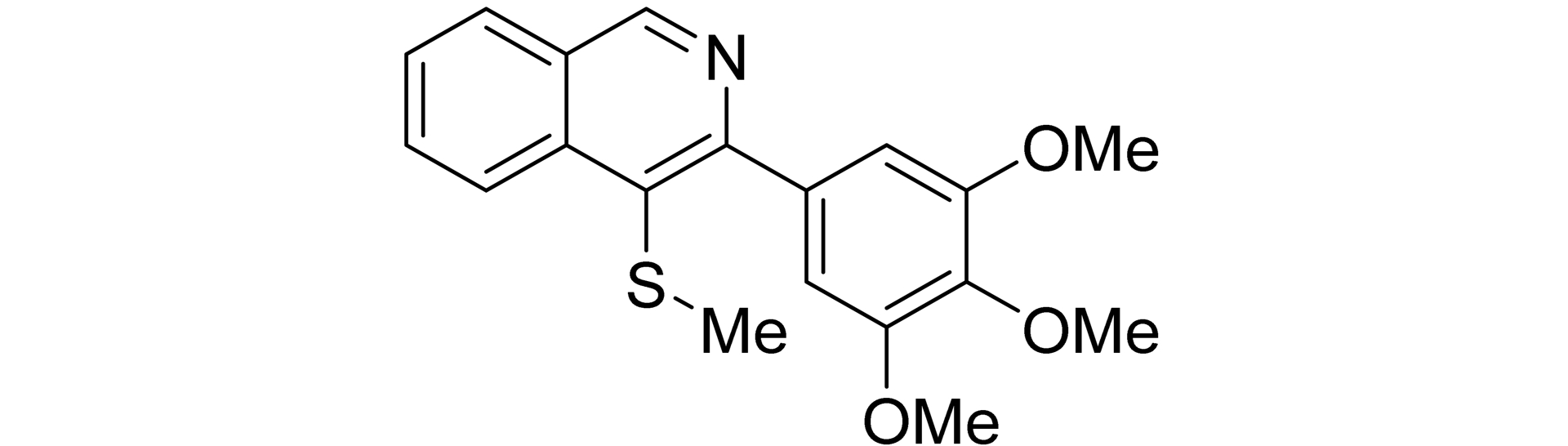
White solid (138 mg, 81%); mp = 136–139 °C.
1H NMR (400 MHz, CDCl3): 𝛿 = 9.29 (s, 1H), 8.19 (d, J = 7.6 Hz, 1H), 7.83 (d, J = 7.4 Hz, 1H), 7.75–7.70 (m, 1H), 7.58–7.53 (m, 1H), 7.36 (s, 2H), 3.98 (s, 6H), 3.89 (s, 3H), 2.67 (s, 3H); 13C NMR (100 MHz, CDCl3): 𝛿 = 157.6, 154.1 (2C), 150.3, 147.5, 141.9, 136.1, 131.6, 131.0, 128.7, 127.6, 125.2, 122.6, 104.4 (2C), 61.0, 56.3 (2C), 19.4; HRMS (ESI) (m/z): [M+H]+ calcd. for C19H20NO3S+: 342.1158, found: 342.1161.
4.3.10. 3-(4-Fluorophenyl)-4-(methylthio)isoquinoline (3j)

Yellow solid (82 mg, 61%); mp = 124–127 °C.
1H NMR (400 MHz, CDCl3): 𝛿 = 9.35 (s, 1H), 8.24–8.17 (m, 3H), 7.88 (d, J = 6.8 Hz, 1H), 7.80–7.75 (m, 1H), 7.62–7.57 (m, 1H), 7.28–7.22 (m, 2H), 2.78 (s, 3H); 13C NMR (100 MHz, CDCl3): 𝛿 = 161.7 (d, J = 244 Hz), 156.3, 148.4, 144.9, 135.2 (d, J = 244 Hz) 129.0, 128.3 (d, J = 8 Hz, 2C), 128.2, 126.0, 125.0, 123.6, 118.8, 115.7 (d, J = 17 Hz, 2C), 17.9; 19F NMR (100 MHz, CDCl3): 𝛿 = −113.2; HRMS (ESI) (m/z): [M+H]+ calcd. for C16H13FNS+: 270.0747, found: 270.0744.
4.3.11. 3-(4-Chlorophenyl)-4-(methylthio)isoquinoline (3k)

Brown solid (98 mg, 69%); mp = 123–127 °C.
1H NMR (400 MHz, CDCl3): 𝛿 = 9.30 (s, 1H), 8.24 (t, J = 7.2 Hz, 1H), 8.12 (d, J = 6.8 Hz, 1H), 7.95 (d, J = 6.2 Hz, 1H), 7.89–7.83 (m, 1H), 7.71–7.66 (m, 1H), 7.62 (d, J = 7.2 Hz, 2H), 3.82 (s, 3H), 2.68 (s, 3H); 13C NMR (100 MHz, CDCl3): 𝛿 = 158.1, 151.5, 147.3, 138.6, 135.9, 131.4, 130.7, 130.1 (2C), 130.0 (2C), 128.5, 127.4, 126.1, 124.8, 18.2; HRMS (ESI) (m/z): [M+H]+ calcd. for C16H13ClNS+: 286.0452, found: 286.0457.
4.3.12. 3-(4-Bromophenyl)-4-(methylthio)isoquinoline (3l)

Dark brown solid (115 mg, 70%); mp = 132–134 °C.
1H NMR (400 MHz, CDCl3): 𝛿 = 9.29 (s, 1H), 8.12 (d, J = 7.8 Hz, 2H), 7.95 (d, J = 6.6 Hz, 1H), 7.80 (d, J = 7.2 Hz, 1H), 7.70–7.65 (m, 1H), 7.59 (d, J = 7.8 Hz, 2H), 7.53–7.48 (m, 1H), 2.72 (s, 3H); 13C NMR (100 MHz, CDCl3): 𝛿 = 156.4, 148.3, 143.2, 136.7, 132.1 (2C), 129.0, 128.5, 128.0 (2C), 126.2, 124.1, 122.7, 122.5, 120.8, 17.9; HRMS (ESI) (m/z): [M+H]+ calcd. for C16H13BrNS+: 329.9947, found: 329.9946.
4.3.13. 3-([1,1’-Biphenyl]-4-yl)-4-(methylthio)isoquinoline (3m)

White solid (128 mg, 78%); mp = 142–145 °C.
1H NMR (400 MHz, CDCl3): 𝛿 = 9.31 (s, 1H), 8.35 (d, J = 7.2 Hz, 2H), 8.12 (d, J = 6.8 Hz, 1H), 7.81 (d, J = 7.0 Hz, 1H), 7.72 (d, J = 7.2 Hz, 2H), 7.66–7.61 (m, 3H), 7.55–7.50 (m, 1H), 7.46–7.41 (m, 2H), 7.36–7.31 (m, 1H), 2.34 (s, 3H); 13C NMR (100 MHz, CDCl3): 𝛿 = 155.4, 149.4, 141.9, 141.3, 140.1, 135.5, 132.4, 129.5 (2C), 128.4 (2C), 128.3, 128.2 (2C), 128.1 (2C), 128.0, 127.8, 127.8, 127.6, 125.2, 28.4; HRMS (ESI) (m/z): [M+H]+ calcd. for C22H18NS+: 328.1154, found: 328.1157.
4.3.14. 3-(Furan-2-yl)-4-(methylthio)isoquinoline (3n)

Pale yellow oil (65 mg, 54%).
1H NMR (400 MHz, CDCl3): 𝛿 = 9.23 (s, 1H), 8.14 (d, J = 7.8 Hz, 1H), 8.07 (d, J = 7.6 Hz, 1H), 7.78 (d, J = 6.8 Hz, 1H), 7.75–7.70 (m, 1H), 7.60–7.55 (m, 1H), 7.54 (d, J = 7.0 Hz, 1H), 7.12–7.08 (m, 1H), 2.76 (s, 3H); 13C NMR (100 MHz, CDCl3): 𝛿 = 152.9, 147.2, 143.7, 143.0, 135.0, 134.7, 126.7, 126.3, 125.6, 124.2, 124.0, 114.9, 109.5, 17.2; HRMS (ESI) (m/z): [M+H]+ calcd. for C14H12NOS+: 242.0634, found: 242.0636.
4.3.15. 4-(Methylthio)-3-(thiophen-2-yl)isoquinoline (3o)

Yellow solid (62 mg, 48%); mp = 101–103 °C.
1H NMR (400 MHz, CDCl3): 𝛿 = 9.31 (s, 1H), 8.10 (d, J = 7.4 Hz, 1H), 7.81 (d, J = 7.6 Hz, 1H), 7.68–7.64 (m, 1H), 7.63 (d, J = 4.0 Hz, 1H), 7.49–7.44 (m, 1H), 7.17 (d, J = 5.2 Hz, 1H), 6.88–6.85 (m, 1H), 2.68 (s, 3H); 13C NMR (100 MHz, CDCl3): 𝛿 = 155.9, 147.5, 146.7, 142.0, 141.1, 128.7, 128.4, 127.2, 124.8, 122.5, 120.0, 116.9, 114.9, 17.8; HRMS (ESI) (m/z): [M+H]+ calcd. for C14H12NS2+: 258.0406, found: 258.0401.
4.3.16. 4-(Methylthio)-3-(pyridin-4-yl)isoquinoline (3p)

Orange yellow solid (71 mg, 56%); mp = 111–114 °C.
1H NMR (400 MHz, CDCl3): 𝛿 = 9.33 (s, 1H), 8.73 (d, J = 4.8 Hz, 2H), 8.02–7.99 (m, 3H), 7.80 (d, J = 7.2 Hz, 1H), 7.75–7.69 (m, 1H), 7.66–7.61 (m, 1H), 2.54 (s, 3H); 13C NMR (100 MHz, CDCl3): 𝛿 = 152.7, 151.3 (2C), 145.1, 143.6, 137.1, 133.9, 129.4, 129.0, 128.5, 128.1, 124.7, 122.0 (2C), 20.9; HRMS (ESI) (m/z): [M+H]+ calcd. for C15H13N2S+: 253.0794, found: 253.0799.
4.3.17. 3-(tert-Butyl)-4-(methylthio)isoquinoline (3q)

Colorless oil (50 mg, 43%).
1H NMR (400 MHz, CDCl3): 𝛿 = 8.96 (s, 1H), 8.03 (d, J = 7.6 Hz, 1H), 7.91 (d, J = 7.4 Hz, 1H), 7.66–7.61 (m, 1H), 7.49–7.44 (m, 1H), 2.65 (s, 3H), 1.47 (s, 9H); 13C NMR (100 MHz, CDCl3): 𝛿 = 165.4, 151.8, 146.4, 131.4, 131.0, 130.0, 127.4, 125.6, 124.1, 37.5, 28.6 (3C), 24.8; HRMS (ESI) (m/z): [M+H]+ calcd. for C14H18NS+: 232.1154, found: 232.1156.
4.3.18. 3-Benzyl-4-(methylthio)isoquinoline (3r)

Pale yellow solid (68 mg, 51%); mp = 125–128 °C.
1H NMR (400 MHz, CDCl3): 𝛿 = 2.37 (s, 1H), 8.16 (d, J = 8.2 Hz, 1H), 7.91 (d, J = 7.8 Hz, 1H), 7.79–7.74 (m, 1H), 7.51–7.46 (m, 1H), 7.31–7.25 (m, 4H), 7.22–7.17 (m, 1H), 4.27 (s, 2H), 2.58 (s, 3H); 13C NMR (100 MHz, CDCl3): 𝛿 = 153.7, 146.7, 141.7, 140.1, 128.7, 128.5, 128.4 (2C), 127.8 (2C), 126.1, 125.7, 125.0, 123.9, 122.9, 41.5, 20.6; HRMS (ESI) (m/z): [M+H]+ calcd. for C17H16NS+: 266.0998, found: 266.0993.
4.3.19. 3-(4-Methoxyphenyl)-7-methyl-4-(methylthio)isoquinoline (3s)

White solid (120 mg, 81%); mp = 133–136 °C.
1H NMR (400 MHz, CDCl3): 𝛿 = 9.22 (s, 1H), 8.07 (d, J = 7.2 Hz, 2H), 7.89 (s, 1H), 7.81 (d, J = 6.8 Hz, 1H), 7.65 (d, J = 6.8 Hz, 1H), 7.99 (d, J = 7.2 Hz, 2H), 3.83 (s, 3H), 2.47 (s, 3H), 2.32 (s, 3H); 13C NMR (100 MHz, CDCl3): 𝛿 = 160.2, 158.0, 151.3, 145.3, 140.8, 135.3, 130.4, 130.2 (2C), 129.2, 127.7, 126.4, 124.7, 115.5 (2C), 55.3, 23.1, 20.3; HRMS (ESI) (m/z): [M+H]+ calcd. for C18H18NOS+: 296.1104, found: 296.1102.
4.3.20. 3-(4-Methoxyphenyl)-6-methyl-4-(methylthio)isoquinoline (3t)

White solid (122 mg, 83%); mp = 132–134 °C.
1H NMR (400 MHz, CDCl3): 𝛿 = 9.30 (s, 1H), 8.05 (d, J = 7.0 Hz, 2H), 7.99 (d, J = 6.6 Hz, 1H), 7.48 (d, J = 6.6 Hz, 1H), 7.41(s, 1H), 6.98 (d, J = 7.0 Hz, 2H), 3.82 (s, 3H), 2.61 (s, 3H), 2.46 (s, 3H); 13C NMR (100 MHz, CDCl3): 𝛿 = 160.7, 155.3, 149.1, 144.6, 137.7, 133.5, 132.5, 130.7, 129.8 (2C), 128.0, 126.0, 123.7, 114.2 (2C), 55.4, 22.9, 20.1; HRMS (ESI) (m/z): [M+H]+ calcd. for C18H18NOS+: 296.1104, found: 296.1108.
4.3.21. 3-(4-Methoxyphenyl)-8-methyl-4-(methylthio)isoquinoline (3u)
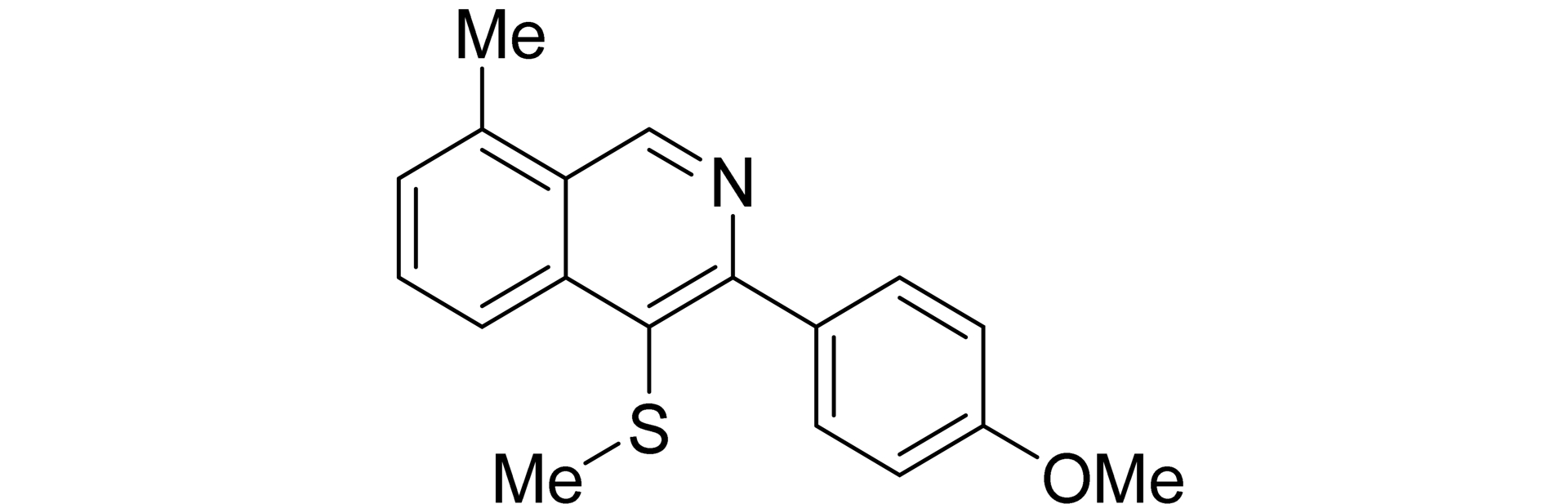
Pale yellow solid (121 mg, 82%); mp = 129–131 °C.
1H NMR (400 MHz, CDCl3): 𝛿 = 9.32 (s, 1H), 8.24 (d, J = 7.8 Hz, 2H), 7.87 (d, J = 7.4 Hz, 1H), 7.81 (d, J = 7.0 Hz, 1H), 7.58–7.53 (m, 1H), 7.04 (d, J = 7.8 Hz, 2H), 3.88 (s, 3H), 2.74 (s, 3H), 2.55 (s, 3H); 13C NMR (100 MHz, CDCl3): 𝛿 = 162.8, 146.9, 146.0, 141.5, 138.2, 133.5, 131.2, 130.7 (2C), 130.0, 128.7, 127.0, 121.3, 114.2 (2C), 55.4, 21.0, 19.3; HRMS (ESI) (m/z): [M+H]+ calcd. for C18H18NOS+: 296.1104, found: 296.1101.
4.3.22. 3-(4-Methoxyphenyl)-6,7-dimethyl-4-(methylthio)isoquinoline (3v)

White solid (128 mg, 83%); mp = 137–139 °C.
1H NMR (400 MHz, CDCl3): 𝛿 = 9.26 (s, 1H), 8.03 (d, J = 7.6 Hz, 2H), 7.85 (s, 1H), 7.51 (s, 1H), 7.05 (d, J = 7.6 Hz, 2H), 3.90 (s, 3H), 2.64 (s, 3H), 2.41 (s, 6H); 13C NMR (100 MHz, CDCl3): 𝛿 = 159.9, 153.8, 147.8, 142.9, 140.4, 135.9, 133.7, 130.5, 129.8 (2C), 128.3, 124.2, 122.8, 114.1 (2C), 55.4, 21.4, 21.4, 20.1; HRMS (ESI) (m/z): [M+H]+ calcd. for C19H20NOS+: 310.1260, found: 310.1261.
4.3.23. 6-Fluoro-3-(4-methoxyphenyl)-4-(methylthio)isoquinoline (3w)

Yellow solid (114 mg, 76%); mp = 129–131 °C.
1H NMR (400 MHz, CDCl3): 𝛿 = 9.33 (s, 1H), 8.09–8.02 (m, 3H), 7.49 (dd, J = 7.2, 3.2 Hz, 1H), 7.43–7.37 (m, 1H), 6.98 (d, J = 7.6 Hz, 2H), 3.82(s, 3H), 2.62 (s, 3H); 13C NMR (100 MHz, CDCl3): 𝛿 = 162.8, 162.2 (d, J = 196.3 Hz), 158.0, 149.5, 146.2 (d, J = 4.4 Hz), 134.4 (d, J = 7.3 Hz), 134.0, 129.7 (d, J = 7.3 Hz), 127.7 (2C), 121.9, 121.3 (d, J = 20.5 Hz), 117.9 (2C), 107.3 (d, J = 17.1 Hz), 55.4, 21.1; 19F NMR (100 MHz, CDCl3): 𝛿 = −106.7; HRMS (ESI) (m/z): [M+H]+ calcd. for C17H15FNOS+: 300.0853, found: 300.0851.
4.3.24. 6-Chloro-3-(4-methoxyphenyl)-4-(methylthio)isoquinoline (3x)

Brown solid (123 mg, 78%); mp = 142–144 °C.
1H NMR (400 MHz, CDCl3): 𝛿 = 9.38 (s, 1H), 8.10–8.04 (m, 3H), 7.88 (s, 1H), 7.60 (d, J = 6.4 Hz, 1H), 7.04 (d, J = 7.8 Hz, 1H), 3.89 (s, 3H), 2.65 (s, 3H); 13C NMR (100 MHz, CDCl3): 𝛿 = 158.8, 152.5, 148.6, 144.1, 133.9, 133.7, 133.5, 132.2, 130.9 (2C), 129.8, 126.7, 124.9, 114.2 (2C), 55.4, 21.1; HRMS (ESI) (m/z): [M+H]+ calcd. for C17H15ClNOS+: 316.0557, found: 316.0551.
4.3.25. 6-Bromo-3-(4-methoxyphenyl)-4-(methylthio)isoquinoline (3y)

Dark brown solid (142 mg, 79%); mp = 144–146 °C.
1H NMR (400 MHz, CDCl3): 𝛿 = 9.24 (s, 1H), 8.14 (d, J = 6.4 Hz, 1H), 8.05 (d, J = 8.0 Hz, 2H), 7.61 (s, 1H), 7.52 (d, J = 6.4 Hz, 1H), 7.06 (d, J = 8.0 Hz, 2H), 3.91 (s, 3H), 2.66 (s, 3H); 13C NMR (100 MHz, CDCl3): 𝛿 = 159.3, 150.7, 146.7, 142.9, 136.0, 135.6, 130.9, 130.8 (2C), 127.5, 126.9, 125.2, 123.4, 114.2 (2C), 55.4, 20.8; HRMS (ESI) (m/z): [M+H]+ calcd. for C17H15BrNOS+: 360.0052, found: 360.0048.
4.3.26. 6-Methoxy-3-(4-methoxyphenyl)-4-(methylthio)isoquinoline (3z)

White solid (129 mg, 83%); mp = 129–131 °C.
1H NMR (400 MHz, CDCl3): 𝛿 = 9.35 (s, 1H), 8.03 (d, J = 7.8 Hz, 2H), 7.78 (d, J = 7.4 Hz, 1H), 7.41 (d, J = 7.4 Hz, 1H), 7.10 (d, J = 7.8 Hz, 2H), 6.96 (s, 1H), 3.90 (s, 3H), 3.81 (s, 3H), 2.63 (s, 3H); 13C NMR (100 MHz, CDCl3): 𝛿 = 161.7, 161.6, 151.0, 145.6, 140.4, 133.6 (2C), 129.9, 127.7, 123.1, 119.6, 118.6, 114.3 (2C), 108.0, 55.5, 55.4, 20.1; HRMS (ESI) (m/z): [M+H]+ calcd. for C18H18NO2S+: 312.1053, found: 312.1051.
Declaration of interests
The authors do not work for, advise, own shares in, or receive funds from any organization that could benefit from this article, and have declared no affiliations other than their research organization.
Funding
This work was supported by Fuzhou University Zhicheng College Students’ Innovation and Entrepreneurship Training Program (2025045).
Supplementary materials
Supporting information for this article is available on the journal’s website under https://doi.org/10.5802/crchim.447 or from the author.
Use of artificial intelligence techniques
No artificial intelligence was used in the preparation of this manuscript.